Author: Zaman Australia

  • Erdoğan receiving medical advice from Israeli cardiologist: report

    Turkish President Recep Tayyip Erdoğan, whose health is a frequent subject of debate and speculation, is receiving medical advice from an Israeli cardiologist, according to an Israeli news website.

    Ynetnews, the English-language web edition of the Yedioth Ahronot newspaper, reported on Thursday that the deputy director-general of the Sourasky Medical Center in Tel Aviv, Professor Itzhak Shapira, advises Erdoğan.

    “He is a trained cardiologist, which might suggest the Turkish leader is dealing with heart problems, but there is no official information to support that speculation,” said the website.

    Ynetnews referred to Shapira as the overseer of medical tourism at the hospital who advises world leaders on medical issues and treatments.

    Sources familiar with the relationship between Erdoğan and Shapira say they “won’t be surprised if they met in Turkey.”

    Sourasky Medical Center and Shapira have declined to comment.

    There is growing speculation in Turkey about the health of Erdoğan, who will turn 68 in February. He was seen in public and in videos in the past months walking or speaking with difficulty or dozing off in front of the cameras.

    In an apparent bid to dismiss speculation about his health, Erdoğan shared a video of him playing basketball on his Telegram channel in October. In the video he was seen wearing uniform number 15 with “R. Tayyip Erdoğan” printed on it. He was also the team captain and was seen encouraging his teammates.

    The president was joined by former NBA star and current Turkish Basketball Federation (TBF) head Hidayet Türkoğlu.

    Rumors about Erdoğan’s health have been circulating for years, with one of his doctors going on record in 2011 to deny that the Turkish leader had cancer.

    In 2011, Erdoğan, then prime minister, underwent laparoscopic gastrointestinal surgery and has been walking more carefully ever since.

    Meanwhile, Erdoğan announced on Monday that his Israeli counterpart, Isaac Herzog, might soon make an official state visit.

    Speaking to reporters, Erdoğan floated the idea of the two nations signing an energy deal, owing to their location on the coasts of the gas-rich Mediterranean.

    “Politics is not a struggle, we must take politics to a line of peace,” he said.

    A senior source confirmed that Herzog has been mulling traveling to Turkey but said a final decision has yet to be made.

    Ties between Israel and Turkey have been tense since a Turkish NGO oversaw a flotilla of ships that tried to break Israel’s blockade of the Gaza Strip in 2010.
  • Jailed Kurdish leader urges Erdoğan to end Öcalan’s ‘isolation’ amid claims of rift

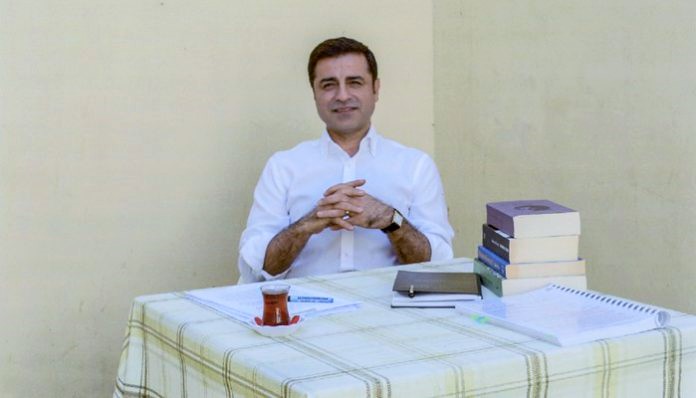
    Jailed Kurdish leader urges Erdoğan to end Öcalan’s ‘isolation’ amid claims of rift

    Jailed Kurdish politician Selahattin Demirtaş has called on Turkish President Recep Tayyip Erdoğan to end the “isolation” imposed on Abdullah Öcalan, jailed leader of the outlawed Kurdistan Workers’ Party (PKK), and let him speak in the wake of Erdoğan’s recent claims about a rift between the two Kurdish figures, Turkish media outlets reported.

    Erdoğan surprised many when he said at a party meeting last week that Demirtaş will have to “give an accounting” to Öcalan, using the names of the prisons where they’re incarcerated, Edirne and İmralı, respectively, and hinting at a rift between the two.

    Demirtaş responded to Erdoğan from prison through his lawyers and said he would only give an accounting to an independent judiciary.

    Speaking to the Yeni Yaşam daily about Erdoğan’s remarks, again through his lawyers, Demirtaş suggested that Erdoğan should end Öcalan’s “isolation,” which refers to his inability to speak with his lawyers for years, and let him make a statement regarding the recent allegations.

    “How do you know what Mr. Öcalan, whom you have kept in isolation for years, said? Then, end the isolation, let Öcalan meet with his lawyers and his family regularly, [and] let’s find out together what he has to say,” Demirtaş said, adding that it wasn’t “moral” for Erdoğan to impose severe isolation on Öcalan and at the same time speak on his behalf.

    The former HDP leader said Erdoğan’s claims were aimed at creating confusion among the country’s Kurdish population before the June 2023 general election and that nobody should believe or take seriously such “nonsense rhetoric.”

    When asked his thoughts on whether Erdoğan’s statements were just comments or if they were based on information received during a recent meeting with Öcalan, Demirtaş said he had no concrete information that there had been a meeting with Öcalan. “The only thing we know is that the isolation has been going on for years in its most extreme form,” he said.

    Demirtaş further said there must be a meeting between government representatives and Öcalan, who has been jailed in a high-security prison on İmralı Island in the Sea of Marmara since 1999, because there were some issues that couldn’t be resolved without his participation in such talks.

    Demirtaş added that it was “wrong and dangerous” for Erdoğan to build his intentions to have a meeting on İmralı, if he has them, on such cheap remarks aimed at causing a rift between him and Öcalan and that they would make everyone think that Erdoğan has no intention of ending the fight between the PKK and the Turkish government but is only aiming at garnering more votes in the upcoming elections.

    The president also claimed two days before the İstanbul Metropolitan Municipality elections, which were repeated on June 23, 2019, that there was a leadership struggle between Öcalan and Demirtaş.

    However, Erdoğan’s remarks weren’t enough to change the minds of Kurdish voters, who cast strategic votes after the HDP urged them to, for the candidate of the main opposition Republican People’s Party (CHP), Ekrem İmamoğlu, contributing to his victory against the ruling Justice and Development Party (AKP) candidate.

    Turkish authorities had conducted direct talks with Öcalan for over two years until the summer of 2015, when the death of two police officers near the Syrian border became the official reason for their collapse.

    Since then, there have been continuing clashes between the PKK, listed as a terrorist organization by Turkey, the US and the EU, and Turkish security forces. More than 40,000 people, including 5,500 security force members, have been killed in four decades of fighting between the Turkish state and the PKK. turkishminute

  • Dismissed police officer Ahmet Güngör goes missing after fleeing to Greece

    Ahmet Güngör, a former police officer who was fired from his job after a coup attempt in Turkey in 2016, has gone missing after fleeing to Greece, the TR724 news website reported on Wednesday.

    Güngör was one of the more than 125,000 civil servants who were expelled from public service under a state of emergency declared after the coup attempt on the pretext of an anti-coup fight.

    According to TR724, his family, who hasn’t heard from him since he fled to Greece on Monday, are worried about him.

    The family lost touch with Güngör as soon as he crossed the Evros River into Greece, TR724 said, adding that it had been determined that the former police officer wasn’t being kept at a police station in Greece and that he hadn’t been pushed back to Turkey.

    Although the family contacted all the relevant institutions in Turkey and Greece, they haven’t been able to learn Güngör’s whereabouts, TR724 said.

    Turkish President Recep Tayyip Erdoğan and his Justice and Development Party (AKP) government launched a war against the Gülen movement, a worldwide civic initiative inspired by the ideas of Muslim cleric Fethullah Gülen, following corruption investigations in late 2013 that implicated then-prime minister and current President Erdoğan’s close circle.

    The war against the movement accelerated after the attempted coup because Erdoğan and his AKP government accused the movement of masterminding the abortive putsch and initiated a widespread purge aimed at cleansing sympathizers of the movement from state institutions, dehumanizing its popular figures and putting them in custody.

    A total of 319,587 people have been detained and 99,962 arrested in operations against supporters of the Gülen movement since the coup attempt, Turkey’s Interior Minister Süleyman Soylu said in a statement in December.

    In addition to the thousands who were jailed, scores of other Gülen movement followers had to flee Turkey to avoid the government crackdown.

  • Bureau of Meteorology updates tsunami warning for Australia’s east coast

    The Bureau of Meteorology has issued a tsunami warning for parts of Australia’s east coast after an undersea volcano erupted near Tonga.
    The warning stretches across Queensland, New South Wales, Victoria and Tasmania, and also is for Lord Howe, Norfolk and Macquarie islands.
    The BoM says the size of the waves means the threat is for the marine environment, but there is potential for land impact on Lord Howe Island and Norfolk Island.

    What is a marine warning?

    There are three categories of threat levels within tsunami warnings, the Bureau of Meteorology (BoM) says.
    No threat is when an undersea earthquake has been detected, however it has not generated a tsunami, or the tsunami poses no threat to Australia and its offshore territories.
    Marine and immediate foreshore threat is a warning of potentially dangerous rips, waves and strong ocean currents in the marine environment and the possibility of only some localised overflow onto the immediate foreshore.
    Land inundation threat is a warning for low-lying coastal areas of major land inundation, flooding, dangerous rips, waves and strong ocean currents.

    How often do tsunamis occur?

    Tsunamis are recorded in Australia about once every two years, the BoM says.
    “Most are small and present little threat of land inundation to our coastal communities.
    “However the abnormal waves, tides and currents caused by even relatively small tsunami can be dangerous to swimmers and mariners.”

  • Teen takes own life over father’s imprisonment in post-coup crackdown

    A 16-year-old has died by suicide in Turkey’s eastern Diyarbakır province as a result of depression caused by actions of the Turkish government, which, following a coup attempt in 2016, embarked on a massive crackdown on non-loyalist citizens, Turkish Minute reported on Saturday.

    According to the report, the teenager, identified as Bahadır Odabaşı, threw himself from the 10th story of his apartment building due to depression caused by the situation of his father, Nurettin Odabaşı, a former teacher who was fired from his job by an emergency decree and arrested on terror-related charges due to his alleged links to the Gülen movement after the attempted coup.

    The teenager, whose father has been in prison for the past four years, lapsed into depression and took his own life, Bold Medya said, adding that his body was sent to a hospital for autopsy.

    Nurettin Odabaşı was brought to the funeral in handcuffs, accompanied by gendarmes.

    Following the coup attempt in 2016, the ruling Justice and Development Party (AKP) declared a state of emergency and carried out a massive purge of state institutions, summarily dismissing by means of emergency decree-laws more than 130,000 public servants including academics, teachers, military personnel, diplomats and police officers, for alleged membership in or relationships with the Gülen movement.

    The Gülen movement, a faith-based group inspired by Turkish cleric Fethullah Gülen, is accused by the government and President Recep Tayyip Erdoğan of masterminding the failed coup and is labeled a “terrorist organization,” although the movement denies involvement in the coup attempt or any terrorist activity.

    The purge has damaged the unity of many families and left children to the care of relatives. Such separations have had a negative impact on the mental and physical well-being of the children. In cases where grandparents are responsible for the child’s care, they cannot meet every need, especially in education and schoolwork. SCF

  • Mother of 3 arrested on Gülen charges, leaving children to the care of relatives

    A mother of three was arrested on Thursday for alleged links to the Gülen movement, leaving her children to the care of relatives, the Bold Medya news website reported.

    Döndü Deniz was handed down a nine-year sentence and sent to a prison in southeastern Mardin province. She broke down in court when she heard the judges’ decision and said her three children — Sema, 9, Belma, 7, and Semra, 5 — were waiting for her at home.

    Deniz’s husband Hıdır Deniz was also arrested two years ago on similar charges and sentenced to nine years, seven months in prison. The couple are accused of working for private tuition centers affiliated with the movement, depositing money to the now-closed Bank Asya and using the ByLock smartphone messaging app.

    Turkey has considered ByLock, once widely available online, a secret tool of communication among supporters of the movement, since a coup attempt in July 2016 despite the lack of any evidence that ByLock messages were related to the abortive putsch, leading to the arrest of thousands who were using it.

    The Gülen movement, a faith-based group inspired by Turkish cleric Fethullah Gülen, is accused by the government and President Recep Tayyip Erdoğan of masterminding the failed coup and is labeled a “terrorist organization,” although the movement denies involvement in the coup attempt or any terrorist activity.

    The purge has damaged the unity of many families and left children to the care of relatives. Such separations have had a negative impact on the mental and physical well-being of the children. In cases where grandparents are responsible of the child’s care, they cannot meet every need, especially in education and schoolwork. SCF

  • Reactions mount over attaché appointment of ex-Erdoğan aide who kicked protestor

    Political parties and nongovernmental organizations in Germany have criticized the appointment of a former advisor to then-prime minister and current President Recep Tayyip Erdoğan who in 2014 had kicked the relative of a victim of Turkey’s largest mining disaster on camera as a commercial attaché at the Turkish Consulate General in Frankfurt, the Sözcü daily reported on Wednesday.

    Yusuf Yerkel sparked public outrage in May 2014 when he in front of the cameras kicked the relative of one of the 301 victims of the tragedy during a visit to Soma in Manisa province, where the accident took place. The man and others were protesting Erdoğan, whose policies they held responsible for the tragedy.

    While Yerkel hasn’t yet been accredited as a diplomat, according to Sözcü, reactions by politicians and activists against his appointment had widespread media coverage in prominent outlets in Germany, including the Frankfurter Rundschau, Frankfurter Allgemeine Zeitung and Bild dailies as well as broadcaster ARD.

    “It’s clear to us that anyone who kicks a defenseless worker who is lying on the ground must not become a commercial attaché at the Turkish Consulate General,” Saadet Sönmez from the Left Party (Die Linke) said in a statement.

    The Social Democratic Party of Germany (SPD) also said they didn’t welcome Yerkel and disapproved of his appointment, according to Sözcü.

    “We cannot accept that a militant person, an extremist and an anti-democrat is being appointed as a commercial attaché,” Atila Karabörklü, chairman of the Turkish Community in Germany (TGD), told German daily Frankfurter Rundschau on Tuesday.

    The left-wing Federation of Democratic Workers’ Associations (DIDF) also condemned Yerkel’s appointment, calling for his “immediate withdrawal.”

    “If the appointment decision is not revoked, we will … expose Yerkel’s anti-working class face …” added the DIDF.

    Yerkel, who doesn’t have a degree in business, will be given a monthly salary of 6,000 euros during his assignment as commercial attaché, which will last for three or four years. He and his family will be granted diplomatic immunity and their travel and healthcare expenses in Turkey will be paid by the Turkish government.

    The former aide’s appointment also had sparked criticism in Turkey, not only due to his treatment of the protestor in Soma but also due to his alleged lack of training to fulfill the responsibilities of a commercial attaché.

    Turkey’s ruling Justice and Development Party (AKP) and its leader President Erdoğan are widely criticized for filling state posts with their cronies and eschewing merit-based assignments.

    Yerkel has a bachelor’s degree from the politics and international relations department of a university in İstanbul, according to his biography.

  • Judicial supervision of former Zaman columnists to continue during retrial

    Judicial supervision of former Zaman columnists to continue during retrial

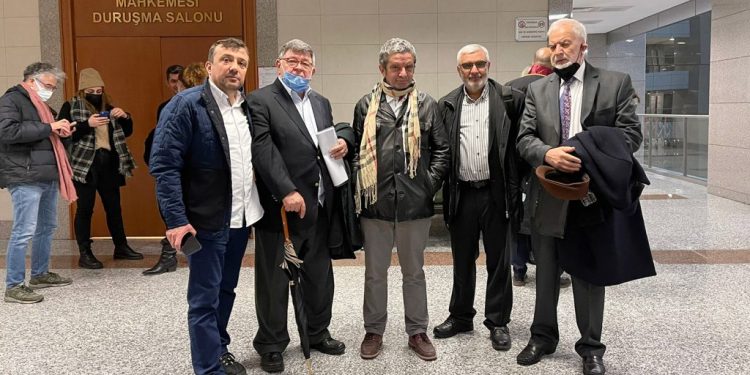
    Four former columnists from the now-closed Zaman daily appeared in an İstanbul court on Wednesday in a retrial in which the court ruled for the continuation of judicial supervision measures imposed on the defendants, the Kronos news website reported.

    Former Zaman daily columnists Şahin Alpay, Mümtaz’er Türköne, Ahmet Turan Alkan and Ali Bulaç attended the latest hearing at the İstanbul 13th High Criminal Court, while former Zaman editor Mehmet Öztürk was absent. The journalists’ retrial became possible after the Supreme Court of Appeals in December 2020 overturned a local court’s verdicts against the five journalists. The top court ruled that the sentences handed down to Türköne, Bulaç and Alpay as well as an acquittal decision for Öztürk were flawed.

    The Zaman daily, which was Turkey’s best-selling newspaper, was closed down along with dozens of other media outlets due to their links to the Gülen movement, which is accused by Turkey’s Justice and Development Party (AKP) government of masterminding a coup attempt on July 15, 2016, although it strongly denies any involvement.

    The journalists had been arrested in the aftermath of the coup attempt as part of a crackdown on journalists critical of the government and journalists who used to work at Gülen-affiliated media organizations. Eleven journalists were tried on charges of violating the constitution, membership in a terrorist organization, disseminating the propaganda of a terrorist organization and aiding a terrorist organization.

    The journalists, who were all in pretrial detention for several years following the coup attempt, demanded that the court comply with the top appeals’ court ruling and rule for their acquittal.

    Alkan, who delivered his defense at Wednesday’s hearing, told the court he has never been a member of any terrorist organization and asked for his acquittal.

    Former Zaman columnist Hüseyin Gülerce, who attended the hearing via IT Voice and Image System (SEGBİS) as a witness, told the court that he personally knows the defendants and they are not kind of the people who would write their articles based on orders from others.

    Although Gülerce was also a columnist at Zaman and known as the unofficial spokesperson for the Gülen movement, he did not face any charges due to his links to the Gülen movement after siding with the AKP government and serving as an ardent supporter of its crackdown on the movement’s alleged or real members.

    The court ruled for the continuation of the judicial supervision measures including a travel ban for the journalists.

    The court also adjourned the trial to a later date after deciding the send the case dossier to the prosecutor for his opinion.

    The journalists deny all the charges against them, saying their activities at the Zaman daily were merely journalistic and that they had nothing to do with the coup attempt.

  • Turkish court rejects ailing philanthropist’s appeal for release from prison

    The İzmir 2nd High Criminal Court has rejected an appeal from imprisoned 82-year-old businessman and philanthropist Yusuf Bekmezci to be released for proper medical care, the Stockholm Center for Freedom reported, citing the Bold Medya news website.

    Although Turkey’s Council of Forensic Medicine (ATK) issued a medical report saying Bekmezci was not fit to remain in prison, the court said there was too much evidence against him and that he was a flight risk.

    Bekmezci’s lawyer, Saadet Aytekin, criticized the decision on Twitter, saying her client was unconscious in intensive care and needed to be immediately released.

    Bekmezci, who suffers from Alzheimer’s disease, underwent an operation on January 4, during which his heart stopped. Bekmezci was revived after 15 minutes of heart massage and electroshock and was taken to intensive care, where he remains unconscious.

    Bekmezci was arrested for alleged links to the Gülen movement and tried on charges of terrorism, with the prosecutor demanding a life sentence.

    The court  handed down a sentence of 17 years, four months in April 2021.

    Speaking to Bold Medya earlier, his daughter Şeyma Bekmezci said her ailing father had been condemned to die in prison.

    Turkish President Recep Tayyip Erdoğan has been targeting followers of the Gülen movement, a faith-based group inspired by Turkish cleric Fethullah Gülen, since the corruption investigations of December 17-25, 2013, which implicated then-Prime Minister Erdoğan, his family members and his inner circle.

    Dismissing the investigations as a Gülenist coup and conspiracy against his government, Erdoğan designated the movement as a terrorist organization and began to target its members. He intensified the crackdown on the movement following a coup attempt on July 15, 2016 that he accused Gülen of masterminding. Gülen and the movement strongly deny involvement in the abortive putsch or any terrorist activity.

    According to Şeyma Bekmezci, her father could barely understand the court proceedings due to his advanced Alzheimer’s and was unable to defend himself. The lack of proper health care in prison has caused his mental state to deteriorate. “He completely forgets himself in court and is in a vulnerable position,” she said.

    Human rights activists and opposition politicians have frequently criticized authorities for not releasing critically ill prisoners so they can seek proper treatment.

    According to the Human Rights Association (İHD), as of June 2020 there were more than 1,605 sick inmates in Turkish prisons, approximately 600 of whom were critically ill. Although most of the seriously ill patients had forensic and medical reports deeming them unfit to remain in prison, they were not released. Authorities refuse to free them on the grounds that they pose a potential danger to society. In the first eight months of 2020, five critically ill prisoners passed away because they were not released in time to receive proper medical treatment.

  • Family of jailed former police officer hasn’t seen him in 2 years due to distance between prison and home

    The family of former police officer Ali Osman Kayan, a father of four serving a sentence for conviction of links to the Gülen movement, said they have not been able to visit him for nearly two years due to the distance between the prison he’s in and the family home in Izmir, the Stockholm Center for Freedom reported on Wednesday.

    Speaking to Bold Medya, Kayan’s wife said they have to travel 1,300 kilometers to visit her husband in a prison in eastern Elazığ province. Kayan’s four children have not been able to see their father since February 3, 2020.

    “My eldest son said he could barely remember his father’s face,” said Kayan’s wife. “The last time we went to visit my husband, the youngest children said they did not want to go anymore because it was a long journey for a very short visit.”

    Kayan’s wife added that their only means of communication has been short telephone calls for the past two years.

    Although Kayan appealed to authorities several times asking to be transferred to a prison closer to his family, his petitions were not approved.

    Kayan was arrested in November 2016 and sentenced to 18 years in prison. His case is currently with the Supreme Court of Appeals.

    Turkish President Recep Tayyip Erdoğan has been targeting followers of the Gülen movement, a faith-based group inspired by Turkish cleric Fethullah Gülen, since the corruption investigations of December 17-25, 2013, which implicated then-prime minister Erdoğan, his family members and his inner circle.

    Dismissing the investigations as a Gülenist coup and conspiracy against his government, Erdoğan designated the movement as a terrorist organization and began to target its members. He intensified the crackdown on the movement following a coup attempt on July 15, 2016 that he accused Gülen of masterminding. Gülen and the movement strongly deny involvement in the abortive putsch or any terrorist activity.

    According to Article 8 of the European Convention on Human Rights (ECHR), everyone has the right to respect for his or her private and family life, their home and their correspondence. Public authorities cannot interfere with the exercise of this right except as is in accordance with the law and is necessary in a democratic society in the interests of national security, public safety or the economic well-being of the country, for the prevention of disorder or crime, for the protection of health or morals, or for the protection of the rights and freedoms of others.

    In 2019 the European Court of Human Rights (ECtHR) ruled in favor of two political prisoners and said Turkey had violated Article 8. Both prisoners were sent to a prison more than 800 kilometers from their families. Abdulkerim Avşar and Abdulkerim Tekin appealed to the court saying their families could not visit due to the long distance.

    Turkey was ordered to pay 6,000 euros to each in compensation and 1,000 euros to Avşar for expenses.