Author: Zaman Australia

  • Turkey says NATO summit ‘not the deadline’ for Finland, Sweden talks

    The comments from Turkish President Recep Tayyip Erdoğan’s top foreign policy adviser followed a round of urgent talks in Brussels that NATO leaders had hoped would pave the way for the Nordic states’ formal approval to join the bloc at the Madrid summit.

    Ankara has accused Finland and Sweden of providing a safe haven for outlawed Kurdish militants whose decades-long insurgency against the Turkish state has claimed tens of thousands of lives.

    Ankara has also demanded the two countries lift their weapons freezes on Turkey.

    Erdoğan’s foreign policy chief İbrahim Kalın reported no breakthrough at the Brussels talks.

    “The Madrid NATO summit is not the deadline, so our negotiations will continue,” Kalin told reporters.

    “The existence of terrorist organizations must end in those countries. That is what we expect both from Finland and Sweden.”

    NATO chief Jens Stoltenberg called the meeting “constructive” while conceding that Turkey’s “legitimate” concerns had still not been fully addressed.

    “Turkey’s has legitimate security concerns over terrorism that we need to address,” Stoltenberg said.

    “So we will continue our talks on Finland and Sweden’s applications for NATO membership, and I look forward to finding a way forward as soon as possible.”

    TurkishMinute

  • Dissenting judge in Khashoggi trial to quit profession after demotion

    Nimet Demir, head of the panel of the judges at the İstanbul 12th High Criminal Court, which in a controversial move in April decided to halt the murder trial in absentia of 26 suspects linked to the killing of the journalist and transfer it to Riyadh, was among the more than 5,000 judges and prosecutors replaced by Turkey’s Board of Judges and Prosecutors (HSK) under a summer decree.

    Demir submitted a dissenting opinion to the court’s decision, which was labelled as politically motivated, angered rights groups and dashed hopes about justice being served in the murder of Khashoggi.

    The 59-year-old journalist was killed inside the Saudi Consulate General in İstanbul on Oct. 2, 2018 in a gruesome murder that shocked the world. Khashoggi had gone to the consulate to get papers for his upcoming marriage to his Turkish fiancée.

    Demir was appointed as a judge to the southern province of Kahramanmaraş under the HSK’s summer decree, interpreted as a demotion for an experienced judge like him.

    Journalist İsmail Saymaz from the pro-opposition Halk TV news website wrote on Monday that he talked to judge Demir on the phone on Monday morning and said the judge thinks his transfer is related to his dissenting opinion in the Khashoggi case.

    Demir said he was not expecting such a move and was planning to submit his resignation in a sign of protest.

    “I am planning to quit. It [Kahramanmaraş] is not a place for senior judges like me,” he said.

    The judge said he was trying to act in line with democratic values, human rights and freedoms in expressing a dissenting view and has faced a sanction for his attitude.

    “My attitude is the kind that will always be condemned in authoritarian structures,” he said, adding that he is talking to his family about his resignation and would soon submit a letter to that effect.

    Exiled Turkish journalist Can Dündar hailed judge Demir’s decision to quit the legal profession after his transfer, saying in a tweet that when the rule of law is reestablished in Turkey, people like Demir will be remembered as the guardians of justice.

    The HSK replaced 5,426 judges and prosecutors in its summer decree.

    Among them was another dissenting judge in in the Gezi Park trial.

    Judge Kürşad Bektaş, who was on the panel of judges in the Gezi Park trial heard by a high criminal court in İstanbul, has been appointed as a prosecutor in a small district in central province of Tokat. Bektaş recommended the acquittal of the eight defendants who included prominent businessman and civil society leader Osman Kavala.

    The İstanbul court where Bektaş used to serve on April 25 sentenced Kavala, who had been behind bars without a conviction for over four years, to aggravated life on charges of “attempting to topple the government,” while sentencing seven other defendants to 18 years each on charges of aiding the attempt due to their alleged role in the anti-government Gezi Park protests of 2013.

    The ruling sparked international condemnation as well as protests across Turkey for being politically motivated.

    Bektaş, who submitted a dissenting opinion to the court’s ruling, said there was no evidence against the defendants except for some wiretaps that were conducted illegally. He said there was not sufficient evidence against the defendants for a conviction; hence, they should be acquitted of the charges.

    The Turkish government is being widely criticized for taking the judiciary under its control and imposing pressure on its members to make politically motivated decisions. The government has removed thousands of judges and prosecutors from their posts on coup charges since a failed coup attempt on July 15, 2016.

    TurkishMinute

  • Saudi Arabia lifts travel restrictions to Turkey amid thaw in relations

    The Saudi Interior Ministry on Monday lifted the Covid-19 travel restrictions it had imposed on India, Ethiopia, Turkey and Vietnam.

    Travel to Turkey and several other countries was prohibited for Saudi nationals during the Covid-19 health emergency, with the threat of a three-year ban on foreign travel for violators. The decision coincided with a period of particularly tense relations between the two regional powers.

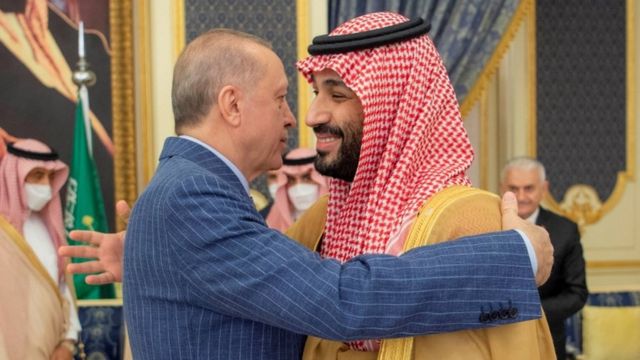
    The Saudi ministry’s decision comes ahead of a visit by Crown Prince Mohammed bin Salman to Turkey on June 22 as Ankara and Riyadh move on from the 2018 murder of journalist Jamal Khashoggi.

    It will be Prince Mohammed’s first visit to Turkey since the brutal killing of Khashoggi inside the Saudi consulate in İstanbul, which shocked the world and dealt a heavy blow to ties between the regional rivals.

    Turkish President Recep Tayyip Erdoğan had already paid a visit to Saudi Arabia in late April, where he met with the prince before traveling to Mecca.

    Saudi agents killed and dismembered Khashoggi, an insider turned critic, in the kingdom’s İstanbul consulate in October 2018. His remains have never been found.

    Erdoğan previously said the “highest levels” of the Saudi government ordered the killing and Turkey angered the Saudis by vigorously pursuing the case, opening an investigation and briefing international media about the lurid details of the murder.

    Turkey already had strained relations with Saudi Arabia because of its support for Qatar during the Riyadh-led blockade on the Gulf state, but relations were frozen for three years after Khashoggi’s killing.

    Saudi Arabia responded at the time with an unofficial boycott of Turkish imports, putting pressure on Turkey’s economy.

    Now with high inflation and a cost-of-living crisis a year before a presidential election, Erdoğan is seeking backing from Gulf countries.

    Before Covid-19, Turkey was a favored tourism destination for many Saudis, who viewed it as a relatively affordable and culturally familiar vacation spot. Nearly 750,000 Saudis visited Turkey in 2018, despite the strained diplomatic relations, according to Bloomberg.

    TurkishMinute

  • Amnesty International names 7 jailed Gezi defendants ‘prisoners of conscience’

    Amnesty defines prisoners of conscience as people who haven’t used or advocated violence or hatred in the circumstances leading to their imprisonment but are imprisoned solely because of who they are (sexual orientation, ethnic, national or social origin, language, birth, color, sex or economic status) or what they believe (religious, political or other conscientiously held beliefs).

    An İstanbul court on April 25 sentenced Kavala, who had been behind bars without a conviction for over four years, to aggravated life while sentencing seven other defendants – architect Mücella Yapıcı, city planner Tayfun Kahraman, lawyer Can Atalay, documentary filmmaker Mine Özerden, film producer Çiğdem Mater, higher education director Hakan Altınay and university founder Yiğit Ekmekçi – to 18 years each on charges of instigating the anti-government Gezi Park protests.

    Six of them were immediately put in prison, and an arrest warrant was issued for Ekmekçi.

    Agnes Callamard, secretary-general of Amnesty International, wrote on Friday that the organization had taken the significant step of naming all seven jailed Gezi defendants prisoners of conscience, “aiming to highlight the chronicle of injustice they’ve suffered— from arbitrary detentions and politically-motivated prosecutions to a show trial ending in these chilling convictions.”

    Since the prosecution failed to provide any evidence to substantiate the charges brought against the accused and the court offered no convincing grounds for its majority verdict when it published its reasoned judgment on June 7, the only substantial conclusion to emerge from the trial, according to Callamard, was that Turkey’s courts operate at the bidding of President Recep Tayyip Erdoğan and aren’t independent, impartial, free from political interference, or fair.

    “… the Gezi Seven’s imprisonment comes as no surprise in a country that’s been cracking down on human rights, especially freedom of expression, with increasing intensity since a failed coup in 2016,” Callamard said, adding that overly broad anti-terrorism laws had been used to target dissent, with thousands being subjected to abusive criminal investigations, prosecutions and punitive pretrial detentions and the judiciary — already lacking independence — being used to repress peaceful dissent.

    Callamard further stated that Erdoğan had shown active involvement in Kavala’s case from day one, and his repeated public comments had undermined the presumption of innocence — a key tenet of fair trial rights.

    “The shocking injustice handed out to the Gezi Seven exposes, yet again, how Turkey’s judicial system has become a repressive tool to silence peaceful dissent. And each day they spend behind bars is an affront to the concept of justice and human rights — principles the Turkish state has committed itself to upholding but repeatedly and relentlessly violates,” the secretary-general said.

    The Gezi Park demonstrations, which took place in the summer of 2013 in reaction to the Justice and Development Party (AKP) government’s attempt to destroy one of the few green spaces left in İstanbul, quickly turned into a nationwide protest against the authoritarian policies of then-prime minister and current president Erdoğan.

    Eleven protestors died and thousands more were injured as they were brutally suppressed by the police on Erdoğan’s instructions.

    TurkishMinute

  • LGBTI event at İstanbul University canceled over threats, 26 students briefly detained

    LGBTI event at İstanbul University canceled over threats, 26 students briefly detained

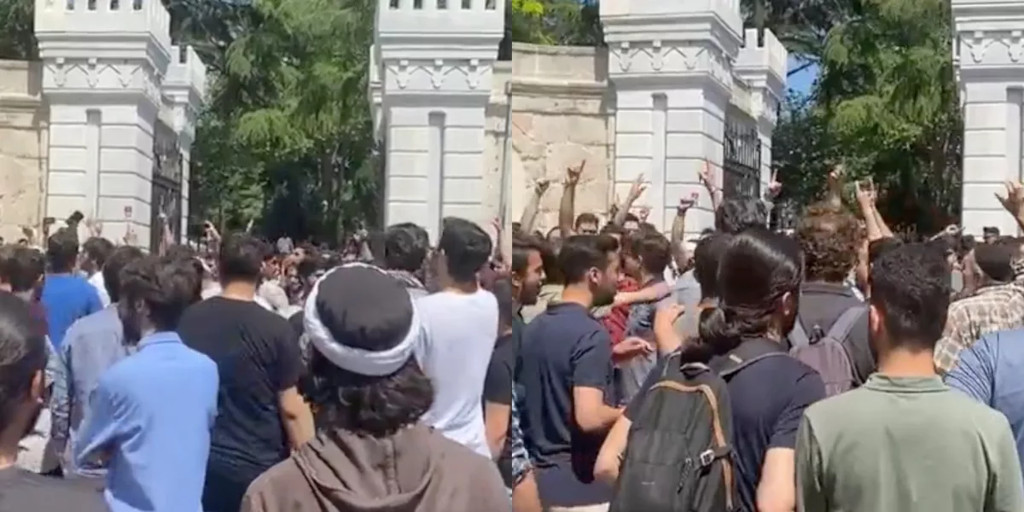
    While police didn’t disperse the group that had gathered in front of the campus gate and chanted “Takbir, Allahu Akbar” (God is the greatest) and “Beyazıt is ours and it will remain ours,” they briefly detained 26 students who turned out to support their friends, the organizers of the picnic.

    The picnic, which was planned by the İstanbul University Equality Society to be held at 4 p.m. on Friday, was canceled due to security concerns, with the Equality Society announcing the development on social media and warning those planning to participate not to be seen in the vicinity in large groups and to leave Beyazıt safely.

    The İstanbul Governor’s Office announced the detentions in a written statement, saying that 26 students were detained because those who gathered for the picnic refused to leave the area although police repeatedly warned them that the event they were about to hold was illegal and that they should cancel it.

    The Equality Society then released a written statement, saying: “We exist as the students of this university, and we will continue to exist. … We are calling out to those who make us look like we are not legitimate, what’s not legitimate is you, it’s your fascism, your phobias and your attacks.”

    Homosexuality is not illegal in Turkey, but homophobia is widespread. After a spectacular Pride March in İstanbul drew 100,000 people in 2014, the government responded by banning future events in the city, citing security concerns.

    It is common for Turkish President Recep Tayyip Erdoğan and other politicians from the ruling Justice and Development Party (AKP) to attack LGBTI individuals and accuse them of perversion and ruining family values.

    Turkey was ranked 48th among 49 countries as regards the human rights of LGBT people, according to the 2022 Rainbow Europe Map published by the International Lesbian, Gay, Bisexual, Trans and Intersex Association (ILGA)-Europe in May.

    TurkishMinute

  • Turkish authorities detain pregnant woman for links to Gülen movement

    Five-months-pregnant Emine Coşkun was detained with her husband Zafer Coşkun in western Edirne province. The couple was trying to cross into Greece to seek asylum but was pushed back to Turkey by the Greek border authorities. Upon their return to Turkey, they were detained and taken to a police station.

    Coşkun’s father, Arif Yıldırım, said he went to see his daughter in detention. “Her clothes were wet from the Evros River and she was covered in mud, but I’m thankful she’s alive,” he said.

    According to Yıldırım his daughter’s pregnancy is high risk and the baby will require surgery as soon as it born. “The baby suffers from cleft lip,” he said. “It will need surgery upon birth. It will also need an artificial palate.”

    Yıldırım added that his daughter was also at risk of preterm labor and needed frequent monitoring.

    Coşkun was first detained in 2018 for links to the movement. Her husband, a former healthcare worker, was dismissed from his job by an executive decree. The couple was trying to flee to Europe in search of a safer life.

    Turkish President Recep Tayyip Erdoğan has been targeting followers of the Gülen movement, a faith-based group inspired by Turkish cleric Fethullah Gülen, since the corruption investigations of December 17-25, 2013, which implicated then-prime minister Erdoğan, his family members and his inner circle.

    Dismissing the investigations as a Gülenist coup and conspiracy against his government, Erdoğan designated the movement as a terrorist organization and began to target its members. He intensified the crackdown on the movement following the coup attempt on July 15, 2016 that he accused Gülen of masterminding. Gülen and the movement strongly deny involvement in the abortive putsch or any terrorist activity.

    As a result of the crackdown, the number of asylum applications in EU countries from Turkish citizens has peaked in recent years.

    According to a Eurostat report for 2008-2020, Turkish citizens are among the top asylum seekers in EU countries, ranking seventh in a list of countries whose citizens sought asylum in the EU in 2020.

    TurkishMinute

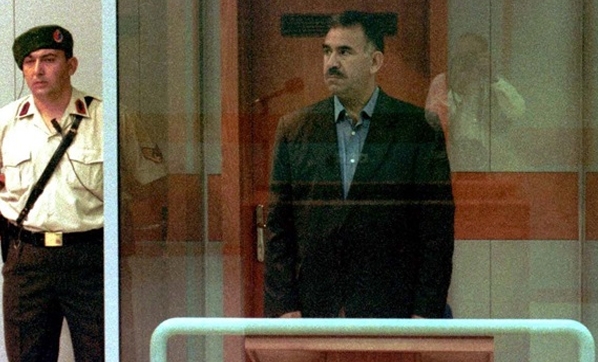
  • Öcalan will be allowed to meet with family member, journalist says

    Öcalan will be allowed to meet with family member, journalist says

    The “isolation” of Öcalan, who has been jailed in a high-security prison on İmralı Island in the Sea of Marmara since 1999, refers to his inability to speak with his lawyers for years.

    Selvi’s claim, based on rumors, came after police prevented a march to protest Öcalan’s isolation over the weekend, detaining 70 protestors in İstanbul and 19 in northwestern Bursa province, as they sought to gather in the Gemlik district of Bursa, a harbor town from where boats sail to İmralı Island.

    Referring to the person who is to meet with Öcalan, Selvi said: “It may be his brother Mehmet Öcalan. [His nephew] Ömer Öcalan, who is still the HDP’s lawmaker for Şanlıurfa, may also go to İmralı.”

    “I don’t know whether Öcalan’s meeting [with a family member] will be a one-time thing or will continue to be held regularly,” the journalist said, adding that the important thing, in his opinion, was whether Öcalan would send a message to the outlawed PKK or the HDP via the meeting.

    Saying that claims about a possible meeting between Öcalan and a family member could spark discussions on whether the ruling Justice and Development Party (AKP) was to launch a new settlement process, Selvi insisted that this wasn’t the case and that “providing Öcalan with the opportunity to meet someone again meant nothing but an attempt to eliminate tension.”

    The settlement process, which refers to talks between the AKP government and the leadership of the PKK to resolve the Kurdish issue, began in 2012 and ended after two police officers were executed in southeastern Şanlıurfa province in June 2015.

    Selvi also said that he didn’t think it was right to have had Osman Öcalan, brother of Abdullah Öcalan, appear on public broadcaster TRT seeking support for the ruling AKP ahead of a critical vote in İstanbul in June 2019.

    TRT’s Kurdish TV station, TRT Kurdi, broadcast an interview with Osman Öcalan, who commented on a letter from Abdullah Öcalan calling on the HDP, whose supporters would play a crucial role in determining the winner, to remain impartial in a repeat mayoral election in İstanbul.

    Despite the PKK leader’s call, the HDP, the country’s second-largest opposition party, in 2019 sat out the mayoral races in big cities as part of its political strategy in Turkey’s west and urged its supporters to cast strategic votes for the Nation Alliance, consisting of several opposition parties including the main opposition Republican People’s Party (CHP).

    Partly due to the support of Kurdish voters, the CHP was able to defeat the governing AKP in a number of major cities, including Ankara and İstanbul, during the 2019 local elections.

    The PKK leader, who was jailed for treason after Turkey removed the death penalty, has been barred from meeting with his legal representatives since 2011 with one exception, and has had only limited family visits since the collapse of the settlement process in 2015.

    On March 25, 2021 he was allowed a phone call with Mehmet Öcalan, following rumors that he had died in prison. The PKK leader had previously spoken with his brother on April 27, 2020, according to his representatives at the Asrın Law Office. The lawyers said they last spoke with their client on Aug. 7, 2019.

    TurkishMinute
  • Independent journalists in Turkey increasingly worried for their financial security: report

    The report said many newspapers in Turkey, which are faced with falling revenues and increased paper and other costs as the Turkish lira has fallen almost 50 percent against the US dollar over the past year, are struggling to survive.

    Anti-government media are more vulnerable to the economic crisis than pro-government outlets, the report said, adding that it is because government organizations advertise almost exclusively in pro-government outlets, and those critical of the Justice and Development Party (AKP) government, such as Fox TV News, Tele 1 and Halk TV, are repeatedly fined by the Radio and Television Supreme Council (RTÜK), the country’s broadcasting watchdog.

    “… These fines amounted to nearly $2m in 2021, leaving independent media outlets in an even more difficult position,” the report added.

    Political censorship places additional pressures on independent media, according to the report, with online news outlets continuing to be occasionally blocked or asked to remove content deemed inappropriate or offensive, such as stories about abuses of government contracts and the impact of increasing inflation.

    “Further, prominent independent journalists are constantly detained or face lawsuits for reporting on issues not approved by the government. … Even more concerning is the increasing physical violence against journalists. Several journalists were physically attacked because of their reporting. In February, the owner of a local newspaper which reported on local corruption was murdered in his office,” the report said.

    It further underlined that international news outlets in Turkey had also come under increasing political pressure within the past year, with RTÜK requiring the Turkish services of Euronews, Deutsche Welle and Voice of America to obtain broadcasting licenses for their websites and Euronews removing video content from its website to avoid the need for a license, while DW and VoA’s appeals are due to be decided in court.

    “Given all these attempts to affect citizens’ rights to access news in Turkey, it is unsurprising that only 23 percent of respondents think that media are independent of political influence,” the report said.

    News consumption via social media continues to grow in Turkey, a country with a population of 83 million and Internet penetration of 83 percent in total, and is important for independent media, according to the report, with Instagram and YouTube proving to be particularly useful for visual content and generating traffic for social and economic issues, such as women’s rights, which are largely ignored by the pro-government media.

    Among the most popular offline news sources in the country are Fox TV, critical of the ruling AKP; the opposition Sözcü daily; and the 24-hour news channel CNN Türk, the report said, adding that the pro-government A Haber news channel was at the bottom of the list.

    Fox TV News online, Sözcü online and Sondakika.com are the most used online sources, according to the report, which also said that only 36 percent of Turks trust the news overall and 44 percent say they trust the news sources they use.

    The Turkish government increased its crackdown on critical media outlets and journalists in the aftermath of a coup attempt in July 2016, following which dozens of journalists were jailed, while more than 200 media outlets were closed down under the pretext of an anti-coup fight.

    TurkishMinute

  • Saudi crown prince to visit Turkey on June 22: Turkish official

    Saudi crown prince to visit Turkey on June 22: Turkish official

    It is Prince Mohammed’s first visit to Turkey since the brutal killing of Khashoggi inside the Saudi consulate in İstanbul, which shocked the world and dealt a heavy blow to ties between the regional rivals.

    The details of the visit will be announced “over the weekend”, the official said.

    The two countries will sign several agreements during the trip, which is expected to be in the capital Ankara, but the location is yet to be confirmed, the official added.

    Turkish President Recep Tayyip Erdoğan had already paid a visit to Saudi Arabia in late April, where he met the prince before traveling to Mecca.

    The pair “reviewed the Saudi-Turkish relations and ways to develop them in all fields”, Saudi state news agency SPA said at the time.

    Saudi agents killed and dismembered Khashoggi, an insider turned critic, in the kingdom’s İstanbul consulate in October 2018. His remains have never been found.

    Erdoğan previously said the “highest levels” of the Saudi government ordered the killing and Turkey angered the Saudis by vigorously pursuing the case, opening an investigation and briefing international media about the lurid details of the murder.

    Turkey already had strained relations with Saudi Arabia because of its support to Qatar during the Riyadh-led blockade on the Gulf state but relations were frozen for three years after Khashoggi’s killing.

    Saudi Arabia responded at the time with an unofficial boycott of Turkish imports, putting pressure on Turkey’s economy.

    Now with high inflation and a cost-of-living crisis a year before a presidential election, Erdoğan is seeking backing from Gulf countries.

    TurkishMinute

  • Turkish authorities detain 10 for wearing scarves in Kurdish-flag colors at wedding

    Turkish authorities on Sunday detained 10 people during a wedding in Istanbul’s Esenyurt district for wearing traditional Kurdish scarves in the colors of the Kurdish flag, the Stockholm Center for Freedom reported, citing Turkish media.

    The groom, Mesut Karçık, and nine guests were detained for wearing yellow, red and green-colored scarves. They were also accused of singing Kurdish folk songs and spreading terrorist propaganda. The detainees were scheduled to appear in court on Wednesday.

    Yellow, red and green are colors of the Kurdish flag, which was first used in 1920 by people seeking an independent Kurdistan. The Turkish state strongly opposes the flag since sympathizers of the outlawed Kurdistan Workers’ Party (PKK) use it widely.

    Moreover, Turkey has prohibited use of the Kurdish language, clothing, folklore and names since 1937. After a military coup in 1980, speaking Kurdish was officially forbidden even in private life.

    Hüseyin Boğatekin, the detainees’ lawyer and a member of the Association for the Freedom of Lawyers (ÖHD), said his clients were only expressing their cultural heritage and were not part of any illegal organization.

    Boğatekin tweeted on Wednesday that the prosecutor was demanding his clients’ arrest.

    Kurds in Turkey are often pressured not to speak their native language. Authorities frequently claim that people speaking in Kurdish are actually chanting slogans in support of the PKK, which has been leading an armed insurgency against Turkey’s security forces since the ’80s in a campaign that has claimed the lives of some 40,000 people.

    TurkishMinute