Author: Zaman Australia

  • Disputed Russian grain ship moves away from Turkish coast

    The Zhibek Zholy moved at least 20 kilometers (12 miles) away from Turkey’s Black Sea port of Karasu before apparently switching off its transponder and disappearing from view, data on the marinetraffic.com website showed.

    Kyiv alleges that the 7,000-ton vessel had set off from Ukraine’s Kremlin-occupied port of Berdyansk after picking up confiscated wheat.

    But Russia claims to have “nationalized” Ukrainian state assets and to be buying crops from local farmers.

    NATO member Turkey has been trying to negotiate a solution that could preserve its good relations with both Moscow and Kyiv.

    Ukraine has demanded that Turkey impound the vessel and return the allegedly stolen wheat.

    The traffic monitor showed the ship moving across the Black Sea toward Russia.

    It was not immediately clear what had happened to the wheat.

    An unnamed crew member of the Zhibek Zholy told Russia’s TASS news agency that the crew intended to offload the grain to another ship so as “not to lose money.”

    TurkishMinute

  • 332,884 detained and 101,000 incarcerated due to Gülen links: interior minister

    In a statement during an event marking the coup attempt, Soylu said there were currently 19,252 people in prison for links to the movement. According to Soylu, operations against members of the movement will continue in the future.

    Turkish President Recep Tayyip Erdoğan has been targeting followers of the Gülen movement, a faith-based group inspired by Turkish cleric Fethullah Gülen, since the corruption investigations of December 17-25, 2013, which implicated then-prime minister Erdoğan, his family members and his inner circle.

    Dismissing the investigations as a Gülenist coup and conspiracy against his government, Erdoğan designated the movement as a terrorist organization and began to target its members. He intensified the crackdown on the movement following the coup attempt on July 15, 2016 that he accused Gülen of masterminding. Gülen and the movement strongly deny involvement in the abortive putsch or any terrorist activity.

    “We are continuing our fight against this organization in Turkey and in other countries, and searching for 24,000 fugitives,” Soylu said. “We have increased crackdowns on the movement by 175 percent in comparison to last year, and the number of people who were arrested has increased by 133 percent.”

    Throughout his speech, Soylu referred to the Gülen movement as FETÖ, a derogatory term used by the Turkish government.

    In addition to the thousands who were jailed, scores of other Gülen movement followers have had to flee Turkey to avoid the government crackdown.

    TurkishMinute

  • 3 journalists detained in Ankara for protesting arrest of 16 colleagues

    Journalists Sibel Yükler, Deniz Nazlım and Yıldız Tar were reportedly ill-treated and detained by police officers who on Tuesday intervened in a protest organized by the Broadcasting and Printer Workers Union (DİSK BASIN-İŞ), the Dicle Fırat Journalists’ Association (DFG) and Mezopotamya Women Journalists Platform in Ankara’s Ulus district.

    The other journalists, who were prevented by police officers from reading out a written statement condemning the arrest of their 16 colleagues, moved the protest to the Ankara office of DİSK BASIN-İŞ.

    Slamming the Justice and Development Party (AKP) government’s crackdown and police violence against Kurdish journalists, they said: “Let it be known that journalism is not a crime. Journalism has no nationality.”

    Turkish authorities arrested 16 journalists, including DFG co-chair Serdar Altan, Mezopotamya news agency (MA) Editor-in-Chief Aziz Oruç and JinNews News Director Safiye Alagaş, on June 16, after they had been detained in southeastern Diyarbakır province on June 8, in a move that sparked outrage among opposition politicians, press members and rights activists.

    Kurdish culture and language remain repressed in Turkey, with most pro-Kurdish and Kurdish language media outlets closed down and several journalists from Kurdish or pro-Kurdish outlets in prison on trumped-up terrorism charges.

    It is common for journalists in Turkey, which has a poor record on freedom of the press, to face threats, physical attacks and legal harassment due to their work.

    Rights groups routinely accuse the Turkish government of trying to keep the press under control by imprisoning journalists, eliminating media outlets, overseeing the purchase of media brands by pro-government conglomerates and using regulatory authorities to exert financial pressure, especially after President Recep Tayyip Erdoğan survived a failed coup in July 2016.

    Turkey, which is among the top jailers of journalists in the world, was ranked 149th among 180 countries in the Reporters Without Borders (RSF) 2022 World Press Freedom Index, released in early May.

    TurkishMinute

  • Demirtaş urges HDP to cooperate with opposition bloc for democracy

    The Kurdish leader made the call in a column for the T24 news website on Tuesday, underlining that if the HDP expects a “Kurdish initiative” from the other opposition parties, the party should also launch a “Turkish initiative” and “embrace the whole of Turkey with self-confidence, without allowing our victim identity to plunge us into the psychology of oppression or anger.”

    The “Kurdish initiative,” which was first announced by the Justice and Development Party (AKP) government in 2009, refers to the loosening of many restrictions on Kurds in Turkey to improve their rights and end the decades-long conflict between the outlawed Kurdistan Workers’ Party (PKK) and Turkish security forces.

    Demirtaş said all opposition parties should enter into a period of “change” and find new ways forward to stop the “terrible decay” in all areas of Turkey’s governmental system, which is due to the acts of “unbelievable unlawfulness and immorality” committed by the AKP and its ally, the far-right Nationalist Movement Party (MHP).

    Noting that the ruling AKP pursues politics based on perceptions rather than facts, especially during election periods, Demirtaş warned that even if the opposition produces strong and concrete projects and policies based on facts, it still can’t reach large masses without changing the perceptions created by the AKP.

    The opposition parties should work on common strategies to overcome this situation, the Kurdish leader said, adding that they would win the elections by taking at least 80 percent of the vote if they used a common language and the media, held joint activities, came up with joint projects to solve people’s problems and ultimately nominated a joint presidential candidate.

    “In today’s conditions, institutional cooperation between the Table of Six and the HDP-based opposition seems unlikely,” Demirtaş said, accusing the parties, including the HDP, of the inability to respond to perceptions produced by the AKP with “a bold move of change.”

    The “Table of Six” refers to the leaders of the main opposition Republican People’s Party (CHP), the Felicity Party (SP), the İYİ (Good) Party, the Future Party (GP), the Democrat Party (DP) and the Democracy and Progress Party (DEVA).

    CHP leader Kemal Kılıçdaroğlu, İYİ head Meral Akşener, SP leader Temel Karamollaoğlu, DEVA chairman Ali Babacan, GP chair and former prime minister Ahmet Davutoğlu and DP chair Gültekin Uysal in February signed a declaration confirming their resolve to introduce a “strengthened parliamentary system” should they unseat President Recep Tayyip Erdoğan in the 2023 elections.

    The leaders were criticized due to the fact that the pro-Kurdish HDP, the second-largest opposition party in parliament, was excluded from the declaration.

    The HDP also repeatedly criticized the CHP and its ally, İYİ, for their stance on Kurds’ rights and efforts to distance themselves from the pro-Kurdish party amid a crackdown on its members that accelerated after 2016.

    Turkey’s Constitutional Court in June 2021 accepted an indictment filed by a prosecutor seeking closure of the HDP and the imposition of a political ban on 451 party members as well as a freeze of the party’s bank accounts for alleged ties to the outlawed PKK.

    “As I said, change takes courage. Now is the time to show that courage and start the change through ourselves. Be assured, the rest will come. … Change must begin now so that it can continue after the election,” Demirtaş said.

    Arrested on Nov. 4, 2016 on terrorism-related charges, Demirtaş has since then remained in prison despite two European Court of Human Rights (ECtHR) rulings in 2018 and 2020 that said Demirtaş was imprisoned for “political” reasons and not for “legal” reasons, ordering his “immediate release.”

    TurkishMinute

  • NSW SES deals with 3,900 calls for help as wild weather, flooding hit Sydney

    The NSW State Emergency Service (SES) has responded to over 4,200 requests for help as heavy rain continues to pound Greater Sydney and its surrounds.

    The Hawkesbury, Nepean, Georges and Colo rivers have flooded due to the persistent rain.

    Most of the communities inundated are on Sydney’s south-western and north-western outskirts, but just before 7.30pm, the Bureau of Meteorology (BoM) warned major flooding was possible at the more suburban areas of Liverpool and Milperra tonight and tomorrow.

    About 9.30pm, the SES ordered people in parts of Chipping Norton, about 30km from Sydney’s CBD, to evacuate.

    While the east coast low which sparked the deluge has weakened, the BoM still recorded more than 120mm of rain between 9am and 6pm at Horsley Park, in the city’s south-western suburbs.

    SES Commissioner Carlene York said there had been an “enormous” demand for help with the organisation dealing with about 4,297 requests and 141 rescues taking place.

    With rain easing in some parts of Greater Sydney, Commissioner York warned “it’s still dangerous out there”.

    “It can change quite dramatically. Just because it’s not raining doesn’t mean the catchments aren’t filling up,” she said.

    Commissioner York said while it was still expected to rain in Sydney tomorrow, it would “not be in the amounts that have been seen over the last 72 hours”.

    Minister for Flood Recovery Steph Cooke warned Sydneysiders to be vigilant.

    “Sydney so far has missed out on the worst but it doesn’t mean it’s out of the woods yet. We still have broad warnings from just south of Nowra all the way up to just south of Newcastle at the moment,” Ms Cooke said.

    She said there had been 184 registrations at evacuation centres, with 68 people in emergency accommodation.

    BoM’s Jane Golding said rainfall was expected to be “very high” today across Sydney, the Illawarra, Blue Mountains and the Central Coast.

    “The weather shows signs it will ease tomorrow, but throughout today, expect more rain,” Ms Golding said.

    Premier Dominic Perrottet said he had requested 100 more Australian Defence Force officers, with 100 currently assisting rescues across north-west Sydney.

    Greater Sydney residents have been warned to avoid travel and check the SES website for evacuation orders.

    Camden resident of 42 years, Stephen Rae, said it had been “horrendous” weather this year.

    “The trouble with this flood now is the other flood filled everything up with water, even the groundwater is full, there’s nowhere for it to go,” Mr Rae said.

    “The house is damp, the pets are damp all the time [and] it’s very hard to keep things dry.”

    Windsor resident Tracey moved her animals to Blacktown when water began inundating her property.

    She said insurers had only recently been assessing damage in the area from the last flood, in March.

    “We’re so over it, four times in three months is a bit much for all of us,” she said.

    “A lot of us aren’t coping, there’s a lot of people in the area who are elderly with illness and stuff like that and basically we’re stuck, we’re stranded.”

    Today, the SES told people in low-lying areas near the Hawkesbury River downstream of Wisemans Ferry, north west of Sydney, to evacuate by 10am.

    Warragamba Dam, Sydney’s main water source, began spilling about 2am yesterday and, this morning, WaterNSW said “all major dams in the Sydney network continue to spill”.

    Some rivers have exceeded the major flood levels reached in March.

    Major flooding is continuing along the Nepean River at Menangle where river levels peaked at 16.61 metres on Sunday morning, exceeding the March flood peak of 15.92m, but below the April 2022 flood peak of 16.83m.

    The Hawksbury River at North Richmond peaked at 14.18m this morning, above the March peak of 14.08m and below the March 2021 level of 14.38m.

    A severe weather warning for heavy rainfall is current for the Metropolitan, Illawarra, parts of Hunter and Central Tablelands Forecast Districts.

    It’s the third time this year many of the areas being inundated, including parts of Sydney’s north-west and south-west, have flooded.

    The downpour became deadly yesterday when a man drowned in the Parramatta River at Abbotsford.

    SES deputy state commander Ashley Sullivan said people in Greater Sydney should “bunker down”.

    “This is a developing flood and severe weather situation and we do ask residents to really consider your movements over the next couple of days,” Mr Sullivan said.

    ABC
  • Turkey hikes minimum wage for second time this year

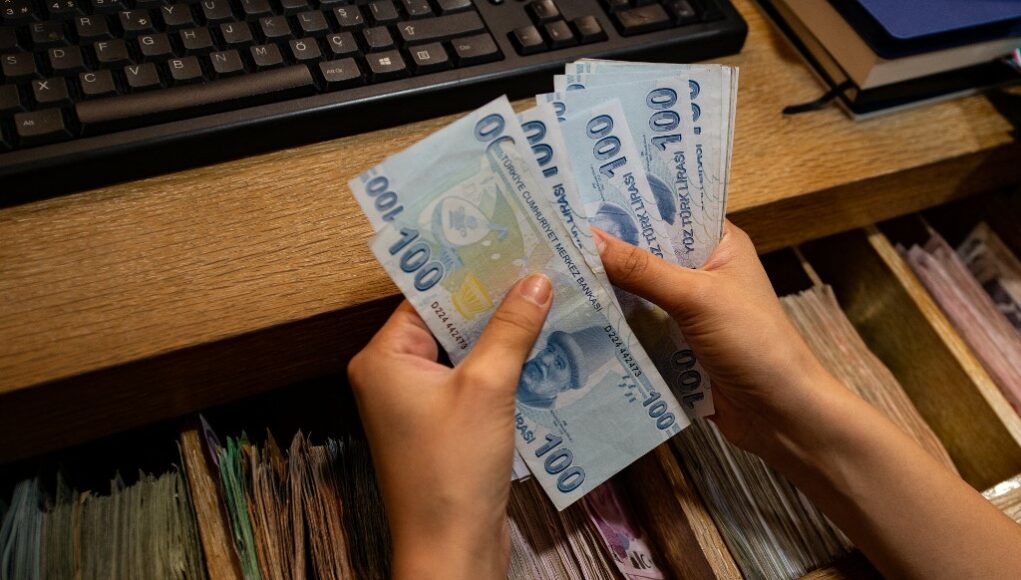
    Turkey hikes minimum wage for second time this year

    The hike in the net monthly take-home pay to 5,500 liras ($330) means the nominal minimum wage has nearly doubled since the end of last year.

    It stood at 2,826 liras in late December and 4,253 liras in January.

    But with an official annual inflation rate of 73.5 percent — even higher in big cities such as İstanbul — the increase for the most part only compensates for erosion in purchasing power already suffered by consumers.

    The Turkish currency has lost half its value against the dollar in the past 12 months, which has fuelled price rises on imported goods.

    Economists warn that substantially raising the pay of a large swathe of the population is an inflationary measure that should be accompanied by interest hikes or other means of limiting spending.

    But Turkish President Recep Tayyip Erdoğan rejects conventional economics and affirms that high interest rates cause prices to rise.

    Official data show that more than 40 percent of Turks earned the minimum wage at the start of the year.

    TurkishMinute

  • German Journalists Association calls on RTÜK to lift ban on Deutsche Welle

    Access to the Turkish editions of the two international news websites operating in the country was blocked on Thursday evening based on a demand from the country’s media watchdog, the Radio and Television Supreme Council (RTÜK).

    When readers went to access these websites on Thursday evening, they saw a notice saying that access to the websites had been blocked by the decision of an Ankara court.

    The two media outlets had refused to comply with an order from RTÜK in February to obtain broadcasting licenses, which they said would amount to censorship.

    “The ban on Deutsche Welle cannot be justified by anything other than the sheer arbitrariness of Erdogan’s autocracy,” DJV chairman Frank Überall said in a statement on Friday. “The people in Turkey should be able to continue to have access to independent and critical journalism like that offered by Welle,” he added.

    The DJV chairman also called on the German government to press Turkish authorities to have the ban lifted.

    “Deutsche Welle is Germany’s foreign broadcaster, after all. That puts the issue on Berlin,” he said.

    Deutsche Welle General Director General Peter Limbourg said his agency refused to apply for a Turkish license because it would harm independent broadcasting.

    “In our extensive correspondence, as well as in personal conversations with the head of the media monitoring agency, we explained why DW cannot apply for such a license,” Limbourg said in a statement.

    “For example, licensed media in Turkey is obliged to delete online content that RTUK considers inappropriate. This is unacceptable for an independent media organization,” he added.

    “DW will take legal action against the now imposed access ban.”

    Meanwhile, RTÜK also released a statement on Friday saying that an access ban had to be imposed on DW and VOA because they failed comply with an order to secure broadcasting licenses. The watchdog said the ban on these websites would be lifted if they applied for licenses, adding that RTÜK always supports freedom of the press, pluralism and independent journalism.

    RTÜK Chairman Ebubekir Şahin also said in a tweet on Friday that RTÜK is protecting the rights of legal media outlets against illegal media outlets in the country.

    The US State Department criticized the new rules when they first went into force in February, stressing that a “free media is essential to a robust democracy”.

    The new media regulation applies to foreign providers of Turkish audio and video content.

    On Friday the two news websites were inaccessible in Turkey without the use of VPN technology. Both shared instructions on their social media accounts about using VPN to access their content.

    The move by RTÜK has been described by media outlets as an attempt at censorship and at expansion of the Turkish government’s control over domestic media to foreign outlets, which are the only source of free and independent journalism for some people in Turkey, where the majority of the media is controlled by the government.

    Deutsche Welle and VOA challenged RTÜK’s move at the time and announced that they would appeal its decision and take legal action in court. As for Euronews, the news outlet removed the content that necessitated the license, hence was no longer required to get a broadcasting license, according to an announcement from a RTÜK member in April.

    In 2019 Turkey revised its media regulations to allow RTÜK to supervise online broadcasts. Since the new regulations went into effect, various streaming platforms including Netflix and Amazon Prime have applied for and received licenses.

    RTÜK is a controversial agency that is accused of contributing to increasing censorship in the country by imposing punitive and disproportionate sanctions on independent television and radio stations critical of the Turkish government.

    According to Reporters Without Borders (RSF), 90 percent of the national media in Turkey, which was ranked 149th among 180 countries in the RSF’s 2022 World Press Freedom Index, is owned by pro-government businessmen and toe the official line.

    TurkishMinute

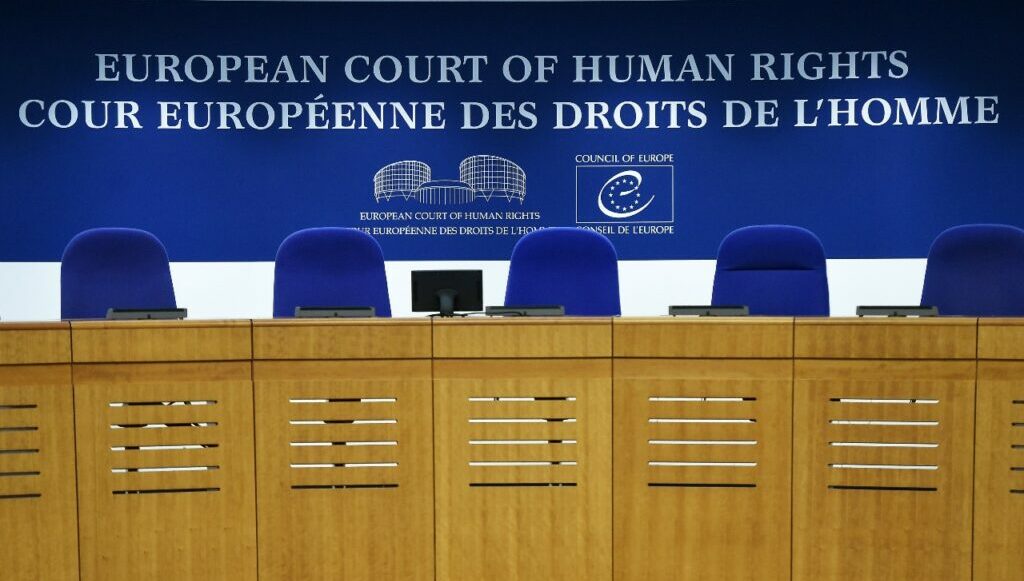
  • Turkey’s post-coup detention of judges and prosecutors lacked ‘reasonable suspicion’ : ECtHR

    Turkey’s post-coup detention of judges and prosecutors lacked ‘reasonable suspicion’ : ECtHR

    Responding to a complaint brought by 50 members of the Turkish judiciary who were detained after the failed putsch, the court said the grounds for their detention were “not of a nature” to constitute “reasonable suspicion” and ordered Ankara to pay 5,000 euros in damages to each applicant.

    They had been arrested as part of a mass crackdown on the Gülen movement, inspired by Turkish cleric Fethullah Gülen, whom the president blames for the coup bid. Gülen and the movement deny any involvement.

    The ruling is the latest by the Strasbourg-based ECtHR against Turkey, a member since 1950 of the Council of Europe, of which the court is a part. It said the detentions had violated the European Convention on Human Rights, which the court enforces, “on account of the lack of reasonable suspicion, at the time of the applicants’ initial pre-trial detention, that they had committed an offence.”

    Following the abortive putsch, the Turkish government declared a state of emergency and carried out a massive purge of state institutions under the pretext of an anti-coup fight. More than 130,000 public servants, including 4,156 judges and prosecutors, as well as 29,444 members of the armed forces, were summarily removed from their jobs for alleged membership in or relationships with “terrorist organizations” by emergency decree-laws subject to neither judicial nor parliamentary scrutiny.

    Dr. Gökhan Güneş, a human rights activist and an expert on international criminal law, tweeted that the ECtHR decision was “significant,” saying the court’s Tuesday decision was about the merits of the judges’ pretrial detention, unlike the prior decision, which was about the lawfulness of the procedure.

    “The Court notes from the information in the case files that the applicants’ initial pre-trial detention was based solely on the decisions taken by the HSYK [High Council of Judges and Prosecutors] or the 1st Presidency Board of the Court of Cassation for their suspension from office or the revocation of their authorities, and/or on information indicating their use of the ByLock messaging system. The Court has already found that neither of these grounds relied on by the domestic courts in ordering the applicants’ pre-trial detention was of a nature to constitute ‘reasonable suspicion’ within the meaning of Article 5 § 1 (c) in respect of the offence attributed to them,” the ECtHR said, referring to its previous rulings on the ByLock messaging app.

    ByLock, once widely available online, has been considered a secret tool of communication among supporters of the faith-based Gülen movement since the coup attempt on July 15, 2016 despite the lack of any evidence that ByLock messages were related to the abortive putsch.

    The ECtHR ruled in July 2021 in the case of former police officer Tekin Akgün that use of the ByLock application is not an offense in itself and does not constitute sufficient evidence for arrest. The Strasbourg court’s ruling came as a source of hope for thousands of people who were arrested or sentenced on terrorism charges based mainly on a National Intelligence Organization (MİT) report that detailed users of ByLock. However, detentions and arrests based on ByLock use continued unabated in Turkey.

    TurkishMinute

  • Swedish PM hails Turkey deal as ‘very important step’ for NATO

    Sweden’s Prime Minister Magdalena Andersson on Tuesday hailed a “very good agreement” with Turkey to back Swedish and Finnish membership in NATO and said the move would make the alliance stronger, Agence France-Presse reported.

    “Taking the next step toward a full NATO membership is of course important for Sweden and Finland. But it’s also a very important step for NATO, because our countries will be security providers within NATO,” Andersson told AFP in an interview.

    Andersson rejected claims that she had conceded too much to Turkish President Recep Tayyip Erdoğan in order to convince him to drop his veto to Stockholm’s membership.

    “I think this is an agreement that I can stand fully behind,” she said after lengthy talks in Madrid with Erdoğan and her Swedish counterpart.

    Andersson said she had been able to lay out to the Turkish leader changes in Sweden’s terrorism legislation set to come into force next month.

    “And of course, we will continue our fight against terrorism and as NATO members also do so with closer cooperation with Turkey,” the Swedish premier said.

    She insisted that Swedish authorities were working on extradition requests from Turkey in accordance with Swedish legislation and a European convention on extradition.

    Andersson said she expected NATO leaders meeting Wednesday in Madrid to formally agree to invite Sweden and Finland to join the alliance without any surprises.

    But she conceded that the process to become full members could take some time and throw up more hurdles.

    “Thirty countries have to sign the accession of course and all 30 parliaments and you never know what’s going to happen.”

    “But I also know that the member states in NATO see the fact that Sweden and Finland both increase the security for NATO as a whole if we were to become members.”

    TurkishMinute

  • Greece says stops over 1,000 migrants from Turkey

    Greek Merchant Navy Minister Yannis Plakiotakis said Turkish smugglers had “tried to disembark” about 1,130 refugees on Greek islands in the last three days.

    Greek authorities have “turned back the smuggling boats in 24 separate incidents,” the minister told private radio station Real in an interview.

    The boats had tried to reach the islands of Chios, Kos, Lesbos, Rhodes and Samos, Plakiotakis’ ministry said in a statement.

    Greek coastguards said none of the boats entered Greek waters and that “all foreigners were rescued by Turkish marine authorities”.

    The Greek coastguard respected international law while taking “all appropriate measures for the effective protection of the maritime borders of Greece and the European Union,” it added.

    Aid groups and media frequently accuse Athens of organizing “illegal pushbacks” of migrants, allegations that Greece denies.

    In May, Greece said it prevented around 600 migrants from crossing into its waters from Turkey.

    A Greek migration ministry source said nearly 30 percent more asylum seekers had tried to come to Greece in the first four months of 2022 than in the same period last year.

    “Turkey continues to behave like a pirate state violating international law and endangering the lives of unfortunate people,” Plakiotakis said, accusing Ankara of turning a blind eye to smuggling networks.