Author: Zaman Australia

  • Turkey ready to host four-way meeting on Ukrainian grain exports

    Millions of tons of wheat are currently stuck in Ukrainian ports, either blockaded or occupied by Russian forces, and vessels face the danger of mines.

    According to the Turkish foreign minister, the UN has submitted a plan to facilitate exports.

    Under the plan, safe corridors could be established without de-mining in the Black Sea for grain exports from Ukraine, he said.

    “If Russia answers positively, there will be a four-partite meeting in İstanbul,” Çavuşoğlu said.

    The UN Secretary-General’s spokesman Stephane Dujarric said Ankara had an important role in resolving the situation which has raised the prospect of worldwide food shortages.

    “We have been in very close contact and we are working in close cooperation with the Turkish authorities on this issue,” he said.

    “I think the role of the Turkish military will be critical in that regard.”

    Çavuşoğlu last week hosted his Russian counterpart Sergei Lavrov in Ankara to discuss the issue, but without conclusive results.

    Prior to the war, Ukraine was a major exporter of wheat, corn and sunflower oil, but shipments have been blocked since Russia invaded its neighbor in late February, causing food prices to soar worldwide.

    Countries in the Middle East and Africa depend on Ukraine’s exports.

    At the request of the UN, Turkey has offered its services to escort maritime convoys from Ukrainian ports, despite the presence of mines — some of which have been detected near the Turkish coast.

    After hosting talks between Russian and Ukrainian foreign ministers in March aimed at ending the war, the country has positioned itself as a neutral mediator as it maintains a delicate balancing act between its two Black Sea neighbors.

    TurkishMinute

  • Turkey wants written response from Finland, Sweden over NATO bid concerns

    Turkey said on Wednesday it was waiting for a “written response” from Sweden and Finland to Ankara’s objections to their NATO bids, Agence France-Presse reported.

    “We have transmitted our questions in writing to these two countries,” Turkey’s Foreign Minister Mevlüt Çavuşoğlu told reporters.

    “Now we’re waiting for their written responses,” he said.

    The two Nordic countries reversed decades of military non-alignment by applying for NATO membership in May, following Russia’s invasion of Ukraine.

    Any NATO membership deal must, however, be unanimously approved by all 30 members of the alliance, and Turkey has thrown a wrench in the works and blocked their bids.

    Ankara is accusing the Nordic neighbors of providing a safe haven for the outlawed Kurdistan Workers’ Party (PKK), listed as a terrorist group by Turkey and its Western allies.

    Turkey’s President Recep Tayyip Erdoğan told members of his party on Wednesday that “as long as Sweden and Finland don’t adopt concrete measures on the fight against terrorism, our position will not change.”

    NATO Secretary-General Jens Stoltenberg said Monday, during a visit to Sweden, that NATO was working “hard and actively” to resolve Turkey’s concerns “as soon as possible.”

    Finnish Prime Minister Sanna Marin acknowledged on Tuesday that the Nordic bids could stall if an agreement with Turkey is not reached before a summit later in June.

    TurkishMinute

  • Rally in Turkey as groups fight for women’s rights in court

    Hundreds of people rallied outside Turkey’s highest administrative court on Tuesday as it examines a case hoping to overturn the country’s withdrawal from an international treaty protecting women’s rights, Agence France-Presse reported.

    Feminist groups, human rights campaigners and representatives of bar associations across Turkey again called for the withdrawal from the Istanbul Convention to be scrapped.

    President Recep Tayyip Erdoğan pulled Turkey out of the Convention last year. Social conservatives in the country claim it promotes homosexuality and threatens traditional family values.

    There have been many legal attempts to cancel the withdrawal, and groups including political parties and NGOs have taken the case to Ankara’s Council of State.

    Outside, demonstrators shouted: “We don’t give up because we are right!” and “The Istanbul Convention gives life to women!” as they paraded purple banners, the color of the feminist movement in Turkey.

    “Turkey’s withdrawal from the Convention is contrary to basic human rights and democracy. We are telling the Council of State this today,” said Yelda Koçak, a lawyer and member of the Women’s Platform for Equality group.

    The Istanbul Convention requires countries to set up laws aimed at preventing and prosecuting violence against women.

    Campaigners believe the withdrawal has left women in Turkey more vulnerable to violence.

    The We Will Stop Femicide Platform said 166 women have been killed in Turkey so far this year, the majority by family members. There were 423 such killings last year.

    The Council of State hearing was still underway on Tuesday afternoon.

    TurkishMinute

  • AKP’s vote below 30 percent, majority of Turks against Erdoğan’s re-election: poll

    Support for Turkey’s ruling Justice and Development Party (AKP) has declined to 29.8 percent, while 55.6 percent of Turkish voters are against the re-election of President Recep Tayyip Erdoğan, local media reported on Wednesday, citing the results of a survey conducted by the Yöneylem Social Research Center.

    According to the poll, which was conducted on 2,700 voters in 27 provinces, 55.6 percent of participants said they would “never” vote for Erdoğan in a possible presidential election in June, while 31.9 said they would “definitely” vote for him and 10.4 percent said they may or may not vote for him.

    When asked “If the presidential election were to be held next Sunday, would you vote for Erdoğan or the opposition candidate?” 52.5 percent of participants answered they would support the opposition candidate.

    The survey also revealed that Erdoğan would be defeated by each of his two potential rivals — main opposition Republican People’s Party (CHP) Chairman Kemal Kılıçdaroğlu and the party’s İstanbul mayor, Ekrem İmamoğlu — in a possible presidential election in which one of them is running against the incumbent president.

    In the event that Erdoğan and Kılıçdaroğlu qualify for the second round of a presidential election, the CHP leader would receive 43.5 percent of the vote and Erdoğan would get 35.1 percent, according to the poll, which also showed that İmamoğlu would receive 49.4 percent against Erdoğan’s 34.5 percent in a similar scenario.

    When respondents were asked the open-ended question “Which party would you vote for in a general election this Sunday?” 29.8 percent said they would vote for the AKP, followed by the main opposition CHP (29.5 percent), the İYİ (Good) Party (13.2 percent), the pro-Kurdish Peoples’ Democratic Party (HDP) (10.3 percent), the Nationalist Movement Party (MHP) (6.9 percent), the Democracy and Progress Party (DEVA) (2.3 percent), the New Welfare Party (YRP) (2.3 percent), the Victory Party (ZP) (1.8 percent), the Felicity Party (SP) (1 percent), the Turkish Workers’ Party (TİP) (0.8 percent), the Future Party (GP) (0.2 percent) and other parties (1.9 percent).

    Sixty-two percent of participants answered in the affirmative when they were asked if they would want an early election to be held in November.

    In the last general election held in June 2018, the AKP garnered a nationwide vote of 42.6 percent. However, public surveys have increasingly been showing the party’s public support to be slipping.

    Erdoğan, whose ruling AKP has been in power as a single-party government since 2002, was elected president in 2014 and re-elected in 2018. His election in 2018 was under a presidential system as Turkey switched from a parliamentary to a presidential system of governance with a public referendum in 2017.

    Under the presidential system, Erdoğan is accused by critics of establishing one-man rule in the country, engaging in massive corruption and using the state’s resources for the benefit of his family and cronies while the Turkish people are overwhelmed by the increasing cost of living caused by the depreciation of the Turkish lira and a record level of inflation at around 73.5 percent, according to official figures.

    TurkishMinute

  • Turkish government is increasing pressure on dissident students: report

    On May 11 students at Istanbul’s Yıldız Technical University (YTÜ) protested against the rector for purchasing 12 Mercedes Benz cars on the university budget, leaving a cardboard model car in front of the rector’s office. Student Sümeyye Gülsüm Şen, who organized the protest, was subject to a disciplinary investigation and suspended for a month.

    Rector Nur Bekiroğlu denied the suspension on Twitter; however, Şen shared the notification she received from the university on June 8 on social media. “I had to share the document after the rector accused me of lying,” she said. “I will miss all my exams and will have to repeat this year.”

    Two students at Eskişehir Anadolu University, Egehan K. and Alpay A., were beaten and detained for attempting to unfurl a banner during their graduation ceremony on June 11. The students wanted to commemorate Ali Ismail Korkmaz, a 19-year-old university student who died of his injuries after being battered by police during the Gezi Park protests in July 2013. Korkmaz was a student at the university at the time of his death.

    Egehan K. said displaying a banner was not a crime and that their only aim was to commemorate Korkmaz. “We had no warning, they [security officers] just attacked us. They surrounded us so parents and other students couldn’t see what was going on. We were beaten and dragged away from the ceremony area,” he said. “We have hospital reports documenting our injuries, and we will file a complaint against the security officers.”

    Alpay A. said they were severely beaten although they did not resist. “We tried to calm the officers and save ourselves. But they just kept on hitting us. I was subjected to violence in front of my young nephews and family. It was a traumatic experience,” he said.

    Students protesting high housing prices across the country were detained in September 2021 in another instance of government pressure.

    Hundreds were taken into custody during the Boğaziçi University protests, a prolonged series of protests that broke out at the university in early 2021 after Turkey’s President Recep Tayyip Erdoğan appointed Melih Bulu, a founding member of the ruling Justice and Development Party’s (AKP) Sarıyer district branch and former deputy chairman of the AKP’s İstanbul provincial chapter, as rector.

    Two students, Berke Gök and Pelit Özen, were arrested in October 2021 and were kept in solitary confinement in İstanbul’s Metris Prison until January 2022 when they were released pending trial.

    In May 70 students were briefly detained for attending a Pride March. Moreover, dozens of students have been detained or arrested for links to the Gülen movement.

    The Turkish government accuses the faith-based Gülen movement of masterminding a coup attempt on July 15, 2016 and labels it a “terrorist organization,” although the movement strongly denies involvement in the coup attempt or any terrorist activity.

    TurkishMinute

  • Greece rejects UN pushbacks claim

    “The report… is not based on primary research but reproduces older findings by the (UN refugee agency), foreign media reports and the recommendations of non-governmental organizations,” a Greek migration ministry source said.

    The ministry source added that such claims are “already under investigation as to their validity” but insisted that past checks had so far “never confirmed illegal actions (by Greece) whilst guarding its borders.”

    “The Greek coastguard and Greek police on a daily basis save people whose life is at risk at sea and land borders,” the source added.

    The UN’s special rapporteur on the human rights of migrants, Felipe Gonzalez Morales, had earlier shared the report saying that “in Greece, pushbacks at land and sea borders have become de facto general policy.”

    “UNHCR has recorded almost 540 separate incidents during the period 2020–2021, 40 involving at least 17,000 people who were reportedly returned by force, informally, to Turkey,” said the report, which will be formally presented on June 23.

    “The Special Rapporteur concludes that pushbacks remain the de facto general policy in many states and continue to seriously impede the enjoyment of the human rights of migrants who cross international borders,” the report said.

    Greece routinely denies that its border forces engage in illegal pushbacks, despite repeated claims to the contrary by rights groups and asylum seekers.

    Rights groups have also repeatedly accused EU border agency Frontex of illegally returning migrants across EU borders.

    The Greek government last week declined to comment on the resignation of Frontex head Fabrice Leggeri in April amid an investigation by the European Anti-Fraud Office, reportedly into alleged mismanagement.

    “(Greece) has nothing to observe,” government spokesman Yannis Economou said Thursday.

    TurkishMinute

  • Dancing goalkeeper Andrew Redmayne sends Australia to World Cup

    Dancing goalkeeper Andrew Redmayne sends Australia to World Cup


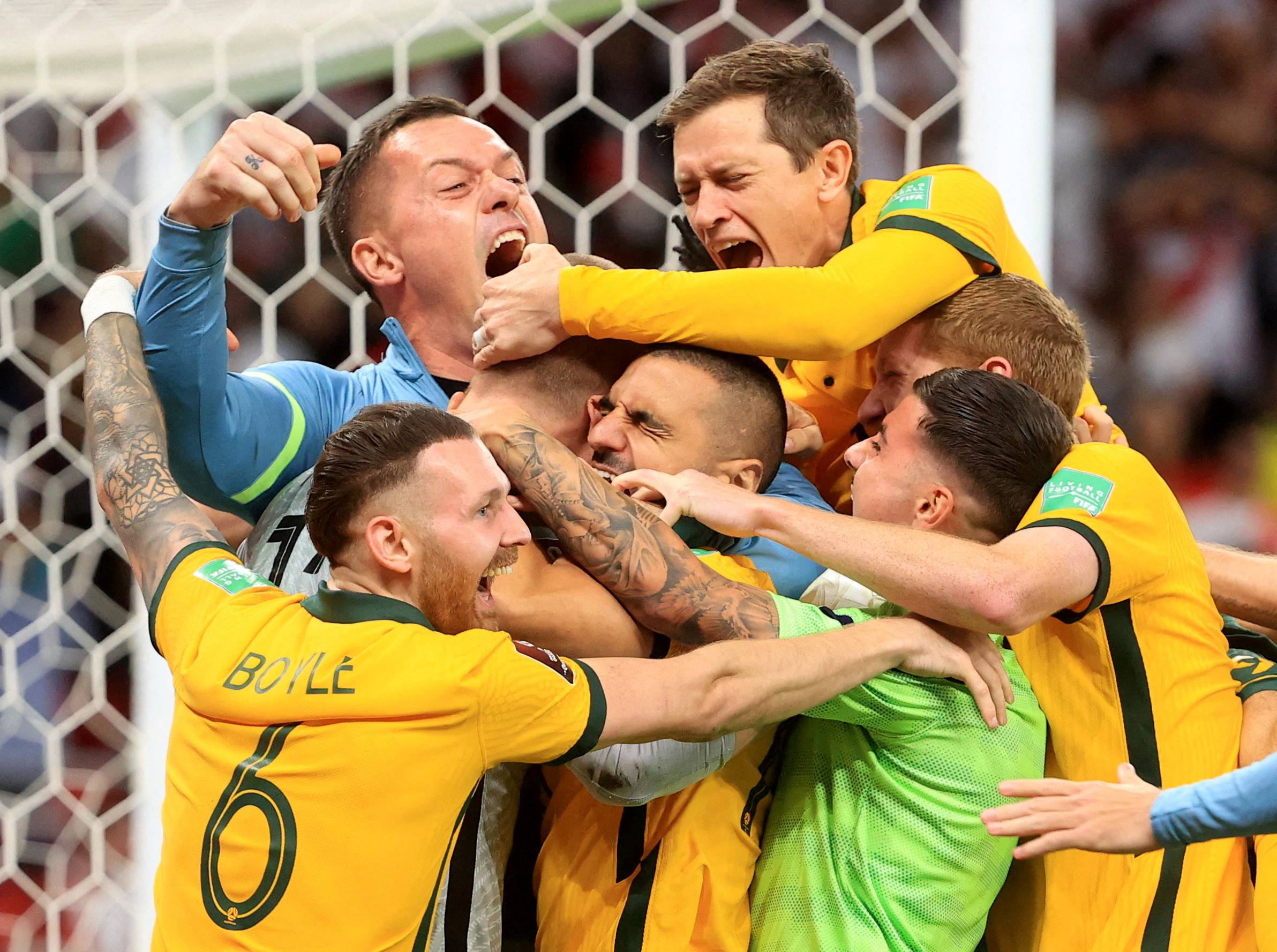
    Australia on Tuesday celebrated the antics of dancing goalkeeper Andrew Redmayne, whose penalty shootout save against Peru saw the Socceroos reach their fifth straight World Cup finals.

    The 33-year-old clowned his way along the goal line as Peru’s players prepared to take their penalty kicks, and his block of Alex Valera’s shot gave Australia a 5-4 win after the two sides had been deadlocked without a goal for 120 minutes.

    Australia coach Graham Arnold brought Redmayne on for team captain Mathew Ryan for the final minutes of extra time as a ploy for the shootout.

    Martin Boyle missed Australia’s first penalty but the next five were all on target.

    Redmayne danced and jigged along the line to unnerve the Peru players and Luis Advincula’s shot cannoned off a post. Redmayne’s save of Valera’s shot set off wild celebrations among the Socceroos and their band of a few hundred supporters.

    Arnold said that Ryan is a “fantastic goalkeeper” but Sydney FC’s Redmayne “is a good penalty saver and at that stage of the game I was just trying to do something that could affect them (Peru) mentally.”

    “Maybe that’s why they hit the post,” Arnold said. “They thought they had to put it closer to the post to score. It’s a risk but it worked.”

    Redmayne denied he was the hero of the night, saying his routine was “a little thing I do” for Sydney that has “proved quite successful.”

    “If I can gain 1% by making a fool of myself then I will,” he said.

    “I love this team, I love this country and I love this sport. I am under no illusions that all I did was to save one penalty.”

    Victory gave Australia the penultimate place available for the tournament that starts on Nov 21. They will play defending champion France in Group D one day later to start their sixth appearance at the World Cup in all.

    Peru, 22nd in FIFA’s list and a 2-0 victor over Australia 2-0 in the 2018 World Cup group stage, was roared on by 10,000 fans, most of whom had flown halfway round the globe for the playoff only to see a frustrating encounter between the rivals with few clear-cut chances.

    Arnold insisted that his whole team were heroes for getting through.

    “What we have been through in the last year and a half with the pandemic, not being able to get back into Australia, players getting COVID, not being able to get the best squad together a lot of the time.

    “I am so proud and happy for the players,” said Arnold.

    “The sacrifices they have made. No one thought they could do it, but they kept on believing.”

    Peru’s Argentine coach Ricardo Gareca said the whole side felt “enormous disappointment” at the way in which it was beaten but would not criticize Redmayne’s conduct on the line.

    “It hurts not to make it as we were doing well in the game,” added Gareca.

    Peru’s red-and-white army of supporters gave the conservative Gulf state a taste of what it can expect in November when some 1.4 million visitors are predicted to come to town. The team’s distinctive red and white shirts dominated the streets.

    For more than two hours the fans chanted “Come on Peruvians, tonight we must win.” Most of the team was left in tears of disbelief after the defeat.

    The final place for the tournament will be decided on Tuesday when Oceania champion New Zealand takes on Costa Rica, who reached the intercontinental phase out of the North and Central American qualifying contest.

  • First ever Aboriginal Supreme Court judge sworn in


    As a young man Lincoln Crowley may not have known if the Supreme Court of Queensland existed, but he understood what was fair and what was not.

    The Warramunga man has become Australia’s first Indigenous Supreme Court judge after being sworn in in Brisbane on Monday.

    Justice Crowley says he didn’t take any classes in legal studies at high school in Charters Towers in the 1980s.

    Nor did he spend much time thinking about the court he would sit on. In fact, he doesn’t think he even knew it existed.

    “But I knew what was fair and what was not,” the new judge told his swearing-in ceremony in Brisbane.

    “I knew it was not fair when I applied for a part-time job after school at a local shop and later found out that the manager threw my application in the bin, while saying: ‘They’re Aboriginal, aren’t they?’

    “And I knew it was not fair when teachers suggested that I wouldn’t amount to anything and when others judged me, and my worth, and potential without even knowing me.”

    Justice Crowley was inspired by his father, a retired army officer and one of the ADF’s first Indigenous majors.

    His dad encouraged his children to be educated, work hard and make something of themselves.

    Justice Crowley says he always resisted measuring himself with “someone else’s yardstick”.

    He was admitted to the bar in 2003 and worked with Aboriginal and Torres Strait Islanders Legal Service, and the NSW Crown Solicitors Office.

    Justice Crowley has been a Crown prosecutor for the Commonwealth Director of Public Prosecutions in Queensland.

    He was a private counsel for the NSW DPP, and served as Senior Council Assisting with the Disability Royal Commission.

    Bar association president Damien O’Brien QC said Justice Crowley is highly respected in the legal community, and especially by aspiring students.

    Mr O’Brien says for too long Indigenous Australians have lacked a voice within the legal system.

    The senior judiciary hasn’t reflected the import role of First Nations people as the custodians of the country, he said.

    “Your honour’s elevation to become the first First Nation superior court judge in this land is an important step in a much longer process to ensure that this historical role is rectified,” Mr O’Brien said.

    “I can tell you right now, the barristers of Queensland are extremely proud that you are one of our own.”

    Back when he was studying law, Justice Crowley distinctly remembers feeling he wouldn’t fit in in the legal profession, which seemed like an exclusive club at the time.

    “Times have changed, though,” he added

    His appoint as a judge comes 30 years after Margaret White became the first female supreme court judge in Queensland, and since the momentous Mabo land rights decision.

    Supreme Court Chief Justice Helen Bowskill says Justice White once said the qualities she admired most in judges were calmness, equitableness, moderation, wisdom and courtesy.

    “With the appointment of Justice Crowley, we add another person of such qualities to our bench and we reinforce the importance of equality before the law,” Justice Bowskill said.

    While he hopes one day that the appointment of an Indigenous judge isn’t remarkable, Justice Crowley said some have asked on social media why his “Aboriginality” is such a big deal today.

    “The answers to these questions are pretty obvious: diversity matters,” he said.

    He said the administration of justice was advanced by having judges who represented Australia’s diverse communities and their life experiences.

    He also hopes his appointment inspired other First Nations people to take up the legal profession.

    “I will strive to do justice in every case,” Justice Crowley said.

    “To my mind that is the most important objective in the law, and the one thing our community expects judges of this court will deliver.

    “In the end, justice is what it’s all about: always was, always will be.” Source: AAP
  • HDP lawmaker submits parliamentary question regarding detention of 21 journalists in SE Turkey

    Meral Danış Beştaş from the Peoples’ Democratic Party (HDP) on Thursday submitted a parliamentary question regarding the detention of 21 journalists in southeastern Diyarbakır province, the Stockholm Center for Freedom reported, citing the Bianet news website.

    Addressing the Ministry of Justice, Beştaş said there was a confidentiality order regarding the investigations and demanded to know why the journalists were detained.

    Turkish authorities detained 21 Kurdish journalists on Wednesday. The detainees worked for Kurdish news outlets JinNews and the Mezopotamya news agency (MA). Among those who were detained were MA’s Editor-in-Chief Aziz Oruç, JinNews News Director Safiye Alagaş and JinNews Editor-in-Chief Gülşen Koçuk.

    The journalists are currently in custody at Diyarbakır police headquarters’ counterterrorism division, where they are reportedly being kept in one-person cells.

    The journalists’ lawyer Resul Temur contacted the prosecutor to find out why they were detained and to see his clients. However, the prosecutor said the investigations were still underway and that he was reluctant to disclose the reason for the detentions. He only said the journalists were detained for their journalism activities and servicing news for foreign television stations.

    Opposition politicians, journalists and activists expressed outrage over the detentions, saying it was a huge blow to freedom of the press. At a press conference in eastern Turkey’s Van province, representatives for the Human Rights Foundation (IHD) said the journalists were punished for their journalistic work.

    “The police raided the homes and offices of these journalists as if they were terrorists,” they said. “They were made to wait in handcuffs for hours while the police conducted the searches.”

    They added that the independent press would never stop telling the public the truth. “Independent journalists will not give in to political pressure and violence,” they said.

    Journalists in southern Mersin province also said they would not give in to political pressure and supported their detained colleagues. At a press briefing they added that censorship had become common in Turkey but that they would cover the news with the utmost transparency.

    The Turkish Journalists’ Association (TGC) said the detention of journalists was unacceptable. “The government is trying to monopolize the press,” they said. “They want journalists to cover the news according to the government agenda. But a country where independent media does not exist cannot be democratic.”

    The TGC said the government urgently needed to stop referring to government critics as terrorists and their journalistic work as terrorism. Moreover, they demanded that all detained and arrested journalists be immediately released.

    Turkey is one of the world’s biggest jailers of professional journalists and was ranked 153rd among 180 countries in terms of press freedom in 2021, according to Reporters Without Borders (RSF).

    Turkish journalists are often targeted and jailed for their journalistic activities.

    TurkishMinute

  • Turkey’s security concerns are legitimate: Stoltenberg

    Security concerns raised by Turkey in its opposition to Finland and Sweden’s NATO membership applications are legitimate, NATO Secretary-General Jens Stoltenberg said on Sunday during a visit to Finland, Reuters reported.

    “These are legitimate concerns. This is about terrorism, it’s about weapons exports,” Stoltenberg told a joint news conference with Finnish President Sauli Niinisto while visiting him at his summer residence in Naantali, Finland.

    Sweden and Finland applied to join NATO last month in response to Russia’s invasion of Ukraine. But they have faced opposition from Turkey, which has accused them of supporting and harboring Kurdish militants and other groups it deems terrorists.

    Stoltenberg said Turkey was a key ally for the alliance due to its strategic location on the Black Sea between Europe and the Middle East and cited the support it has provided to Ukraine since Russia sent troops into its neighbor on Feb. 24. Moscow calls its actions a “special military operation.”

    “We have to remember and understand that no NATO ally has suffered more terrorist attacks than Turkiye,” Stoltenberg said, using the Turkish pronunciation of the country’s name, as preferred by Turkey and its President Recep Tayyip Erdoğan.

    Stoltenberg and Niinisto said talks with Turkey would continue but gave no indication of progress in the negotiations.

    “The summit in Madrid was never a deadline,” Stoltenberg said, referring to a NATO meeting in Madrid at the end of June.