Author: Zaman Australia

  • Erdoğan’s neo-nationalist ally to meet with Assad to discuss terrorism, Syrian refugees

    Erdoğan’s neo-nationalist ally to meet with Assad to discuss terrorism, Syrian refugees

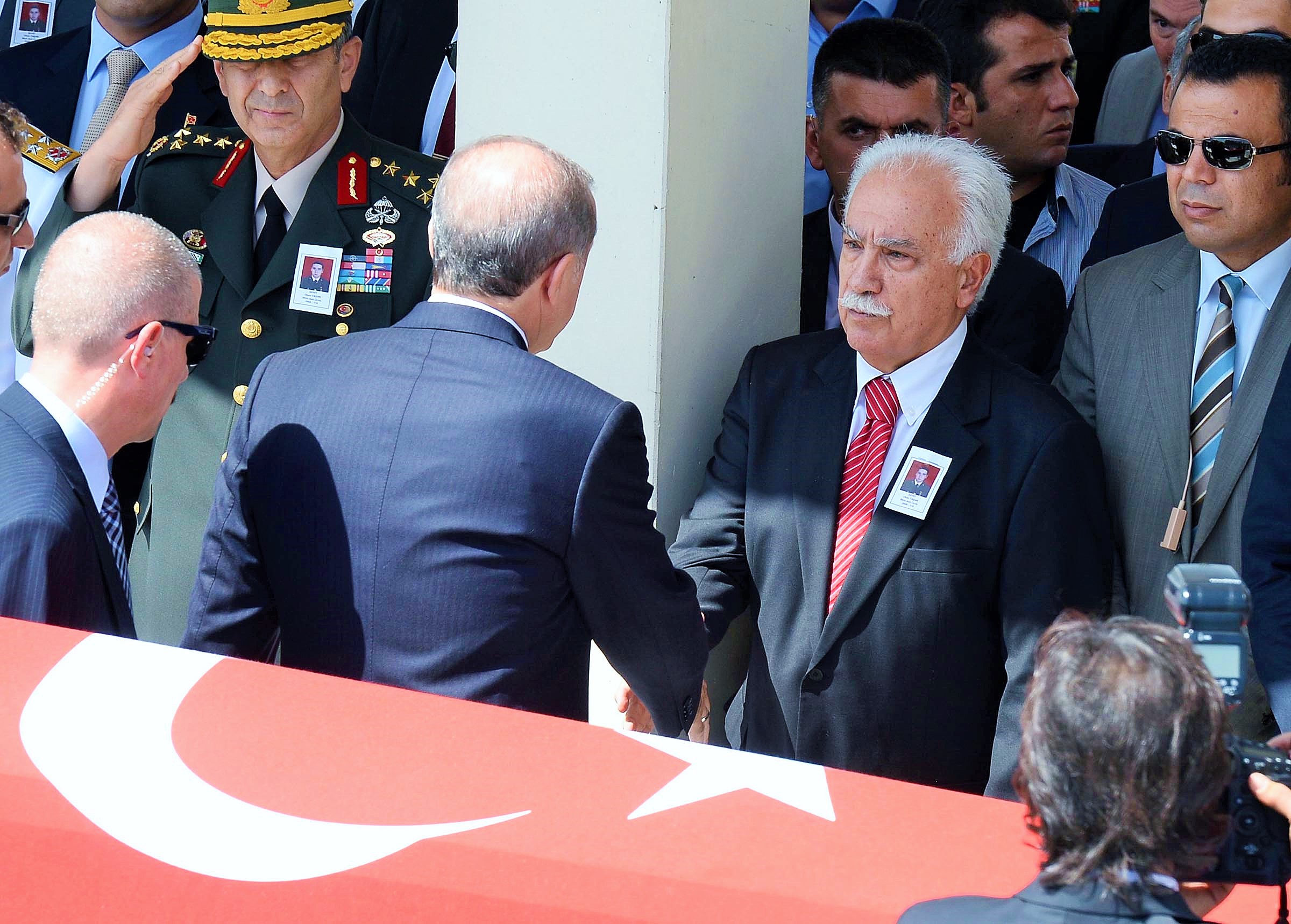
    Doğu Perinçek, the founder and chairman of the neo-nationalist Homeland Party (VP) and an ally of Turkish President Recep Tayyip Erdoğan, has said he will travel to Syria with a delegation to meet with Syrian President Bashar Al-Assad and discuss the issues of terrorism and the safe return of Syrian refugees in Turkey.


    “Ending terrorism [in Syria] and the safe return of [Syrian refugees] in Turkey is what is essential. Syria is forgiving them, anyway. We will ensure their full safety. They will easily go back to their jobs. … Also, ending the Kurdistan Workers’ Party [PKK] requires cooperation with Syria,” Perinçek said.

    Turkey is today home to more than 3.6 million Syrian refugees, who fled after a civil war broke out in 2011 in Turkey’s southern neighbor.

    Designated as a terrorist group by Ankara and much of the international community, the outlawed PKK has been waging an insurgency against the Turkish state since 1984 that has claimed tens of thousands of lives.

    When asked if the Syrian regime had invited him, Perinçek said they had been inviting them for the past seven or eight months, adding that Ethem Sancak, the owner of Turkey’s largest commercial and military vehicle manufacturer BMC and a strong supporter of Erdoğan who joined the VP earlier this month, would be part of the delegation that would also include individuals outside the party, possibly journalists.

    The neo-nationalist leader also said the Turkish government was informed about their planned visit to Damascus and that Ankara didn’t give them any warnings not to go there since they, too, had entered into a positive process with the Syrian regime following the Sochi talks between Erdoğan and his Russian counterpart, Vladimir Putin, in early August.

    Referring to the Turkish-backed Syrian fighters in the region, Perinçek said Turkey was wrong to support them since they serve as the “shackles on Turkey’s feet” and prevent Ankara from taking “permanent and radical steps.”
  • Judicial council disbars Turkish prosecutor arrested on drug-trafficking charges

    Turkish public prosecutor Osman Yarbaş, who was arrested last month on drug-trafficking charges, has been disbarred by the country’s top judicial council, local media reported on Friday.

    Following an operation carried out by the Konya Police Department on a network trafficking drugs from Turkey’s southern Adana province to the central Anatolian city of Konya, the police identified Yarbaş as the person running the network through evidence obtained from the phone of a courier, who was also a police officer.

    According to a previous report by the NTV news website, the police retrieved WhatsApp messages on the courier’s phone and found that Yarbaş, a public prosecutor overseeing the Adana Chief Public Prosecutor’s Office Terrorism Crimes Investigation Bureau, had given instructions to him about a shipment of drugs.

    After he was suspended on May 11 by the Council of Judges and Prosecutors (HSK), which also assigned an inspector to investigate his conduct, Yarbaş was arrested on drug-trafficking charges in June.

    Turkish media reports said on Friday the HSK had disbarred the public prosecutor.

    After a 2016 coup attempt, Turkish President Recep Tayyip Erdoğan’s government dismissed 4,156 judges and prosecutors, nearly a third of the total number at the time, which was followed by the mass recruitment of replacements.

    Yarbaş was hired as a prosecutor in 2017, after the post-coup purge targeting the judiciary resulted in a shortage of staff.

    According to a report by Italian judge Luca Perilli, as of December 2019, at least 45 percent of Turkey’s roughly 21,000 judges and prosecutors had three years of experience or less.

    Hakkı Köylü, a lawmaker from Erdoğan’s Justice and Development Party (AKP), acknowledged to Reuters in 2020 that some judges and prosecutors “have been appointed without adequate training.”

    Critics accuse Erdoğan of recruiting pro-AKP lawyers as judges and prosecutors. On top of that, the mass disbarment of members of the judiciary is believed by many to have had a chilling effect on the entire justice system, intimidating the remaining judges and prosecutors into doing the government’s bidding by launching politically motivated investigations into critics.

  • AKAM poll shows main opposition party leaving ruling AKP behind

    Turkish President Recep Tayyip Erdoğan’s ruling Justice and Development Party (AKP) would have been left behind by the country’s main opposition Republican People’s Party (CHP) if a general election were to have been held in August, according to a survey conducted by the Eurasia Public Research Center (AKAM).

    The results of the survey, which is based on face-to-face interviews carried out between July 30 and Aug. 8 on 2,410 people in 26 provinces, were reported Friday by local media.

    When asked “Which political party would you vote for if an early election were to be held?” 29.9 percent of respondents said they would vote for the main opposition CHP, while 28.5 percent said they would support the ruling AKP, with undecided voters distributed among the parties.

    While the İYİ (Good) Party, an ally of the CHP, would have stood at 13.3 percent in total in an August election, the AKP’s ally, the far-right Nationalist Movement Party (MHP), and the pro-Kurdish Peoples’ Democratic Party (HDP) would have received 7.1 and 10.5 percent of the vote, respectively.

    The poll results further showed that of the smaller parties, the Democracy and Progress Party (DEVA) would have garnered 5.1 percent, followed by the Victory Party (ZP) (1.3 percent), the Future Party (GP) (1.2 percent) and the Felicity Party (SP) (1.2 percent), with other parties receiving 1.9 percent of the nationwide vote.

    In the last general election held in June 2018, the AKP garnered a nationwide vote of 42.6 percent. However, public surveys have increasingly been showing the party’s public support to be slipping.

    The ORC Research Company on Friday released a graph showing the changes in the ruling AKP’s nationwide support in the last year. According to the figures, the party continued to bleed voters, with its support declining from 33.4 percent to as little as 27.3 percent within a year.

    While the struggle to sway undecided voters continues between the AKP and the CHP, the Diken news website on Thursday cited members of the ruling party as saying that they would soon come back to the AKP, with the main opposition “resting on its [laurels].”

    An AKP lawmaker told Diken that the party’s vote had “recovered” compared to a few months ago as they started “reaping the rewards of being on the field.”

    Erdoğan, whose ruling AKP has been in power as a single-party government since 2002, was elected president in 2014 and reelected in 2018. His election in 2018 was under a presidential system as Turkey switched from a parliamentary to a presidential system of governance with a public referendum in 2017. Under the presidential system, Erdoğan is accused of establishing one-man rule, destroying the separation of powers and silencing dissent. Turkishminute

  • Lawyer for arrested Furkan Foundation leader says client under psychological pressure in prison

    Lawyer for arrested Furkan Foundation leader says client under psychological pressure in prison


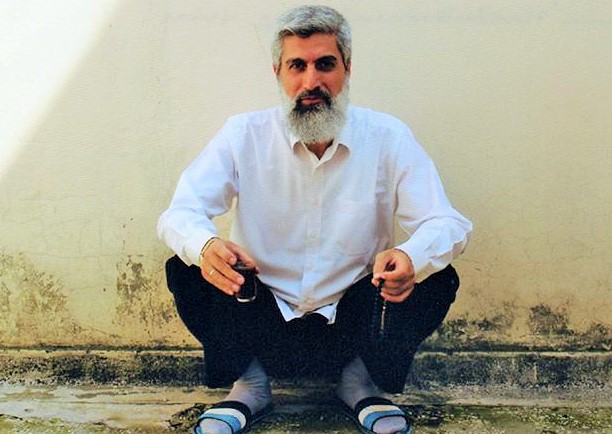
    The lawyer for Alparslan Kuytul, the arrested leader of the anti-government Furkan Foundation, said in a social media post that Kuytul was put under psychological pressure in prison, the Stockholm Center for Freedom reported.

    Lawyer Bilal İpek said Kuytul was kept in a one-person cell in a prison in eastern Ağrı province. According to İpek, the prison is located 900 kilometers from Kuytul’s hometown of Adana, making it difficult for his family to visit.

    There have been previous reports of inmates staying in one-person cells who have complained of mental health problems.

    “My client has been in a one-person cell for the past 90 days,” said İpek. “This on its own is mistreatment. Moreover, he has appealed several times to be transferred to a prison closer to his family; however, the general directorate of prisons and detention houses has rejected his appeals.”

    İpek said Kuytul’s telephone privileges were restricted and that he was only allowed to phone his family once every two weeks for 10 minutes. “Normally inmates are allowed to video call their families every week for 30 minutes, but my client has been denied this right,” said İpek.

    Kuytul is also reportedly not allowed to socialize with other inmates in the prison yard.

    İpek demanded that Kuytul be transferred to a regular cell where he will have cellmates. “We urge authorities to transfer him to a prison closer to Adana, where he can stay in a regular cell,” said İpek.

    The Furkan Foundation, a religious group, is known for its criticism of the Turkish government and for ardently advocating that religion and politics not mix.

    Kuytul was arrested in 2018 for criticizing Turkey’s military involvement in northern Syria. He publicly opposed the government’s decision to send Turkish soldiers to Afrin, after which he was detained along with 28 other people from the foundation.

    They were charged with “abusing their religious power” and “organizing a terrorist organization.” Kuytul was acquitted in 2020, but raids on members’ homes and offices in various cities have repeatedly taken place since then.

    Furkan Foundation members have been protesting the arrest of their founder and the pressure on their activities. In many cases police intervened in their protests with tear gas and used excessive force against the protestors.

  • Attacks on 4 Alevi institutions in Turkish capital ‘organized and planned,’ lawyer says


    Attacks targeting four Alevi houses of worship (cemevis) and associations in the Turkish capital of Ankara on Saturday were “organized and planned beforehand,” the Gazete Duvar news website reported on Sunday, citing a lawyer representing the institutions.

    According to Hüsniye Şimşek, the Türkmen Alevi Bektaşi Foundation’s headquarters in Çankaya was targeted around 1:30 p.m. and the Şah-ı Merdan cultural association in Mamak around 2:30 p.m., while the Ana Fatma Cemevi and the Gökçebel Village Association – both also in Mamak – were attacked simultaneously around 3:40 p.m.

    A woman sustained injuries from a knife at the Türkmen Alevi Bektaşi Foundation, local media reports said over the weekend, while plastic chairs were thrown at members of the Şah-ı Merdan cultural association.

    Although the police detained a suspect identified only by the initials A.O.K., accusing him of all the attacks in Ankara, others believe the incidents weren’t perpetrated by the same person.

    “The person caught on camera at the Ana Fatma Cemevi doesn’t fit the description of the [perpetrator of the attack on] the Türkmen Alevi Bektaşi Foundation, where the first attack took place. … The perpetrator of the first attack was said to be in his 20s, while the person who attacked the other institutions was [said to be] in his 30s,” Şimşek said, adding that they thought the incidents were “organized and planned beforehand.”

    Ana Fatma Cemevi President Mustafa Karabudak also said they thought the attacks were organized, underlining that there has to be someone who hired the attacker since there’s no logic to one person perpetrating all the attacks.

    Main opposition Republican People’s Party (CHP) Ankara deputy Gamze Taşcıer, who visited the Alevi associations and was briefed on the events, said there wasn’t a long time between the attacks, adding that if the attacks were carried out by the same person, the questions of how and by whom this person was provided transportation should be answered.

    “Nearly 10 hours elapsed between the first attack and the time he [the attacker] was caught. There is negligence here, but it’s the Interior Ministry that should investigate it,” Taşcıer also said.

    According to a 2020 report published by the Freedom of Belief Initiative, which listed data obtained from work monitoring religion or belief-based hate crimes that were committed in Turkey that year, Alevis were targeted in more than half of them.

    Alevis, who are estimated to account for 16.5 percent of Turkey’s population of 83 million, are the second-largest Islamic sect in Turkey, with Sunni Hanafi Islam the largest.

    There are long-standing tensions between the Alevi and Sunni communities in Turkey. During the Turkish republican era, hundreds of Alevis were killed in pogroms, which many now believe were masterminded by groups inside the state, in the cities of Çorum, Yozgat and Kahramanmaraş in the 1970s.

    Thirty-four Alevi intellectuals died in a fire in 1992 at the Madımak Hotel in Sivas. In other incidents, such as in İstanbul’s predominantly Alevi Gazi neighborhood in 1995, Alevis were targeted by individuals armed with machine guns.

    Turkey has long denied Alevi demands for state recognition, and cemevis are not officially recognized by the state as houses of worship, hence given no financial assistance.

  • Turkey’s top court upholds sentences given to 60 former cadets on coup charges

    Turkey’s top appeals court has upheld life sentences handed down to 60 former military cadets who were jailed in the aftermath of a failed coup in July 2016 and convicted on coup charges, according to a platform defending the rights of jailed military cadets.

    Three former female air force cadets — Nagihan Yavuz, Nimet Ecem Gönüllü and Şüheda Sena Öğütalan — are among the 60 whose sentences have been upheld. They were convicted in May 2018.

    The cadets have denied taking part in the coup attempt and said they were only acting on orders from their superiors, who told them there was a terrorist attack on the night of the attempted coup on July 15, 2016.

    Dozens of other military cadets who were sentenced to life on coup charges have been released in recent months for retrial after the Supreme Court of Appeals overturned their sentences. The cadets had been in jail for about six years. The top court’s latest decision on the 60 former cadets has come as a disappointment for those who were awaiting a similar ruling that would have made their release possible.

    “The life sentences given to our friends in the Orhanlı trial have been upheld by the Supreme Court of Appeals. Take the cadets into the midst of chaos, open fire on them, then give them life sentences. Damn your justice,” the military cadets committee tweeted on Wednesday.

    Orhanlı refers to the trial of military cadets over incidents that took place at the Orhanlı toll booths in the Tuzla neighborhood of İstanbul on the night of the coup attempt.

    Immediately after the abortive putsch, the Justice and Development Party (AKP) government along with President Recep Tayyip Erdoğan pinned the blame on the faith-based Gülen movement. The movement strongly denies any involvement.

    A documentary telling the stories of military cadets in Turkey, hundreds of whom were unjustly convicted due to their alleged involvement in the failed coup in 2016, premiered on YouTube several days before the sixth anniversary of the coup attempt this month, drawing more than 1 million viewers.

    Following the coup attempt, 16,409 military cadets were expelled from their academies by emergency decree-laws subject to neither judicial nor parliamentary scrutiny, and 355 of them were given life sentences, with some of them overturned by the Supreme Court of Appeals, according to figures revealed at the end of the video. As of July 2022, 209 cadets are still behind bars.

  • Professor, jailed for 6 years, given disciplinary punishment on day of release

    Professor, jailed for 6 years, given disciplinary punishment on day of release

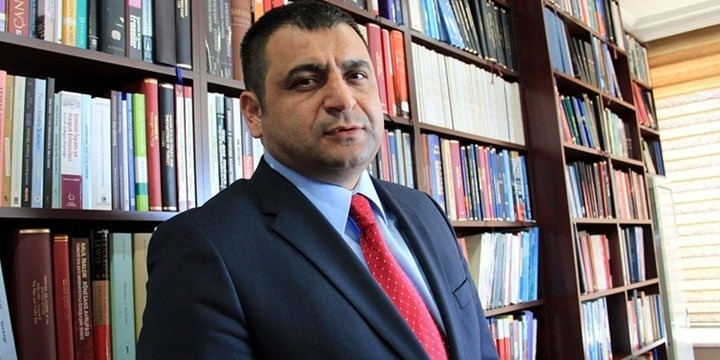
    A prominent Turkish professor who has been behind bars for six years on politically motivated charges has been forced to serve four more months in prison after he was given a disciplinary punishment on the day of his release, according to a journalist.

    In an article on his personal website, journalist Fehmi Koru talked about the plight of Professor Sedat Laçiner, an expert on international relations and the former rector of Çanakkale Onsekiz Mart University in western Turkey.

    Laçiner was detained on July 20, 2016, five days after a failed coup in Turkey, and arrested by a court on July 23, 2016 over alleged ties to the Gülen movement, which the Turkish government and President Recep Tayyip Erdoğan declared a terrorist organization following the abortive putsch.

    The movement denies all accusations of masterminding the coup attempt.

    In September 2018 he was sentenced to nine years, four months and 15 days in prison by a court in Çanakkale after his conviction of membership in the Gülen movement.

    According to Koru, Laçiner was given a disciplinary punishment due to an incident he was not involved in on the day he was to be released from jail and ordered to spend four more months in prison.

    Koru said he feels very sorry for the professor and his family and thinks it is nonsense to keep Laçiner in prison for four months when the grounds for his imprisonment were already not convincing.

    Laçiner studied at Ankara University and the University of Sheffield, where he was awarded an M.A. with distinction in international politics, and King’s College London, where he earned his Ph.D. Since 2001 he had been teaching international relations and international security at Çanakkale Onsekiz Mart University and the National Police Academy Security Studies Institute in Ankara. Professor Laçiner was appointed rector of Çanakkale Onsekiz Mart University in 2011, becoming the youngest rector in Turkey

    Laçiner was also the editor of the Journal of Administrative Studies and Review of International Law and Politics as well as a regular contributor to state-run TRT and other Turkish television and radio broadcasts. He was also chairman of the Journal of Turkish Weekly, a regular columnist for the Star newspaper and general coordinator of Ankara-based think tank the International Strategic Research Organization (ISRO).

    Laçiner is the author/co-author or editor of numerous books and articles, including “Iraq Global War and Turkey,” “The Iraq Crisis,” “Turks and Armenians,” “The World and Turkey,” “European Union with Turkey, Turkey’s Membership’s Impact on the EU,” “The Armenian Diaspora” and “Britain from a Different Perspective.”  turkishminut

  • 3 Austrian-Turks detained on suspicion of espionage released pending trial, says Austrian interior ministry

    3 Austrian-Turks detained on suspicion of espionage released pending trial, says Austrian interior ministry


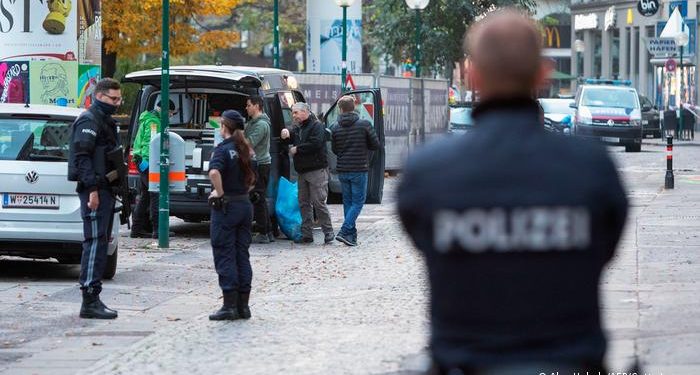
    The Austrian interior ministry has confirmed that three Austrian Turks were detained in June on suspicion of spying on dissidents for Turkey’s National Intelligence Organization (MİT) and were released pending trial after questioning, the Austrian news website Kurier reported on Thursday.

    The suspects reportedly provided information to Ankara on followers of Turkish Muslim cleric Fethullah Gülen.

    The Turkish government accuses the Gülen movement of masterminding a failed coup on July 15, 2016 and labels it a “terrorist organization,” although the movement strongly denies involvement in the coup attempt or any terrorist activity.

    According to Kurier’s report Austrian police on June 20 raided two houses and detained three people who reportedly gave information about 800 members of the Gülen movement to Turkish intelligence service MİT.

    On Thursday Interior Minister Gerhard Karner confirmed that charges had been filed against three Austrian nationals of Turkish origin on suspicion of espionage, Kurier said.

    According to Kurier, during searches of the suspects’s houses, numerous data carriers, cell phones and blank-firing guns were seized. The suspects were released after questioning.

    The Innsbruck public prosecutor’s office requested pretrial detention for the suspects; however, the court rejected the request. The prosecutor’s office appealed the decision, which is still pending review.

    The Austrian interior ministry views the case as a typical one of “foreign powers spying on opposition members and government opponents living abroad,” Kurier reported.

    Turkish President Recep Tayyip Erdoğan has been targeting followers of the Gülen movement since the corruption investigations of December 17-25, 2013, which implicated then-Prime Minister Erdoğan, his family members and his inner circle.

    Dismissing the investigations as a Gülenist coup and conspiracy against his government, Erdoğan designated the movement as a terrorist organization and began to target its members. He locked up thousands including many prosecutors, judges and police officers involved in the investigation as well as journalists who reported on them.

    Erdoğan intensified the crackdown on the movement following a coup attempt in 2016. In order to avoid the government-led crackdown, thousands of Gülen followers have fled Turkey and taken refuge in European and other countries.

    For years, Turkey has repeatedly urged the European governments to take action against Gülen supporters who sought asylum in the

  • Top court annuls aggravated life sentence given to ex-media executive, 3 others


    Turkey’s Supreme Court of Appeals has reversed aggravated life sentences handed down to four people including a former media executive on conviction of attempting to destroy the constitutional order due to their alleged links to the Gülen movement, Deutsche Welle Turkish service reported.

    The 3rd criminal chamber of the Supreme Court of Appeals has completed its review of appeals filed by the defendants including Hidayet Karaca, former chief executive of the now-defunct Samanyolu Media Group, as part of a case that was launched against 75 people accused of having links to the faith-based movement inspired by Muslim cleric Fethullah Gülen.

    The Turkish government labels the Gülen movement as a terrorist organization and accuses it of masterminding a failed coup in July 2016. The movement strongly denies involvement in the coup attempt or any terrorist activity.

    In June 2018 the Ankara 4th High Criminal Court handed down aggravated life sentences to Karaca; former lawmaker İlhan İşbilen; Fethullah Gülen’s cousin Kazım Avcı; and Alaeddin Kaya, former owner of the now-defunct Zaman newspaper, on charges of attempting to overturn the constitutional order.

    Their aggravated life sentences were upheld by a regional appeals court in November 2020. The defendants subsequently filed an appeal at the Supreme Court of Appeals.

    The Supreme Court of Appeals in a ruling dated June 28 decided to annul the aggravated life sentences given to the four suspects on the grounds that they were in jail at the time of the coup attempt and were not involved in it. Yet the top court suggested the maximum punishment for the defendants on charges of terrorist organization membership due to their links to the Gülen movement.

    The court also annulled the prison sentences given to the four defendants on charges of fraud and money laundering. Karaca and the other three defendants will be retried at the Ankara 4th High Criminal Court, where they will face charges of terrorist organization membership.

    Karaca has been held in the notorious Silivri Prison in İstanbul since Dec. 14, 2014. He has been given prison sentences of various lengths in several trials, which are seen as politically motivated due to his work at a Gülen-linked media outlet.

  • Turkey’s top court upholds sentences given to 60 former cadets on coup charges


    Turkey’s top appeals court has upheld life sentences handed down to 60 former military cadets who were jailed in the aftermath of a failed coup in July 2016 and convicted on coup charges, according to a platform defending the rights of jailed military cadets.

    Three former female air force cadets — Nagihan Yavuz, Nimet Ecem Gönüllü and Şüheda Sena Öğütalan — are among the 60 whose sentences have been upheld. They were convicted in May 2018.

    The cadets have denied taking part in the coup attempt and said they were only acting on orders from their superiors, who told them there was a terrorist attack on the night of the attempted coup on July 15, 2016.

    Dozens of other military cadets who were sentenced to life on coup charges have been released in recent months for retrial after the Supreme Court of Appeals overturned their sentences. The cadets had been in jail for about six years. The top court’s latest decision on the 60 former cadets has come as a disappointment for those who were awaiting a similar ruling that would have made their release possible.

    “The life sentences given to our friends in the Orhanlı trial have been upheld by the Supreme Court of Appeals. Take the cadets into the midst of chaos, open fire on them, then give them life sentences. Damn your justice,” the military cadets committee tweeted on Wednesday.

    Orhanlı refers to the trial of military cadets over incidents that took place at the Orhanlı toll booths in the Tuzla neighborhood of İstanbul on the night of the coup attempt.

    Immediately after the abortive putsch, the Justice and Development Party (AKP) government along with President Recep Tayyip Erdoğan pinned the blame on the faith-based Gülen movement. The movement strongly denies any involvement.

    A documentary telling the stories of military cadets in Turkey, hundreds of whom were unjustly convicted due to their alleged involvement in the failed coup in 2016, premiered on YouTube several days before the sixth anniversary of the coup attempt this month, drawing more than 1 million viewers.

    Following the coup attempt, 16,409 military cadets were expelled from their academies by emergency decree-laws subject to neither judicial nor parliamentary scrutiny, and 355 of them were given life sentences, with some of them overturned by the Supreme Court of Appeals, according to figures revealed at the end of the video. As of July 2022, 209 cadets are still behind bars.