Author: Zaman Australia

  • 7 university students among 35 detained over alleged Gülen links

    7 university students among 35 detained over alleged Gülen links

    Thirty-five people, including seven university students, were detained on Tuesday on warrants issued by Turkish prosecutors for alleged links to the Gülen movement, a faith-based group accused by the government of “terrorist” activities, the Stockholm Center for Freedom reported, citing local media.

    As part of an investigation launched by the İstanbul Chief Public Prosecutor’s Office, seven university students and two individuals who were accused of providing financial assistance to students were detained on Tuesday. Turkish police conducted operations in two provinces to detain the suspects.

    The same office issued detention warrants in a separate investigation for 18 suspects over alleged Gülen links. Police carried out operations in three provinces during which 16 of the suspects were detained.

    Turkish President Recep Tayyip Erdoğan has been targeting followers of the Gülen movement, inspired by Turkish Muslim cleric Fethullah Gülen, since the corruption investigations of December 17-25, 2013, which implicated then-prime minister Erdoğan, his family members and his inner circle.

    Dismissing the investigations as a Gülenist coup and conspiracy against his government, Erdoğan designated the movement as a terrorist organization and began to target its members. He intensified the crackdown on the movement following an abortive putsch in July 2016 that he accused Gülen of masterminding. Gülen and the movement strongly deny involvement in the coup attempt or any terrorist activity.

    In addition, the Ankara Chief Public Prosecutor’s Office issued detention warrants for 17 suspects, some of whom were accused of using ByLock, an encrypted messaging app used on smartphones that used to be available on Apple’s App Store and Google Play.

    The ByLock messaging app, once widely available online, is considered by the government to be a tool of secret communication among supporters of the movement. The UN Human Rights Council’s Working Group on Arbitrary Detention (WGAD) has repeatedly stated that arrest and conviction based on ByLock use in Turkey violated Articles 19, 21 and 22 of the International Covenant on Civil and Political Rights.

    Following the abortive putsch, the Turkish government declared a state of emergency and carried out a massive purge of state institutions under the pretext of an anti-coup fight. More than 130,000 public servants, including 4,156 judges and prosecutors, as well as 24,706 members of the armed forces, were summarily removed from their jobs for alleged membership in or relationships with “terrorist organizations” by emergency decree-laws subject to neither judicial nor parliamentary scrutiny.

    In addition to the thousands who were jailed, scores of other Gülen movement followers had to flee Turkey to avoid the government crackdown.

  • Turkish police detain 7 more people over financial aid to purge victims: journalist

    Turkish police have detained an additional seven people for providing financial support to people fired from their jobs on the pretext of an anti-coup purge following a failed putsch in 2016, Abdulhamit Bilici, a Turkish journalist in exile, claimed on his social media account.

    The detentions took place in the Central Anatolian province of Çorum, according to Bilici.

    The detainees are apparent followers of Turkish cleric Fethullah Gülen, who inspired a faith-based movement Turkey accuses of masterminding the 2016 coup attempt despite their strong denial of any involvement.

    Bilici shared an image of items confiscated by the police as pieces of evidence that include books, magazines, cash, computers, smartphones and videotapes of Gülen.

    A total of 219 people were jailed in a massive operation last week over accusations of either receiving financial assistance or distributing financial assistance sent by Gülen followers abroad to the families of people jailed over links to the Gülen movement or removed from the civil service for the same reason.

    The Turkish government has been cracking down for more than six years on the real and assumed members of the Gülen movement, which it designated as a terrorist organization. The government’s crackdown on the movement intensified following the coup attempt in 2016. The Gülen movement strongly denies any involvement in the abortive putsch or any terrorist activity.

    The mass detention of so many people for distributing or receiving donations has attracted widespread criticism from politicians and human rights activists from within and without Turkey.

    Following the coup attempt, the Turkish government declared a state of emergency and carried out a massive purge of state institutions under the pretext of an anti-coup fight. More than 130,000 public servants, including 4,156 judges and prosecutors, as well as 29,444 members of the armed forces, were summarily removed from their jobs for alleged membership in or relationships with “terrorist organizations” by emergency decree-laws subject to neither judicial nor parliamentary scrutiny.

    Victims of Turkey’s post-coup crackdown say they and their families experience severe financial and psychological problems due to what they call hate speech employed by the government and its supporters against them, which prevents them from leading normal lives, finding jobs and supporting their families.

  • Turkey’s top court rejects application from abducted teacher’s wife

    Turkey’s top court rejects application from abducted teacher’s wife

    Turkey’s Constitutional Court has found inadmissible an individual application filed by the wife of a teacher who was the alleged victim of an enforced disappearance in Ankara in 2019, the Bold Medya news website reported.

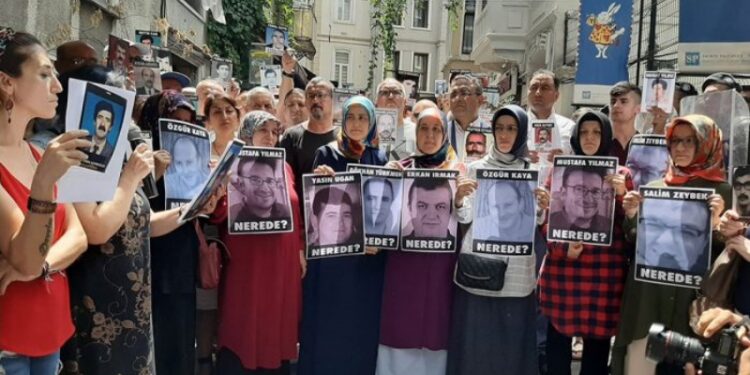
    The court’s decision concerns Özgür Kaya, who was reportedly abducted in Ankara on Feb. 13, 2019 along with three others by a group of police officers.

    The men disappeared after they were purged from their state jobs due to their alleged links to the Gülen movement, accused by the Turkish government of masterminding a failed coup in 2016 and subjected to a harsh crackdown for years. The movement strongly denies any involvement in the failed putsch.

    Their families were able to receive news on their whereabouts only five months later in July 2019, when they suddenly appeared at the Ankara Police Station.

    Kaya’s wife, Aycan Kaya, who waged a campaign along with the families of the other victims of the alleged enforced disappearances, filed a petition at the Constitutional Court claiming that her husband’s “right to [live a normal] life” was violated along with a constitutional article that prohibits torture and ill-treatment.

    However, the court rejected her application on the grounds that she withdrew her application at the European Court of Human Rights regarding the disappearance of her husband.

    Following his reappearance, Özgür Kaya, who lost around 20 kilograms and showed signs of having been subjected to torture or ill-treatment, said in his police testimony that he was not abducted or subjected to torture and that he was in hiding of his own free will.

    Kaya also told his wife, whom he saw at the police station for 30 minutes, to withdraw the complaints she had filed regarding his disappearance and not to meet with any lawmakers regarding his situation. The woman withdrew her application at the European Court of Human Rights.

    The top court’s decision came in disregard of a report drafted by the Ankara Bar Association about the seven people who were allegedly kidnapped in 2019 by Turkish authorities as well as a criminal complaint filed by the bar against government officials regarding the disappearance of the seven people.

    Out of the seven people who went missing in 2019, a former civil servant, Yusuf Bilge Tunç, still has not been found.

    Among the other six, four of them including Kaya were released pending trial at an Ankara court, where they said they were not abducted or subjected to torture. The other two men, who said they were abducted and subjected to acts of torture during their disappearance, were given lengthy jail sentences.

    Dozens of people have reportedly been abducted by Turkey’s intelligence agency in a massive post-coup crackdown targeting Gülen movement followers in the aftermath of the coup attempt on July 15, 2016.

  • Jailed media executive’s son kept in custody for 3 days for receiving donation from Gülen followers

    Jailed media executive’s son kept in custody for 3 days for receiving donation from Gülen followers

    The son of a media executive who has been jailed since 2014 was held in police custody for three days after he was detained in an operation targeting more than 700 people allegedly affiliated with a faith-based group, the Kronos news website reported.

    Sıdkı Karaca, a 26-year-old lawyer and the son of Hidayet Karaca, the former chief executive of the Samanyolu Media Group, was among the more than 650 people detained in a massive operation targeting alleged followers of the Gülen movement for accepting assistance from other Gülen followers or for distributing donations from Gülen members overseas to the families of people jailed by the Turkish government or purged from their jobs over links to the movement.

    The Turkish government has been cracking down on the real and assumed followers of the Gülen movement for more than six years. The government’s crackdown on the movement intensified following a coup attempt in 2016 because it accuses the movement of masterminding the failed coup and terrorism. The Gülen movement strongly denies any involvement in the abortive putsch or any terrorist activity.

    Hidayet Karaca was arrested two years before the coup and was sentenced by an İstanbul court to 18 years’ imprisonment over the scenario of a TV series that was broadcast by Samanyolu TV. Karaca was convicted on charges of leading a terrorist organization for his alleged ties to the Gülen movement and for allegedly slandering the al-Qaeda-affiliated radical Islamist group Tahşiyeciler.

    The mass detention of so many people for distributing or receiving donations has attracted widespread criticism from politicians and human rights activists from within and without Turkey.

    The pro-government Sabah daily targeted Sıdkı Karaca on Sunday, publishing secretly taken photos showing him in a shopping center in İstanbul where he allegedly received money from a Gülen follower. Sıdkı Karaca was reportedly released from police detention following his interrogation on Friday.

    At least 50 of the people detained in the operation last week have been arrested, according to media reports, although the exact number of arrestees is not yet known.

    Following the coup attempt, the Turkish government declared a state of emergency and carried out a massive purge of state institutions under the pretext of an anti-coup fight. More than 130,000 public servants, including 4,156 judges and prosecutors, as well as 29,444 members of the armed forces were summarily removed from their jobs for alleged membership in or relationships with “terrorist organizations” by emergency decree-laws subject to neither judicial nor parliamentary scrutiny.

    Victims of Turkey’s post-coup crackdown say they and their families experience severe financial and psychological problems due to what they call hate speech employed by the government and its supporters against them, which prevents them from leading normal lives, finding jobs and supporting their families.turkishminute

  • Turkey has deported hundreds of refugees to Syria: HRW

    Turkey has deported hundreds of refugees to Syria: HRW

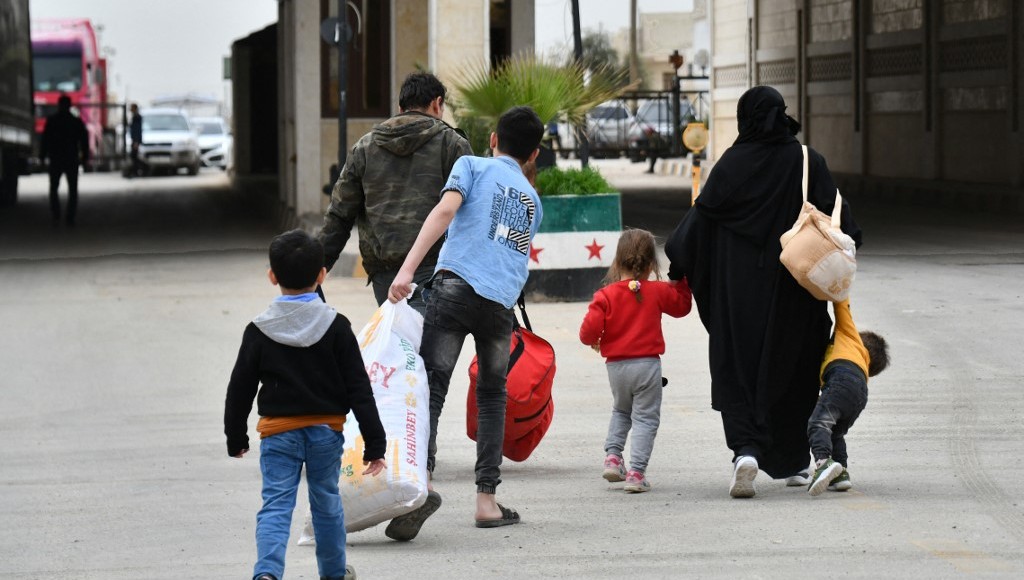
    Turkish authorities arbitrarily arrested, detained and deported hundreds of Syrian refugee men and boys to Syria between February and July 2022, Human Rights Watch (HRW) said in a new report.

    There are more than 3.5 million Syrian refugees officially living in Turkey. Less than nine months from elections, their presence in the country has become a thorny political issue, especially as Turkey battles an economic crisis. President Recep Tayyip Erdoğan, who has in recent months said he is preparing to repatriate a million Syrian refugees on a voluntary basis, announced earlier this month that more than half a million Syrians who had fled their war-torn country for neighboring Turkey have returned home since 2016.

    However, HRW says the Syrian refugees who are presented as having returned to Syria voluntarily were actually deported by Turkey.

    Deported Syrians told HRW that Turkish officials arrested them in their homes, workplaces and on the street, held them in poor conditions, beat and abused most of them, forced them to sign voluntary return forms, drove them to border crossing points and forced them across at gunpoint.

    “In violation of international law Turkish authorities have rounded up hundreds of Syrian refugees, even unaccompanied children, and forced them back to northern Syria,” said Nadia Hardman, refugee and migrant rights researcher at HRW. “Although Turkey provided temporary protection to 3.6 million Syrian refugees, it now looks like Turkey is trying to make northern Syria a refugee dumping ground.”

    Recent signs from Turkey and other governments indicate that they are considering normalizing relations with Syrian President Bashar al-Assad. In May 2022 President Erdoğan announced that he intends to resettle 1 million refugees in northern Syria, in areas not controlled by the government, even though Syria remains unsafe for returning refugees. Many of those returned are from government-controlled areas, but even if they could reach them, the Syrian government is the same one that produced over 6 million refugees and committed serious human rights violations against its own citizens even before the uprisings began, according to HRW.

    The prominent rights group said deportations provide a stark counterpoint to Turkey’s record of generosity as host to more refugees than any other country in the world and almost four times as many as the whole European Union, for which the EU has provided billions of euros in funding for humanitarian support and migration management.

    Between February and August, HRW interviewed by phone or in person inside Turkey 37 Syrian men and two Syrian boys who had been registered for temporary protection in Turkey. HRW also interviewed seven relatives of Syrian refugee men and a refugee woman whom Turkish authorities deported to northern Syria during this time.

    HRW also sent letters with queries and findings to the European Commission, the European Commission’s Directorate-General for Migration and Home Affairs and the Turkish Interior Ministry.

    Turkish officials deported 37 of the people interviewed to northern Syria. All said they were deported together with dozens or even hundreds of others. All said they were forced to sign forms either at removal centers or at the border with Syria. They said the officials did not allow them to read the forms and did not explain what the forms said, but all said they understood the forms to be allegedly agreeing to voluntary repatriation. Some said officials covered the part of the form written in Arabic with their hands. Most said they saw authorities at these removal centers processing other Syrians the same way.

    Many said that they saw Turkish officials beat other men who had initially refused to sign, so they felt they had no choice. Two men detained at a removal center in Adana said they were given the choice of signing a form and going back to Syria or being detained for a year. Both chose to leave because they could not bear the thought of a year in detention and needed to support their families.

    Ten people were not deported. Some were released and warned that if they did not move back to their city of registration they would be deported if found elsewhere. Others managed to contact lawyers through the intervention of family members to help secure their release. Several are still in removal centers waiting for a resolution to their case, unaware of why they’re being detained and fearing deportation. Those released described life in Turkey as dangerous, saying they are staying at home with their curtains closed and limiting movement to avoid the Turkish authorities.

    HRW said Turkey is bound by treaty and customary international law to respect the principle of nonrefoulement, which prohibits the return of anyone to a place where they would face a real risk of persecution, torture or other ill-treatment, or a threat to life.

    “Turkey must not coerce people into returning to places where they face serious harm. Turkey should protect the basic rights of all Syrians, regardless of where they are registered and should not deport refugees who are living and working in a city other than where their temporary protection ID and address are registered,” said HRW.

  • European lawmakers urge PACE to examine Albania’s closure of Gülen-linked school

    European lawmakers urge PACE to examine Albania’s closure of Gülen-linked school

    A declaration signed by 20 European lawmakers from 14 countries on Tuesday said the Parliamentary Assembly of the Council of Europe (PACE) should follow up on Albania’s decision to close a school with links to the Gülen movement, a faith-based group accused by Ankara of orchestrating a coup in Turkey in 2016 although it denies any involvement.

    Albania’s government was accused of caving in to Turkey’s authoritarian President Recep Tayyip Erdoğan after it abruptly closed a Gülen-linked school on Sept. 22.

    After public criticism of the decision, Education Minister Evis Kushi said the school, Mehmet Akif Ersoy College, had its license revoked because the school had been relocated without permission and that it no longer met the legal criteria to operate as a school.

    Turkey’s state-run Anadolu news agency also reported that a kindergarten that had ties to the Gülen group-affiliated college was also ordered to close.

    “On 22 September 2022, the Albanian Government cancelled two Turkish educational institutions due to an alleged relocation procedure. This closure was assessed by lawyers, academics and civil society as an arbitrary decision of the Albanian Government due to pressure from the Turkish authorities,” the lawmakers said in their declaration.

    Many criticized the decision and connected it to Erdoğan’s repeated calls for Albania to close institutions affiliated with his arch-foe Fethullah Gülen, the inspiration of the movement who has lived in self-imposed exile in the US since 1999.

    “For more than seven years, Turkish foreign policy made it its mission to close educational institutions perceived as embarrassing to the Erdogan government. The Turkish President used the weight of his office to reach out to the Albanian authorities and other governments by calling for the closure of schools founded by a certain group of Turkish nationals, who were in the opposition,” they added.

    “We are concerned that Albania, as an EU candidate country, does not respect the rule of law by deciding politically under external pressure,” the lawmakers said, adding, that the PACE “should follow this case and call upon Albania to respect the rule of law.”

    At its peak, the Gülen movement, a worldwide civic initiative renowned for its educational activities, operated schools in 160 countries, from Afghanistan to the United States. In Turkey, the network had run thousands of educational facilities, including schools, prep schools, universities and dormitories.

  • Police probe exiled journalist’s aid to victim of crackdown diagnosed with brain tumor

    Police probe exiled journalist’s aid to victim of crackdown diagnosed with brain tumor


    Turkish police are following money sent by exiled journalist Adem Yavuz Arslan to Haşim Söylemez, a Turkish investigative journalist who was jailed and released after he was diagnosed with a brain tumor, as part of a criminal investigation, the TR724 news website reported last Friday, citing official documents.

    In 2019 Söylemez, who was working for the now-closed Aksiyon magazine, was sentenced to six years, three months in prison by the İstanbul 26th High Criminal Court on charges of links to the faith-based Gülen movement, which Turkish President Recep Tayyip Erdoğan and his government accuse of instigating a major corruption investigation in Turkey that became public in December 2013, implicating the inner circle of the ruling Justice and Development Party (AKP) government and then-prime minister Erdoğan as well as orchestrating a coup attempt on July 15, 2016.

    The Turkish government designates the Gülen movement, inspired by Turkish cleric Fethullah Gülen, as a terrorist organization. The movement denies the coup accusations and involvement in any terrorist activity.

    Following the coup attempt, the Turkish government declared a state of emergency and carried out a massive purge of state institutions under the pretext of an anti-coup fight. More than 130,000 public servants, including 4,156 judges and prosecutors, as well as 29,444 members of the armed forces, were summarily removed from their jobs for alleged membership in or relationships with “terrorist organizations” by emergency decree-laws subject to neither judicial nor parliamentary scrutiny.

    Söylemez was arrested by a court immediately after the abortive putsch as part of a post-coup crackdown targeting the Gülen movement and was later released pending trial for reasons of health, as he was diagnosed with a brain tumor. He underwent six operations to remove the tumor and is currently undergoing chemotherapy.

    Arslan is among dozens of journalists living in exile accused of links to the Gülen movement. In the last few years, he has made a number of wire transfers to Söylemez’s nephew Hamza Söylemez to help his colleague, who is in dire straits due to the loss of his job and his deteriorating health.

    Highlighting the relentless nature of the Turkish government’s crackdown on non-loyalist citizens, the six wire transfers, of which the largest was some $1,000, sent by Arslan to help Söylemez between 2018 and 2022 were deemed suspicious activity and documented by the Turkish police’s counterterrorism unit.

    “The government closed down Söylemez’s magazine and left him unemployed. They imprisoned him and targeted him with hate speech. Amid all this he was diagnosed with a brain tumor. And now, they are investigating the little help I provide for him as a colleague. It is callous,” Arslan told Turkish Minute.

    Arslan also alluded to detentions that took place last week in Turkey, as the police had as of Wednesday taken 599 people into custody out of 704 for whom detention warrants were issued as part of an investigation into the financial activities of followers of the Gülen movement.

    The mass detention of people affiliated with the movement for accepting assistance from other Gülen followers or for distributing donations from Gülen members overseas to the families of people jailed by the Turkish government or purged from their jobs over links to the movement has drawn condemnation from politicians and human rights activists.

    “This is genocidal. They want to condemn to penury people who lost their jobs and means of subsistence due to the government crackdown, whose relatives are in jail and who are sick and vulnerable,” Arslan said.

    According to a statement from Justice Minister Bekir Bozdağ in July, 117,208 people have been convicted, with 1,366 sentenced to life in prison and 1,634 to aggravated life with no chance of parole following the coup attempt. While 87,519 people have been acquitted of charges specifically related to the Gülen movement since the coup attempt, according to Bozdağ, there are doubts about the number of people who have been acquitted of all charges by a court of law.

    Judicial experts voice skepticism about the figures announced by the minister, saying that 117,208 convictions are only those that have been upheld by an appeals court, since Justice Ministry data show that more than 265,000 people were sentenced on charges of terrorist organization membership between 2016 and 2020 due to their alleged Gülen links.

    In addition to the thousands who were jailed, scores of other Gülen movement followers had to flee Turkey to avoid the government crackdown.

  • Journalists discuss war, persecution and democracy with colleagues and activists at Frankfurt Book Fair

    Journalists discuss war, persecution and democracy with colleagues and activists at Frankfurt Book Fair

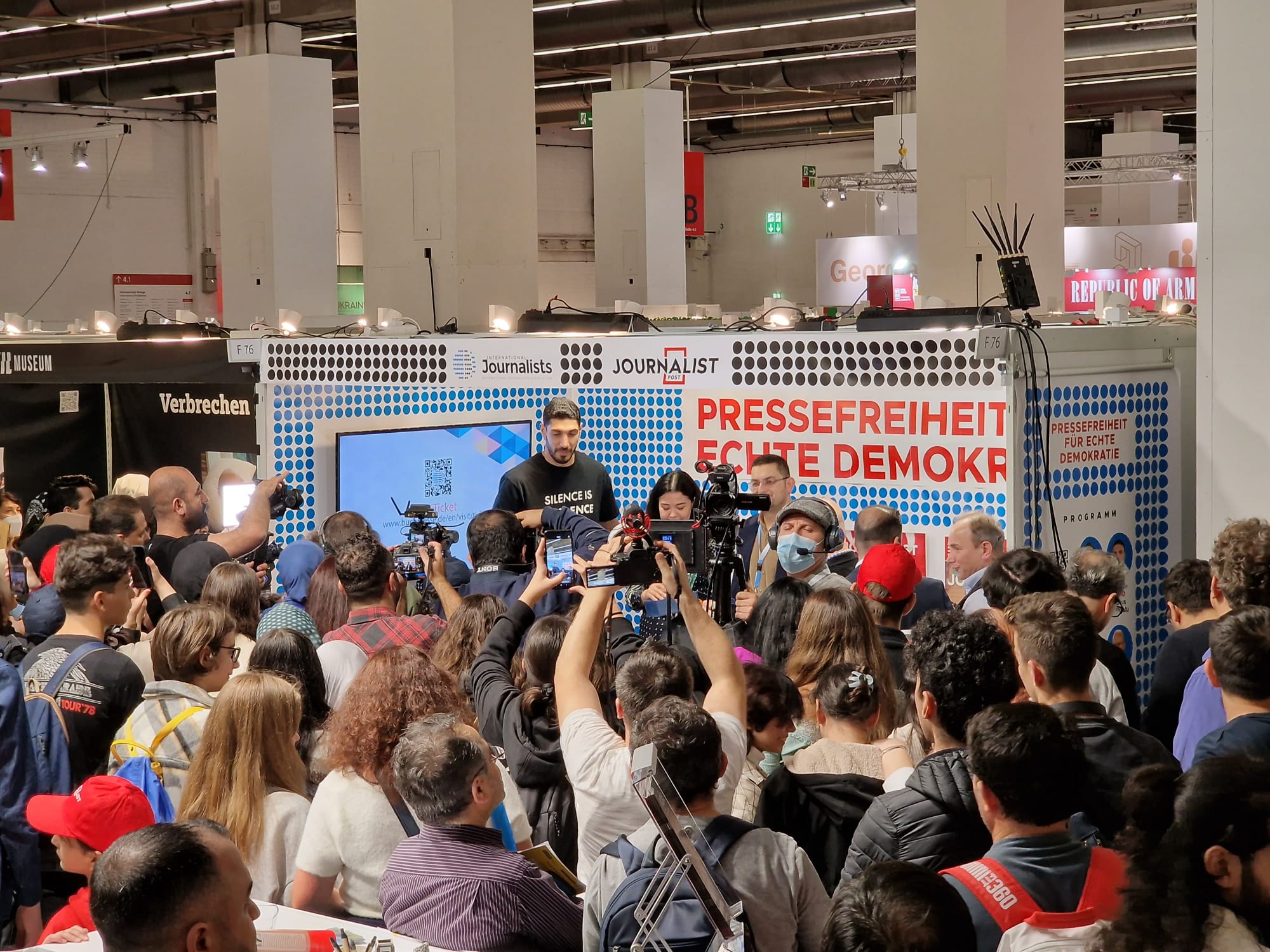
    The International Journalists Association e.V. (IJA), founded in Germany by media professionals who were forced to flee Turkey due to government pressure and now live in exile, hosted talks with journalists and human rights activists about the war in Ukraine, Turkey’s crackdown on freedom of expression and the fight for democracy around the world at its exhibition at the 74th Frankfurt Book Fair, the largest of its kind in the world.

    Numerous national and international publishing houses presented their new titles at the Frankfurt Book Fair, which hosted more than 2,000 events between Oct. 18 and 23.

    Organizing events with media professionals, opposition figures in exile and human rights activists under the banner “Free Media for Real Democracy,” the IJA exhibition started on Wednesday with a discussion between Volodymyr Bober, editor-in-chief of the Ukrainian Poglyad newspaper, and the previously Ukrainian-based Turkish editor of the ukraynahaber.com news website, Yunus Erdoğdu, who talked about the safety of journalists affected by the Russian-Ukrainian war.

    The journalists have lived in Ukraine for many years and witnessed the crisis. Bober continues to reside in the western Ukrainian city of Chernivtsi, where he is also president of the National Society of Journalists of Ukraine (NSJU). Erdoğdu is now living in exile in Switzerland.

    On Thursday exiled journalist Erkam Tufan Aytav discussed “Media, democracy and the economics of free speech,” with prominent Turkish academics Prof. Dr. Eser Karakaş and Prof. Dr. Vedat Demir.

    On Friday journalist İrfan Galip Dumlu hosted writer Kazım Gündoğan to talk about the processes of “marginalization” in Turkey and how minorities and the lower classes are bearing the brunt of it.

    Journalist Post Chief Editor Yüksel Durgut on Saturday hosted Ukrainian journalist Sevgil Musayeva, editor-in-chief of the largest news portal in Ukraine (Ukrayinska Pravda), who was named one of the 100 most influential people by Time magazine in 2022.

    Addressing the role of the media and journalists in the Russian-Ukrainian war, Musayeva said that Ukraine is waging “a war for democracy and the future of the free world.”

    “Unfortunately, Russian propaganda is still valuable for many Russians,” Musayeva said and added, “Thanks to journalists, the world saw the truth about the war and hundreds of civilians killed.”

    Enes Kanter Freedom, an activist and basketball player who was dropped from the NBA reportedly for speaking out against human rights abuses worldwide and who received the 2022 Courage Award at the 14th Annual Geneva Summit for Human Rights and Democracy, was also present in the IJA exhibition area and joined Durgut’s talk with Musayeva toward its end.

    Freedom, who has lived mainly in the United States for more than a decade, has used his substantial platform as an international star athlete to condemn Turkey’s pivot towards authoritarianism under Turkish President Recep Tayyip Erdoğan over the past few years.

    Turkish prosecutors are seeking a four-year prison sentence for his alleged membership in the Gülen movement, a religious group inspired by Turkish cleric Fethullah Gülen.

    Freedom called on world leaders not only to condemn Russia’s actions in Ukraine but to take concrete action.

    On Sunday Cevheri Güven, a prominent investigative journalist living in Germany, spoke about the challenges and consequences of journalistic work in exile and the current political landscape in Turkey.

    Güven stressed that the opposition must leave “the comfort zone” set by the government of President Erdoğan and challenge its nationalist discourse if it is to succeed in coming to power in the 2023 elections.

    Güven has made scandalous revelations about President Erdoğan and his close circle as well as some journalists and opposition figures in his YouTube videos. He recently came under the spotlight after the pro-government Sabah daily, on its Sept. 22 front page, published secretly taken photos of him while walking on the street and revealed his home neighborhood in a German city.

    Güven told Turkish Minute at the time he believed Turkey’s National Intelligence Organization (MİT) was behind the search for him and that it was due to one of his videos in early September in which he questioned MİT’s role in a failed coup in Turkey in July 2016, following which Erdoğan’s government launched a massive crackdown on outspoken journalists and non-loyalist citizens under the pretext of an anti-coup fight.

    Purge Museum, an initiative that collects and exhibits items belonging to individuals who survived Turkey’s massive crackdown on the Gülen movement, also opened for a four-day run adjacent to the IJA’s exhibition area at the book fair.

    Since a failed coup attempt in 2016 for which Erdoğan blamed Fethullah Gülen, an Islamic cleric living in the US and the inspiration of the movement, being a Gülen follower in Turkey has become unbearable.

    Purge Museum, “Tenkil Müzesi” in Turkish, was launched months ago in Germany by a group of refugees who fled Turkey after the coup and have been collecting objects from victims ever since.

    Among the items on display are the broken eyeglasses of Gökhan Açıkkollu, who died in detention after the coup from the torture and ill treatment he was subjected to; several items of clothing that were damaged during rough interrogations; baby clothes that were worn in Turkish prisons; and a number of articles that were used during the dangerous trip from Turkey to Greece across the Evros River.

    Overall the objects depict the horror and cruelty of detention and restrictions and a longing for loved ones in prison, the dangers of fleeing Turkey, and new beginnings in a strange country.
  • Turkey detains 543 people in massive operation targeting Gülen followers


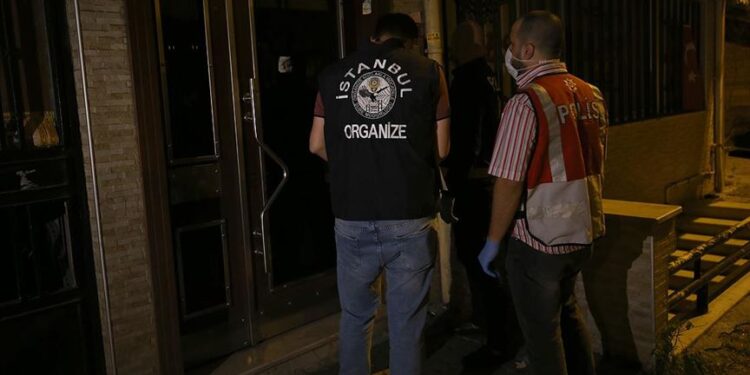
    Turkish police have detained 543 people out of 704 named in detention warrants as part of an investigation into the financial activities of followers of the Gülen movement, the state-run Anadolu news agency reported, citing the country’s interior minister, according to the Stockholm Center for Freedom.

    Interior Minister Süleyman Soylu announced on Tuesday that 543 of the 704 people facing detention have been taken into custody as part the Gazi Turgut Aslan Operation, in simultaneous raids across 59 provinces.

    The Turkish government accuses the faith-based Gülen movement of masterminding a coup attempt on July 15, 2016 and labels it a “terrorist organization,” although the movement strongly denies involvement in the coup attempt or any terrorist activity.

    Soylu said the detentions began Tuesday morning following an eight-month investigation focusing on the financial activities of the alleged Gülen followers. He said the operation was carried out by the Anti-Smuggling and Organized Crime Department (KOM), the Counterterrorism Bureau (TEM) and the Cybercrime Department in coordination with the Security General Directorate’s intelligence unit and the Financial Crimes Investigation Board (MASAK).

    The suspects are accused of either receiving financial assistance or distributing financial assistance sent by Gülen followers abroad to the families of people jailed over links to the Gülen movement or removed from public service for the same reason.

    “This money traffic, which has been going on for about eight months through both the mail and ATMs and through people who don’t know each other, originated exclusively from abroad,” Soylu said, adding that the investigation has been carried out in utmost secrecy.

    “We needed [the suspects’] technical devices, especially mobile phones,” he said.

    Following the coup attempt, the Turkish government declared a state of emergency and carried out a massive purge of state institutions under the pretext of an anti-coup fight. More than 130,000 public servants, including 4,156 judges and prosecutors, as well as 29,444 members of the armed forces were summarily removed from their jobs for alleged membership in or relationships with “terrorist organizations” by emergency decree-laws subject to neither judicial nor parliamentary scrutiny.

    Victims of Turkey’s post-coup crackdown say they and their families experience severe financial and psychological problems due to what they call hate speech employed by the government and its supporters against them, which prevents them from leading normal lives, finding jobs and supporting their families.

    According to a statement from Justice Minister Bekir Bozdağ in July, 117,208 people have been convicted, with 1,366 sentenced to life in prison and 1,634 to aggravated life with no chance of parole following the coup attempt. While 87,519 people have been acquitted of charges specifically related to the Gülen movement since the coup attempt, according to Bozdağ, there are doubts about the number of people who have been acquitted of all charges by a court of law.

    Judicial experts voice skepticism about the figures announced by the minister, saying that 117,208 convictions are only those that have been upheld by an appeals court, since Justice Ministry data show that more than 265,000 people were sentenced on charges of terrorist organization membership between 2016 and 2020 due to their alleged Gülen links.

    In addition to the thousands who were jailed, scores of other Gülen movement followers had to flee Turkey to avoid the government crackdown.

  • Medibank admits personal data stolen in cyber attack


    In a statement, the company said the criminal group allegedly responsible had claimed that 200 gigabytes of data had been stolen and that it would be reaching out to affected customers to let them know and what to do next.

    “The criminal [group] has provided a sample of records for 100 policies, which we believe has come from our ahm and international student systems,” it said.

    “That data includes first names and surnames, addresses, dates of birth, Medicare numbers, policy numbers, phone numbers and some claims data.”

    It said the claims data involved where the medical service was and the codes that related to their diagnosis and procedures.”The criminal claims to have stolen other information including data related to credit card security, which has not yet been verified by our investigations,” it said.

    Medibank said it understood the development was upsetting and that it expected the number of affected customers to grow as the incident continued.

    Earlier this week, Medibank said it had been contacted by a group that claimed it had removed customer data and wanted to negotiate with the company, but investigations were ongoing to work out if the claim was true.

    The company’s chief executive, David Koczkar, offered an unreserved apology for “this crime, which has been perpetrated against our customers”.

    “I know that many will be disappointed with Medibank and I acknowledge that disappointment,” he said.

    “This cybercrime is now the subject of an investigation by the Australian Federal Police.

    “We will learn from this incident and will share our learning with others.”

    Mr Koczkar promised to continue to provide customers and the public with updates as the investigation continued.

    The revelations come hours after Cyber Security Minister Clare O’Neil confirmed the matter had been referred to the AFP and that Medibank was working with the Australian Cyber Security Centre and Australian Signals Directorate on the attack.

    Opposition Leader Peter Dutton encouraged businesses and individuals to use the resources on offer through ASD and the ACSC to better protect themselves.

    “I would encourage people to visit those websites, just to get the patches, the upgrades, the updates and for the government to continue that messaging,” he said.

    He said the government was missing the mark on making sure people knew where they could go and what they could do to protect themselves.

    “Nobody is actually providing this support and this messaging out to the community and it is important that people just take the basics and upgrade your passwords to something that is not predictable. Do it regularly,” Mr Dutton said.

    “Make sure that the software upgrades are installed as you receive them on your phone on your devices.”

    Medibank was hit by a cyber attack last week but, at the time, said there was no evidence sensitive data had been accessed.

    A trading halt on Medibank shares will continue until further notice.