Author: Zaman Australia

  • Journalist says 2016 coup attempt was carried out with knowledge of AKP gov’t


    Many believe the abortive putsch, which killed 251 people and wounded more than a thousand others, was a false flag aimed at entrenching the authoritarian rule of President Recep Tayyip Erdoğan by rooting out dissidents and eliminating powerful actors such as the military in his desire for absolute power.

    On the night of the abortive putsch, President Erdoğan immediately blamed the faith-based Gülen movement. The next morning, after announcing the coup had been put down, the Turkish government immediately started a wide-ranging purge of military officers, judges, police officers, teachers and other civil servants that ultimately led to the dismissal of more than 130,000 from their jobs.

    Çandar on Monday said in an interview with the T24 news website that he didn’t like discussing July 15 based on the narrative pushed by the Justice and Development Party (AKP) government.

    “If we were to discuss the theory that the Gülen movement led people to distance themselves from Islam by attacking the parliament with tanks and artillery on July 15, killing many people, then let’s first discuss whether what we were told about July 15 really the truth,” Çandar said.

    The journalist said it was “understandable” that there were elements of both the state and the Gülen movement involved in the events of July 15 since the movement had close ties to the government at the time.

    “However, I perceive it as an operation orchestrated by the government. … I believe that Erdoğan was aware of it,” he added.

    Referring to the civil servants purged in the wake of the coup attempt, Çandar said, “Their lives have been ruined. Are all these people now coup plotters? Were they aware of the coup, or would they have approved of it if asked? I’m not so sure.”

    The journalist further argued that the list of civil servants to be purged was already prepared before the attempted coup.

    “Think about it. A lot people die in İstanbul [on July 15]. … Early the [next] morning, a Saturday, hundreds of judges, prosecutors and members of the Constitutional Court are being arrested. … Clearly, there was a list. … There are many indications that this was a planned coup attempt,” Çandar said.

    He also questioned whether Adil Öksüz, the prime civilian suspect in the coup attempt, was actually “a prominent figure of the Gülen movement or a person placed in the movement by the state’s security system with instructions to carry out a failed coup.”

    Çandar, who left Turkey for Sweden in May 2016 upon the invitation of the Stockholm University Institute for Turkish Studies (SUITS) to work as a visiting scholar, returned to the country earlier this month from the French city of Nice where he was spending the winter.

    He has been nominated by the Green Left Party (YSP) from the predominantly Kurdish province of Diyarbakır, where it is almost certain that he will be elected.

    Erdoğan has been targeting followers of the Gülen movement, a faith-based group inspired by Turkish cleric Fethullah Gülen, since the corruption investigations of December 17-25, 2013, which implicated then-prime minister Erdoğan, his family members and his inner circle.

    Dismissing the investigations as a Gülenist coup and conspiracy against his government, Erdoğan designated the movement as a terrorist organization and began to target its members. He locked up thousands including many prosecutors, judges and police officers involved in the investigation as well as journalists who reported on them.

    Erdoğan intensified the crackdown on the movement following the coup attempt. Gülen and the movement strongly deny involvement in the abortive putsch or any terrorist activity.
  • Melbourne snatches the crown from Sydney as Australia’s biggest city

    After more than a century languishing as the beta city to her New South Wales alpha, Melbourne has snatched the title of Australia’s largest city.

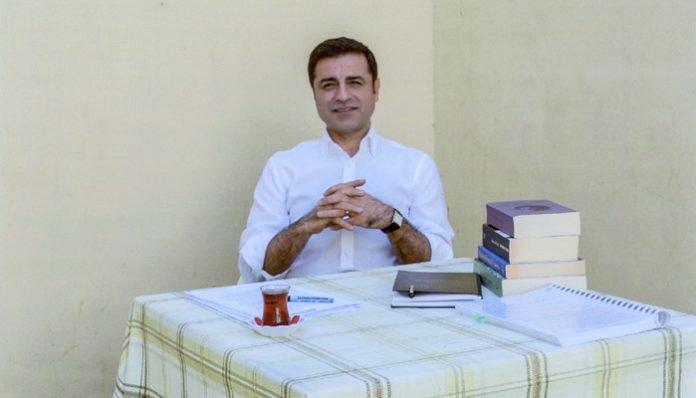
  • Jailed Kurdish leader promises to work towards ending armed conflict with PKK

    Jailed Kurdish leader promises to work towards ending armed conflict with PKK


    Arrested on Nov. 4, 2016 on terrorism-related charges, Demirtaş has since then remained in prison despite two European Court of Human Rights (ECtHR) rulings in 2018 and 2020 that said Demirtaş was imprisoned for “political” reasons and not for “legal” reasons, ordering his “immediate release.”

    In a series of tweets Demirtaş accused Erdoğan of feeding on conflict and preventing efforts at peace. He also criticized the government’s crackdown on pro-Kurdish politicians, including imprisoning those who advocated for peace and appointing trustees to their municipalities.

    “We could have done this already, but Erdoğan imprisoned those who wanted peace, put them in isolation, tried to close down their parties, appointed trustees to their municipalities, fueled the conflict with provocations and tried to scare the people with the discourse of ‘terror’ to get votes. And they’re still doing this,” Demirtaş tweeted.

    Despite these challenges, Demirtaş said peace and tranquillity are possible. However, he warned of persistent provocations and the risk of bloodshed before upcoming elections.

    “We will be careful together and we will not be tricked. Please remember, we want peace and democracy. We want to live together equally and fraternally,” he said.

    Demirtaş also said the Green Left Party (YSP) would work towards achieving peace as its primary goal.

    The YSP is the party under whose banner the HDP decided to run in the parliamentary elections slated for May 14 in a bid to circumvent the risks that could emerge from its possible closure ahead of the elections.

    The HDP is facing a closure case on terrorism charges that was filed in March 2021 and could be concluded before the elections since the Constitutional Court, which is hearing the case, has rejected the HDP’s request to delay the verdict until after the elections.

    “Trust us, not the liars and frauds who provoke people for votes. We will win together, and we will surely win,” he said.

    Demirtaş has been in prison since 2016 on terrorism-related charges, which he denies. His imprisonment has been widely criticized by human rights organizations and Western governments, who see it as politically motivated. Turkishminute

  • More cost blowouts on Sydney’s new metro train network revealed

    The Minns government has been inspecting the state’s books since taking office, and claims the former Coalition government hid the true cost and timeline for several stages of the driverless train network.

    Internal government documents seen by the ABC show the City and Southwest Metro project is set to cost $20.11 billion, but the “publicly announced” figure under the Coalition was $18.5 billion.

    The ABC understands the previously secret price tag may still not build a fully functioning metro, and the final touches could add another billion dollars.

    Transport Minister Jo Haylen said she needed to find “solutions” to overspending issues.

    “Every day, we are asking more about the Sydney Metro and discovering more key details the former government did not reveal to the public,” she said.

    “We are being up-front and honest about the challenges we are inheriting.”

    The City and Southwest Metro project will convert the T3 Bankstown line to a metro, with services leaving every four minutes in each direction between Bankstown and Sydenham.

    It will link to a new line under the harbour between Chatswood and Sydenham, with stations to be built at sites such as Barangaroo, Pitt Street and Waterloo.

    The internal documents show the former government had already budgeted for $20.5 billion.

    A business case for the City and Southwest Metro, published in 2016, estimated the project would cost around $12 billion.

    But the government announced in the 2022-23 budget that construction costs and the pandemic had pushed it to $18.5 billion.

    The government has also flagged a cost blowout of the Sydney Metro West line, which will link the CBD with Parramatta.

    It was meant to cost about $18 billion, but internal documents show it will now exceed $25 billion.

    Ms Haylen hinted that project may be delayed as the administration comes to terms with the budget situation.

    During the election campaign, Labor warned it a would take a more conservative approach to spending on some infrastructure projects announced under its predecessor.

    Two further Metro sections — one linking Bankstown to Glenfield and the other linking Parramatta to the new airport line — will be put on the backburner under Labor.abcnew

  • Indictment of Kurdish journalists jailed for 10 months accepted by court


    The first hearing in the trial will be held at the Diyarbakır 4th High Criminal Court on July 11, more than a year after they were jailed on terrorism-related charges.

    MLSA co-director and lawyer Veysel Ok tweeted that the delayed preparation of indictments is a way of punishing defendants. He said the journalists will have already spent one year in jail before appearing in court, adding that they should be released immediately since they’ve been unjustly deprived of their freedom for months.

    Sixteen of the 21 detainees, including Serdar Altan, co-chair of the Dicle Fırat Journalists Association (DFG), Mezopotamya news agency (MA) Editor-in-Chief Aziz Oruç and JinNews News Director Safiye Alagaş, were arrested by a court on June 16, 2022 after they had been held in custody for eight days, in a move that sparked outrage among opposition politicians, members of the press and rights activists.

    The Kurdish journalists, who had been detained as part of an operation overseen by the Diyarbakır Chief Public Prosecutor’s Office, were arrested on charges of membership in a terrorist organization, a charge included in the indictment.

    Kurdish journalists in Turkey frequently face legal harassment, stand trial and are given jail sentences for covering issues related to Kurds and the outlawed Kurdistan Workers’ Party (PKK), which has been waging a bloody campaign in Turkey’s southeast since 1984 and is listed as a terrorist organization by Turkey and much of the international community.

    Rights groups routinely accuse Turkey of undermining media freedom by arresting journalists and shutting down critical media outlets, especially since President Recep Tayyip Erdoğan survived a failed coup in July 2016.

    Turkey, which is one of the top jailers of journalists in the world, was ranked 149th among 180 countries in the Reporters Without Borders (RSF) 2022 World Press Freedom Index, released in May.

  • [OPINION] Militant secularists meddle in politicking ahead of crucial Turkish elections

    [OPINION] Militant secularists meddle in politicking ahead of crucial Turkish elections

    Türkmen Terzi- Turkishminute

    Although 99 percent of Turkey’s population is Muslim, the country is constitutionally a secular state with no official religion. As a result, the people of Turkey have never enjoyed domestic peace due to constant tensions between different ethnic, cultural and ideological groups spanning many decades. Turkey’s “deep state,” which refers to a clandestine network consisting of bureaucratic and security officials operating outside official channels to protect Turkey’s secular Republican regime, has traditionally played a key role in increasing social tension. However, the formation of the Ata (Ancestral) Alliance—an electoral alliance created on March 11 to compete in the 2023 Turkish presidential election—suggests that the deep state has moved from secretive operations to direct political involvement.

    Throughout modern Turkish history, the deep state, which can be described as a group spearheaded by military members, has targeted communists and Greek and Armenian minorities, Islamists and Kurdish politicians to maintain absolute secularist rule. This fact has been publicly admitted by former Turkish presidents Kenan Evren and Süleyman Demirel as well as former prime minister Bülent Ecevit. Nevertheless, Islamist President Recep Tayyip Erdoğan, himself a victim of the military establishment, managed to form a coalition with the deep state by sharing executive power with infamous figures, including former generals, controversial bureaucrats and mafia leaders since the early 2010s. Erdoğan aimed to cover up his corruption and purge Gülen movement members from key government institutions. He prevented Turkish police and the judiciary from carrying out the December 17-25, 2013 corruption and bribery operation that involved several ministers and his son Bilal Erdoğan. Erdoğan called the corruption case an “international plot” and accused Gülen movement members within the police and judiciary of carrying out these operations. To stay in power, Erdoğan formed an alliance with Doğu Perinçek, the leader of Turkey’s ultranationalist Motherland Party who wields significant influence in the Defense Ministry. As a result, members of the deep state have filled key state positions over the last 10 years, and they are now likely preparing for the final blow to Erdoğan, whose power is waning.

    The main opposition Republican People’s Party (CHP), formed by Mustafa Kemal Atatürk, founder of the modern Turkish Republic, is a social democrat party representing a center-left, secular ideology. Following the collapse of the Ottoman Empire, Ataturk’s CHP implemented modern reforms and promoted a European lifestyle. The members of the ATA alliance, including the Victory Party, the Justice Party, the Homeland Party (Memleket) and the Turkish Alliance Party, are also secular, nationalist parties, like the main opposition CHP and Erdoğan’s ally, the Nationalist Movement Party (MHP).

    However, the CHP is not a militarist party, and the MHP is a nationalist yet conservative party that does not share the anti-Ottoman, anti-Islamic view. The CHP and MHP maintain a more balanced view of ethnic minorities and Syrian refugees. These parties would like the Syrians to return to their homeland but are not provoking the public against them. On the other hand, ATA members such as Victory Party leader Ümit Özdağ often make statements regarding the need for Syrians to leave Turkey and have organized campaigns against refugees. The presidential candidate of the ATA Alliance, Dr. Sinan Oğan, shares similar extreme views with Perinçek and Özdağ. Oğan frequently expresses far-right opinions regarding Syrian refugees. In March 2017 he commented on CNN TURK that Turkey must send 500,000 Syrians to Europe. In a recent election video, Dr. Oğan vows to send Syrians back home and threatens political parties that have coalitions with pro-Kurdish parties and those promoting Pan-Turanism, an ideology aiming to unite all Turkic peoples.

    Election polls indicate that President Erdoğan will face the greatest test of his political career in the upcoming election scheduled for May 14. Erdoğan has relied on the nationalist vote since the pro-Kurdish opposition Peoples’ Democratic Party (HDP) surpassed the 10 percent electoral threshold, causing Erdoğan’s Justice and Development Party (AKP) to lose its majority of seats in parliament in the June 2015 general election and the loss of the İstanbul Municipality to the CHP in 2019. Turkey’s third-largest party, the HDP, has not fielded a presidential candidate this time, allowing Kurds to vote for Erdoğan’s main rival, Kemal Kılıçdaroğlu, the leader of the main opposition CHP. Erdoğan formed an electoral alliance with the MHP in 2018 and has been sharing executive power with the ultranationalist Motherland Party since 2013.

    Erdoğan’s 20-year-long regime has been difficult for Turkey’s secularists, who have lost their privileges and feel stifled under his authoritarian rule. Turkey now faces a new nationalism as militant secularists have vowed to take revenge on the AKP rulers. Although their vote potential is minimal, they enjoy strong representation in key state institutions. Furthermore, they share a similar ideology with the CHP, the party that has a chance to emerge victorious in the May 14 presidential and parliamentary elections. If Erdoğan loses the upcoming presidential election, these militant secular parties, whose leaders are known for their affiliation with the deep state and their anti-Islamic, anti-Ottoman and anti-European Union views, may launch a purge of AKP members with the aim of re-establishing their absolute secular regime.

  • Kurdish villager dumped from helicopter sentenced to prison on terrorism conviction


    The ruling from the Mersin 2nd High Criminal Court concerns Osman Şiban, who along with another Kurdish villager, Servet Turgut, were detained by gendarmes while working on their farm in the eastern province of Van in in September 2020 and were allegedly pushed out of a military helicopter. Initial reporting on the incident by rights groups and media outlets cited a medical report giving the reason for their admission to the hospital as a “fall from a height.”

    Yet, research by opposition deputy and investigative journalist Ahmet Şık revealed in November 2020 that the villagers were in fact assaulted by a mob of more than 100 soldiers.

    No individual involved in the incident has been indicted, although families of the victims have filed criminal complaints against the relevant security force members. However, criminal charges were filed against Şiban in December 2021 by the Van Chief Public Prosecutor’s Office. In the indictment, Şiban was accused of membership in the outlawed Kurdistan Workers’ Party (PKK), which is listed as a terrorist organization by Turkey and much of the international community.

    According to the indictment, Şiban provided logistical support to the PKK, with militants receiving food from his house in the village of Surik. Three 40 to 50-liter containers of diesel fuel that were found in the vicinity of Şiban’s house were also considered evidence in the indictment.

    The indictment also included the testimony of an informant who claimed that two top PKK figures, Murat Karayılan and Mahsum Korkmaz, had a meeting at Şiban’s house at the time.

    At the last hearing on Tuesday, Şiban was given the lengthy prison sentence on charges of terrorist organization membership. A travel ban imposed on him would also remain in place, according to the court’s decision.

    Şiban did not attend the hearing. His lawyers said they would appeal the court’s decision, which means that their client will not immediately be jailed.

    Interior Minister Süleyman Soylu, who spoke in parliament in November 2020 about the incident concerning Şiban and Turgut, did not respond to the allegations of torture, yet described them as “militia” of the PKK.

    In fact, throwing people to their death from a helicopter was commonplace in Turkey in the 1990s, when the Kurds were the victims of extraordinary violence. As is the case today, the then-ill treatment received almost no media coverage. Human Rights Watch (HRW) reported in 1995 that suspected female terrorists were thrown from a helicopter on May 14, 1994, citing a “reliable” witness.

  • Prosecutor seeks prison sentence for journalist who returned to Turkey for election campaign

    Cengiz Çandar, 75, appeared before an İstanbul court on Monday for a trial in which he faces charges of “praising crime and criminals” in a 2017 tweet decrying the death of a woman killed while fighting Islamic State in Iraq and the Levant (ISIL) militants in northern Syria.

    The journalist returned to Turkey on Sunday from the French city of Nice where he was spending the winter.

    Ayşe Deniz Karacagil was killed in northern Syria in May 2017 while fighting alongside the People’s Protection Units (YPG), a Kurdish militant group that spearheaded the fight against the self-proclaimed ISIL caliphate. Karacagil became famous in Turkey after standing trial on terrorism charges for wearing a red neckscarf during the countrywide anti-government protests in 2013 that erupted over plans to demolish Gezi Park in the Taksim neighborhood of İstanbul.

    Upon Karacagil’s death, Çandar tweeted, “The girl wearing a red scarf [Karacagil], the angel of Gezi with the most beautiful smile warming our hearts, has fallen before Raqqa and risen to the stars, once again searing our hearts.”

    An investigation was launched two years after the tweet was posted, culminating in legal proceedings in July 2020. The first hearing of the trial was held in İstanbul in January 2021. Çandar did not attend since he was living abroad at the time.

    The journalist left Turkey for Sweden in May 2016 upon the invitation of the Stockholm University Institute for Turkish Studies (SUITS) to work as a visiting scholar.

    Ankara maintains that the YPG is indistinguishable from Turkey’s outlawed Kurdistan Workers’ Party (PKK); hence, Karacagil’s association with the YPG is deemed a “crime” by the country’s judiciary.

    During Monday’s hearing, the prosecutor presented his final opinion and asked the court to sentence Çandar to two years in prison on charges of praising crime and criminals.

    Çandar denied the charges and demanded his acquittal, saying that as a father, he was moved by a social media post about Karacagil and did not even know the woman’s name at the time.

    The trial was adjourned until May 16.

    Monday’s hearing was scheduled for Tuesday but was moved to Monday because Çandar will attend a meeting of the Green Left Party (YSP) on Tuesday where the party’s parliamentary candidates will be introduced.

    Turkey will hold presidential and parliamentary elections on May 14.

    Çandar has been nominated by the YSP from the predominantly Kurdish province of Diyarbakır, where it is almost certain that he will be elected.

    The pro-Kurdish Peoples’ Democratic Party (HDP) decided to run under the banner of the YSP in the parliamentary elections in a bid to circumvent the risks that could emerge from its possible closure ahead of the elections.

    Çandar is known for his work on the Kurdish issue, a term prevalent in Turkey’s public discourse that refers to the demand for equal rights by the country’s Kurdish population and their struggle for recognition. He has written several books on the Kurdish issue.

  • Iraqi Kurds protest Turkish bombardment of airport


    The bombardment on Friday caused an explosion near the airport wall while the commander of the Kurdish-led and US-allied Syrian Democratic Forces (SDF) was present. US troops were also in the area but there were no casualties, the Pentagon said.

    Around 400 protesters, many of them middle-aged, walked in the center of Sulaimaniyah, the second city in Iraq’s autonomous Kurdistan region.

    They waved the flag of Iraqi Kurdistan and held a banner denouncing the airport bombardment as a “terrorist act.”

    Organized by activists and former parliamentarians, the demonstrators also shouted against the “dictator” President Recep Tayyip Erdoğan of Turkey, according to an AFP correspondent.

    “This is not the first Turkish aggression against civilian targets in the region,” said Ali Amine, 66, a retired civil servant.

    “It has become a permanent attack. Sometimes it’s villages, sometimes civilian targets — agricultural land, water or electricity installations.”

    Another protester, Fatma Hamid, 55, denounced “the lax positions” of authorities in the region which has been autonomous for three decades.

    Turkey has long maintained military positions inside northern Iraq, where it regularly launches operations against the militants of the outlawed Kurdistan Workers’ Party (PKK).

    The PKK, which Ankara and its Western allies classify as a “terrorist” organization, operates rear bases in Iraq’s north.

    Since 1984 the PKK has waged an insurgency in Turkey that has claimed tens of thousands of lives.

    Turkey regards the main component of the SDF, the People’s Protection Units (YPG), as an offshoot of the PKK.

    On April 3, Ankara halted flights to and from Sulaimaniyah until at least July 3, blaming increased PKK activity in and around the airport.

    A source at the Turkish defense ministry denied any involvement by the country’s military in the bombardment of Sulaimaniyah airport.

    Iraqi President Abdel Latif Rashid on Saturday condemned Turkey’s “military operations against the Kurdistan region, the last being the bombardment against Sulaimaniyah civilian airport.” Turkishminute

  • 61 detained over alleged Gülen links in a week

    61 detained over alleged Gülen links in a week


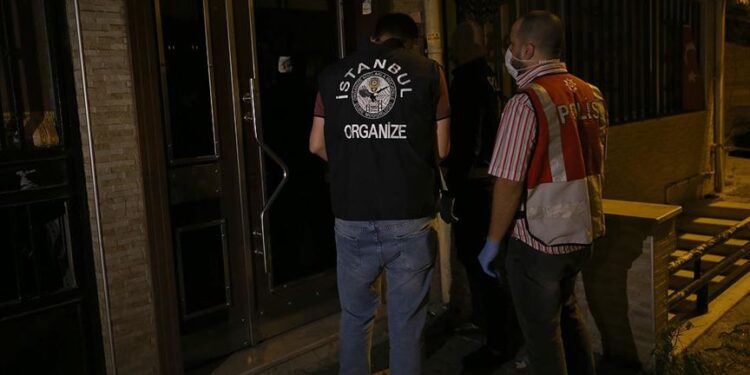
    In an investigation launched by the İzmir Chief Public Prosecutor’s Office, detention warrants were issued on Wednesday for 25 individuals including 16 former military cadets over alleged Gülen links. Police conducted operations in 10 provinces across Turkey and detained 22 of the suspects.

    The İstanbul Chief Public Prosecutor’s Office on Tuesday issued detention warrants for 23 suspects including doctors and teachers over alleged Gülen links. Police carried out operations in four provinces during which 20 of the suspects were detained.

    The same office issued detention warrants in a separate investigation for seven university students and two other people. Police conducted operations in two provinces to detain the suspects on Tuesday.

    Turkish President Recep Tayyip Erdoğan has been targeting followers of the Gülen movement, inspired by Turkish Muslim cleric Fethullah Gülen, since the corruption investigations of December 17-25, 2013, which implicated then-prime minister Erdoğan, his family members and his inner circle.

    Dismissing the investigations as a Gülenist coup and conspiracy against his government, Erdoğan designated the movement as a terrorist organization and began to target its members. He intensified the crackdown on the movement following an abortive putsch in July 2016 that he accused Gülen of masterminding. Gülen and the movement strongly deny involvement in the coup attempt or any terrorist activity.

    On Tuesday, 10 people were also detained in Ankara after the Ankara Chief Public Prosecutor’s Office issued detention warrants for 17 suspects, some of whom were accused of using ByLock, an encrypted messaging app used on smartphones that used to be available on Apple’s App Store and Google Play.

    The ByLock messaging app, once widely available online, is considered by the government to be a tool of secret communication among supporters of the movement. The UN Human Rights Council’s Working Group on Arbitrary Detention (WGAD) has repeatedly stated that arrest and conviction based on ByLock use in Turkey violated Articles 19, 21 and 22 of the International Covenant on Civil and Political Rights.

    Following the abortive putsch, the Turkish government declared a state of emergency and carried out a massive purge of state institutions under the pretext of an anti-coup fight. More than 130,000 public servants, including 4,156 judges and prosecutors, as well as 24,706 members of the armed forces, were summarily removed from their jobs for alleged membership in or relationships with “terrorist organizations” by emergency decree-laws subject to neither judicial nor parliamentary scrutiny.

    In addition to the thousands who were jailed, scores of other Gülen movement followers had to flee Turkey to avoid the government crackdown.