Author: Zaman Australia

  • Turkish journalists in exile join exhibitors at world’s largest book fair in Frankfurt


    The International Journalists Association e.V. (IJA), founded in Germany by media professionals who were forced to flee Turkey due to government pressure and now live in exile, joined the 74th Frankfurt Book Fair, the largest of its kind in the world, with an exhibition as the fair commenced Tuesday evening.

    Numerous national and international publishing houses present their new titles at the Frankfurt Book Fair, which hosts more than 2,000 events between October 18 and 23.

    Organizing events with media professionals and opposition figures in exile under the banner “Free Media for Real Democracy,” the IJA exhibition started on Wednesday with a discussion between Volodymyr Bober, editor-in-chief of the Ukrainian Poglyad newspaper, and the previously Ukrainian-based Turkish editor of the ukraynahaber.com news website, Yunus Erdoğdu, who talked about the safety of journalists affected by the Russian-Ukrainian war.

    The journalists have lived in Ukraine for many years and witnessed the crisis. Bober continues to reside in the western Ukrainian city of Chernivtsi, where he is also president of the National Society of Journalists of Ukraine (NSJU). Erdoğdu is now living in exile in Switzerland.

    The IJA will organize other events at the book fair in the coming days.

    On Thursday at 2 p.m. local time, exiled journalist Erkam Tufan Aytav will discuss “Media, democracy and the economics of free speech,” with prominent Turkish academics Prof. Dr. Eser Karakas and Prof. Dr. Vedat Demir.

    Journalist Post Chief Editor Yüksel Durgut will on Saturday host Ukrainian journalist Sevgil Musayeva, editor-in-chief of the largest news portal in Ukraine (Ukrayinska Pravda), who was named one of the 100 most influential people by Time magazine in 2022. Musayeva will address the role of the media and journalists in the Russian-Ukrainian war.

    The same day, Enes Kanter Freedom, an activist and basketball player who was dropped from the NBA reportedly for speaking out against human rights abuses worldwide and who received the 2022 Courage Award at the 14th Annual Geneva Summit for Human Rights and Democracy, will also be present in the IJA exhibition area, the association’s website says.

    Freedom, who has lived mainly in the United States for more than a decade, has used his substantial platform as an international star athlete to condemn Turkey’s pivot towards authoritarianism under Turkish President Recep Tayyip Erdoğan over the past few years.

    Turkish prosecutors are seeking a four-year prison sentence for his alleged membership in the Gülen movement, a religious group inspired by Turkish cleric Fethullah Gülen.

    On Sunday Cevheri Güven, a prominent investigative journalist living in Germany, will talk about the challenges and consequences of doing journalism in exile.

    Güven has made scandalous revelations about President Erdoğan and his close circle as well as some journalists and opposition figures in his YouTube videos. He recently came under the spotlight after the pro-government Sabah daily, on its Sept. 22 front page, published secretly taken photos of him while walking on the street and revealed his home neighborhood in a German city.

    Güven told Turkish Minute at the time he believed Turkey’s National Intelligence Organization (MİT) was behind the search for him and that it was due to one of his videos in early September in which he questioned MİT’s role in a failed coup in Turkey in July 2016, following which Erdoğan’s government launched a massive crackdown on outspoken journalists and non-loyalist citizens under the pretext of an anti-coup fight.
  • Mass detention of Gülen followers over donations sparks condemnation and anger

    Mass detention of Gülen followers over donations sparks condemnation and anger

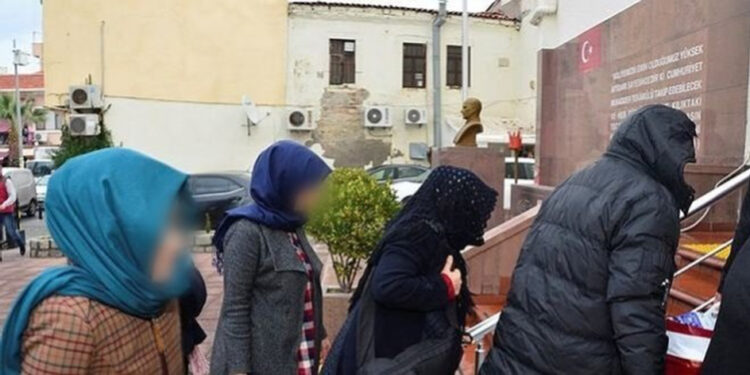
    Politicians and human rights activists from Turkey and around the world have expressed anger, disappointment and condemnation over the mass detention of people affiliated with the Gülen movement in Turkey for accepting assistance from other Gülen followers or for distributing donations from Gülen members overseas to the families of people jailed by the Turkish government or purged from their jobs over links to the movement, the Stockholm Center for Freedom reported.

    Turkish police teams had as of Wednesday detained 599 people out of 704 for whom detention warrants were issued as part of an investigation into the financial activities of followers of the Gülen movement.

    The Turkish government accuses the faith-based Gülen movement of masterminding a coup attempt on July 15, 2016 and labels it a “terrorist organization,” although the movement strongly denies involvement in the coup attempt or any terrorist activity.

    Interior Minister Süleyman Soylu announced on Tuesday that 543 of the 704 people facing detention had been taken into custody as part the Gazi Turgut Aslan Operation, in simultaneous raids across 59 provinces.

    The number of detainees had risen to 599 by Wednesday, including 244 women. According to the Turkish media, among those detained are mothers with infants and chronically ill and elderly people.

    The detentions triggered reactions from international and Turkish politicians, lawyers and human rights advocates.

    “The mass persecution in Turkey continues,” tweeted former Green member of the European Parliament Rebecca Harms, adding, “The sheer number of these detentions is terrifying. Five Hundred Forty-Three in one day! That the food donations to families of incarcerated people are allegedly a reason for detention is insane. … Turkey, no rule of law.”

  • Journalist on Turkey’s extradition list from Sweden targeted by pro-Erdoğan daily

    Journalist on Turkey’s extradition list from Sweden targeted by pro-Erdoğan daily


    A Turkish journalist living in exile in Sweden who’s on a list of political dissidents whose extradition is demanded by the Turkish government has been targeted by a pro-government newspaper that revealed his home address and published secretly taken photos.

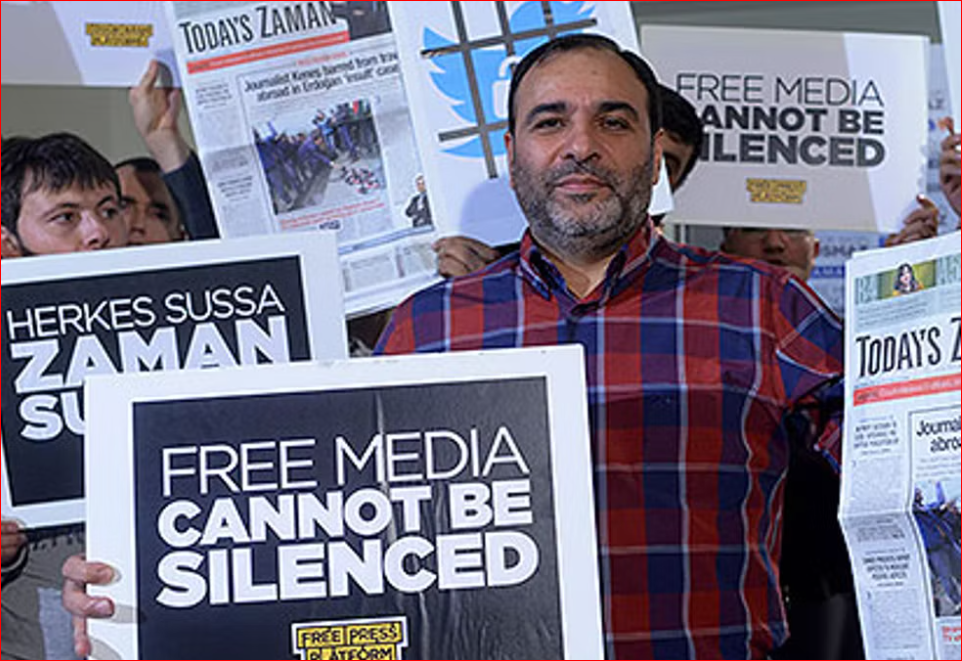
    This time it was journalist Bülent Keneş, an academic and a former editor-in-chief of the now-closed English language daily Today’s Zaman who was targeted by the Sabah daily. Keneş is one of the political dissidents whose extradition Turkey is demanding from the Swedish government in exchange for dropping its objection to the Nordic country’s NATO membership.

    Sabah on Wednesday published secretly taken photos of Keneş leaving a Stockholm shopping center with a bag in his hand. The paper also revealed Keneş’s address in addition to publishing pictures of his house.

    Sabah said Keneş was leading a life of luxury in Sweden, living in TL 10 million ($537,000) “villa,” and that he looked concerned and anxious on the street.

    It was again the daily’s news coordinator, Abdurrahman Şimşek, who is suspected of having ties to Turkey’s National Intelligence Organization (MİT), who followed Keneş in Stockholm for months to find out his address and take pictures of him.

    Şimşek also recently targeted two other journalists in exile, Cevheri Güven in Germany and Abdullah Bozkurt in Sweden, revealing their addresses and secretly taken photos on Sabah’s front page. Bozkurt was the former Ankara representative of Today’s Zaman.

    The three are among the dozens of people who left Turkey in the aftermath of a failed coup in July 2016 to avoid a government-led post-coup crackdown targeting critical journalists as well as non-loyalist citizens.

    They continue their job from abroad, and their reports and social media posts anger the government and its supporters as they talk about the dirty relations of the Turkish government and President Recep Tayyip Erdoğan with crime groups and radical organizations as well as their corruption.

    The journalists are accused by the Turkish government of having links to the faith-based Gülen movement, which is labelled as the mastermind of the failed coup and a “terrorist organization” by the Turkish government.

    Today’s Zaman, a sister newspaper to Turkey’s best-selling newspaper Zaman, was closed down by the government in the aftermath of the coup attempt in addition to dozens of other media organizations due to their links to the Gülen movement.

    An outraged Keneş responded to Sabah’s story in a series of tweets on Wednesday. He said he is not in hiding in Sweden as claimed by Sabah and would have been willing to talk to Şimşek if he had contacted to him instead of following him and covertly taking his picture.

    He said the house where he lives in Stockholm, which is presented as a luxurious “villa” in Sabah’s story, is located in a remote neighborhood and is considered a small house in Sweden and that he rented, not bought, it, contrary to what Sabah claimed.

    Keneş called on Sabah and Şimşek to stop acting as “dishonest subcontractors” of the dirty acts of the Erdoğan regime under the pretext of journalism.

    Keneş, who was one of the founders of the Stockholm Center for Freedom, an advocacy organization that promotes the rule of law, democracy, fundamental rights and freedoms, is also among the founders of the Brussels-based European Center for Populism Studies (ECPS).

    NATO member Turkey is threatening to freeze Sweden and Finland’s attempts to join the Western defense alliance unless they extradite dozens of people Ankara accuses of “terrorism” including Keneş.

    A non-binding deal Sweden and fellow NATO aspirant Finland signed with Turkey in June commits them to “expeditiously and thoroughly” examine Ankara’s requests for suspects linked to the Gülen movement and the outlawed Kurdistan Workers’ Party (PKK), which is recognized as a terrorist organization by Turkey and much of the international community.

    Both Swedish and Finnish government officials said they will continue to respect national and international laws regarding Turkey’s extradition requests and that the decision for extraditions will be up to independent authorities and the courts.

    The seven Gülen-linked political dissidents whose extradition Turkey is seeking from Sweden, according to a report by the state-run Anadolu news agency earlier this month, are writer Harun Tokak, journalists Keneş and Levent Kenez, Yılmaz Aytan, former police chief Murat Çetiner, Orhan Er and Harun Ayvaz, who all face trials in Turkey due to their alleged links to the Gülen movement.

    Some alleged PKK members are also on Turkey’s list, according to Anadolu, which said Sweden earlier rejected Turkey’s extradition requests for these people.

    Sabah’s story about Keneş comes at a time when Turkish journalists in exile are being subjected to attacks by unknown assailants believed to be linked to the Turkish government. The Sabah daily is owned by the Turkuvaz Media Group, whose CEO is Serhat Albayrak, the brother of Erdoğan’s son-in-law and former finance minister Berat Albayrak.

    In March Ahmet Dönmez, a Turkish journalist living in exile in Sweden and known for his reports on mafia groups associated with Turkish government officials including Erdoğan, was attacked by two men in Stockholm.

    Dönmez, who lost consciousness after the attack, which took place in front of his 6-year-old daughter, was treated in intensive care due to an injury to his head.

    In 2020 journalist Bozkurt sustained injuries when he was attacked by three men who were waiting for him in front of his house in Stockholm.

    In July 2021 another exiled journalist, Erk Acarer, was attacked “with fists and knives” in the courtyard of his apartment building in Berlin.turkishminute


  • Turkish businessman missing in Azerbaijan abducted by MİT: opposition MP

    Turkish businessman missing in Azerbaijan abducted by MİT: opposition MP

    Uğur Demirok, a Turkish businessman who went missing in Azerbaijan more than a month ago, was allegedly abducted and illegally brought to Turkey by the National Intelligence Organization (MİT), the TR724 news website reported on Wednesday, citing an opposition lawmaker.

    Ömer Faruk Gergerlioğlu, a human rights advocate and deputy for the pro-Kurdish Peoples’ Democratic Party (HDP), on Wednesday brought the issue of Demirok’s abduction to the parliamentary agenda, saying that the businessman’s family was worried about his safety and urging the Interior Ministry and the Ankara Police Department to make a statement on the issue.

    According to the MP, Demirok’s family, who hasn’t heard from him for 36 days, was previously told by Azerbaijani officials that he was taken to Turkey as part of an operation carried out by Turkish spies. After they went to the missing persons bureau in Ankara, the family found out that Demirok was being held at the counterterrorism branch (TEM) of the Ankara Police Department.

    However, when Demirok’s lawyer went to see him, the officials told him his client wasn’t there, according to Gergerlioğlu.“TEM [initially] admitted [they were keeping Demirok in detention] and then denied it. … I invite the Interior Ministry and the Ankara Police Department, where [victims of] enforced disappearances [usually] emerge after a while, to make a statement as soon as possible,” the lawmaker said.

    According to a report by the Bold Medya news website earlier this month, 42-year-old Demirok, who had been working in the medical equipment business in Baku for the past seven years, left his home to go to work on the morning of Sept. 6 and was never heard from again.

    A worker from the carwash on the same street as Demirok’s office, in front of which his car was found with its doors unlocked on the day he went missing, reportedly told the businessman’s wife that he saw people whose faces were covered with masks putting him in a van and taking him away.

    The same witness also said he saw suspicious people walking on the street where Demirok’s office is located a few days earlier, Bold Medya said.

    The businessman’s wife, Nurdan Demirok, also told Bold Medya that she found footage supporting what she had heard from the witness on a security camera that monitored the street.

    “My husband enters the camera’s view at 08.50. Nine minutes earlier … two minibus-type vehicles are seen passing [one after another] within a short period of time, while a pedestrian is seen talking on the phone. I interpret it to mean that the people who took my husband came and prepared in advance. There are some [witnesses] who say that the entrance to the street was blocked by another group during those critical moments,” she said.

    During the 1980s and ’90s, many people “disappeared” in Turkey’s predominantly Kurdish areas. The practice had been long gone until it reappeared in the wake of an attempted coup against Turkish President Recep Tayyip Erdoğan that claimed the lives of 251 people on July 15, 2016.

    Dozens of enforced disappearances have been reported in Turkey since the abortive putsch, with more than 20 of the victims reporting, after they were found, that they were subjected to torture during the time they were “missing.”

    The victims of those enforced disappearance cases were mostly alleged followers of the Gülen movement, which is inspired by the US-based Muslim cleric Fethullah Gülen and targeted by the president since the corruption investigations of Dec. 17-25, 2013, which implicated then-Prime Minister Erdoğan, his family members and his inner circle.

    The war against the movement culminated after the attempted coup in Turkey in July 2016 because Erdoğan and his Justice and Development Party (AKP) government designated the movement as a terrorist organization, accused them of masterminding the abortive putsch and initiated a widespread purge aimed at cleansing sympathizers of the movement from within state institutions, dehumanizing its popular figures and putting them in custody. The movement strongly denies involvement in the coup attempt or any terrorist activity.

  • Gendarmes escort former member of Council of State to son’s funeral

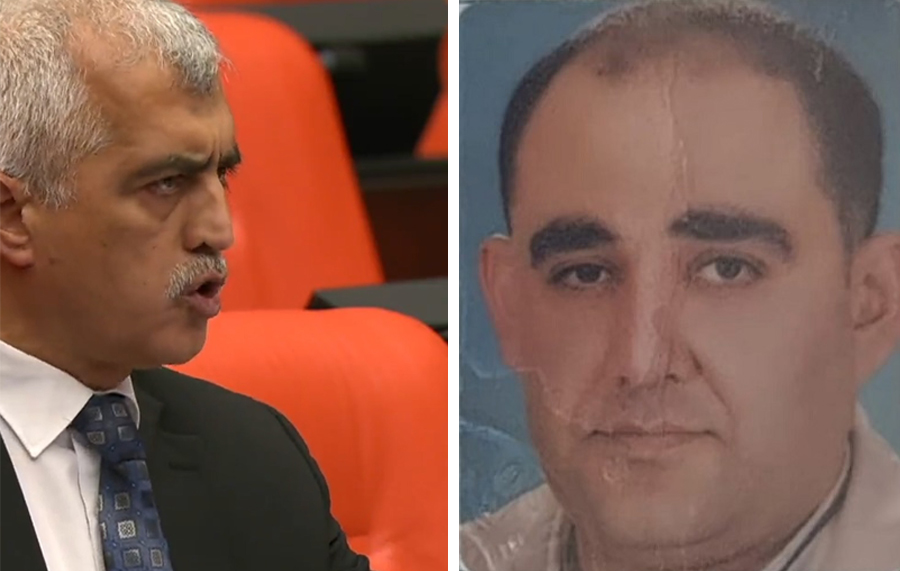
    Haşim Güney, a former member of Turkey’s Council of State who was imprisoned in July 2016 after a failed coup and whose 26-year-old son, Emre Güney, recently died by suicide in İstanbul, was escorted to his son’s funeral on Friday by a group of gendarmes, the Kronos news website reported.

    Emre Güney, a 26-year-old university student, died on Wednesday after he jumped from the observation deck of Galata Tower, an İstanbul tourist destination, reportedly due to depression caused by the imprisonment of his father in a post-coup purge. He began to receive psychological treatment following the arrest of his father.

    Following the coup attempt on July 15, 2016, the Turkish government declared a state of emergency and carried out a massive purge of state institutions under the pretext of an anti-coup fight. More than 130,000 public servants, including 4,156 judges and prosecutors, as well as 29,444 members of the armed forces, were summarily removed from their jobs for alleged membership in or relationships with “terrorist organizations” by emergency decree-laws known as KHKs, subject to neither judicial nor parliamentary scrutiny.
    The Gülen movement, a faith-based group inspired by Turkish cleric Fethullah Gülen, is accused by the government and President Recep Tayyip Erdoğan of masterminding the failed coup and is labeled a “terrorist organization,” although the movement denies involvement in the coup attempt or any terrorist activity.

    Güney was convicted of membership in the Gülen movement and was sentenced to 10 years in prison. He has been in prison for the past six years.

    Güney was taken to his son’s funeral in the custody of gendarmes. He was reportedly given two days’ leave for the funeral but remained with his family for only five hours and was then sent back to prison in the central Anatolian province of Kırıkkale.

    Human rights defender and Peoples’ Democratic Party (HDP) lawmaker Ömer Faruk Gergerlioğlu and the Democracy and Progress Party (DEVA) lawmaker Mustafa Yeneroğlu attended Emre’s funeral.

    “Nobody should doubt that the KHKs are a crime against humanity, a genocide! How can people remain silent about this injustice?” Gergerlioğlu tweeted after the funeral.

    The dismissed civil servants lost 70 percent of their average monthly income, a circumstance that reduced them to dire financial straits, according to a survey.

    According to the victims’ family members taking part in the survey, the biggest problem they have been facing is economic hardship (97.9 percent) followed by psychological distress (88.6 percent), loss of social prestige and social exclusion (83.7 percent), disintegration of social circles (83.1 percent), unemployment/lack of employment (80.4 percent) and lack of social security (73.2 percent).

    Prior to Güney’s suicide, a total of 84 people in Turkey had died by suicide as a result of the post-coup purge since 2016, according to data released by the Brussels-based human rights monitor Solidarity with OTHERS.

  • BOM’s severe weather outlook signals a summer of cyclones and floods

    BOM’s severe weather outlook signals a summer of cyclones and floods

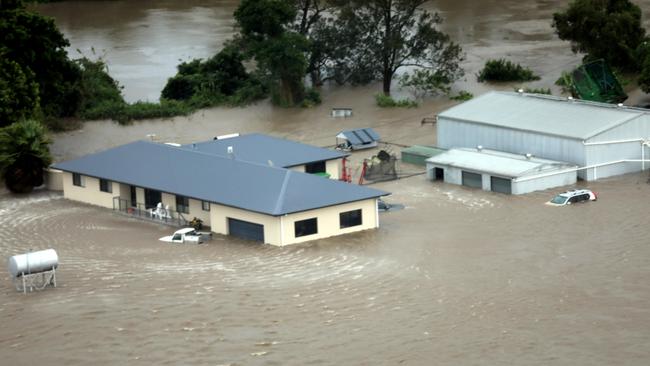
    After multiple years of flooding rains, people have had enough. But the Bureau of Meteorology’s severe weather outlook indicates we are going to have to keep picking ourselves back up again this season.

    The outlook warns of an increased risk of widespread flooding for eastern and northern Australia and an increased risk of an above-average number of tropical cyclones and tropical lows.

    It finds normal bushfire potential in eastern states but an elevated risk of grass fire in southern Australia, and increased risk of prolonged heatwaves in southern areas, along with higher humidity.

    There is a normal risk of severe thunderstorms but a possible increase in risk of thunderstorm asthma events if conditions are dry in late spring and early summer.

    The combination of La Niña conditions in the Pacific Ocean and a negative Indian Ocean Dipole in the west means warm waters are fuelling these wet conditions from both sides and encouraging an early start to the northern wet season.

    Now in the third La Niña year in a row — with rivers, dams and soil up and down the coast already brimming — it isn’t taking much to trigger floods, as we saw this weekend.

    Most of the country is enjoying a brief respite from the relentless rain today but water is still streaming its way down creeks and rivers, especially in New South Wales.

    The next round of rain is expected from Tuesday night. More on the forecast below.

    Judging from this outlook, it will be just one of many more rounds to come. abcnews

  • Erdoğan pardons disabled bomb expert 20 months after his incarceration


    Turkish President Recep Tayyip Erdoğan has used his presidential power to pardon disabled former bomb disposal expert Bilal Konakçı nearly 20 months after he was put behind bars for conviction on bogus terrorism-related charges, the Kronos news website reported on Friday, citing the Official Gazette.

    Konakçı was a decorated police officer whose life was upended in 2009 after a bomb left in front of a school detonated while he was trying to defuse it. Besides losing his eyesight and right hand, he also lost some of the fingers on his left hand. He has difficulty walking as well as hearing loss.

    Konakçı was arrested after a coup attempt on July 15, 2016 for alleged links to the Gülen movement, a faith-based group inspired by Turkish cleric Fethullah Gülen.

    He was accused of terrorism for having an account at Bank Asya, a commercial bank founded by businessmen affiliated with the Gülen movement, and for using the ByLock messaging app. He was released and put under house arrest after remaining in police custody and jail for more than a month.

    He was re-arrested in February after Turkey’s Supreme Court of Appeals upheld a conviction and sentence handed down on the charge of membership in a terrorist organization.

    A decision concerning the pardon of the 45-year-old Konakçı based on a Council of Forensic Medicine (ATK) report on his “continuous illness and disability,” sent by the Ministry of Justice, was published in the Official Gazette on Friday, Kronos said. The decision by the president, who has the authority to pardon convicts due to advanced age or health problems according to the 104th article of the Turkish Constitution, lifted the remainder of a sentence of seven years, six months handed down to Konakçı.


    Journalist in exile Sevinç Özarlsan tweeted the first picture of Konakçı after his release from Menemen Prison in the western province of İzmir on Friday.

    “They kept a person in such a condition in prison for 20 months,” Özarlsan said, tagging the Twitter account of Turkey’s Justice Ministry.

    Konakçı previously said in a letter he wrote from prison that he feared for his life there and that life had become unbearable as he was unable to take care of himself due to his severe disabilities. “Prison conditions are endangering my life as I can’t walk, use the bathroom or eat on my own,” he said.

    Erdoğan also pardoned 54-year-old Hasan Şen, who was sentenced to 24 years, seven months in prison on charges of drug trafficking and threatening with a weapon and has been behind bars since 2018, due to a report on his “continuous illness,” according to Kronos.

    Opposition politicians and legal experts have criticized the Supreme Court of Appeals decision to uphold Konakçı’s conviction and sentence without even stopping to think about how he could have committed the crimes he was accused of as a person with such severe disabilities.

    Despite the fact that Ömer Faruk Gergerlioğlu, a lawmaker from the pro-Kurdish Peoples’ Democratic Party (HDP) and a prominent defender of human rights, and Democracy and Progress Party (DEVA) deputy Mustafa Yeneroğlu had previously condemned Konakçı’s imprisonment, and multiple campaigns were held on social media stating he shouldn’t have been arrested and calling for his immediate release, Erdoğan’s decision to pardon him came nearly 20 months after his imprisonment.

    Erdoğan has been targeting followers of the Gülen movement since the corruption investigations of December 17-25, 2013, which implicated then-prime minister Erdoğan, his family members and his inner circle.

    Dismissing the investigations as a Gülenist coup and conspiracy against his government, Erdoğan designated the movement as a terrorist organization and began to target its members. He intensified the crackdown on the movement following an abortive putsch on July 15, 2016 that he accused Gülen of masterminding. Gülen and the movement strongly deny involvement in the coup attempt or any terrorist activity.

  • More than 5,000 people mistreated or tortured in Turkey in 2021: report


    The “2021 Turkey Rights Violations Report” was released by the İHD on its website on Thursday.

    According to the report, 1414 people were subjected to mistreatment or torture in Turkish prisons in 2021, while 2,835 people faced mistreatment as a result of police intervention in protests and gatherings, in addition to 531 people – including 12 children – mistreated or tortured in detention and 704 people – 25 of them children – outside places of detention.

    At least 57 people died behind bars due to negligence, suicide, illness or violence, and 375 women died as a result of domestic violence last year, while 2,170 workers were killed in occupational accidents in Turkey.

    Sixty-nine security officers, 275 militants and eight civilians died in armed conflict inside and outside the borders of Turkey in 2021, and security forces killed 16 and injured 27 people in raids and by firing into a crowd on the pretext that the people did not obey orders, the report also said.

    Turkish police intervened in at least 409 demonstrations, public press statements and gatherings last year, the report said, adding that investigations were launched into 7,704 people for “contravening Law No. 2911 on assemblies and demonstrations” in the same period, citing data from the Justice Ministry.

    According to the report, the number of inmates in Turkish prisons, which have the capacity to safely hold 288,798 people, reached a record high of 326,243 in 2021.

    The human rights report also pointed out the disappearance of Yusuf Bilge Tunç in broad daylight on August 8, 2019, saying he has not been heard from since.

    Tunç’s family has consistently complained about the lack of cooperation from officials to find him after his wife unearthed details indicating that Tunç had been abducted.

    Hüseyin Galip Küçüközyiğit, a former Turkish bureaucrat who had been missing since December 2020 and was found in Ankara’s Sincan Prison in September 2021, is still behind bars, the İHD said in the report, adding that there are three more people missing who they think haven’t been found due to the negligence of the security forces.

    İHD chair Öztürk Türkdoğan said during a press briefing on Thursday where they announced the report that “a new political power and an increased social struggle” is needed to change the permanent effects of the state of emergency on the country.

    Turkey’s Justice and Development Party (AKP) government declared a state of emergency in the aftermath of a failed coup on July 15, 2016 that remained in effect until July 19, 2018, during which the AKP increased the pressure on human rights by issuing a number of government decrees, known as KHKs.

    Human rights violations culminated in Turkey after the abortive putsch in 2016, when the government launched a crackdown on non-loyalist citizens under the pretext of an anti-coup fight. Ill-treatment and torture became widespread and systematic in Turkish prisons and detention centers, with a lack of condemnation from higher officials and a readiness to cover up allegations rather than investigate them, resulting in widespread impunity for the security forces.
  • Alevis claim Erdoğan’s plan to support cemevis is attempt to control their faith

    Alevi leaders and politicians have condemned Turkish President Recep Tayyip Erdoğan’s recent push to establish a new government institution to provide financial support to Alevi houses of worship (cemevis) and hire spiritual leaders, saying the policy aims to bring their faith under state control, Turkish media reported on Friday.

    Alevis are historically the largest religious minority group in Turkey, and they fulfill religious obligations and hold ceremonies not in mosques but in cemevis. Alevis make up as much as 20 percent of Turkey’s 85 million population.

    Erdoğan attended the opening ceremony of a cemevi on Friday.

    Turkey is a majority Sunni country, and millions of the religious, conservative masses view Alevis as apostates. Turkey’s religious authority the Diyanet does not recognize cemevis as places of worship. As a result, mosques have civil servant imams and enjoy government subsidies for their electricity and water bills, but cemevis struggle to pay high utility bills as they fall under the status of “commercial users” and don’t have government-paid clerics like Sunnis do.

    During the ceremony, Erdoğan announced that a new institution was to be established under the Ministry of Culture and Tourism, named the Directorate of Alevi Bektaşi Culture and Cemevis.

    According to Erdoğan, the institution will take care of cemevis’ financial obligations such as utility bills and maintenance costs.

    “The people who run cemevis will be given a staff by the state if they want one,” Erdoğan said.

    The new policy was denounced by some leaders of the Alevi community and other prominent Alevis.

    Ali Kenanoğlu, founder of the Federation of Alevi Foundations, said, “This is not an AKP [Justice and Development Party] project, but a state project,” implying that a deeper bureaucratic plot to put Alevism under state control is at play.

    Kenanoğlu added that the government wants to take Alevism under control through the Ministry of Culture in a way that the Sunni public and Sunni Islam have been taken under control by the state through the Diyanet.

    “A faith under government control should be out of the question,” said Reha Çamuroğlu, who was an AKP deputy between 2007 and 2011.

    Çamuroğlu said the policy is an attempt to appropriate Alevism. “Will the ministry coordinate worship? Will they allocate a budget to the Alevi community’s houses of worship? Who is going to use that budget? It would be enough if they provided the privileges that mosques enjoy. Beliefs must be independent of the state. Believers themselves must pay for their religious activities,” he said.

    There are long-standing tensions between the Alevi and Sunni communities in Turkey. Hundreds of Alevis were killed in pogroms, which many now believe were masterminded by groups inside the state, in the cities of Çorum, Yozgat and Kahramanmaraş in the 1970s.

  • Albanian court approves decision to close Gülen-linked school

    Albanian court approves decision to close Gülen-linked school

    An Albanian court on Friday ruled in favor of a government decision to close a school with links to the Gülen movement, a faith-based group accused by Ankara of orchestrating a coup in Turkey in 2016 although it denies any involvement, Turkey’s state-run Anadolu news agency reported.

    Albania’s government was accused of caving in to Turkey’s authoritarian President Recep Tayyip Erdoğan after it abruptly closed a Gülen-linked school on Sept. 22.

    After public criticism of the decision, Education Minister Evis Kushi said the school, Mehmet Akif Ersoy College, had its license revoked because the location of the building had been changed without permission and that it no longer met the legal criteria to operate as a school.

    Mehmet Akif Ersoy College said it only learned about the closure order from the media and that it would challenge it in court.

    It added that on Sept. 14, an inspection was carried out by the Ministry of Education and on Sept. 22 the school was notified by mail that the school does not meet the criteria to continue operations.

    Anadolu also reported that a kindergarten that had ties to the Gülen group-affiliated college was also ordered to close.

    Many criticized the decision and connected it with Erdoğan’s repeated calls for Albania to close institutions connected with his arch-foe Fethullah Gülen, the inspiration of the movement who has lived in self-imposed exile in the US since 1999.

    At its peak, the Gülen movement, a worldwide civic initiative renowned for its educational activities, operated schools in 160 countries, from Afghanistan to the United States. In Turkey, the network had run thousands of educational facilities, including schools, prep schools, universities and dormitories.