Author: Zaman Australia

  • What’s in the budget? Here are some of the major measures we know about

    Treasurer Jim Chalmers will unveil his second budget on Tuesday.

    It follows his “mini-budget” in October, which was released five months after Labor won the May election.

    Aside from registering a surplus for the first time in 15 years, Tuesday’s budget will be far more substantial for policy announcements, and we already have a pretty good idea of what’s in it.

    Here are some of the biggest policies that have been flagged ahead of time.

    Almost $15 billion in cost of living relief will be a big element of Tuesday’s budget.

    The package will be spent over the next four years, and will include $1.5 billion in electricity bill relief for 5.5 million households and about 1 million small businesses.

    Pensioners, people on other income support payments, and small businesses will have their energy bills subsidised by up to $500.

    But the size of the rebates won’t be the same for everyone.

    They’ll be determined by where you live in Australia because the government has struck eight different deals with different state and territory governments to share the cost of the rebates.

    Mr Chalmers says the cost of living package, as a whole, has been designed in such a way that it won’t add to inflation.

    The federal government plans to change the dispensing rules at pharmacies so people can buy two months’ worth of medicines on a single prescription, with the change affecting more than 300 common medicines.

    The current rule is that only 30 days’ supply of medicine is able to be supplied to patients.

    But Health Minister Mark Butler says that under the 30-day rule, given that GPs can issue a script with five repeats, a patient with a chronic disease will, at the very least, have to visit their GP twice a year and make 12 visits to the pharmacist a year to get their medicines, and make a co-payment to the pharmacist each time.

    He says the rule change will halve the number of visits people have to make to a pharmacist, cutting the cost of medicine.

    The advice to make the change came from the Pharmaceutical Benefits Advisory Committee (and it dates back to 2018).

    Mr Butler announced the plan last month.

    The Pharmacist Guild of Australia has reacted angrily to the plan and has been campaigning against it. But the Royal Australian College of General Practitioners says it’s a “win for patients“.

    The federal government passed its cheaper childcare package through parliament in November, so it will be included in this budget.

    The lower childcare costs will start flowing from July, at the start of the new financial year.

    It will provide cheaper child care for about 1.2 million families.

    It will see Child Care Subsidy rates lift to 90 per cent for families on a combined income of $80,000 or less.

    For families earning over $80,000, the subsidy rate will taper down by 1 percentage point for every additional $5,000 of family income until the subsidy reaches 0 per cent for families earning $530,000.

    A typical family earning about $120,000 with a child in care three days a week will save about $1,700 a year.

    The existing measure that provides a higher Child Care Subsidy rate to families with multiple children aged five or under in care will be retained.

    It will see total spending on subsidies of $55.3 billion over the next four years.

    The government will also expand access to financial support for single parents by raising the age cut-off for the Parenting Payment (Single) from eight years to 14, at a cost of $1.9 billion over four years.

    The government will provide $11.3 billion to fund a 15 per cent pay rise for aged care workers.

    It will accept the ruling from the Fair Work Commission that the pay rise should be delivered in one go, rather than in increments.

    Aged Care Minister Anika Wells says workers will get an extra $7,000 annually from the pay rise.

    This one is potentially very important.

    The federal government says it wants to make Australia a “renewable energy superpower” and late last week it announced a plan to establish a “Net Zero Authority” to make it happen.

    Tuesday’s budget will include some details of the plan.

    The new agency will be asked to help workers in coal-dominated regions to find employment and access new skills training as the economy transitions away from fossil fuels towards renewable energy.

    It will help communities attract new clean energy industries and support investors with those opportunities.

    It will also coordinate policies and programs across government departments to help different regions of Australia attract new clean energy industries.

    Climate Change and Energy Minister Chris Bowen unveiled the plan on Friday.

    “We want it to be a one-stop shop for workers who are thinking about the transformation [and] how they prepare for the jobs of the future,” he said at the time.

    The budget will include funding for the government’s new National Anti-Corruption Commission (NACC).

    The legislation to create the NACC passed federal parliament in November, and the government committed $262.6 million over four years to support its establishment.

    Every state and territory already has a form of anti-corruption or integrity commission, so the Commonwealth had been a laggard in this area until now.

    The commission will investigate and report on serious or systemic corruption in the Commonwealth public sector, refer evidence of criminal corrupt conduct for prosecution, and undertake education and prevention activities regarding corruption.

    It will have powers similar to a royal commission.

    This is a tough area for the government.

    It has been under increasing pressure from welfare groups, social policy experts, and some economists to raise the rate of the JobSeeker payment to levels that are far more equitable.

    The government has announced it’s scrapping the Parents Next program, ending compulsory mutual obligations for about 100,000 parents who were forced into the program.

    It is also expected to increase JobSeeker payments slightly for older long-term unemployed people, for people aged over 55.

    But Mr Chalmers says there will be more announcements in the budget in the welfare area.

    The government says it will cost about $19 billion over an initial four-year period to start implementing the recent defence strategic review’s recommendations.

    That includes $9 billion for the AUKUS nuclear-powered submarine project and $4.1 billion for missiles and manufacturing.

    The government says it will recoup some of those costs through $7.8 billion of downgraded and scrapped projects.

    It adds to Australia’s commitment to the controversial nuclear submarine program, which is estimated to cost between $268 billion and $368 billion over the next 30 years.

    As part of that figure, $8 billion will be spent on upgrading the naval base HMAS Stirling in Western Australia.abcnews
  • Former Erdoğan insider exposes $1 bln corruption scheme in bombshell revelations

    Former Erdoğan insider exposes $1 bln corruption scheme in bombshell revelations

    Bünyamin Tekin

    A former confidant of Turkish President Recep Tayyip Erdoğan revealed the details of a $1 billion corruption scheme involving a 2007 tender, implicating the then-prime minister and current president and other key political figures in the scandal, in a shocking video released by journalist Cevheri Güven on Friday.

    Ali Yeşildağ, a former associate of Erdoğan and a member of the influential Yeşildağ family, claimed that he and Ali İhsan Arslan, also known as Mücahit Arslan, an MP from the ruling Justice and Development Party (AKP) since 2015, were key figures in a criminal organization that helped Erdoğan profit by manipulating a tender for the operating rights of Antalya Airport. In the video Yeşildağ shared how the operation was taken over from Çelebi Holding through a series of crimes and tricks, with the contract ultimately awarded to businessman İbrahim Çeçen.

    According to Yeşildağ, Çelebi Holding was prepared to bid up to $5 billion for Antalya Airport, but its tender documents were stolen, which resulted in the company being excluded from the bidding. The specifications of the tender were detailed and the bureaucracy justified the disqualification of Çelebi Holding.

    The contract was then awarded to İbrahim Çeçen for $3 billion, with Erdoğan allegedly pocketing the $1 billion in the process

    “The biggest characteristic of Tayyip Abi [Erdoğan] is that he steals your money and then makes you applaud him,” Yeşildağ said in the video.

    “So far, two people have released videos and made revelations about Erdoğan’s corruption and crimes. One is Sedat Peker, and the other is Muhammed Yakut. Both are known mafia leaders in Turkey. They are people Erdoğan used for a while and then got into conflicts of interest with,” investigative journalist Güven, who posted the video on his YouTube channel, told Turkish Minute.

    Peker and Yakut have both made revelations about Erdoğan’s alleged corruption and crimes. Peker is a mafia boss living in exile in the United Arab Emirates, while Yakut, a Kurdish businessman, has been exposing alleged links between AKP figures and shady businesses, black money, mafia schemes and the murky background of a 2016 coup attempt on his YouTube channel, which was recently blocked by Turkish authorities. Many believe the failed coup was a false-flag aimed at entrenching the authoritarian rule of President Erdoğan by rooting out dissidents and eliminating powerful actors such as the military in his quest for absolute power.

    “Ali Yeşildağ, however, is different from these two people. Ali Yeşildağ is a member of the Yeşildağ family. Erdoğan and the Yeşildağ family have a 40-year relationship. When Erdoğan was arrested and jailed in 1999, Hasan Yeşildağ, the eldest of the Yeşildağ brothers, went to prison with Erdoğan for a minor offense and, in his own words, served as Erdoğan’s bodyguard in prison. The Yapı Yapı company, in which the Yeşildağ family has a share, is now worth several billion dollars, a fortune made during the Erdoğan era. Etiler Ulus Cafe, owned by the Yeşildağ family, with its exquisite view of the Bosporus, is an important meeting place for the AKP government and state bureaucracy, including members of the Erdoğan family,” Güven said.

    Ali Yeşildağ and his two older brothers, Hasan and Zeki Yeşildağ, have been on the public agenda for a long time. Hasan Yeşildağ was allegedly involved in the assassination of Abdi İpekçi and has been exposed for a series of crimes by Peker.

    “It wouldn’t be an exaggeration to say that members of the government are more likely to make important decisions at the Ulus cafe rather than at a Cabinet meeting,” he added.

    According to the 2022 Corruption Perceptions Index released by Transparency International, Turkey has fallen to 101st place among 180 countries, with a score of 36 out of 100, which is the lowest in the past 10 years. The score indicates the perceived level of public sector corruption on a scale of 0 to 100.

    Transparency International’s study shows that Turkey’s backsliding started in late 2013 when two corruption investigations implicated then-prime minister and current president Erdoğan’s inner circle, which the government subsequently suppressed.

    However, Yeşildağ’s allegations are unique, as they show corrupt practices go as far back as 2007, when the country was on track to become an EU member state and the rule of law, albeit flawed, was in place.

    The release of the video comes at a critical time, with presidential and parliamentary elections set to take place on May 14. These allegations could impact the outcome of the elections, as Erdoğan’s administration faces increased scrutiny amid an economic crisis and high inflation.

    The Turkish government has not yet issued an official response to the allegations made by Ali Yeşildağ.

    According to Güven, this is the first of seven videos in which Yeşildağ will make revelations, to be released until the elections on May 14.

    Güven is a Turkish journalist who lives in exile in Germany and is on Erdoğan’s wanted list. His videos on YouTube, in which he talks about the Turkish government’s corruption and shady relations, attract millions of viewers.

  • 295 detained, 61 arrested in a month as part of crackdown on HDP

    A total of 143 people were detained as part of a Diyarbakır-based operation that was conducted in 21 provinces on April 25. The detentions, ordered by the Diyarbakır Chief Public Prosecutor’s Office, came three weeks before critical elections on May 14 that could extend Turkish President Recep Tayyip Erdoğan’s two-decade rule.

    Police on May 2 detained at least 32 people in raids in İstanbul in another operation targeting Kurds.

    Nineteen suspects were detained on April 29 as part of an investigation launched by the Ankara Chief Public Prosecutor’s Office.

    According to Özdoğan, several members of the HDP were also detained and some of them were arrested in Edirne, Muş, Eskişehir and Şanlıurfa.

    Parliamentary candidates Müslüm Koyun and Ayten Dönmez from the opposition Green Left Party (YSP) were among the people who were arrested on terrorism-related charges ahead of the presidential and parliamentary elections.

    The HDP — the second-largest opposition party in parliament — is widely seen as a kingmaker in the tight race.

    Erdoğan has often accused the HDP of links to the outlawed Kurdistan Workers’ Party (PKK), which the party denies.

    The PKK is listed as a terrorist organization by Turkey and much of the international community.

    The HDP said in March that it would not field a presidential candidate in the May 14 elections, giving tacit support to Erdoğan’s main rival, Kemal Kılıçdaroğlu, the joint presidential candidate of an opposition alliance of six parties.

    The party announced in late April that it would support Kılıçdaroğlu.

    The HDP, which faces a closure case on terrorism charges, will run in the elections under the banner of the YSP, to avoid the risks of the party’s closure before the elections.

  • Kılıçdaroğlu says if elected, his first act will be to remove bureaucrats involved in crime


    Kılıçdaroğlu, the presidential candidate of an opposition bloc of six parties, on Tuesday told Sözcü that he expects to win the presidential race on May 14 by securing 60 percent of the vote in the first round.

    The CHP leader added that his first act after assuming the top state post would be to dismiss bureaucrats who obeyed unlawful orders from President Recep Tayyip Erdoğan and his Justice and Development Party (AKP) government.

    “Today, there are partisan bureaucrats in state positions. … After we come to power, our priority will be to dismiss those who are involved in bribery, facilitated dirty deeds and served the palace [Erdoğan] rather than the state,” Kılıçdaroğlu said.

    He said Egemen Bağış cannot serve as the Turkish ambassador to the Czech Republic because he is known to have taken “bribes,” and Metin Feyzioğlu cannot remain as the ambassador to the self-declared Turkish Republic of Northern Cyprus (KKTC) since he was recently engaged in disseminating political propaganda for the ruling AKP.

    Bağış, Turkey’s former EU minister and chief negotiator for EU accession, was one of four ministers forced to resign on Dec. 25, 2013, after prosecutors targeted officials from the ruling AKP in a corruption probe. He was accused of accepting bribes in a sanctions-busting scheme run through Turkish state-owned Halkbank to circumvent US sanctions on Iran.

    The AKP government says the corruption probe and the New York trial of people involved in the sanctions-breaking scheme were masterminded by police, prosecutors and judges linked to the faith-based Gülen movement, which it labels as a terrorist organization and also blames for orchestrating a July 2016 coup attempt to topple Erdoğan.

    The movement strongly denies involvement in the coup attempt or any terrorist activity.

    According to Sözcü, Kılıçdaroğlu will also remove the chairmen of the Turkish Statistical Institute (TurkStat), the Disaster and Emergency Management Authority (AFAD), the Housing Development Administration (TOKİ), the Turkish Central Bank, the Red Crescent (Kızılay) and Turkey’s public broadcaster TRT, which are thought by many to have come under political interference from Erdoğan’s government.

    Sözcü also said hundreds of bureaucrats whose tenure is limited to the time in office of the president will only continue to serve until new appointments are made following the election of a new head of state, according to a presidential decree issued in 2018.

    They include the heads of the Religious Affairs Directorate (Diyanet), the National Intelligence Organization (MİT), the National Security Council (MGK), the Social Security Institution (SGK) and the Directorate General of Migration Management (DGMM) in addition to deputy ministers.

  • RBA boss Philip Lowe defends shock interest rate rise, saying ‘there is a limit’ to inflation patience

    The decision was taken at an RBA board meeting in Perth — the first time since before the pandemic that the bank had made it to the West — and governor Philip Lowe spoke at a dinner filled with business leaders to explain why the pause was so short.

    “We have seen further evidence that the Australian labour market is still very tight, that services price inflation is proving to be uncomfortably persistent abroad, and that asset prices — including the exchange rate and housing prices — are responding to changes in the interest rate outlook,” he told the gathered crowd.

    Mr Lowe was referring to March unemployment data, released in April, showing the jobless rate remained at near-a-50-year low of 3.5 per cent after more than 50,000 extra jobs were added to the economy.

    The Australian dollar had been edging lower — sitting just above 66 US cents before the rates decision was announced — jumping to 67 US cents soon after. A lower dollar lifts import prices and, thus, inflation.

    House price data released on Monday showed a second consecutive month of national gains, with the five biggest capitals all posting price rises in April, and the average of regional markets up too, albeit barely.

    However, the coup de grace was last week’s inflation number for the March quarter.

    Initially interpreted by a majority of economists as supporting at least another month or two on hold, the RBA was spooked by an acceleration in price rises for services, such as hospitality, healthcare and education.

    “Goods price inflation is slowing, which is good news,” Mr Lowe said, “but services and energy price inflation is still high and likely to remain so for some time.

    “Looking overseas, we see worryingly persistent services price inflation.

    “It is possible that circumstances might be different here in Australia, but the experience abroad points to an upside risk, especially given the high degree of commonality across countries in inflation dynamics recently.”


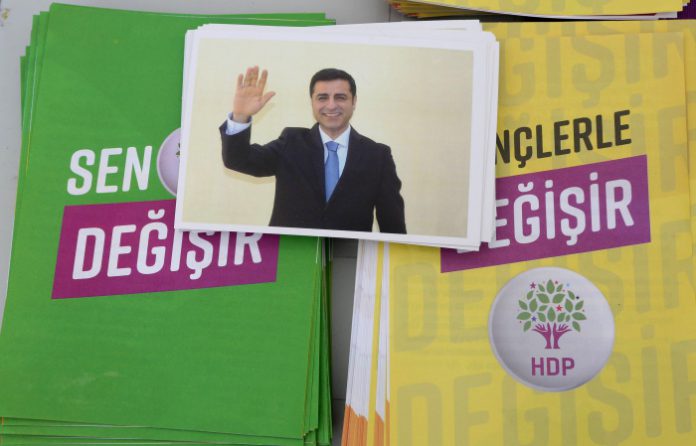
  • Erdoğan vows not to release Demirtaş from prison as long as he is in power


    Demirtaş, former co-chairperson of the pro-Kurdish Peoples’ Democratic Party (HDP) and also a human rights lawyer, has been behind bars since November 2016 on politically motivated charges.

    He was an outspoken critic of Turkey’s ruling Justice and Development Party (AKP) and its leader, Erdoğan, before he was jailed. He ran in the presidential elections of 2014 and 2018 as a rival to Erdoğan. The imprisoned leader conducted his election campaign from jail for the 2018 election.

    Erdoğan was speaking at his party’s election rally in Ankara on Sunday.

    “As long as we are in office, neither Selo nor that child murderer can be released, they won’t be able to get out, they will serve their sentences,” the president said, referring to Demirtaş and Abdullah Öcalan, jailed leader of the outlawed Kurdistan Workers’ Party (PKK), respectively.

    Recognized as a terrorist organization by Turkey and much of the international community, the PKK has been waging a bloody campaign in Turkey’s Southeast since 1984. Öcalan was captured by Turkish security forces in Nairobi in 1999 and has been jailed on İmralı Island in the Sea of Marmara ever since.

    Following Erdoğan’s remarks, Demirtaş said in a tweet, posted through his lawyers, that he would explain why the president was being “so bitter, angry and hostile” towards them in a statement he would make at 7 p.m. on Monday.

    Demirtaş last week shared four decisions for his release in a series of tweets, accusing Erdoğan of ignoring the judgments of local courts and the European Court of Human Rights (ECtHR).

    Listing the decisions that were rendered by the ECtHR in 2018, the Ankara 19th High Criminal Court in 2019, the Constitutional Court in 2020 and the Grand Chamber of the ECtHR in 2021, the Kurdish leader argued that it was Erdoğan who had prevented compliance with those decisions.

    Erdoğan and his ruling AKP, in addition to their ultranationalist election partner, the Nationalist Movement Party (MHP), accuse the HDP of links to the outlawed PKK and also accuse other opposition parties of collaboration with it from time to time.

    The HDP currently faces a closure case on charges of “attempting to destroy the indivisibility between the state and the people,” and hundreds of its politicians, including former co-chairs, are behind bars on terrorism charges, while most of the 65 HDP mayors elected in the predominantly Kurdish Southeast in 2019 have been replaced by government-appointed trustees.

    The HDP said last month it would not field a presidential candidate in the May 14 elections, giving tacit support to Erdoğan’s main rival, Kemal Kılıçdaroğlu.turkishminute

  • Turkey marks May Day amid police interventions, detention of protestors, journalists


    Turkish riot police detained more than 35 people trying to reach İstanbul’s main Taksim Square for May Day demonstrations protesting economic hardship and the exploitation of labor.

    The ban on May Day demonstrations in Taksim has been in effect for several years due to security concerns. Police closed all roads leading to Taksim Square with barricades and increased its presence in the area on Monday.

    Taksim Square holds symbolic value for Turkey’s labor movement. During a 1977 May Day event, 34 people were killed there when shots were fired into the crowd from a nearby building. Representatives from HAK-SEN, a public servant labor union, were allowed to lay wreaths at the site.

    HAK-SEN representatives also held a symbolic funeral prayer in the area for civil servants who they said are like the living dead due to the rising cost of living in the country, skyrocketing rents and low salaries.

    Authorities indicated the Maltepe meeting area on İstanbul’s Anatolian side was the venue for celebrations where representatives from labor unions delivered speeches.

    This year’s May Day celebrations are held two weeks before critical presidential and parliamentary elections scheduled for May 14.

    Confederation of Progressive Unions of Turkey (DİSK) Chairperson Arzu Çerkezoğlu, who delivered a speech in Maltepe, said Turks will make a choice between “despotism and freedoms” on May 14.

    “We will rid ourselves of this system of evil together. Let’s make a promise together, will we eliminate the rule of the tyrants,” she told the crowd, referring to the rule of the Justice and Development Party (AKP).

    Main opposition Republican People’s Party (CHP) İstanbul provincial head Canan Kaftancıoğlu said May Day will be joyfully celebrated next year in Taksim Square under the rule of her party and its leader, Kemal Kılıçdaroğlu.

    Kılıçdaroğlu, the joint presidential candidate of an opposition alliance, poses the greatest challenge to the two-decades-long rule of President Recep Tayyip Erdoğan. Opinion surveys show Kılıçdaroğlu neck-and-neck with Erdoğan or winning against him in the presidential race.

    Many labor unions expressed hope that this will be the last May Day that Taksim Square is closed.

    In the predominantly Kurdish province of Diyarbakır, protestors also faced police intervention as they sought to march to Dağkapı Square, which was banned by the local authorities.

    Some journalists were detained and were subject to police violence during Monday’s demonstrations as they tried to cover the event.

    Journalist Zeynep Kuray, who was following the protestors trying reach Taksim Square, was forcibly detained by police although she said she was a journalist and doing her job, according to  the Media and Law Studies Association (MLSA).

    The Confederation of Progressive Unions of Turkey (DİSK) Basın-İş also announced that journalists Sultan Eylem Keleş and Gencer Keten were also violently detained by the police during the demonstrations.

    The Turkish Journalists Union (TGS) tweeted that two other journalists, Bülent Kılıç and Hazar Dost, were also subjected to police violence in the Beşiktaş and Taksim neighborhoods of İstanbul.

    The TGS called on the Turkish authorities to immediately release the detained journalists and to stop preventing them from doing their job.

    Journalists in Turkey frequently face physical attacks and legal harassment due to their journalistic activities.

    Turkey, which is among the top jailers of journalists around the world, ranked 149th among 180 countries in the Reporters Without Borders (RSF) 2022 World Press Freedom Index.

  • Demirtaş accuses Erdoğan of disregarding local court, ECtHR decisions for his release

    Demirtaş accuses Erdoğan of disregarding local court, ECtHR decisions for his release


    Demirtaş, former leader of the pro-Kurdish Peoples’ Democratic Party (HDP) and also a human rights lawyer, has been behind bars since November 2016 on politically motivated charges.

    The Kurdish leader on Wednesday listed in a series of tweets four court decisions for his release that were rendered by the ECtHR in 2018, the Ankara 19th High Criminal Court in 2019, the Constitutional Court in 2020 and the Grand Chamber of the ECtHR in 2021, saying Erdoğan prevented compliance with those decisions.

    “I’m not the guilty one. It is Erdoğan who openly gives instructions to the courts and judges. My response to those who call me a ‘terrorist leader’ is this: You are the terrorists, and you are their leaders!” Demirtaş added.

    Demirtaş was an outspoken critic of Turkey’s ruling Justice and Development Party (AKP) and its leader, Erdoğan, before he was jailed. He ran in the presidential elections of 2014 and 2018 as a rival to Erdoğan. The imprisoned leader conducted his election campaign from jail for the 2018 election.

    His tweets, posted through his lawyers, came after Erdoğan on Monday criticized one of his rivals, presidential candidate Kemal Kılıçdaroğlu, for his election promise to release political prisoners, including such figures as Demirtaş and philanthropist Osman Kavala. Erdoğan also referred to Demirtaş as a “terrorist” in the same speech delivered in the western province of Bursa.

    Erdoğan and his ruling AKP, in addition to their ultranationalist election partner, the Nationalist Movement Party (MHP), accuse the HDP of links to the outlawed Kurdistan Workers’ Party (PKK) and also accuse other opposition parties of collaboration with it from time to time.

    The PKK, recognized as a terrorist organization by Turkey and much of the international community, has been waging a bloody campaign in Turkey’s Southeast since 1984.

    The HDP currently faces a closure case on charges of “attempting to destroy the indivisibility between the state and the people,” and hundreds of its politicians, including former co-chairs, are behind bars on terrorism charges, while most of the 65 HDP mayors elected in the predominantly Kurdish Southeast in 2019 have been replaced by government-appointed trustees.Turkishminute

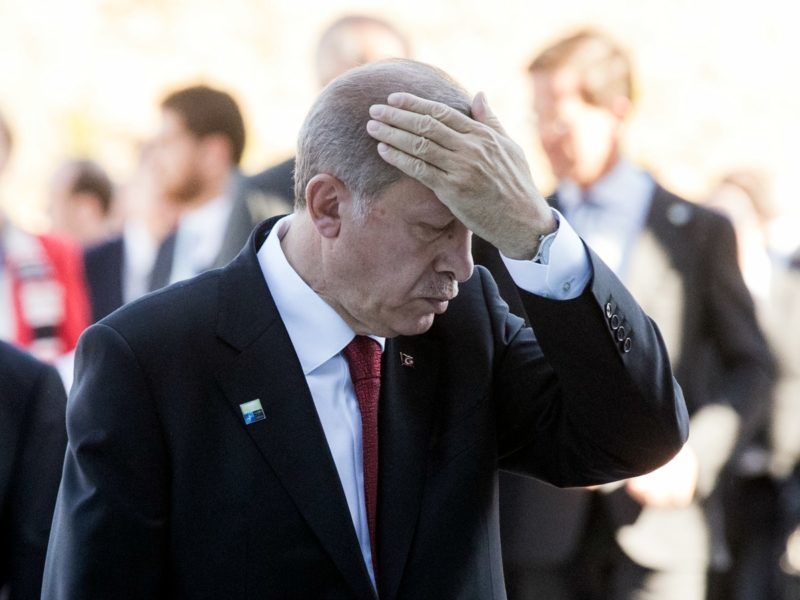
  • Ailing Erdoğan delays video speech at nuclear plant event

    Ailing Erdoğan delays video speech at nuclear plant event


    Erdoğan was set to attend an event for a nuclear plant by broadcast at 1.30 p.m. local time on Thursday. He will now appear via video at 4 p.m., according to a statement from the presidency. It gave no further details.

    Erdoğan, who is facing his toughest election race since taking power in 2003, has remained out of public view since a TV interview late Tuesday during which he was suddenly taken ill with what he described as an upset stomach.

    The Turkish president had already canceled his visit to the $20 billion Akkuyu power plant project on Thursday over health concerns. The plant is being built by Russia in Turkey’s Mediterranean province of Mersin. Russian President Vladimir Putin is scheduled to also attend by video link.

    Erdoğan’s been on the campaign trail ahead of elections where he’ll face an alliance of six opposition parties joining forces to unseat him.

    He’s expected to use the nuclear power plant ceremony to bolster support among voters who back the Turkish leader’s “strongman” image and close ties with the Kremlin ruler. He abandoned a plan to visit Mersin for the event on the advice of doctors, an official with direct knowledge said, asking not to be identified.

    Family Minister Derya Yanık told Turkish television on Thursday that Erdoğan was on the mend, according to Agence France-Presse.

    “There is nothing to worry about. He is well,” she said. “He will resume his intense program tomorrow, I think.”

    But the health scare has upturned Erdoğan’s travel schedule and complicated his path to a third decade of rule.

    Erdoğan is known for his love of campaigning and embrace of political fights.

    Polls show him running neck-and-neck or losing against opposition leader Kemal Kılıçdaroğlu in Turkey’s most momentous election in decades — if not its entire post-Ottoman history.

    His Islamic-rooted party’s control of parliament through an alliance with a far-right group is also under threat.

    Erdoğan had used his campaign speeches to launch venomous barbs at the opposition and portray himself as a man who gets the job done.

    That image has been shaken — and his office is fighting back.

    The president’s powerful media director Fahrettin Altun posted screen shots on Twitter of Chinese state media and some popular accounts speculating about Erdoğan’s condition being more serious than officially reported.

    “We categorically reject such baseless claims regarding President Erdoğan’s health,” Altun wrote.

    “No amount of disinformation can dispute the fact that the Turkish people stand with their leader and Erdoğan and his AK Party are set to win the May 14 elections.”

    Rumors about Erdoğan’s health have been swirling since he underwent two gastrointestinal surgeries in 2011 and 2012.

    The operations went well but left him with a slight hitch in his gait that appears to have fed some of the social media speculation.

    Turkey does not publicize the results of its leaders’ health evaluations and makes it illegal to “insult the president.”

    Thousands of people have been prosecuted for the offence — punishable by either a fine or a jail term of up to four years.

    Turkey’s main opposition leaders all quickly tweeted messages wishing Erdoğan a speedy quick recovery.

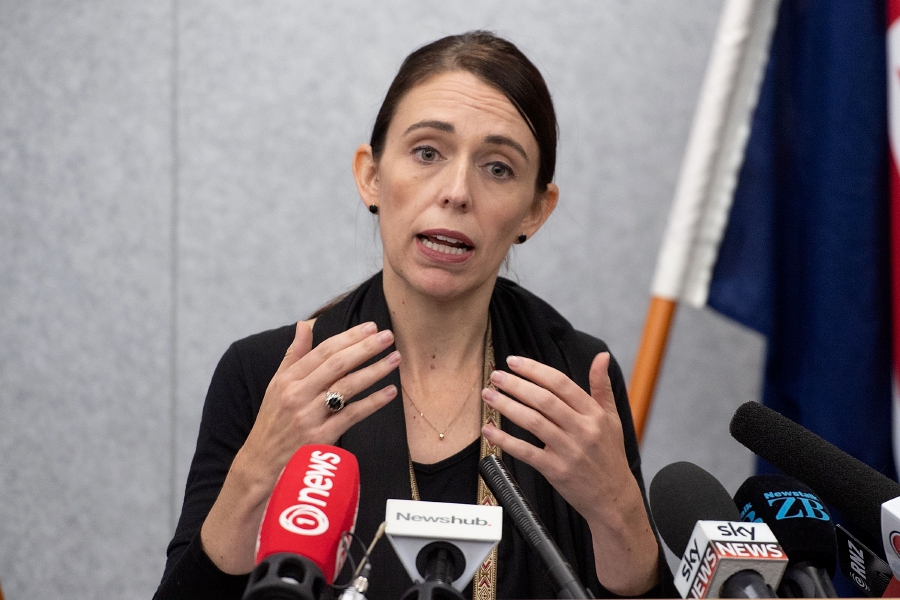
  • Former New Zealand prime minister Jacinda Ardern accepts fellowships at Harvard University

    Former New Zealand prime minister Jacinda Ardern accepts fellowships at Harvard University

    Ms Ardern stepped down as prime minister in January, saying she had “no more in the tank” to lead the country and she would also not seek re-election to parliament.

    She quit parliament earlier this month.

    Harvard University said in a statement she had been appointed to dual fellowships at Harvard Kennedy School and to a concurrent fellowship at the Berkman Klein Center.

    “I am incredibly humbled to be joining Harvard University as a fellow — not only will it give me the opportunity to share my experience with others, it will give me a chance to learn,” Ms Ardern said in the statement.

    She added on Instagram the fellowship at the Berkman Klein Center would not only be a chance to work collaboratively with the centre’s research community, but also to work on the challenges around the growth of generative AI tools.