Author: Zaman Australia

  • Jailed Kurdish leader Demirtaş announces he’s stepping back from political engagement

    Jailed Kurdish leader Demirtaş announces he’s stepping back from political engagement


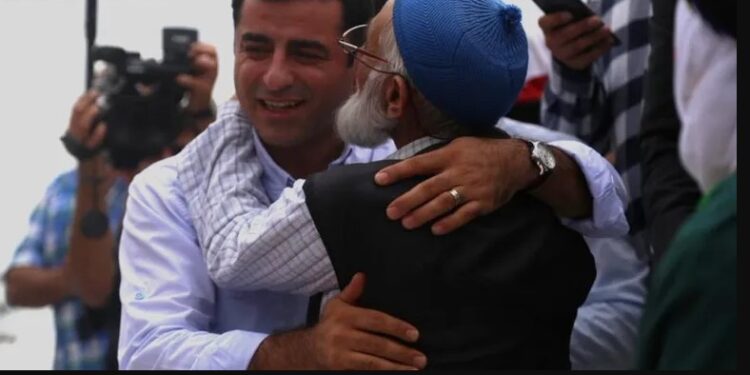
    Demirtaş, a former co-chair of the pro-Kurdish Peoples’ Democratic Party (HDP), has been behind bars since November 2016 on politically motivated charges.

    Sharing two paragraphs from an interview that will be published on Thursday on the Artı Gerçek news website in a tweet posted through his lawyers, Demirtaş expressed his gratitude for constructive criticism directed towards him, adding that he’s stepping back from political engagement “at this stage,” although he’ll continue the struggle “like every comrade from inside the prison.”

    The politician’s statement coincides with his article published on Artı Gerçek, in which he provides an analysis of the reasons behind the HDP’s poor performance in the May 14 general election, saying it wasn’t solely due to unfair competition.

    The HDP ran in the election under the banner of the Green Left Party (YSP) because the party faces the risk of being shut down due to an ongoing closure case against it. The YSP secured 8.8 percent of the vote in the elections, while the HDP won 11.7 percent in the 2018 parliamentary elections.

    Demirtaş stated that it would be “simplistic” to attribute the HDP’s failure in the election solely to such unfair conditions as the ruling Justice and Development Party (AKP) and its allies using all the resources of the state without limit, conducting a massive smear campaign against their rivals “without any regard for moral values” and “playing games at the ballot box.”

    “The alarm bells have been ringing for quite some time now, and these election results serve as a final warning. The way to silence the alarm bells and play victory songs lies in accurate analysis and proper action,” Demirtaş said.

    Stating that the HDP’s vote percentages decreased in 87 electoral districts, Demirtaş said it was mainly due to the party’s disorganized election campaign that lacked professionalism and the fact that the AKP and its far-right ally, the Nationalist Movement Party (MHP), had been conducting the campaign for the 2023 elections for the past five years.

    “Our party intensified its campaign one month before election day, but it was still a half-hearted and disorganized effort. On the other hand, the AKP-MHP government has been engaged in a form of [social] engineering … particularly over the past five years,” he said.

    According to Demirtaş, his attempt to conduct an election campaign from behind bars and his efforts to alarm the masses into working for a change of government have been misunderstood by some of his allies, who thought he was actually promoting himself.

    “I acknowledge my own shortcomings. … I should’ve put in more effort and pushed for collaboration. It’s also necessary for all my colleagues to engage in self-reflection because they haven’t correctly deciphered the AKP-MHP system and failed to make timely and appropriate moves. They also haven’t taken measures against the perception operations conducted against me,” the jailed leader added.

    Demirtaş said they need to make every topic, from the micro-level issues of society to the macro-level challenges, a main agenda and generate organizational and solution-oriented policies.

    “Nobody can make significant progress through slogans alone,” Demirtaş said, adding that social collapse becomes “inevitable” if they fail to explain democratic modernity to a population that has been so heavily exposed to capitalist modernity and provide them with “alternative, beautiful and honorable ways of living,” along with the necessary institutions.

    Demirtaş was an outspoken critic of Turkey’s ruling AKP and its leader, Erdoğan, before he was jailed. He ran in the presidential elections of 2014 and 2018 as a rival to Erdoğan. The imprisoned leader conducted his election campaign from jail for the 2018 election.

    Demirtaş also actively supported the YSP’s and opposition’s presidential candidate Kemal Kılıçdaroğlu’s election campaigns for the May elections on social media through his lawyers.
  • Crackdown on Gülen movement continues with detention of 12 following Erdoğan’s victory

    Crackdown on Gülen movement continues with detention of 12 following Erdoğan’s victory


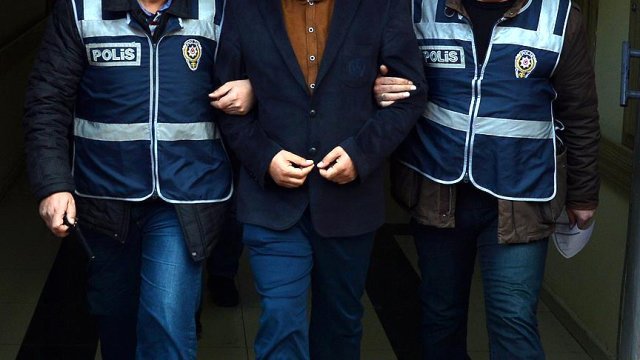
    As part of an investigation launched by the İstanbul Chief Public Prosecutor’s Office, detention warrants were issued on Tuesday for 13 individuals including former military cadets over alleged links to the Gülen movement, a faith-based group accused by the government of “terrorist” activities.

    Turkish police conducted operations in nine provinces and detained 12 of the suspects.

    The accusations include secretly communicating with their contacts within the movement via payphones. The detention warrants were issued based on lists drafted by the country’s National Intelligence Organization (MİT) detailing people who used payphones.

    President Erdoğan has been targeting followers of the Gülen movement, inspired by Turkish Muslim cleric Fethullah Gülen, since the corruption investigations of December 17-25, 2013, which implicated then-prime minister Erdoğan, his family members and his inner circle.

    Dismissing the investigations as a Gülenist coup and conspiracy against his government, Erdoğan designated the movement as a terrorist organization and began to target its members. He intensified the crackdown on the movement following an abortive putsch that he accused Gülen of masterminding. Gülen and the movement strongly deny involvement in the coup attempt or any terrorist activity.

    The so-called “payphone investigations” are based on call records. The prosecutors assume that a member of the Gülen movement used the same payphone to call all his contacts consecutively. Based on that assumption, when an alleged member of the movement is found in call records, it is assumed that other numbers called right before or after that call also belong to people with Gülen links.

    Following the coup attempt, the Turkish government declared a state of emergency and carried out a massive purge of state institutions under the pretext of an anti-coup fight. More than 130,000 public servants, including 4,156 judges and prosecutors, as well as 24,706 members of the armed forces, were summarily removed from their jobs for alleged membership in or relationships with “terrorist organizations” by emergency decree-laws subject to neither judicial nor parliamentary scrutiny.

    In addition to the thousands who were jailed, scores of other Gülen movement followers had to flee Turkey to avoid the government crackdown.

  • Turkish FM says not all Syrians can be sent home since they are needed in labor market

    Turkish FM says not all Syrians can be sent home since they are needed in labor market


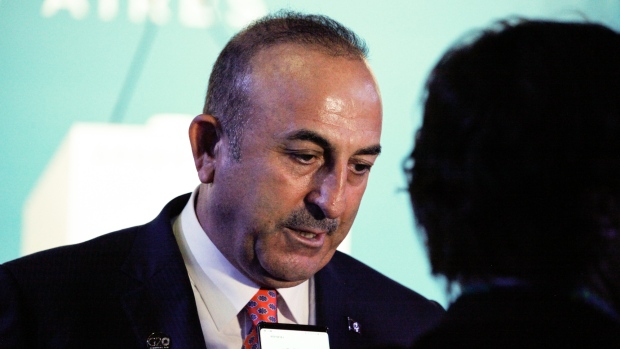
    “If we say we will send all Syrians back, this would not be accurate. Their labor is needed in some areas. My father has sheep, and he complains about not being able to find a shepherd,” Foreign Minister Mevlüt Çavuşoğlu said in televised remarks on Sunday

    The debate about the repatriating of Syrian refugees has heated up after the presidential election held on May 14 as Kemal Kılıçdaroğlu, the main opposition leader and presidential candidate, stepped up his rhetoric and called for the urgent expulsion of Syrian refugees in the country.

    Kılıçdaroğlu is seeking to defeat his rival, President Recep Tayyip Erdoğan, in the runoff election to be held on Sunday since neither of them managed to exceed the 50 percent threshold in the presidential election held on May 14.

    Turkey hosts nearly 3.5 million Syrian refugees who have fled civil war and were registered under temporary protection as of April 2023, according to official figures.

    Refugees in Turkey are frequently targeted by Turkish politicians, who hold them responsible for the social and economic problems in the country.

    Çavuşoğlu said Syrians are needed in Turkey’s agricultural and industrial sectors as well as in wholesale food and produce markets.

    Some people said on Twitter that Çavuşoğlu’s remarks were an admission of the fact that the government sees Syrian people as source of cheap labor.

  • Erdoğan under fire after acknowledging doctored video linking Kılıçdaroğlu with terrorism

    Erdoğan under fire after acknowledging doctored video linking Kılıçdaroğlu with terrorism


    More than 40,000 people, including 5,500 security force members, have been killed in four decades of fighting between Turkish security forces and the PKK, which is listed as a terrorist organization by Turkey and much of the international community.

    Shown by Erdoğan at a huge rally in İstanbul on May 7 and broadcast on live TV, the 14-second clip showed the main opposition Republican People’s Party (CHP) leader and presidential candidate Kılıçdaroğlu trying to rally his supporters to the tune of his campaign song. In the next sequence, members of the PKK echoed that call while clapping their hands to the beat of the song.

    The message Erdoğan was trying to project was clear: The secular opposition leader had formed a union with “terrorists.” Only it was a manipulation, one of the latest pieces of disinformation to pollute the May 14 elections, Turkey’s most important in generations.

    As a response to a question asked during a live broadcast on the state-run TRT Haber on Monday, Erdoğan again accused Kılıçdaroğlu of having video shoots with the PKK and said, referring to the 14-second clip, “Fake or not, PKK members supported [the opposition] with videos.”

    Erdoğan’s statement acknowledging that the video clip he used as evidence linking Kılıçdaroğlu with the PKK was a fake sparked outrage among opposition figures, who accused the president on social media of orchestrating a deliberate campaign to discredit his political opponent.

    Referring to Erdoğan as a manipulator, Kılıçdaroğlu said in a series of tweets that he was tired of being falsely accused while Erdoğan never seems to get tired of spreading false accusations.

    “My God, please reveal to everyone who is innocent and who is guilty,” Kılıçdaroğlu added.


    İstanbul Mayor Ekrem İmamoğlu from the CHP also posted Erdoğan’s remarks in a tweet, saying that a campaign of “slander and conspiracy” unbecoming a Muslim backfired on Erdoğan.

    “The morality, conscience and foresight of this nation won’t tolerate manipulation, false accusations or schemes,” he added.


    Erdoğan’s remarks also drew a reaction from CHP İstanbul branch chairperson Canan Kaftancıoğlu, who accused him of being “not only a manipulator but also a conspirator.”

    She was referring to an incident in 2018 in which Erdoğan shared a photo with the public claiming that the person in it was Kaftancıoğlu. The photo showed a female protester whose face is partially covered preparing to throw rocks during the Gezi Park protests of 2013.


    The protests in 2013 erupted over government plans to demolish Gezi Park in the Taksim neighborhood of İstanbul. They quickly turned into mass anti-government demonstrations that were violently suppressed by the government, leading to the death of 11 protestors due to the use of disproportionate force by the police.

    Former prime minister Ahmet Davutoğlu, leader of the opposition Future Party (GP), also posted a video of Erdoğan’s statement, saying, “Does a Muslim tell lies?”


    Academic Nesrin Nas, a former leader of the Motherland Party (ANAP), also said it was “painful” and “devastating” that the president was making excuses for a fake video, saying it might be something else.


    Meanwhile, Presidential Communications Director Fahrettin Altun criticized Kılıçdaroğlu for referring to Erdoğan as a manipulator, adding that the Turkish nation would hold anyone accountable who dared insult and attack Erdoğan.


  • A year since Anthony Albanese won the election, here’s what he has and hasn’t delivered on

    Only a few weeks ago, Time Magazine selected Australia’s Prime Minister Anthony Albanese

    Only a few weeks ago, Time Magazine selected Australia’s Prime Minister Anthony Albanese

  • G7 leaders announce united approach to China as Joe Biden aims for meeting with Xi Jinping

    G7 leaders announce united approach to China as Joe Biden aims for meeting with Xi Jinping

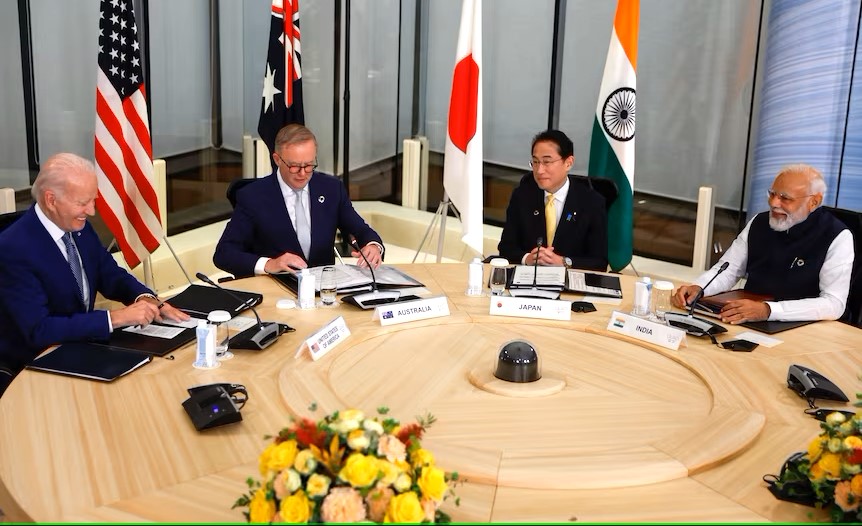
    “We’re not looking to decouple from China. We’re looking to de-risk and diversify our relationship with China,” Mr Biden said on Sunday after a three-day summit with G7 leaders.

    He said G7 nations were more unified than ever in terms of “resisting economic coercion together and countering harmful practices that hurt our workers”.

    G7 leaders outlined a shared approach to “de-risk, not decouple” economic engagement with China in a Saturday communique, prompting China’s embassy in Japan to urged the G7 to stop creating confrontation and division.

    Despite the reaction, Mr Biden said he expected a thaw in frosty relations with China “very shortly” after strains caused by an incident earlier this year when the US shot down a Chinese balloon that flew over sensitive military sites.

    He added that he had agreed with Chinese President Xi Jinping during a G20 summit in Bali last year to keep communications open, but everything changed after “this silly balloon that was carrying two freight cars worth of spying equipment”.

    Mr Biden suggested a shift in US-China relations could occur soon, echoing his comment to reporters before his departure.

    “In terms of talking with them, I think you’re going to see that thaw very shortly,” Mr Biden said.

    On the issue of tensions between China and Taiwan, Mr Biden said there was a clear understanding among most of the allies that if China were to act unilaterally against the self-governed island Taiwan, there would be a response.

    “We’re not going to tell China what they can do,” he said.

    Taiwan’s President Tsai Ing-wen vowed on Saturday to maintain the status quo of peace and stability across the Taiwan Strait amid high tensions with China, which has stepped up military pressure on the democratically governed island.

    Mr Biden reiterated that the US and G7 allies would not trade in materials that would allow China to build weapons of mass destruction, but insisted that was “not a hostile act”.

    He said he would not considering easing restrictions on China on those materials, but it was under negotiation whether to ease sanctions on Chinese General Li Shangfu, who was named in March as China’s new defence minister.Reuters

  • Court releases all jailed suspects in 2002 murder case of Turkish academic


    Hablemitoğlu, an academic in the history department at Ankara University, was murdered outside his home in Ankara on Jan. 18, 2002.

    The Ankara 28th High Criminal Court on Friday released all six suspects due to the possibility of a change in the evidence in their favor.

    Among those who attended Friday’s hearing were suspects under arrest and former soldiers Levent Göktaş, Fikret Emek, Ahmet Tarkan Mumcuoğlu and Gökhan Nuri Bozkır; former intelligence officer Enver Altaylı; and Aydın Köstem, a Turkish arms smuggler who had long worked with the Turkish military and intelligence agency, as well as Mehmet Narin, a defendant who was previously released.

    Hablemitoğlu’s wife Şengül Hablemitoğlu and their daughters were also present in the courtroom.

    A total of 10 people are standing trial in the Hablemitoğlu murder case, including one of three fugitives, Islamic cleric Fethullah Gülen, a resident of the US whose views have inspired the Gülen movement.

    The Justice and Development Party (AKP) government designates the movement as a terrorist organization and accuses Gülen of masterminding a coup attempt on July 15, 2016. Gülen and the movement strongly deny involvement in the abortive putsch or any terrorist activity.

    Hablemitoğlu was known for his research and books on the Gülen movement.

    The movement has time and again been framed in conspiracy theories about Hablemitoğlu’s murder; yet after the 2016 coup attempt, these theories turned into an indictment that accuses the group of the murder.

    The AKP government launched a war against the Gülen movement after the corruption investigations of December 17-25, 2013 that implicated then-prime minister and current president Recep Tayyip Erdoğan’s family members and inner circle. Dismissing the investigations as a Gülenist coup and conspiracy, the AKP government labeled the movement as a terrorist organization and began to target its members. They intensified the crackdown on the movement following the attempted coup.

  • Turkish expatriates across 73 countries casting votes in presidential runoff


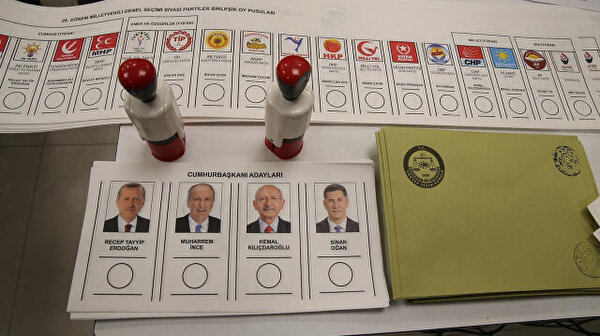
    The presidential election, held on May 14, saw incumbent president Recep Tayyip Erdoğan vying for re-election against his main rival Kemal Kılıçdaroğlu, leader of the Republican People’s Party (CHP). Official results put Erdoğan at 49.52 percent of the vote, narrowly missing the mark, while Kılıçdaroğlu received 44.88 percent. With neither candidate securing the required 50 percent plus one additional vote in the first round, election officials announced that a runoff would be held on May 28.

    Voting for overseas Turks started on Saturday and will continue until May 24 at ballot boxes located in Turkish foreign missions and at customs gates until May 28. According to Anadolu, approximately 3.5 million Turkish nationals are registered to vote overseas.

    Erdoğan’s Justice and Development Party (AKP) and its electoral alliance secured a majority in the parliamentary elections, winning 321 out of 600 seats.

  • Elections well managed, but Erdoğan, ruling parties enjoyed unjustified advantage: int’l observers By Turkish Minute

    Elections well managed, but Erdoğan, ruling parties enjoyed unjustified advantage: int’l observers By Turkish Minute

    Elections in Turkey on Sunday were well managed and offered voters a choice between genuine political alternatives, but President Recep Tayyip Erdoğan and the ruling parties enjoyed an unjustified advantage, international observers representing the Organization for Security and Co-operation in Europe (OSCE) and the Parliamentary Assembly of the Council of Europe (PACE) said in a statement on Monday, the Stockholm Center for Freedom reported.

    International observers from PACE, the OSCE Office for Democratic Institutions and Human Rights (ODIHR) and the OSCE Parliamentary Assembly (OSCE PA) monitored the May 14 presidential and parliamentary elections in Turkey.

    The presidential election will be decided in a runoff, after incumbent President Erdoğan pulled ahead of his chief challenger Kemal Kılıçdaroğlu, leader of the main opposition Republican People’s Party (CHP), but fell short of an outright victory that would extend his rule into a third decade.

    The joint international observation mission found that the legal framework does not fully provide a basis for holding democratic elections.

    “These were competitive but still limited elections, as the criminalization of some political forces, including the detention of several opposition politicians, prevented full political pluralism and impeded individuals’ rights to run in the elections,” said Michael Georg Link, special coordinator and leader of the short-term OSCE observer mission. “Political interference in the electoral process is not in line with Türkiye’s international commitments.”

    Almost 61 million voters were registered to vote in the country as well as 3.5 million abroad, in an election that took place against the backdrop of devastating earthquakes in early February.

    “Turkish democracy is proving to be amazingly resilient. This election had a high turnout and offered a real choice. However, Türkiye does not fulfil the basic principles for holding a democratic election,” said Frank Schwabe, head of the PACE delegation. “Key political and social figures are in prison even after judgments of the European Court of Human Rights, media freedom is severely restricted and there is a climate of self-censorship. Türkiye is a long way from creating fair election campaign conditions.”

    According to the joint mission, misuse of public resources in some cases as well as announcements of significant social benefit programs provided undue advantage to those in power and blurred the line between party and state.

    The joint mission included 401 observers from 40 countries, made up of 264 ODIHR-deployed experts, long-term and short-term observers, 98 from the OSCE PA and 39 from PACE.

  • Premier announces new building commission to regulate NSW construction industry

    Premier announces new building commission to regulate NSW construction industry

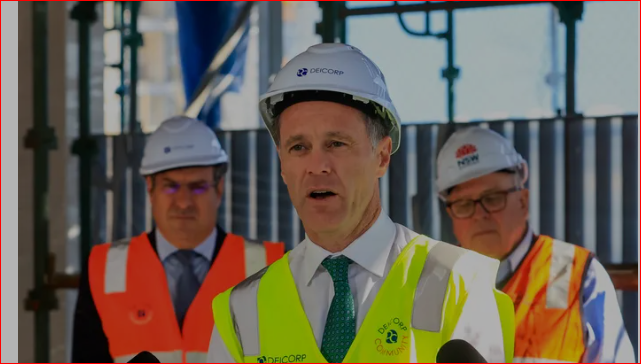
    Premier Chris Minns says he’s fulfilling an election campaign promise to set up a building commission to oversee and regulate the construction industry, by the end of the year.

    The state government on Tuesday announced the commission will ensure quality buildings as it moves to increase supply in the current housing crisis.

    “New South Wales will have greater density and more apartments,” Mr Minns said.

    “To do that properly there needs to be greater confidence in buildings in New South Wales.”

    The previous Coalition government appointed David Chandler as Building Commissioner two and half years ago, after the well-publicised cracks in the Opal and Mascot Towers apartment buildings.

    The defects in those two buildings lifted the lid on structural and safety defects plaguing some developments across the state.

    The premier says developing the commission will help scale up the work Mr Chandler has been undertaking.

    Mr Chandler, who as commissioner was tasked with cleaning up the construction industry, has welcomed the announcement.

    “We’ve got fantastic momentum to build on,” Mr Chandler said.

    “So this will bring the pieces, that are currently not as connected as they could be, together.”

    Mr Chandler says buyers have lost confidence in apartment buildings, and as a result only about 15,000 apartments are being built in New South Wales each year.

    The premier’s vision to address Sydney’s housing shortage is to stop urban sprawl in the west, and have more densely populated suburbs.

    He also wants the population growth and increase in housing supply to be “rebalanced”, so it also occurs east of Parramatta.

    Land audit ordered for new housing space 

    On Monday, the state government announced it had ordered an urgent audit of public land to find new sites for housing.

    They are likely to be along the city’s rail corridor and would be sold off to private developers.

    Each new block would have to include 30 per cent social, affordable or inclusive housing.

    Mr Minns says selling off the land for housing was a commitment he made in the lead up to the March election.

    “It’s not privatisation even by the loosest definition of it,” he said.

    “We were very consistent and clear about our plans in relation to Government land prior to the last election.” ABCNEWS