Tag: Stockholm Center for Freedom.

  • 19 more jailed in investigation targeting Süleymanlılar religious community

    19 more jailed in investigation targeting Süleymanlılar religious community

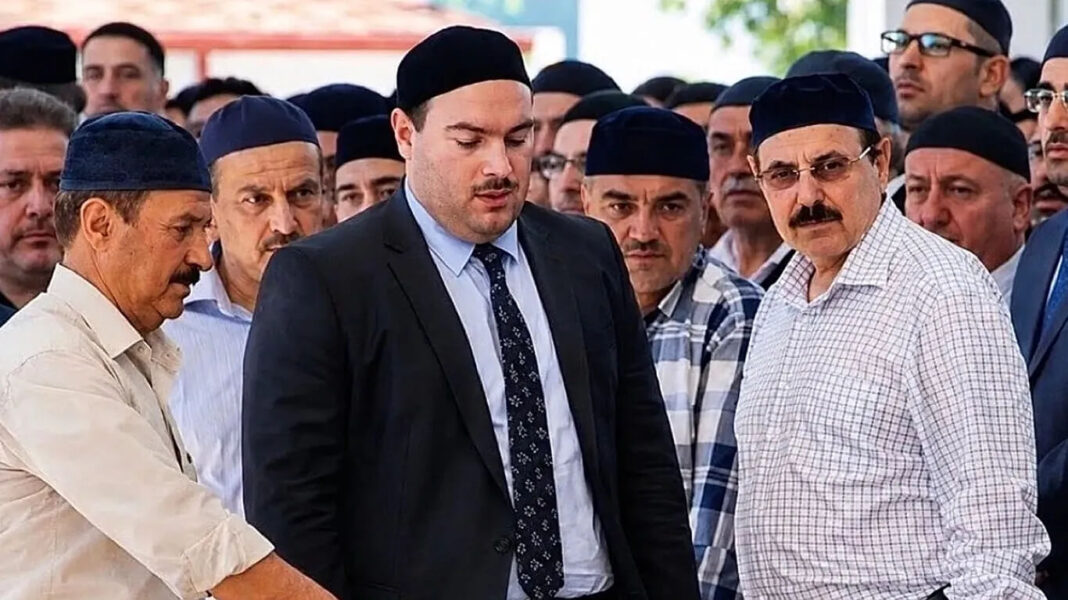
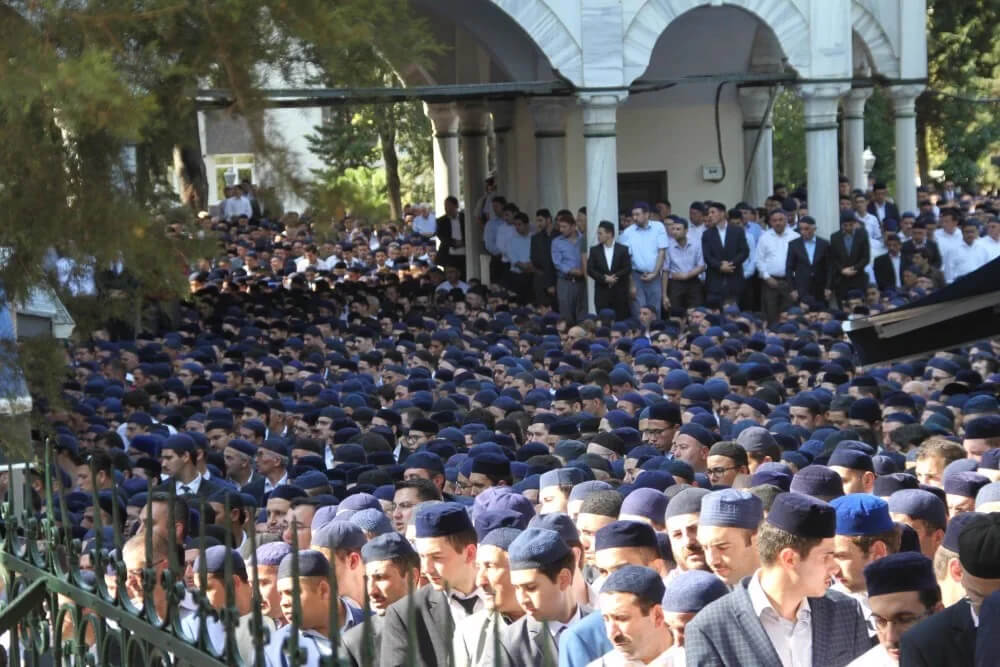
    A Turkish court has ordered the pretrial detention of 19 people in the latest phase of a financial crimes investigation targeting individuals linked to the Süleymanlılar religious community, the DHA news agency reported on Friday.

    Five others were released under judicial supervision after 24 suspects were brought before a court following questioning by police and prosecutors.

    The decisions follow the fifth round of raids in the investigation, led by the Ankara Chief Public Prosecutor’s Office. Police searched 28 homes and 16 workplaces across 12 provinces after prosecutors issued detention warrants for 38 people.

    Twenty-two people were initially detained in the October 19 raids. The number subsequently rose to 24, according to DHA.

    Prosecutors are investigating allegations of establishing, leading or belonging to a criminal organization, money laundering, defrauding public institutions and violations of tax laws.

    The investigation has targeted community leader Alihan Kuriş, who has been jailed pending trial since August. Kuriş has denied leading a criminal organization or participating in money laundering or fraud.

    The case has expanded through successive operations targeting people and businesses linked to the community. In September, prosecutors issued warrants for 29 suspects and secured the appointment of court-supervised trustees to 23 companies.

    The Süleymanlılar trace their roots to Islamic scholar Süleyman Hilmi Tunahan. The community runs Quran courses, student dormitories, charities and businesses in Turkey and Europe, particularly Germany. Kuriş, a grandson of Tunahan, became its leader in 2016.

    The investigation has prompted questions about possible political motives. The community has remained outside President Recep Tayyip Erdoğan’s ruling Justice and Development Party’s (AKP) close circle of religious allies and has at times reportedly supported opposition parties.

    Former education minister Hüseyin Çelik, a founding AKP member, warned in August that investigations into religious communities risked becoming a way to punish groups whose leaders opposed the government.

    He questioned whether the Süleymanlılar would have faced similar action had their leadership supported the ruling party.

    The government denies targeting the community over its beliefs or political position. Justice Minister Akın Gürlek has claimed that the investigation concerns alleged financial crimes rather than religious activities.

  • 2 deputy mayors among 7 jailed in Ankara corruption probe

    2 deputy mayors among 7 jailed in Ankara corruption probe

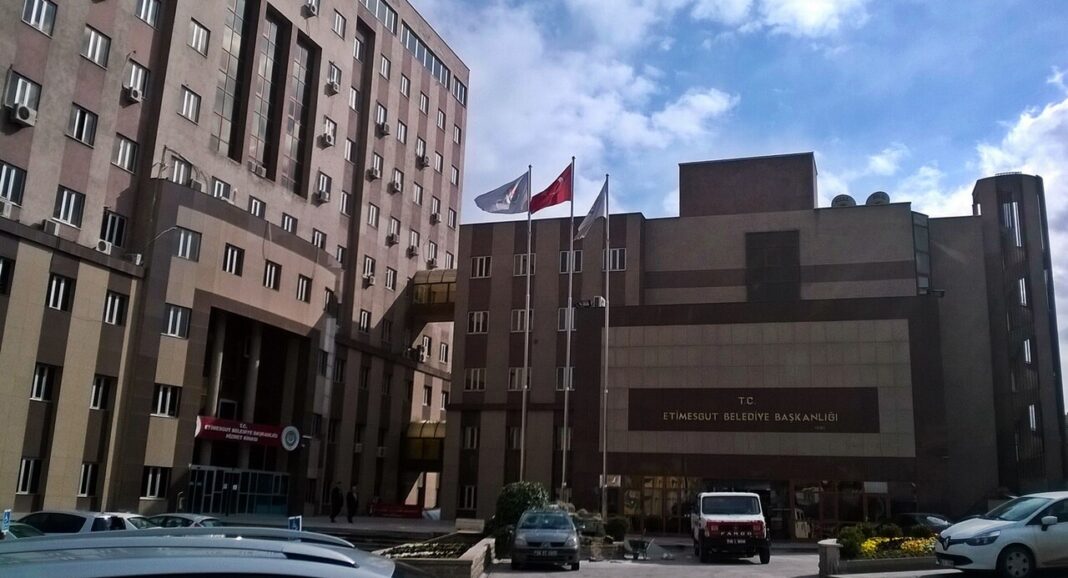
    A Turkish court on Saturday jailed two deputy mayors and five other people pending trial in a corruption investigation into Ankara’s opposition-run municipality of Etimesgut.

    Deputy Mayors Gültekin Bayındır and Fikret Gözüoğlu were among those jailed, while four other suspects were put under house arrest.

    The court decisions followed the detention of 25 people, five of them municipal employees, in raids across five provinces on October 13.

    Etimesgut, in western Ankara, is governed by the opposition Republican People’s Party (CHP).

    The investigation concerns allegations of forged documents and irregularities in municipal contracts, along with improper benefits connected to parking lot leases, zoning decisions and construction permits, according to the Ankara West Chief Public Prosecutor’s Office.

    The offenses under investigation range from bribery, embezzlement and extortion by public officials to forming a criminal organization, rigging tenders and misconduct in carrying out public contracts.

    Nine detainees gave statements under provisions offering leniency for cooperation with investigators, while prosecutors requested judicial supervision for five others, according to a prosecution statement carried by state media.

    The court jailed seven of the 11 suspects whose pretrial detention prosecutors had requested, ordering house arrest for the other four.

    The case had already led to the jailing of Etimesgut Mayor Erdal Beşikçioğlu and 39 others pending trial on August 3, following the detention of 55 people on July 30.

    The Interior Ministry suspended Beşikçioğlu from office the day he was jailed.

    Beşikçioğlu, an actor who plays a homicide detective in the television series “Behzat Ç.,” was elected mayor in 2024.

    He has denied wrongdoing, arguing that some of the irregularities cited in audit reports were uncovered through an internal review he ordered.

    He also denied personal or commercial ties to the companies under investigation and maintained that the municipal tenders in question were outside his direct authority.

    CHP candidate Seda Dilber was elected acting mayor by the city council on August 10, with the support of members from President Recep Tayyip Erdoğan’s ruling party, defeating the New Party’s Mehmet Özdemir.

    The New Party was formed in July by former CHP leader Özgür Özel and lawmakers who left the party after a court removed him as chairman.

    The Etimesgut investigation is part of a series of cases targeting opposition-run municipalities following the CHP’s victory over Erdoğan’s Justice and Development Party (AKP) in the March 2024 local elections.

    Opposition politicians accuse the government of using the investigations to weaken Erdoğan’s rivals and reverse their electoral gains.

  • Turkey detains 32 people over alleged links to Gülen movement

    Turkey detains 32 people over alleged links to Gülen movement

    Turkish authorities have detained 32 people in operations across several provinces over alleged links to the faith-based Gülen movement, Justice Minister Akın Gürlek said Wednesday.

    The operations were part of three investigations launched by prosecutors in Eskişehir and İzmir provinces that targeted 34 people. It was not immediately clear whether any of the detainees had been released or brought before a court.

    In Eskişehir, authorities detained nine of the 10 people included in an investigation into payments made through a US-based company allegedly linked to the Gülen movement. Prosecutors launched the investigation on suspicion that the payments, which were related to food products exported from Turkey, were connected to the movement.

    Turkish President Recep Tayyip Erdoğan has targeted the faith-based Gülen movement, inspired by Muslim cleric Fethullah Gülen, who died in 2024, since corruption investigations in December 2013 implicated Erdoğan as well as some members of his family and inner circle. He dismissed the probes as a Gülenist conspiracy and designated the movement as a terrorist organization in May 2016, intensifying a sweeping crackdown after a coup attempt in July of the same year that he accused Gülen of orchestrating. The movement denies involvement in the coup attempt or any terrorist activity.

    In a separate investigation conducted by the İzmir Chief Public Prosecutor’s Office, authorities detained 21 people across four provinces over allegations that they were involved in the Gülen movement’s ongoing activities.

    Prosecutors said the detainees’ names appeared in digital materials seized from people allegedly linked to the movement. Police also seized digital materials and documents during the raids.

    In a third investigation also led by prosecutors in İzmir, authorities detained two people in İzmir and Aydın over allegations of membership in a terrorist organization. A third person included in the investigation was reported to be abroad.

    Prosecutors cited ByLock messages, records from the now-closed Bank Asya and phone records as evidence of alleged links to the movement. ByLock is an encrypted messaging app once widely available on Apple’s App Store and Google Play that Turkish authorities claim was used as a secret communication tool by Gülen supporters.

    In a landmark 2023 ruling in Yüksel Yalçınkaya v. Türkiye, the European Court of Human Rights (ECtHR) found that convictions based on ByLock use and other alleged Gülen-linked activities, such as having an account at a movement-affiliated bank, violated the rights to a fair trial, no punishment without law and freedom of association.

    Gürlek said the government would continue operations against the Gülen movement and would not tolerate any of its activities.

    According to the latest figures from the justice ministry, more than 127,000 people have been convicted of alleged links to the movement since 2016, with 10,485 still in prison and legal proceedings ongoing against 83,404 individuals.

    This article is republished from the Stockholm Center for Freedom.

  • Turkey probes TR724 news outlet over coverage of crackdown on Süleymanlılar religious group

    Turkey probes TR724 news outlet over coverage of crackdown on Süleymanlılar religious group


    Turkish prosecutors have launched an investigation into TR724, a Turkish media outlet established by journalists in exile, over its coverage of an ongoing crackdown on the Süleymanlılar religious community and developments surrounding the suspicious death of one of its former leaders.

    The Bakırköy Chief Public Prosecutor’s Office said on September 10 that it had opened the investigation under Article 217/A of the Turkish Penal Code, commonly known as Turkey’s “disinformation law,” accusing TR724 of publishing “false, manipulative and misleading” content about the 2016 death of former transport minister Arif Ahmet Denizolgun, who was also a former leader of the Süleymanlılar.

    The prosecutor’s office did not identify a specific TR724 report, piece of information or statement that it considered false or explain what evidence contradicted the outlet’s reporting.

    Prosecutors said they instructed the İstanbul Police Department’s security branch to identify statements made in TR724’s social media broadcasts, establish the identities and addresses of the people involved and carry out the necessary judicial procedures.

    The statement did not announce detention warrants for any TR724 journalists.

    TR724 described the investigation as an attempt to silence the outlet over its coverage of the crackdown on the Süleymanlılar, a religious community that has not endorsed President Recep Tayyip Erdoğan’s ruling Justice and Development Party (AKP), saying it has closely followed the operations since they began in August and reported both the authorities’ allegations and developments surrounding Denizolgun’s death.

    The former minister’s death in 2016 became the subject of a renewed investigation this year, leading to the exhumation of his remains in August.

    Prosecutors later recovered video of his original autopsy after authorities had initially said no recording could be found. A subsequent forensic report classified his death as suspicious and said an intentional killing could not be ruled out.

    The findings led prosecutors to investigate current Süleymanlılar leader Alihan Kuriş and several others for murder.

    Despite these developments having been publicly announced by the authorities, the Bakırköy prosecutor’s office did not specify which part of TR724’s reporting it considers false or misleading.

    Police launched raids across 17 provinces on August 13 as part of the crackdown targeting Süleymanlılar, in an Ankara-based investigation involving allegations including running a criminal organization, money laundering, fraud and tax violations.

    Prosecutors issued detention warrants for 49 people in the first phase, and Kuriş and 31 others were subsequently jailed pending trial. The investigation later expanded, with additional arrests and the seizure of companies and associations linked to the group.

    Justice Minister Akın Gürlek has denied that the government is targeting a religious group, describing the case as a financial crimes investigation directed at its leadership. He said Thursday that Turkey had also requested judicial assistance from Germany over transfers of funds abroad.

    The Süleymanlılar have never built close ties with Erdoğan or the AKP and have at times backed opposition parties. Observers view the operation as a warning that religious communities could face state pressure if their political positions displeased the government.

    The operations followed months of criticism of the group by politicians and media figures close to the government.

    The Süleymanlılar trace their roots to Quran teaching begun by Islamic scholar Süleyman Hilmi Tunahan in the 1920s and now run courses, dormitories, charities and businesses in Turkey and Europe.

    Article 217/A, which took effect in 2022, makes it a criminal offense punishable by up to three years in prison to publicly disseminate false information on certain matters in a way deemed capable of causing fear, panic or concern. Press freedom groups have repeatedly called for its repeal, saying it has been used to criminalize legitimate journalism.

  • Turkey detains 20 in raids over alleged Gülen movement links

    Turkey detains 20 in raids over alleged Gülen movement links

    Turkish police have detained 20 people in raids across six provinces over alleged links to the faith-based Gülen movement, the state-run TRT Haber reported Friday.

    The operation was carried out at 21 locations under the coordination of the İstanbul Chief Public Prosecutor’s Office as part of an investigation into what Turkish authorities describe as the movement’s covert network within the police. Those detained comprise five currently serving civil servants, three who had previously been dismissed from public service and 12 private-sector employees.

    Turkish President Recep Tayyip Erdoğan has targeted the faith-based Gülen movement, inspired by Muslim cleric Fethullah Gülen, who died in 2024, since corruption investigations in December 2013 implicated him as well as some members of his family and inner circle. He dismissed the probes as a Gülenist conspiracy and designated the movement as a terrorist organization in May 2016, intensifying a sweeping crackdown after a coup attempt in July of the same year that he accused Gülen of orchestrating. The movement denies involvement in the attempted coup or any terrorist activity.

    Authorities said the suspects were identified in data stored on an SD card provided by a secret witness codenamed “Garson” (waiter). Investigators also cited alleged contacts with members of the movement, accounts or increased deposits at the now-shuttered Bank Asya and records of sequential payphone calls. Prosecutors allege the suspects operated at a supervisory level in the movement’s purported network within the police.

    The files supplied by Garson have been used in numerous criminal and administrative cases involving police officers accused of Gülen links. Turkey’s Constitutional Court ruled in June that authorities had failed to sufficiently verify and explain the use of the files in the dismissal of a former police officer and ordered a retrial in the case.

    The so-called “payphone investigations” are based on call records. The prosecutors allege that a member of the Gülen movement used a single payphone to consecutively call all his contacts. Based on that assumption, when an alleged member of the movement is found in call records, it is assumed that other numbers called right before or after the primary call also belong to people with Gülen links. The authorities do not possess the content of the calls in question. The supposition of guilt is solely based on the order of the calls made from the phone.

    Since the coup attempt in 2016, the Turkish government has accepted such activities as having an account at the now-shuttered Bank Asya, one of Turkey’s largest commercial banks at the time; using the ByLock messaging application, an encrypted messaging app that was available on Apple’s App Store and Google Play; and subscribing to the now-shut-down Zaman daily or other publications affiliated with members of the movement as benchmarks for identifying and arresting alleged followers of the Gülen movement on charges of membership in a terrorist organization.

    This article is republished from the Stockholm Center for Freedom.