Tag: Erdogan rejim

  • Turkish gov’t takes control of leading pro-opposition news channel as pressure on media grows

    Turkish gov’t takes control of leading pro-opposition news channel as pressure on media grows

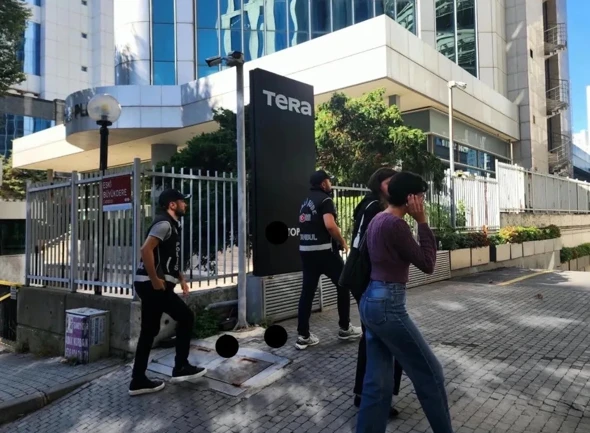
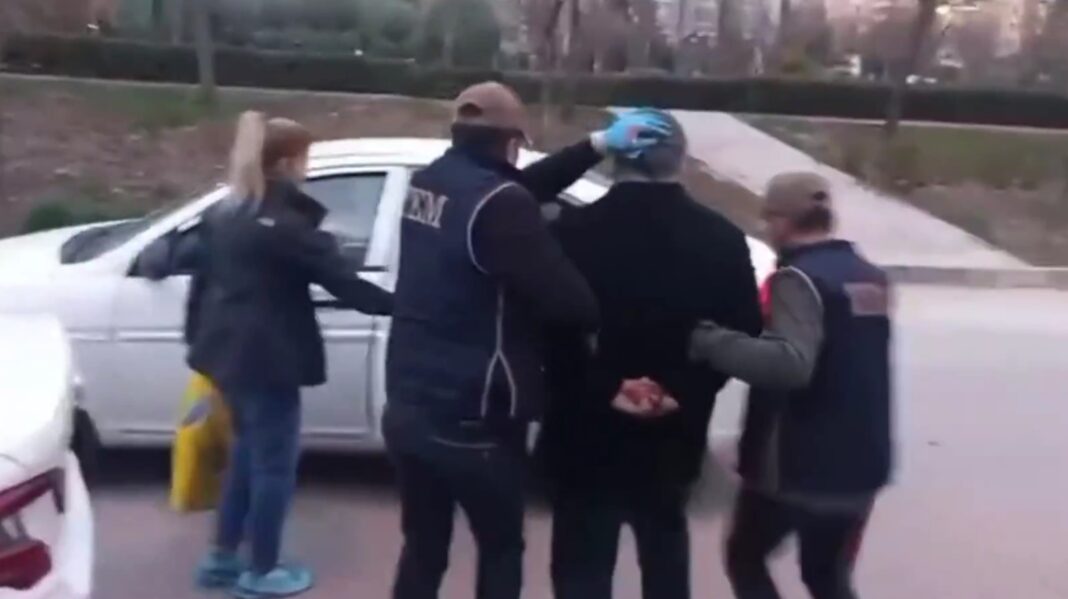
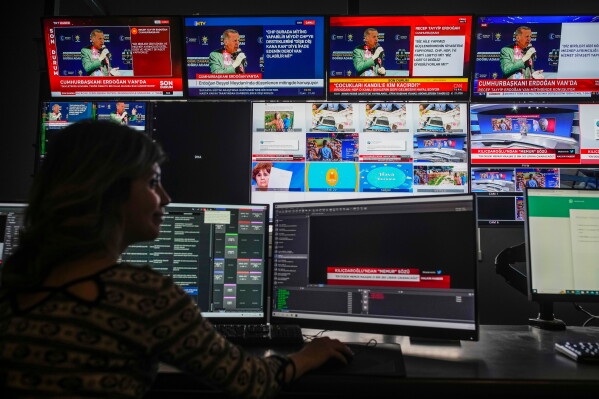
    The Turkish government took control of popular pro-opposition news channel Halk TV through state-appointed trustees early Wednesday, halting its live broadcasts as police raided its İstanbul headquarters, the channel reported.

    The İstanbul Chief Public Prosecutor’s Office said the operation was part of an investigation into Halk TV owner Cafer Mahiroğlu over allegations of bribery, bid rigging and money laundering. Prosecutors ordered the detention of 17 suspects, 11 of whom were taken into custody, the DHA news agency reported.

    Mahiroğlu condemned the raid on Wednesday, saying seven members of his family were among those detained.

    “Today is a dark day for Turkey. The public’s right to information is being seized for political reasons,” he said in a video posted on X.


    The state-run Savings Deposit Insurance Fund (TMSF) was appointed as trustee to Halk TV and companies linked to Mahiroğlu.Police blocked the road outside the channel’s headquarters and prevented employees from entering while officers searched the building. Halk TV reporter Gamze Altunay said hundreds of officers were involved.


    Halk TV said Editor-in-Chief Suat Toktaş asked the incoming trustee to allow live programming to continue, but his request was rejected. Toktaş also refused a proposal to work with the new management, describing the takeover as unlawful. MediaRadar news website subsequently reported that prerecorded footage of a Halk TV program remained on air.

    Prosecutors allege that 14.46 million lira (about $293,000) in unrecorded bribes had been paid in connection with İzmir Metropolitan Municipality tenders and that proceeds were transferred to companies owned by or linked to Mahiroğlu. They cited financial intelligence reports and witness statements in support of the allegations.

    Prosecutors also said Mahiroğlu was already wanted on suspicion of bid rigging in a separate investigation into İstanbul Metropolitan Municipality and had left Turkey on March 10, 2025.

    İzmir, Turkey’s third-largest city and a longtime opposition stronghold, had been governed by the Republican People’s Party (CHP) for more than two decades. Mayor Cemil Tugay, elected on the CHP ticket in 2024, joined President Recep Tayyip Erdoğan’s ruling Justice and Development Party (AKP) on October 7 after leaving the CHP in June.

    Mahiroğlu announced the raid on social media, directing criticism at CHP leader Kemal Kılıçdaroğlu and his allies. His initial post did not address the financial allegations.

    Days before the takeover, Halk TV came under attack from Kılıçdaroğlu, who was restored in May as leader of the CHP by a court ruling overturning the party congress at which he lost the leadership in 2023.

    Speaking on KRT television on October 9, Kılıçdaroğlu accused Halk TV of broadcasting false news “24 hours a day” and questioned why its owner, Mahiroğlu, remained abroad.

    He also said his colleagues had complained to broadcasting regulator RTÜK, which responded that the matter fell outside its remit.

    Mahiroğlu rejected the criticism, accusing Kılıçdaroğlu of targeting independent media and elected opposition politicians.

    Özgür Özel, leader of the opposition New Party, condemned the raid and trustee appointment, saying such an operation against a television station was something only dictators would do.

    The takeover coincided with jailed İstanbul Mayor Ekrem İmamoğlu beginning his defense in a corruption trial involving alleged bribery, bid rigging and money laundering at the municipality.

    Özel questioned the timing, pointing to both the trial and public demands for accountability over an investment fund scandal involving alleged market manipulation and political connections that has left investors unable to recover their savings.

    Özel and 90 other lawmakers left the CHP in July to establish the New Party after Kılıçdaroğlu was restored as party leader.

    The takeover of Halk TV comes amid mounting pressure on independent media in Turkey, following the recent blocking of news website T24 and sweeping restrictions on the X accounts of journalists, news organizations and rights groups.

    On September 30 an İstanbul court’s order blocked access to T24’s website and social media accounts over coverage prosecutors described as “LGBT propaganda.” Prosecutors cited 118 items published over the previous year. T24 said the decision followed a campaign of online defamation against the outlet.

    The Freedom of Expression Association (İFÖD) said at least 1,270 X accounts were subject to blocking orders in September, with the platform subsequently withholding about 90 percent of them in Turkey.

    Those affected included journalists, news organizations, academics, economists and rights groups. İFÖD’s own account and its EngelliWeb censorship-monitoring project were also targeted by blocking orders in October.

    Halk TV has also faced criminal investigations and broadcasting penalties. Toktaş was jailed in January 2025 over the broadcast of a telephone conversation with a court-appointed expert witness.

    A court ordered his release in March after 34 days in pretrial detention and acquitted him and four colleagues of attempting to influence judicial officials.

    A separate charge concerning the recording and publication of the conversation was referred for mediation.

    Halk TV, one of Turkey’s leading news channels, began broadcasting on January 10, 2005. It attracted a wide audience with its live coverage of the 2013 anti-government Gezi Park protests, which began over plans to redevelop an İstanbul park and grew into nationwide antigovernment demonstrations.

    Mahiroğlu bought the channel in 2020.

    Turkey’s media crackdown intensified after a failed coup in July 2016, when the government used emergency decrees to shut down newspapers, television channels, radio stations and publishers. By the end of 2017, some 166 media outlets and publishing houses had been closed and their assets confiscated without compensation, the UN human rights office reported.

    Turkey ranked 163rd among 180 countries and territories in Reporters Without Borders’ 2026 World Press Freedom Index, down from 159th in 2025. The group estimates that 90 percent of national media outlets are under government control.
  • Opposition links Turkish minister’s father to $17 million fund transactions

    Opposition links Turkish minister’s father to $17 million fund transactions

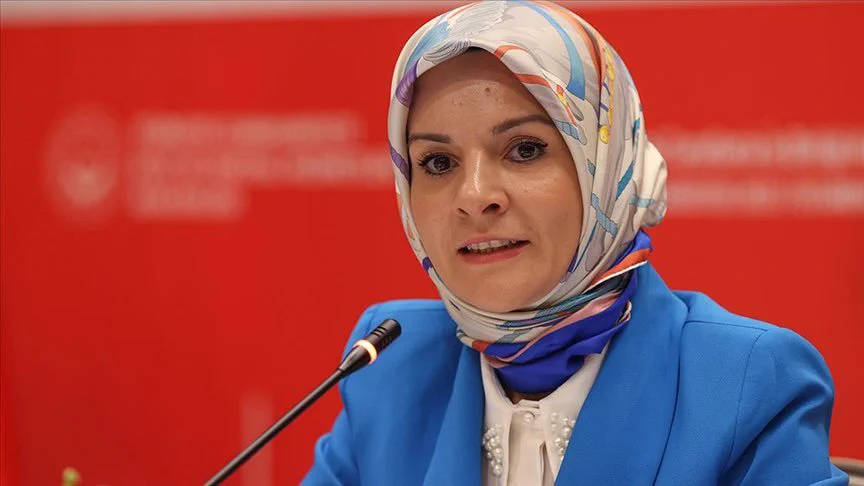
    AKP’s Family and Social Services Minister Mahinur Özdemir Göktaş faced calls Thursday to explain alleged fund transactions worth 830 million lira ($17 million) carried out in her father’s name, as an opposition lawmaker challenged government figures’ connections to the country’s investment fund scandal.

    Ümit Özlale, a lawmaker from the main opposition New Party, asked at a press conference whether her father, Hasan Özdemir, had traded in two funds caught up in the crisis.

    Özlale cited transaction reference numbers and maintained that he had documents supporting his allegations.

    His questions followed a parliamentary speech Wednesday in which he asked whether an unnamed minister had invested through a father’s account, turning 470 million lira ($9.5 million) into 830 million lira before withdrawing the money ahead of the crisis.

    Göktaş denied the allegations Thursday, declaring that neither she nor any family member had an account or conducted transactions in the funds concerned.

    She maintained that the investor was a different person with the same name as her father, citing different identification numbers, and pledged to resign if the allegations were proven, Gazete Pencere reported.

    Özlale argued that investments by ministers were not themselves crimes but demanded disclosure of any transactions benefiting from privileged treatment or information obtained through public office.

    The crisis began in September when funds could not meet withdrawal requests as share prices fell, prompting investigations into market manipulation.

    The Capital Markets Board (SPK), Turkey’s securities regulator, ordered 131 funds managed by seven companies to be closed and their assets sold to repay 455,758 investors.

  • Mayoral defections, removals affect 156 municipalities since opposition victory in 2024 elections

    Mayoral defections, removals affect 156 municipalities since opposition victory in 2024 elections

    Turkey’s government has undermined voters’ choices in 156 municipalities since the March 2024 local elections through mayoral defections, trustee appointments and judicial action, an opposition lawmaker argued on Tuesday, the ANKA news agency reported.

    İbrahim Arslan, a lawmaker from the main opposition New Party representing the central province of Eskişehir, released a study based on Supreme Election Council (YSK) data examining changes in municipal administrations through October 12.

    The study put the municipalities’ combined electorate at 36,564,021, a figure Arslan compared with the 57,766,800 people eligible to vote in mayoral elections nationwide in 2024, calculating a share of 63.3 percent.

    Candidates who won the municipalities for opposition parties received 13.9 million votes, accounting for 50.45 percent of valid ballots cast there, the study calculated.

    Arslan counted 106 mayors who had joined President Recep Tayyip Erdoğan’s ruling Justice and Development Party (AKP) after being elected from other parties or as independents. Of those, 42 were elected from the Islamist New Welfare Party (YRP) and 36 from the Republican People’s Party (CHP).

    He accused the government of using threats, blackmail, the prospect of criminal investigations and its control over municipal funding to pressure mayors into switching parties.

    The study also identified 13 municipalities where elected mayors were replaced by government-appointed trustees, unelected officials who administer municipalities after mayors are removed from office, and 11 where arrests and changes in city council membership enabled the ruling bloc to take control.

    These three categories brought another 130 municipalities under government control after the elections, expanding its reach from the 541 mayoralties won by the AKP in 2024 to 671 municipalities, Arslan calculated.

    The broader total of 156 also covers municipalities where elected mayors were jailed or suspended and had not been reinstated.

    “The AKP added 130 municipalities it had not won at the ballot box to its tally through methods used after the elections,” he said.

    Of the 411 municipalities won by CHP candidates in March 2024, 50 had passed into the government’s control through defections, trustee appointments and changes in city council control, leaving 361 governed by the CHP and the New Party, the study found.

    Ten trustee appointments affected municipalities won by the pro-Kurdish Peoples’ Equality and Democracy Party (DEM Party), while three affected municipalities won by the CHP.

    The study identified interventions in nine metropolitan municipalities: Adana, Antalya, Aydın, Bursa, İstanbul, İzmir, Mardin, Mersin and Van. Their combined electorate totaled 24.3 million.

    The March 2024 elections dealt Erdoğan’s AKP its worst electoral defeat in more than two decades, with the CHP finishing first nationwide and retaining İstanbul and Ankara.

    The AKP took control of İstanbul’s Ataşehir district on Saturday after its elected mayor, Onursal Adıgüzel, and his replacement, Murat Güneş, were jailed and suspended. Six city council members elected on the CHP ticket had joined the AKP before the vote to select a new acting mayor.

    Forty mayors elected from the CHP have been arrested since the 2024 elections, a tally published by the İlke TV news website showed last week. The cumulative figure covers mayors who were subsequently released and does not represent the number currently in jail.

    The crackdown on opposition municipalities intensified after İstanbul Mayor Ekrem İmamoğlu, a political rival of Erdoğan, was jailed pending trial in March 2025.

    The New Party was formed in July by Özgür Özel and 90 other lawmakers after a court removed Özel from the CHP leadership in May and reinstated former party leader Kemal Kılıçdaroğlu.

    Opposition parties accuse the government of using the judiciary to reverse their election gains.

    Arslan urged opposition parties, civic groups and voters to defend election results through joint action, arguing that abandoning the ballot box would give the government more freedom to override voters’ choices.

  • New documentary explores Gülen’s legacy as his movement faces crackdown and exile

    New documentary explores Gülen’s legacy as his movement faces crackdown and exile

    Fatma Zibak

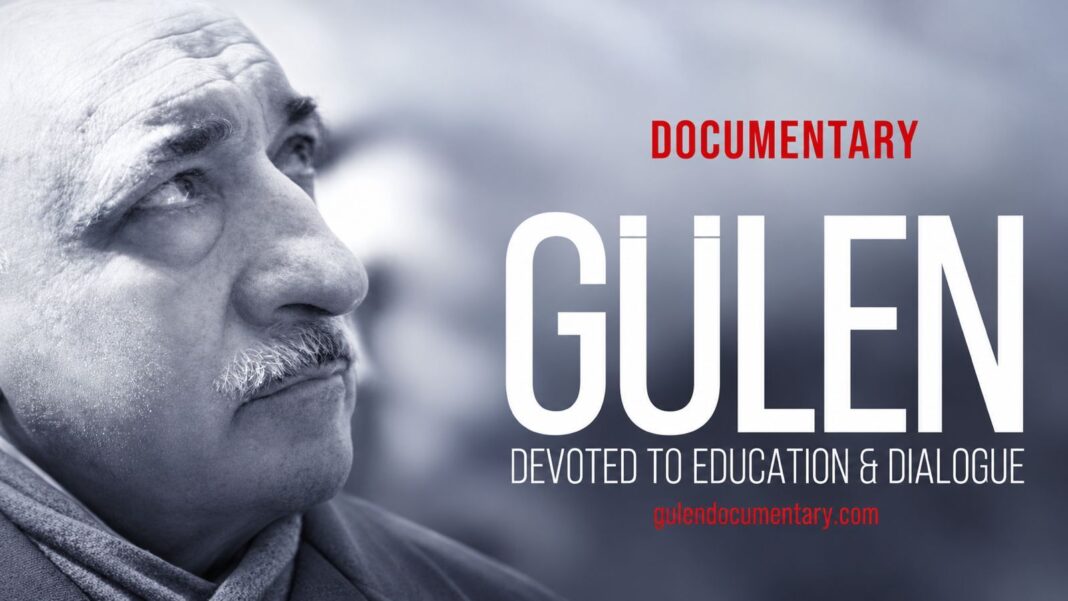
    A new documentary premiering on YouTube on October 17 examines how Turkish Muslim cleric Fethullah Gülen’s teachings encouraged followers to establish schools and promote dialogue around the world, and how his movement is navigating repression, exile and life after his death, according to its producers.

    The 90-minute film, “GULEN: Devoted to Education & Dialogue,” features 35 interviewees from 14 countries. Its release comes three days before the second anniversary of Gülen’s death on October 20, 2024.

    Directed by Ahmet Ünal and produced by Raindrops Productions LLC, with Rıdvan Kızıltepe as project coordinator, the documentary follows Gülen’s ideas beyond Turkey through interviews with academics, observers and people who knew him or participated in his movement.

    Education was central to Gülen’s teachings. He encouraged his followers to open schools that taught both academic subjects and moral values, saying that science and religious faith could go hand-in-hand.

    That approach helped the movement, known as Hizmet, or “service” in Turkish, expand internationally. Schools established by its participants became its most visible institutions, along with charities, professional associations and organizations promoting dialogue between religions.

    By the time of Gülen’s death institutions associated with the movement had operated in more than 100 countries, according to The Associated Press. Their reach extended from Central Asia and Africa to Europe and the United States.

    The documentary examines that educational work along with Gülen’s views on science, faith, peace and social change. Organized into nine thematic chapters, it begins with personal encounters with the cleric before considering how his teachings influenced communities in different countries, the producers said.

    Gülen’s support for interfaith dialogue included a meeting with Pope John Paul II in 1998. His followers subsequently established organizations that brought people from different religious traditions together.

    But the movement’s international growth was followed by a rupture with the Turkish government and a crackdown that reshaped its institutions and scattered many of its participants abroad.

    Gülen and his followers initially supported Recep Tayyip Erdoğan’s government against Turkey’s military-backed secular establishment. Their alliance later broke down amid disagreements over government policy and corruption investigations targeting Erdoğan’s inner circle. Erdoğan denied the corruption allegations and accused Gülen’s followers of building a parallel state within the police and the judiciary.

    After a failed coup on July 15, 2016, that claimed the lives of 251 people, the government accused Gülen and his movement of organizing the uprising. Gülen strongly denied involvement and condemned the coup attempt.

    Turkey sought his extradition from the United States, where he had lived since traveling there for medical treatment in 1999. Washington requested further evidence and never extradited him. He was not charged with a crime in the United States.

    The crackdown that followed brought tens of thousands of arrests, the dismissal of nearly 130,000 people from public service under emergency decrees and the closure of schools, businesses and media organizations associated with the movement.

    The campaign against alleged members has continued beyond Gülen’s death. Turkish officials have claimed that the movement remains a security threat, while its supporters describe the prosecutions as punishment for their religious beliefs and associations.

    Against that background, the film examines the movement’s future after Gülen’s death along with the coup attempt and its aftermath, including exile and the challenges of keeping communities together outside Turkey.

    Scott C. Alexander, a professor of Islamic studies at Catholic Theological Union in Chicago and a board member of the Hizmet-associated Alliance for Shared Values, claims that the movement’s future depends on its participants and their ability to endure what he describes as an exceptionally severe challenge: a powerful state using its economic, political and, to some extent, military power against unarmed civilians.

    “Many in the movement were traumatized. That is only natural. But what I have seen is that the movement is surviving the trauma,” he says in the documentary.

    The scale of the crackdown is reflected in figures Turkish Justice Minister Akın Gürlek released in July: More than 720,000 people had faced legal proceedings since 2016 and more than 127,000 had been convicted. Investigations or trials involving another 83,404 people were ongoing, while 10,485 people were in prison over alleged movement membership or involvement in the coup attempt.

    The crackdown has also driven people accused of links to the movement to flee Turkey, sometimes taking dangerous routes across the Evros River into Greece or attempting sea crossings in small boats.

    The state’s treatment of the movement is a central question for Anwar Alam, a scholar of international relations and Islamic movements interviewed in the documentary.

    He sees the conflict as a struggle over the relationship between the state and civil society, arguing that Gülen’s encouragement of civic participation challenged political traditions that placed the state at the center of public life.

    “Whereas the Hizmet movement was trying to deepen the democracy, the state found that it is no more in control of civil society,” Alam says in the documentary.

    Other interviews explore women’s efforts to gain a greater voice in decision-making and the challenge of passing the movement’s values to younger generations.

    Those questions lead into the documentary’s final chapter, which considers how Hizmet will continue without the religious figure whose teachings brought its participants together.

    Gülen died at a Pennsylvania hospital at the age of 83 after years of ill health. The local coroner said his death was from natural causes.

    The documentary is scheduled to premiere on the Gulen Documentary YouTube channel, with teasers, interview clips and excerpts to be released beforehand.

  • Turkish comedian says he has no regrets after 88 days in jail

    Turkish comedian says he has no regrets after 88 days in jail

    Turkish comedian Deniz Göktaş has said he never regretted the stand-up performance that landed him in jail for 88 days, telling The New York Times that the experience strengthened his confidence and his commitment to speaking freely.

    “Not even one second,” he said when asked whether he had regretted releasing the show. “It was the period of my life when I felt the least lonely.”

    In his first interview since leaving prison last month, Göktaş told the newspaper that he had wanted his courtroom defense to encourage other comedians to speak without fear, even after people close to him warned that it could prolong his detention.

    “I didn’t want to be apologetic,” he said. “Spending three months in prison is terrible, but I wanted to demonstrate that it isn’t something an artist can’t handle in defense of a principle.”

    The 32-year-old was convicted on September 28 of insulting President Recep Tayyip Erdoğan and publicly insulting religious values. The court sentenced him to just over 19 months in prison but ordered his release pending appeal. It acquitted him of praising crime and criminals.

    The prosecution concerned remarks in his second stand-up special, “Ölü Deniz” (Dead Sea), a 90-minute performance that moves between political satire and observations about Turkish society. Its subjects include Erdoğan, jailed İstanbul Mayor Ekrem İmamoğlu, religion, nationalism, universities, public protests and the secular children of conservative families.

    Behind Göktaş onstage sits a giant replica of his own severed head. He told the Times that the image was intended to evoke a guillotine because the show was built around death and censorship.

    One joke described Erdoğan’s evolution from a “shy dictator” into one who had become confident and at peace with himself. Göktaş said he had performed the material across Turkey for three years without facing the same consequences. The special reached a much larger audience after its release on YouTube, attracting 15 million views.

    At his trial Göktaş defended political comedy as part of Turkey’s longstanding tradition of satire. His remarks repeatedly drew laughter in the courtroom as he challenged the prosecution’s interpretation of his jokes.

    “Dictator is not an insult: it is a political characterization,” he said, arguing that a political comedy show that avoided mentioning the country’s president would have little connection to reality.

    He said similar jokes had been made in the past without prosecution and attributed the change to leaders’ declining tolerance of criticism.

    His defense also invoked American comedian Lenny Bruce, who was prosecuted over a comedy routine in 1964. Asked by the Times what he drew from Bruce’s work, Göktaş pointed to being true to oneself and retaining a mischievous lack of restraint.

    Göktaş was detained at İstanbul Airport on July 2 after returning from a trip abroad and jailed the following day. A court later ordered access to the video blocked in Turkey, citing national security and public order concerns.

    In late August a court approved his release, but prosecutors secured a new detention order before he could leave prison. The additional accusation of praising crime and criminals concerned a passage from the same show mentioning the Daltonlar criminal gang. Göktaş denied praising the group, saying the joke criticized crime and violence.

    Speaking to the Times, he described how growing success had initially made him more cautious.

    “As I got bigger and more established, I had more to lose. I started self-censoring my work. That bugged me,” he said.

    He felt that members of his audience, including students and retirees, were showing more courage in their daily lives than he was onstage. He eventually decided to return to saying whatever he found funny, regardless of the consequences.

    “It might be a bit romantic, but my first day in the cell, I slept the best sleep of my life.”

    Göktaş wrote about 20 minutes of new material in prison that he hopes to perform next year. But one of his first diary entries reminded him not to let the case dominate his future shows.

    His prosecution brought renewed attention to Article 299 of Turkey’s penal code, which criminalizes insulting the president. In 2021 the European Court of Human Rights ruled that giving a head of state special protection under criminal law was incompatible with freedom of expression and called for the provision to be amended.

    Göktaş said comedy could offer empathy, motivation and the courage to speak, although he did not see it as capable of defeating authoritarianism on its own.

    “Ultimately, I don’t think they’re only going after comedians,” he said. “They want to silence everyone.”

    Asked about American comedians’ complaints over cancel culture and online attacks, he answered with a joke: “I don’t want to brag, but we have cancel culture — and jail.”

  • Turkey investigates suspected tipoffs behind $8.1 billion in fund withdrawals

    Turkey investigates suspected tipoffs behind $8.1 billion in fund withdrawals

    Prosecutors in Turkey are investigating whether tipoffs about impending action helped investors withdraw 401.3 billion lira ($8.1 billion) from investment funds before regulators intervened, the Cumhuriyet daily reported on Monday.

    The İstanbul Chief Public Prosecutor’s Office is examining transactions by 440 investors between September 1 and 16, seeking to establish whether they acted on information that had not been made public.

    Withdrawals from Tera funds totaled 335.9 billion lira ($6.8 billion), involving 168 investors who each withdrew at least 100 million lira ($2 million). Another 272 investors withdrew at least 50 million lira ($1 million) each from Pusula funds, with their withdrawals totaling 65.4 billion lira ($1.3 billion).

    The figures represent withdrawals, rather than profits. Investigators are examining their timing and whether investors received advance warning about the investigation or restrictions on their accounts. The withdrawals alone do not establish wrongdoing.

    The Capital Markets Board (SPK), Turkey’s securities regulator, ordered the liquidation of 131 investment funds managed by seven companies on September 17, affecting 455,758 investors.

    The funds pooled investors’ money to buy securities, but some invested in stocks with few buyers and struggled to sell their holdings as prices fell and investors requested their money back. Prosecutors are investigating suspected share price manipulation.

    The inquiry has also led to the freezing of bank accounts belonging to 141 people and 73 companies identified as having earned a combined 187.7 billion lira ($3.8 billion) from funds managed by Tera, Pusula and Hedef. Courts imposed travel bans on the individuals and company managers..

    The Savings Deposit Insurance Fund (TMSF), the state agency handling the recovery of these gains, has begun notifying those on the list to return the money for payments to investors who suffered losses.

    Prosecutors separately announced an investigation Monday into people who shared documents marked confidential from the fund inquiry on social media, citing a law against violating investigation secrecy.

    Vice President Cevdet Yılmaz said Monday that investors would receive payments from fund assets, returned gains and proceeds from assets seized from people and companies implicated in the case, with no public money used.

    Nearly 44,000 investors had received payments following the liquidation of funds managed by A1 Capital, Bulls and Pardus, while negotiations continued over whether Atlas funds could be liquidated through the same procedure, Yılmaz explained during an interview with the state-run Anadolu news agency.

    A bill awaiting parliamentary approval would allow interim payments of up to 1 million lira ($20,000) based on investors’ net contributions. Previous withdrawals would count toward the recovery of their principal, excluding investors who had already recovered the amount they put in.

    A parliamentary committee is due to consider the bill Wednesday. Payments could begin this month if it becomes law, but some funds may lack enough assets to pay the proposed maximum, Yılmaz said.

    The government’s handling of the scandal has prompted demands to identify investors who benefited and examine their political connections.

    Abdullah Güler, parliamentary group chairman of President Recep Tayyip Erdoğan’s ruling Justice and Development Party (AKP), defended withholding the names of the 214 people and companies Friday, citing privacy protections and the presumption of innocence, the ANKA news agency reported.

    “We attach importance to the presumption of innocence,” Güler said.

    He urged investors who considered their gains unjustified to return them voluntarily. Under the proposed legislation, a return would not constitute an admission of liability, but would not remove any civil or criminal responsibility arising from unlawful conduct.

    AKP lawmakers and their allies in the Nationalist Movement Party (MHP) rejected five opposition proposals Thursday to advance parliamentary inquiries into the scandal, which sought scrutiny of political connections, suspected fraud and whether regulators ignored warnings.

    Criticism has also come from former AKP lawmaker Orhan Miroğlu, who accused people pursuing wealth of gaining influence in the party and state institutions. He described the scandal as “the most organized and collective betrayal” in Turkey’s history, Cumhuriyet reported Monday.

    An October survey by polling company ASAL Research put AKP support at 31.6 percent, compared with its 35.61 percent share in the 2023 parliamentary election. The main opposition New Party received 25.2 percent, the BirGün news website reported Monday.

  • Turkey presses Greece to extradite Gülen-linked people

    Turkey presses Greece to extradite Gülen-linked people

    Turkey is pressing Greece to extradite people accused of links to the faith-based Gülen movement, while Greek officials deny that the presence of Turkish asylum seekers amounts to an organized network, the Greek iefimerida news website reported on Monday.

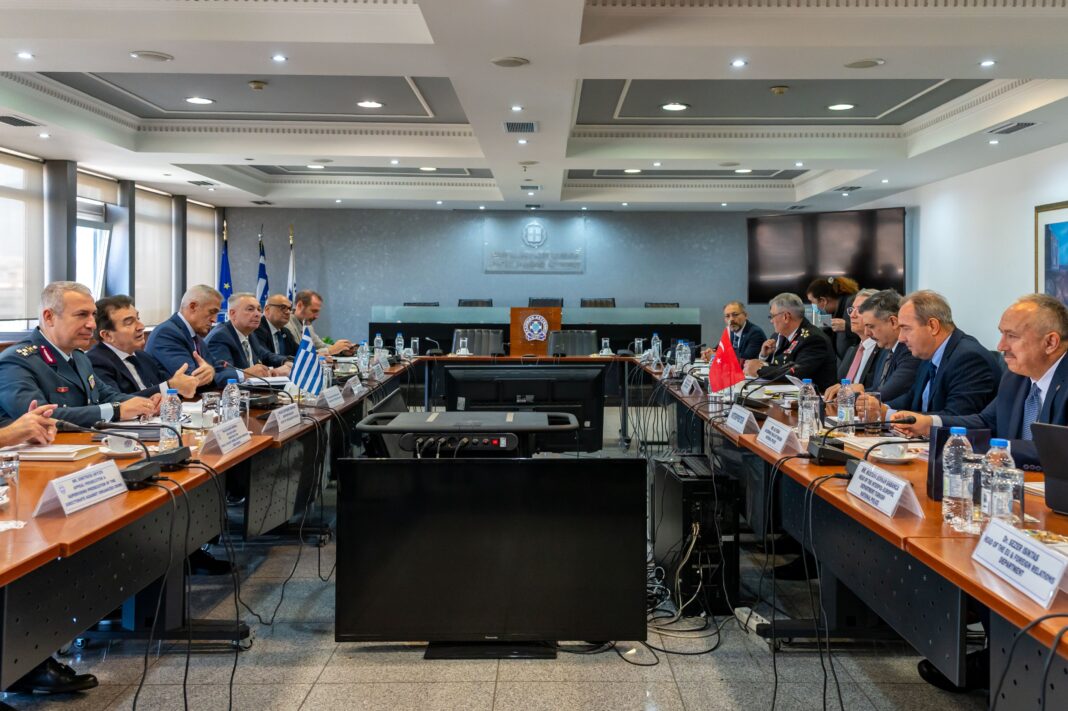
    Interior Minister Mustafa Çiftçi raised the issue during an October 8 visit to Athens, where he met with Greek Citizen Protection Minister Michalis Chrysochoidis and Migration and Asylum Minister Thanos Plevris.

    Çiftçi called for the return of Gülen movement members and accused them of abusing refugee protections. He also sought faster extradition proceedings for 60 people he described as being in Greek custody, some of whom he alleged were members of criminal organizations wanted through INTERPOL Red Notices.

    Greek Citizen Protection Ministry sources denied Ankara’s allegations that an organized branch of the movement operates in Greece and rejected equating Turkish nationals seeking international protection with a criminal organization, iefimerida wrote.

    A source familiar with extradition cases told the website that no recent formal request appeared to have been submitted for someone prosecuted over Gülen links or other political grounds. The requests received concerned accusations such as murder, robbery and kidnapping.

    The source explained that extraditions require review by prosecutors and courts, with the possibility of an appeal to Greece’s Supreme Court. A ministerial meeting cannot authorize someone’s return, and any final approval by the justice minister must follow the judicial process.

    An INTERPOL Red Notice is a request to locate and provisionally arrest someone pending extradition or similar proceedings. It does not compel a country to arrest or extradite the person.

    President Recep Tayyip Erdoğan began targeting the Gülen movement after corruption investigations in December 2013 implicated him, his relatives and political allies. The movement takes its inspiration from the late Islamic scholar Fethullah Gülen.

    His government designated the movement a terrorist organization in May 2016 and expanded the crackdown after accusing it of orchestrating a coup attempt that July. The movement denies orchestrating the coup attempt and engaging in terrorism.

    The United States and the European Union do not recognize Turkey’s designation. Thousands of people accused of Gülen links have been jailed, and many others have fled Turkey to seek asylum abroad.

    Extradition demands previously strained relations between Turkey and Greece after eight Turkish military officers fled to Greece by helicopter following the 2016 coup attempt. Greece’s Supreme Court rejected their extradition in January 2017, citing concerns about their safety and access to a fair trial.

    The latest discussions also coincided with Turkey’s efforts to secure the return of businessman Murat Gülibrahimoğlu, who faces accusations connected to a corruption case involving jailed İstanbul Mayor Ekrem İmamoğlu, Erdoğan’s main political rival.

    Greek police denied Turkish media accounts that Gülibrahimoğlu had been arrested. He applied for international protection in July and his application is under review. Police confirmed receiving extradition documents from Turkey, while Gülibrahimoğlu maintains that the case against him is politically motivated.

  • Turkish nationalist party deputy chair defends AfD as neither racist nor anti-Muslim

    Turkish nationalist party deputy chair defends AfD as neither racist nor anti-Muslim

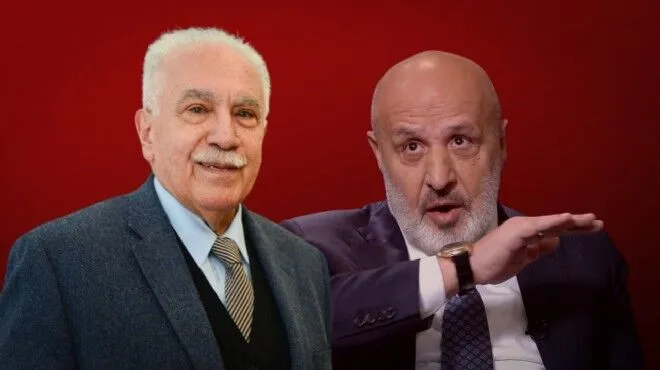
    A deputy chair of Turkey’s far-right Patriotic Party (VP) has denied accusations that the far-right Alternative for Germany (AfD) is racist or hostile to Turks and Muslims, saying Turkish associates of his party have joined the AfD.

    Descriptions of the AfD as fascist, racist or hostile to Islam were lies spread by “globalists” seeking to turn Asian nations against the party, Ethem Sancak said in remarks published Thursday by the T24 news website.

    “Some of our friends have joined the AfD,” Sancak said, referring to members of Germany’s Turkish community.

    Some of them may secure posts in the party because the VP and the AfD have “very good relations,” he added.

    The comments came days after the AfD won 43.8 percent of the vote and 39 of 83 seats in the eastern state of Saxony-Anhalt.

    The party fell three seats short of a majority and is seeking allies, while Germany’s mainstream parties have maintained their refusal to work with it.

    The AfD campaigned on broader deportations, renewed ties with Russia, an end to German support for Ukraine and Germany’s withdrawal from the eurozone.

    Chancellor Friedrich Merz accused the party of promoting “ethnic cleansing” through its “remigration” policy, while the AfD said its proposals concerned only people without legal residence.

    The AfD’s Saxony-Anhalt branch has been designated as a confirmed right-wing extremist group by the state’s domestic intelligence agency since 2023.

    Germany’s federal domestic intelligence agency made the same finding about the party nationwide in 2025, but a Cologne court blocked the designation in February pending a final ruling.

    The Turkish community in Germany warned after the election that the AfD’s rise could fuel violence against migrants and members of religious and other minority groups.

    Sancak is a businessman who served on the top decision-making body of President Recep Tayyip Erdoğan’s ruling Justice and Development Party (AKP) before resigning in 2022 and joining the VP, which advocates closer ties with Russia and Turkey’s withdrawal from NATO.

  • Turkey probes TR724 news outlet over coverage of crackdown on Süleymanlılar religious group

    Turkey probes TR724 news outlet over coverage of crackdown on Süleymanlılar religious group


    Turkish prosecutors have launched an investigation into TR724, a Turkish media outlet established by journalists in exile, over its coverage of an ongoing crackdown on the Süleymanlılar religious community and developments surrounding the suspicious death of one of its former leaders.

    The Bakırköy Chief Public Prosecutor’s Office said on September 10 that it had opened the investigation under Article 217/A of the Turkish Penal Code, commonly known as Turkey’s “disinformation law,” accusing TR724 of publishing “false, manipulative and misleading” content about the 2016 death of former transport minister Arif Ahmet Denizolgun, who was also a former leader of the Süleymanlılar.

    The prosecutor’s office did not identify a specific TR724 report, piece of information or statement that it considered false or explain what evidence contradicted the outlet’s reporting.

    Prosecutors said they instructed the İstanbul Police Department’s security branch to identify statements made in TR724’s social media broadcasts, establish the identities and addresses of the people involved and carry out the necessary judicial procedures.

    The statement did not announce detention warrants for any TR724 journalists.

    TR724 described the investigation as an attempt to silence the outlet over its coverage of the crackdown on the Süleymanlılar, a religious community that has not endorsed President Recep Tayyip Erdoğan’s ruling Justice and Development Party (AKP), saying it has closely followed the operations since they began in August and reported both the authorities’ allegations and developments surrounding Denizolgun’s death.

    The former minister’s death in 2016 became the subject of a renewed investigation this year, leading to the exhumation of his remains in August.

    Prosecutors later recovered video of his original autopsy after authorities had initially said no recording could be found. A subsequent forensic report classified his death as suspicious and said an intentional killing could not be ruled out.

    The findings led prosecutors to investigate current Süleymanlılar leader Alihan Kuriş and several others for murder.

    Despite these developments having been publicly announced by the authorities, the Bakırköy prosecutor’s office did not specify which part of TR724’s reporting it considers false or misleading.

    Police launched raids across 17 provinces on August 13 as part of the crackdown targeting Süleymanlılar, in an Ankara-based investigation involving allegations including running a criminal organization, money laundering, fraud and tax violations.

    Prosecutors issued detention warrants for 49 people in the first phase, and Kuriş and 31 others were subsequently jailed pending trial. The investigation later expanded, with additional arrests and the seizure of companies and associations linked to the group.

    Justice Minister Akın Gürlek has denied that the government is targeting a religious group, describing the case as a financial crimes investigation directed at its leadership. He said Thursday that Turkey had also requested judicial assistance from Germany over transfers of funds abroad.

    The Süleymanlılar have never built close ties with Erdoğan or the AKP and have at times backed opposition parties. Observers view the operation as a warning that religious communities could face state pressure if their political positions displeased the government.

    The operations followed months of criticism of the group by politicians and media figures close to the government.

    The Süleymanlılar trace their roots to Quran teaching begun by Islamic scholar Süleyman Hilmi Tunahan in the 1920s and now run courses, dormitories, charities and businesses in Turkey and Europe.

    Article 217/A, which took effect in 2022, makes it a criminal offense punishable by up to three years in prison to publicly disseminate false information on certain matters in a way deemed capable of causing fear, panic or concern. Press freedom groups have repeatedly called for its repeal, saying it has been used to criminalize legitimate journalism.

  • Turkey detains 20 in raids over alleged Gülen movement links

    Turkey detains 20 in raids over alleged Gülen movement links

    Turkish police have detained 20 people in raids across six provinces over alleged links to the faith-based Gülen movement, the state-run TRT Haber reported Friday.

    The operation was carried out at 21 locations under the coordination of the İstanbul Chief Public Prosecutor’s Office as part of an investigation into what Turkish authorities describe as the movement’s covert network within the police. Those detained comprise five currently serving civil servants, three who had previously been dismissed from public service and 12 private-sector employees.

    Turkish President Recep Tayyip Erdoğan has targeted the faith-based Gülen movement, inspired by Muslim cleric Fethullah Gülen, who died in 2024, since corruption investigations in December 2013 implicated him as well as some members of his family and inner circle. He dismissed the probes as a Gülenist conspiracy and designated the movement as a terrorist organization in May 2016, intensifying a sweeping crackdown after a coup attempt in July of the same year that he accused Gülen of orchestrating. The movement denies involvement in the attempted coup or any terrorist activity.

    Authorities said the suspects were identified in data stored on an SD card provided by a secret witness codenamed “Garson” (waiter). Investigators also cited alleged contacts with members of the movement, accounts or increased deposits at the now-shuttered Bank Asya and records of sequential payphone calls. Prosecutors allege the suspects operated at a supervisory level in the movement’s purported network within the police.

    The files supplied by Garson have been used in numerous criminal and administrative cases involving police officers accused of Gülen links. Turkey’s Constitutional Court ruled in June that authorities had failed to sufficiently verify and explain the use of the files in the dismissal of a former police officer and ordered a retrial in the case.

    The so-called “payphone investigations” are based on call records. The prosecutors allege that a member of the Gülen movement used a single payphone to consecutively call all his contacts. Based on that assumption, when an alleged member of the movement is found in call records, it is assumed that other numbers called right before or after the primary call also belong to people with Gülen links. The authorities do not possess the content of the calls in question. The supposition of guilt is solely based on the order of the calls made from the phone.

    Since the coup attempt in 2016, the Turkish government has accepted such activities as having an account at the now-shuttered Bank Asya, one of Turkey’s largest commercial banks at the time; using the ByLock messaging application, an encrypted messaging app that was available on Apple’s App Store and Google Play; and subscribing to the now-shut-down Zaman daily or other publications affiliated with members of the movement as benchmarks for identifying and arresting alleged followers of the Gülen movement on charges of membership in a terrorist organization.

    This article is republished from the Stockholm Center for Freedom.