The ANOM app was passed on to alleged criminals by Australian drug kingpin Hakan Ayik.
Blog
-
ECtHR rules Turkey violated rights of writer jailed over Gülen links
The European Court of Human Rights (ECtHR) has faulted Turkey over the imprisonment of journalist and writer Ali Bulaç, who was jailed for close to two years over alleged links to the faith-based Gülen movement in the aftermath of a failed coup in 2016.
Bulaç, who was a writer for the now-closed Zaman daily, was arrested in the aftermath of the coup attempt on July 15, 2016 as part of a crackdown on journalists critical of the government and journalists who used to work at Gülen-affiliated media organizations. The Zaman daily, which was Turkey’s best-selling newspaper, was closed down along with dozens of other media outlets due to their links to the Gülen movement.
The Strasbourg-based court ruled in a decision made public on Tuesday that Turkey violated Bulaç’s freedom of expression and right to security and ordered Turkey to pay 12,240 euros in damages. The court’s ruling is expected to set a precedent for thousands of people who were jailed on terrorism charges due to their alleged links to the Gülen movement.
Bulaç was behind bars from July 30, 2016 to May 11, 2018. He was given a prison sentence of eight years, nine months at the end of his trial. Turkey’s Supreme Court of Appeals ruled in December 2020 that the prison sentence given to Bulaç was flawed and his retrial began in April.
In May 2019 Turkey’s Constitutional Court also ruled that a rights violation occurred during the prosecution of Bulaç.
Bulaç, who was a former advisor to President Recep Tayyip Erdoğan when Erdoğan was the mayor of İstanbul between 1995 and 1998, attracted the ruling Justice and Development Party’s (AKP) anger when he said in a newspaper interview in 2014 that the AKP was the biggest disaster experienced by the people of Turkey since the Battle of the Gallipoli, a World War I military campaign fought by the Ottoman Empire against British and French forces. The battle formed the basis for the Turkish War of Independence and the declaration of the Republic of Turkey eight years later.
Turkish President Erdoğan has been targeting followers of the Gülen movement, inspired by US-based Turkish Muslim cleric Fethullah Gülen, since the corruption investigations of December 17-25, 2013, which implicated then-Prime Minister Erdoğan, his family members, and his inner circle.
Dismissing the investigations as a Gülenist coup and conspiracy against his government, Erdoğan designated the movement as a terrorist organization and began to target its members. He intensified the crackdown on the movement following the abortive putsch that he accused Gülen of masterminding. Gülen and the movement strongly deny involvement in the coup attempt or any terrorist activity.turkishminute
-
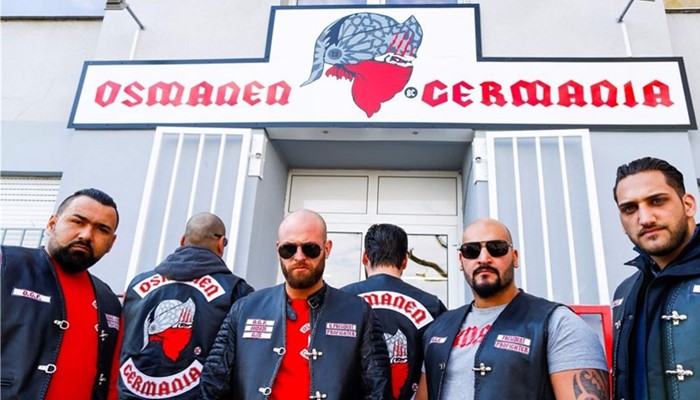
Mob boss claims to have financed banned Osmanen Germania through Erdoğan confidant
Crime boss Sedat Peker claimed on Sunday that he had given 1.5 million Turkish lira ($180,000) to a relative of Metin Külünk, a former lawmaker from the ruling Justice and Development Party (AKP) and a confidant of Turkish President Recep Tayyip Erdoğan, to finance Osmanen Germania, a Turkish nationalist biker gang banned in Germany.
Osmanen Germania has threatened local Kurdish activists in the past and was banned by the German government in 2018. The group still operates in various European countries such as the Netherlands and Switzerland.
In January 2019 a German court convicted five members of the gang on charges that include attempted murder, extortion, drug trafficking, deprivation of liberty and forced prostitution and sentenced them to three to six years in prison.
According to a report by German news outlet Stuttgarter Nachtringen citing wiretap records from court documents, Külünk financed the outlawed gang at Erdoğan’s behest and told them to buy automatic weapons such as submachine guns.
According to the German authorities, the Turkish government was also involved in financing the group as Turkey’s National Intelligence Organization (MİT) funded the group’s purchase of weapons.
For the first time, a senior figure claiming to have been involved in the scheme, mafia boss Peker, corroborated the accusations, with his latest tell-all video garnering more than 10 million views since Sunday.
Peker, the head of one of Turkey’s most powerful mafia groups who was once a staunch supporter of Erdoğan, has since early May been setting the country’s political agenda through videos he posts on YouTube from Dubai. The mob boss has been accusing former and current government officials and their relatives of corruption, drug trafficking, rape and murder, among other crimes.
In his eighth video on May 30, Peker claimed that a paramilitary group established by a former aide to the Turkish president sent weapons to the al-Qaeda-linked al-Nusra Front in Syria in 2015.
Peker said the weapons to the radical al-Nusra group were sent in 2015 by the SADAT International Defense Consultancy, a paramilitary organization established by Adnan Tanrıverdi, a former aide to Erdoğan.
Trucks that allegedly belonged to MİT which were carrying weapons to jihadists in Syria were caught near the border in 2014, sparking a political firestorm in Turkey about the role of the Turkish spy agency in arming rebel factions in Syria.
The AKP and then-Prime Minister Erdoğan strongly denied the claims, saying the trucks were carrying humanitarian aid to Turkmens in northern Syria.
Following the mafia boss’s revelation, Can Dündar, a Turkish journalist who along with fellow journalist Erdem Gül stood trial for reporting in May 2015 on the MİT trucks that allegedly carried weapons to the jihadist group in Syria and was sentenced to 27 years on various charges including espionage, made a statement saying that Peker’s claims confirmed the authenticity of his report, which was published in the Cumhuriyet daily.
He said the prosecutors and military officers who were prosecuted and given lengthy jail sentences for stopping the MİT trucks as well as the journalists who reported on the trucks like him were paying a price for uncovering the truth behind the MİT trucks.
Dündar fled Turkey in 2016 to avoid a crackdown on journalists critical of the government and has been living in exile in Germany ever since.
-
Interpol to assist Kyrgyz authorities in search of missing Turkish citizen
The International Criminal Police Organization, commonly known as INTERPOL, is reportedly in process of assisting the Kyrgyz authorities in search of Orhan İnandı, a Turkish citizen who is feared to have been abducted by Turkey’s National Intelligence Organization (MİT) due to his alleged links to the Gülen group.
According to a Kyrgyz news portal, Deputy Interior Minister Nurbek Abdiev confirmed the INTERPOL’s involvement today at a meeting of the parliamentary committee.
“We are searching for İnandı internationally now. We have sent instructions to look for him in Russia, Turkey and other countries around the world. He may have left the country by using other documents, ”Abdiev said.
İnandı’s wife, Reyhan İnanlı, said in a tweet on Monday that her husband has been held in a building housing the Turkish Embassy in Bishkek.
“My husband, Orhan İnandı who has worked for the good of Kyrgyz children for 26 year, was abducted 7 days ago. According to the information I managed to gather, he has been held at the Turkish embassy in Bishkek.” Reyhan İnandı said in a tweet on Monday,
According to several Kyrgyz media outlets, Orhan İnandı, the founder and president of the Turkish-Kyrgyz Sapat school network operating in Kyrgyzstan, went missing in Bishkek on Monday. Hours after the initial reports, İnandı was reported to be in custody in The Turkish Embassy in Bishkek. İnandı’s Toyota Lexus was found parked several blocs away from his house with its doors were open and tires were flat.
Speaking to the media, İnandı’s wife, Reyhan said on Tuesday that her husband’s jacket and phones were in the car. “We don’t have any eyewitnesses at the moment, but I believe he was abducted to be taken to Turkey. I am extremely concerned for his safety.”
Since 2016, tens of Turkish nationals were abducted and rendered to Turkey by the Turkish intelligence over alleged links to the Gülen group, which Ankara accuses of orchestrating a failed coup in 2016. The group strongly denies any connection with the abortive putsch.
Late on Tuesday, Kyrgyz security forces and a heavy police contingent surrounded the Turkish consulate in Bishkek, implementing strict controls at both entry and exit in order to prevent İnandı’s forced transferred to the Manas International Airport.
People close to the family said there was a private jet waiting at Manas International Airport in Bishkek that was not listed on scheduled flights, raising suspicions that the jet could be used to return the teacher to Turkey where he will possibly face prosecution.
-
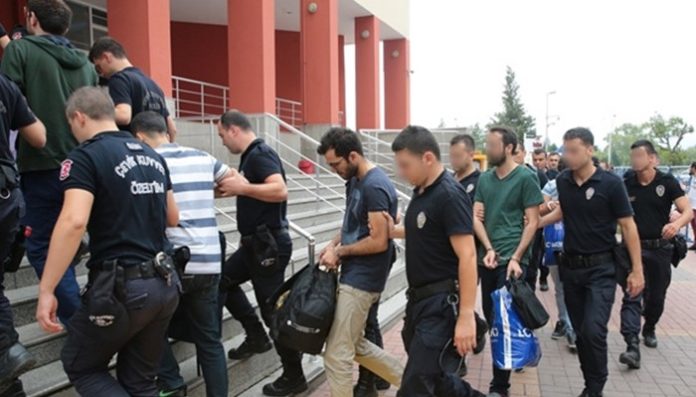
26 former military cadets detained over alleged Gülen links
Turkish police on Tuesday detained 26 former military cadets as part of an operation targeting alleged followers of the Gülen movement, Turkish media outlets reported.
Police raids were conducted across 12 provinces as part of the investigation based in the Turkish capital city of Ankara. According to a statement from the Ankara Chief Public Prosecutor’s Office, detention warrants were issued for 40 former military cadets on accusations that they communicated with alleged members of the Gülen movement via payphones to avoid detection.
The remaining 14 suspects could not be found at their addresses.
The cadets were expelled from the Turkish military following a failed coup in 2016 as part of a government-led crackdown on the Gülen movement.
Turkish President Recep Tayyip Erdoğan has been targeting followers of the Gülen movement, inspired by US-based Turkish Muslim cleric Fethullah Gülen, since the corruption investigations of December 17-25, 2013, which implicated then-Prime Minister Erdoğan, his family members, and his inner circle.
Dismissing the investigations as a Gülenist coup and conspiracy against his government, Erdoğan designated the movement as a terrorist organization and began to target its members. He intensified the crackdown on the movement following the abortive putsch on July 15, 2016 that he accused Gülen of masterminding. Gülen and the movement strongly deny involvement in the coup attempt or any terrorist activity.
The so-called “payphone investigations” are based on call records. The prosecutors assume that a member of the Gülen movement used the same payphone to call all his contacts consecutively. Based on that assumption, when an alleged member of the movement is found in call records, it is assumed that other numbers called right before or after that call also belong to people with Gülen links. Receiving calls from a payphone periodically is also considered a red flag.
Turkish Interior Minister Süleyman Soylu said on February 20, that a total of 622,646 people have been the subject of investigation and 301,932 have been detained, while 96,000 others have been jailed due to alleged links to the Gülen movement since the failed coup. The minister said there are currently 25,467 people in Turkey’s prisons who were jailed on alleged links to the movement.
The government also removed more than 130,000 civil servants from their jobs on alleged Gülen links following the coup attempt.
In addition to the thousands who were jailed, scores of other Gülen movement followers had to flee Turkey to avoid the government crackdown.
-
EP member voices concern over missing educator as Krygyz protests continue
A member of the European Parliament on Monday voiced concern about the suspicious disappearance of an educator in Kyrgyzstan, urging Kyrgyz authorities to exert efforts for his release amid ongoing protests in the country.
“We follow with great concern Turkeys illegal abduction of Turkish educator #OrhanInandi in #Kyrgyzstan over links to the Fethullah Gulen mov.”, Chair of the Delegation to the EU-Kyrgyzstan Parliamentary Cooperation Committee Fulvio Martusciello said in a tweet.
We follow with great concern Turkeys illegal abduction of Turkish educator #OrhanInandi in #Kyrgyzstan over links to the Fethullah Gulen mov. Turkey should refrain from any attempts to deport him. We demand the Kyrgyz authorities to take all possible steps to ensure his release. pic.twitter.com/IHNtc2FTab
— Fulvio Martusciello (@fulviomartuscie) June 8, 2021
Orhan İnandı, the founder and president of the Turkish-Kyrgyz Sapat school network operating in Kyrgyzstan, went missing in Bishkek on the evening of May 31 and is feared to have been abducted by Turkey’s National Intelligence Organization due to his alleged links to the Gülen movement.
Martusciello also cautioned that Turkey should refrain from any attempts to deport İnandı while calling on Kyrgyz authorities to “take all possible steps to ensure his release.”
Meanwhile, hundreds of people in Kyrgyzstan continued to protest the alleged abduction of İnandı, Agence France-Presse reported. Many of the Kyrgyz who gathered outside the parliament in Bishkek are alumni of the Sapat network of schools.
One of the protesters, 39-year-old Zarina Sydykbekova, told AFP she believes Turkey is hiding İnandı in its embassy to force him to renounce his Kyrgyz citizenship, echoing a claim made by İnandı’s wife last week.
“The main thing [to hope for] is that he is still alive,” said Sydykbekova, who has been participating in the 300-strong protests for more than a week, since the suspicious disappearance of İnandı.
Turkey claims the founder of the school network is Turkish Islamic cleric Fethullah Gülen, whose movement is accused by the Turkish government of masterminding a failed coup in July 2016. The movement strongly denies any involvement in the abortive putsch.
Orhan İnandı’s wife, Reyhan İnandı, and the family’s lawyer, Taalaigul Toktakunova, say based on information they received, Orhan İnandı is being held at the Turkish Embassy in Bishkek. She has refused to reveal her source for security reasons.
The Kyrgyz Interior Ministry previously announced that a task force was set up and a search was under way, and that the National Security Committee was providing all possible assistance to the police. More than 1,000 police are searching for Orhan İnandı, according to the ministry.
Protests are also taking place in front of Turkish embassies and consulates in the United States and some European countries. Alumni of Sapat schools also announced a million-dollar reward for anyone who provides information leading to the locating of İnandı.
The Sapat (formerly Sebat) network of educational institutions has been operating in Kyrgyzstan since 1992. The school network has been run by the Kyrgyz Republic since 2017. İnandı had been working in Kyrgyzstan since 1995 and had been president of the schools since 2001. He has been a citizen of the Kyrgyz Republic since 2010. The Kyrgyz government had earlier denied the Turkish government’s request for İnandı’s extradition on terrorism charges.
-
[Opinion] Turkey’s dramatic shift from poster child to rogue state
As a journalist who was forced into exile in March 2016 after the regime of Recep Tayyip Erdoğan brutally took over our newspaper, Today’s Zaman, I still have nightmares about Turkey, both literally and figuratively. After all this time, I dream that I’m stuck in my hometown of Istanbul and trying to escape. This trauma was one of the reasons I took a break from active reporting for Turkish Minute and pursued a different path to normalize my life.
Due to the intense climate of fear in the wake of a coup attempt in Turkey on July 15, 2016, only a handful of journalists in exile created content, without their bylines, for Turkish Minute. Despite incredibly limited resources, this modest website has filled a huge void in the absence of free and independent stories from Turkey, particularly in English. I am thrilled to be back for weekly contributions on underreported issues from and about Turkey.
One of the most neglected stories and now a pattern for Turkey is abductions in and outside the country targeting Turkish citizens. Needless to say, Turkey has never been a true adherent of the rule of law although it was always an aspiring European Union member. However, in the first years of Erdoğan’s government, which came to power in late 2002, there was a significant decrease in the number of unlawful abductions, according to a September 2020 report by Turkey Tribunal. The report states that “During the 1980s and 1990s Turkey was confronted with many state-sponsored abductions and disappearances. Human rights organizations estimate that up to 3,500 people forcibly disappeared, with around 450 cases being confirmed. The UN Working Group on Enforced or Involuntary Disappearances registered 214 cases during those years. … Consequently, between 2002 and 2015, only 1 case of enforced disappearance was transmitted to the UN Working Group on Enforced or Involuntary Disappearances.”
These days, Erdoğan’s one-man regime is “proud” to announce the abduction of political opponents under the label of terrorist captures. Several officials have repeatedly claimed that Turkey was involved in more than 100 international abductions. In 25 cases it is beyond reasonable doubt that an abduction was organized by the Turkish state. The numbers keep rising by the day. All the abductees are branded as “terrorists” with links to the Gülen or Kurdish movements.
According to the Turkey Tribunal report, “İsmail Hakki Pekin, former head of the Turkish Armed Forces Intelligence Department, confirmed that, unless the followers of the Gülen movement are ‘returned to Turkey by force, they must be exterminated wherever they are, just like ASALA or the MOSSAD did with the former Nazis.’ The presidential spokesperson İbrahim Kalın publicly stated that operations abroad against the Gülen movement were being carried out ‘under clear instructions’ from President Erdogan.”
What has turned Turkey, once a poster child of democracy in the Muslim world, into a “rogue” state that completely disregards international law? The pretext seems to be, in almost every case, the failed coup of July 15, 2016. Yet, those who follow Turkey closely know that the real reason behind such a swift transformation is Erdoğan’s fear of accountability. Notoriously corrupt, Erdoğan, his family and his cronies must stay in power as long as possible to avoid prosecution. Since the unfolding of massive corruption investigations in December 2013, Erdoğan has had to be involved in worse crimes in order to cover the original one. As we’ve heard in the confessions of Sedat Peker, a Turkish crime boss in exile, on YouTube in the last couple of months, the government itself has turned into a mafia never before seen in Turkey, even in the dark decade of the 1990s. According to Peker’s revelations, the Erdoğan government is now even in charge of drug trafficking in Turkey with ties to countries as far away as Venezuela.
While I’m writing this piece, a group of Kyrgyz nationals are protesting in front of the Turkish Embassy in Bishkek due to the most recent abduction attempt by Turkey. An educator named Orhan İnandı, a dual Turkish-Kyrgyz citizen, disappeared in late May. Reports state that Kyrgyz officials warned him against a possible abduction by his native country of Turkey. His wife claims İnandı is being held at the embassy and pressured to give up his Kyrgyz citizenship to make it easier to return him to Turkey.
Unfortunately, unlike the reaction to the forced diversion of a plane by the Belarus dictatorship to bring a critical journalist back to the country, there has not been much uproar about this case around the world. Although Turkey chooses mostly anti-democratic and corrupt countries for such abductions, Erdoğan’s long arm is trying to reach even Europe. In 2018 two Turkish diplomats planned to abduct a Turkish-Swiss businessman who was allegedly active in the Gülen movement. The Swiss secret service discovered the plot and prevented it, as reported by the media. I will not even go into the details of revoking the passports of critics of the regime as another way to have them deported to Turkey. Since 2016 over a quarter million passports have been arbitrarily canceled by the Turkish government.
The abductions are not limited to overseas. A worse form of kidnapping, enforced disappearances, has gained pace in Turkey, especially since 2016. The victims are predominantly civil servants linked to the Gülen movement who have been purged from their jobs. According to Solidarity with OTHERS, 30 people have been kidnapped inside Turkey since 2016. German-based news site CORREKTIV.ORG issued a detailed report in 2018 on the torture of these victims for months in secret detention centers run by Turkish intelligence.
This is such a high-risk subject for journalists inside the country that enforced disappearances and the eventual torture of these people do not even make the news. Former opposition deputy and doctor who was purged from his job Ömer Faruk Gergerlioğlu was among the very few who dared bring up the issue and has waged a war against rights violations, but he is now serving a prison sentence on conviction of disseminating “terrorist” propaganda in a 2016 tweet.
In the absence of a free media and a concerned international community, these innocent abductees and victims are left on their own. Such helplessness is one of the reasons I feel obliged to write. This is the least I can do in the midst of the horrendous suffering in my once-home country.
Sevgi Akarçeşme is the former editor-in-chief of Today’s Zaman and Turkish Minute.
-
Missing educator is being held in Turkish Embassy in Bishkek, wife claims
The wife of the president of a prestigious school network in Kyrgyzstan who went missing in Bishkek on the evening of May 31 said on Sunday that her husband is currently being held in the Turkish Embassy in Bishkek, and is being forced to sign a document renouncing his Kyrgyz citizenship.
Subsequently, he will be taken him back to Turkey where he will face prosecution, Reyhan İnandı, the wife of the educator Orhan İnandı, said on a video she posted on Twitter.
İnandı, the founder and president of the Turkish-Kyrgyz Sapat school network operating in Kyrgyzstan, went missing in Bishkek on Monday evening and is feared to have been abducted by Turkey’s National Intelligence Organization (MİT) due to his alleged links to the Gülen movement.
Turkey claims the founder of the school network is Turkish Islamic cleric Fethullah Gülen, whose movement is accused by the Turkish government of masterminding a failed coup in Turkey in July 2016. The movement strongly denies any involvement in the coup attempt.
İnandı left his house at around 8 p.m. on Monday for a meeting at a nearby café. He was last contacted by a friend at around 9 p.m. Attempts by his family to contact him all failed. İnandı’s Toyota Lexus was found parked in an area around eight kilometers from his house at around 3 a.m. on Tuesday. The car’s doors were open and its tires were flat. His family immediately notified the Kyrgyz police about the disappearance, demanding an urgent investigation into his whereabouts.
The Sapat (formerly Sebat) network of educational institutions has been operating in Kyrgyzstan since 1992. The school network has been run by the Kyrgyz Republic since 2017. İnandı had been working in Kyrgyzstan since 1995 and had been president of the schools since 2001. He has been a citizen of the Kyrgyz Republic since 2010. The Kyrgyz government had earlier denied the Turkish government’s request for İnandı’s extradition on terrorism charges.
In a joint letter, UN rapporteurs accused the Turkish government of engaging in the systematic practice of state-sponsored extraterritorial abductions and forcible returns to Turkey, with at least 100 Turkish nationals from multiple states including Afghanistan, Albania, Azerbaijan, Afghanistan, Cambodia, Gabon, Kosovo, Kazakhstan, Lebanon, and Pakistan removed to Turkey.
A recent report by Freedom House on global transnational repression also revealed the intensity, geographic reach and suddenness of the Turkish government’s campaign targeting dissidents abroad, noting that Turkey has become number one among countries that have conducted renditions from host states since 2014.
According to recent official statements by its interior ministry, Turkey has sent 800 extradition requests to 105 countries since the attempt, and more than 110 alleged members of the Gülen movement have been brought back to Turkey as part of the government’s global campaign.
Since it started in 2014, Hakan Fidan, head of Turkey’s National Intelligence Organization (MİT), has been in charge of the campaign at the behest of Turkish President Recep Tayyip Erdoğan
However, İnandı’s case is different than others, as for the first time MİT might have been trying to abduct a citizen of another country from his country of nationality.
İnandı’s alleged abduction by Turkey prompted many Kyrgyz including students and parents from the Sapat schools to stage protests, demanding the educator’s release. The protests mostly take place in front of the Turkish Embassy in Bishkek where İnandı is believed to be held. The alumni of the Sapat schools who also take part in the protests announced their offer of a reward on Friday during protests in front of the Kyrgyz Parliament.
“We alumni got together and made a decision. A reward of $1 million be given to whoever finds Mr. İnandı,” one of the alumni announced.
Other alumni of the Sapat schools who live in Chicago also held demonstrations there protesting İnandı’s alleged abduction.
Being held in the Turkish Embassy
“I have acquired information that my husband is being forcibly held in the Turkish Embassy. They are forcing Orhan İnandı to sign a paper renouncing his Kyrgyz citizenship. Subsequently, they will abduct him from Kyrgyzstan. The current administration in Turkey has previously abducted educators and taken them back to Turkey on false accusations that they are terrorists. My dear Kyrgyz compatriots. Orhan İnandı is a Kyrgyz citizen. His heart is with the Kyrgyz people. I implore you to not let one of your fellow citizens be abducted to Turkey in such an inhumane manner,” Reyhan İnandı said in her statement.
Turkish Minute’s sources confirm the information given by Reyhan İnandı, as they, on the condition of anonymity, have stated that upon his initial abduction, İnandı was taken to the Turkish Embassy for interrogation, and a private jet is being kept ready for him in an unused hangar of the Bishkek airport. Sources say that due to the round-the-clock protests around the embassy that have begun right after İnandı went missing, his abductors have not been able to move the educator out of the premises.
No entry or exit from the embassy due to protests
Hundreds of students, activists, and educators have started to keep watch at the doors of the Turkish Embassy, to prevent possible attempts to spirit İnandı away. Upon searches conducted on the vehicles going in and out of the embassy, the Turkish diplomats halted the entry to and exit from the embassy.
Reyhan İnandı’s claims bring back the memory of the slain Saudi dissident Jamal Khashoggi, who went to the Saudi Embassy in İstanbul in October 2018 to deal with paperwork regarding his upcoming marriage, and had been attacked, killed, and dismembered by a team ordered to take him back to Saudi Arabia.
Gülen movement members who have been rendered from different countries in abduction schemes designed by MİT chief Fidan also faced violence.
After Turkey fails to secure legal extradition, authorities resort to illegal covert operations. Targeted individuals are placed under “around-the-clock surveillance, followed by house raids and arbitrary arrests in undercover operations by law enforcement or intelligence officers in plainclothes,” according to a joint letter written by four UN rapporteurs.
Once arrested, the target is taken to an unmarked vehicle by force, after which they can remain forcibly disappeared for up to several weeks before deportation.
“During that period they are often subjected to coercion, torture and degrading treatment aimed at obtaining their consent on voluntary return and at extracting confessions that would inform criminal prosecution upon arrival in Turkey,” the letter said.
The UN report is in keeping with the allegations of Zabit Kişi, 48, who said he was tortured for more than three months after being abducted from Kazakhstan by Turkish intelligence agency MİT.
In September 2017 a MİT team forcibly removed him from the Almaty airport and put him on a plane he described as painted with a camouflage pattern.
A minivan picked him up after landing at the airport in Ankara, and he was driven to what he described as a freight container where he was subjected to torture and abuse for more than three months. The three-square-meter container had no window, and he could barely move around. “It was like a tomb to me,” he recalled. “My only escape from there was my death. I never imagined death could seem so pleasant.”
The MIT officers stripped him naked, slammed him against the wall, attempted to sodomize him with a hard object, electrocuted and crushed his toes, and threatened to kill him. He had no access to legal representation or any other contact with the outside world.
Kişi turned up in an Ankara court on January 18, 2018, having drastically lost weight and claiming he was tortured. He was later sentenced to 13 years, six months in prison on terrorism-related charges.
Airplane draws suspicion with dubious activity
An airplane left Turkey for Bishkek on June 1, a day after İnandı went missing. According to the air traffic tracking website flightradar24, first landed in Bishkek on June 1.
Subsequently, at 12:05 PM UTC, it had moved to the Issyk-Kul Region to wait there for half an hour and had returned back to Bishkek. At 2:30 PM UTC, it had taken off, drawing two circles above Bishkek, and landed back at Bishkek’s Manas airport.
A ten-men team came to Bishkek to meet Mafia groups: sources
According to the sources of Turkish Minute, before İnandı went missing, a ten-man team from Turkey had arrived at Bishkek. They have met some mafia groups in the country and left, sources claim.
Fidan has a history of working with mafia groups to render Gülen movement members from different countries. Mafia groups had kidnapped Gülenists from Kazakhstan, Moldova, Malaysia and several African countries and handed them over to MİT operatives.
Extensive search to locate İnandı
Kyrgyz President Sadyr Japarov ordered the State Committee for National Security and the Ministry of Internal Affairs to conduct an extensive search to locate İnandı, according to a statement on the presidency website on Tuesday.
According to the statement of the local police, İnandı’s car was found with its doors open on June 1 at 4:20 AM local time. Police said that an investigation team comprising of experienced inspectors has been formed to locate İnandı.turkishminute
Where is #Orhanİnandı ?
In Bishkek his colleagues and lawyer fear that he has been abducted and shall be forcefully returned to #Turkey. @OHCHRAsia @ohchr @blochbihler https://t.co/4tvA7MaViH
— Rebecca Harms (@RebHarms) June 1, 2021
-
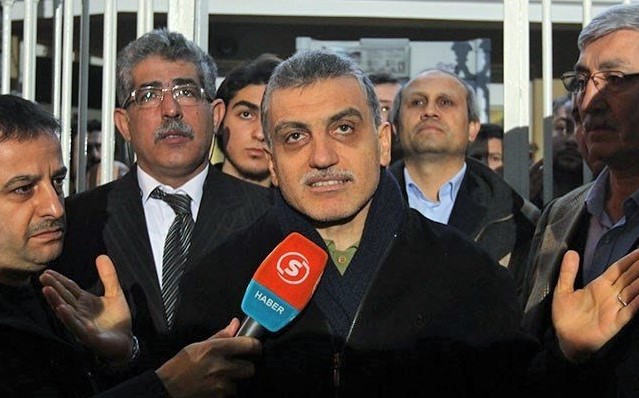
Jailed media executive given 1,406 years in match-fixing ‘conspiracy’ trial
The former chief executive of Turkey’s now-defunct Samanyolu Media Group has been given a jail sentence of 1,406 years on various charges in a trial concerning allegations of a conspiracy in a match-fixing scandal that surfaced in 2011, the state-run Anadolu news agency reported.
Hidayet Karaca, who has been behind bars since December 2014, was among 108 defendants in the trial. He was given the lengthy jail sentence at the last hearing of the trial on Friday on 76 charges of instigating breaches of the confidentiality of communication, 166 charges of instigating wiretapping and the recording of phone conversations, 166 charges of instigating forgery of official documents and 91 charges of instigating slander.
Karaca was accused of involvement in a conspiracy in the match-fixing investigation on behalf of the Gülen movement, accused by the Turkish government of masterminding a failed coup in 2016 and labelled a terrorist organization. The movement strongly denies coup and terrorism charges.
The match-fixing scandal became news in the summer of 2011 when police launched an investigation into 19 football matches suspected of being fixed, and by July 10, 61 people had been arrested, including then-Fenerbahçe Chairman Aziz Yıldırım and Turkish national players.
Former police chief Nazmi Ardıç, who is also jailed, was given a jail sentence of 1,972 years, 10 months in the same trial, while a former police officer was given 161 years, eight months on charges similar to Karaca’s.
While some defendants were acquitted, others were given sentences of various lengths. Eighty-eight defendants remained at the end of the trial since the court had ruled to separate the files of defendants who were at large.
Karaca has been held in the notorious Silivri Prison since December 2014 and was sentenced by an İstanbul court to 31 years, six months’ imprisonment over the scenario of a TV series that was broadcast by Samanyolu TV. Karaca was sentenced on charges of membership in a terrorist organization for his alleged ties to the Gülen movement and for allegedly slandering the al-Qaeda-affiliated radical Islamist group Tahşiyeciler.
In June 2018 the Ankara 4th High Criminal Court handed down an aggravated life sentence to Karaca on charges of attempting to overturn the constitutional order. His sentence was later upheld by the 20th Criminal Chamber of the Ankara Regional Court of Justice in November 2020 as part of a case that was launched against 75 people accused of links to the faith-based movement inspired by Muslim cleric Fethullah Gülen.
Turkish President Recep Tayyip Erdoğan has been targeting followers of the Gülen movement, a faith-based group inspired by the Turkish cleric, since the corruption investigations of December 17-25, 2013, which implicated then-Prime Minister Erdoğan, his family members and his inner circle.
Dismissing the investigations as a Gülenist coup and conspiracy against his government, Erdoğan designated the movement as a terrorist organization and began to target its members. He locked up thousands including many prosecutors, judges and police officers involved in the investigation as well as journalists who reported on them.
Erdoğan intensified the crackdown on the movement following the coup attempt on July 15, 2016 that he accused Gülen of masterminding. The crackdown also targeted political opponents of the government, Kurdish activists and human rights defenders, among others. Gülen and the movement strongly deny involvement in the abortive putsch or any terrorist activity.
The Samanyolu Media Group is among the dozens of media organizations that were closed down by the Turkish government in the aftermath of the failed coup due to their links to the Gülen movement.
-
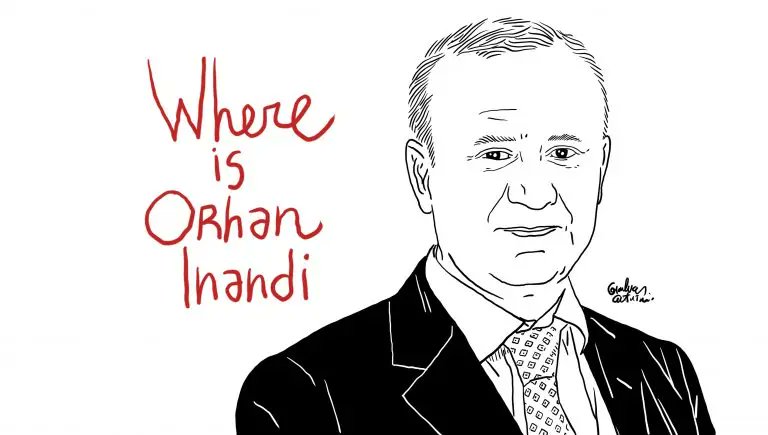
HRF expresses concern over educator missing in Kyrgyzstan
The New York-based Human Rights Foundation (HRF) has expressed concern over the “alleged kidnapping” of educator Orhan İnandı in Kyrgyzstan by Turkey’s National Intelligence Organization (MİT), the Stockholm Center for Freedom reported.
The HRF also called on Kyrgyz President Sadyr Japarovo to demand İnandı’s release and to “prevent his potential deportation under international law’s non-refoulement principle.”
İnandı, the founder and president of the Turkish-Kyrgyz Sapat school network operating in Kyrgyzstan, went missing in Bishkek on Monday evening and is feared to have been abducted by Turkish spies due to his alleged links to the Gülen movement.
“We must put a stop to Erdogan’s illegal attempts to disappear people across borders,” the HRF said.
The Sapat (formerly Sebat) network of educational institutions has been operating in Kyrgyzstan since 1992. The school network has been run by the Kyrgyz Republic since 2017. İnandı had been working in Kyrgyzstan since 1995 and had been president of the schools since 2001. He has been a citizen of the Kyrgyz Republic since 2010. The Kyrgyz government had earlier denied the Turkish government’s request for İnandı’s extradition on terrorism charges.
İnandı’s wife, Reyhan, who spoke at a news conference on Thursday, said: “It’s a race against time [to find him]. We know nothing about what happened to him, how he is and where he is. I am concerned about him being tortured.”
Kyrgyz President Japarovo on Tuesday ordered the State Committee for National Security and the Ministry of Internal Affairs to conduct an extensive search to locate İnandı.
Turkish President Recep Tayyip Erdoğan has been targeting followers of the Gülen movement, inspired by US-based Turkish Muslim cleric Fethullah Gülen, since the corruption investigations of December 17-25, 2013, which implicated then-Prime Minister Erdoğan, his family members and his inner circle.
Dismissing the investigations as a Gülenist coup and conspiracy against his government, Erdoğan designated the movement as a terrorist organization and began to target its members. He intensified the crackdown on the movement following an abortive putsch on July 15, 2016 that he accused Gülen of masterminding. Gülen and the movement strongly deny involvement in the coup attempt or any terrorist activity.
Turkish intelligence has intensified its efforts to target dissidents abroad. Most recently a nephew living in Kenya of Islamic scholar Fethullah Gülen was abducted by Turkish spies and brought back to Turkey at the weekend, according to the state-run Anadolu news agency.
In a joint letter UN rapporteurs accused the Turkish government of engaging in the systematic practice of state-sponsored extraterritorial abductions and forcible returns to Turkey, with at least 100 Turkish nationals from multiple states including Afghanistan, Albania, Azerbaijan, Afghanistan, Cambodia, Gabon, Kosovo, Kazakhstan, Lebanon and Pakistan removed to Turkey.
In a number of cases the UN Working Group on Arbitrary Detention (WGAD) concluded that the arrest, detention and forced transfer to Turkey of Turkish nationals were arbitrary and in violation of international human rights norms and standards.
A recent report by Freedom House on global transnational repression also revealed the intensity, geographic reach and suddenness of the Turkish government’s campaign targeting dissidents abroad, noting that Turkey has become number one among countries that have conducted renditions from host states since 2014.
According to the report, Ankara’s campaign has primarily targeted people affiliated with the Gülen movement, but the government has started applying the same tactics to Kurdish and leftist individuals living abroad.
The Freedom House report also indicated that the Turkish government has pursued its perceived enemies in at least 30 host countries spread across the Americas, Europe, the Middle East, Africa and Asia since the coup attempt.
According to recent official statements by its interior ministry, Turkey has sent 800 extradition requests to 105 countries since the attempt, and more than 110 alleged members of the movement have been brought back to Turkey as part of the government’s global campaign.
1/ HRF expresses concerns over the alleged kidnapping of educator Orhan Inandi in Kyrgyzstan by Turkey’s National Intelligence Organization (MİT).🧵
— Human Rights Foundation (@HRF) June 3, 2021