Blog

  • Seven lawyers among 15 detained in Ankara over Gülen links

    Seven lawyers among 15 detained in Ankara over Gülen links

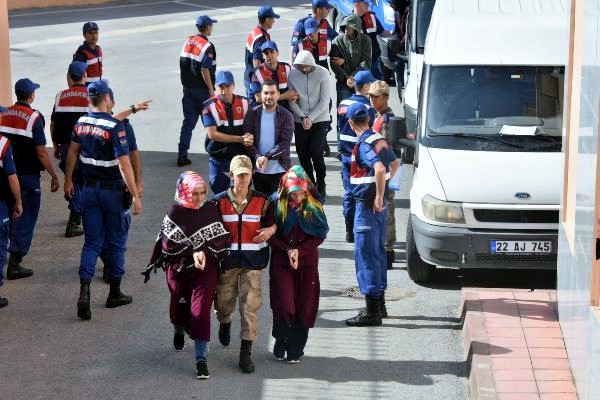
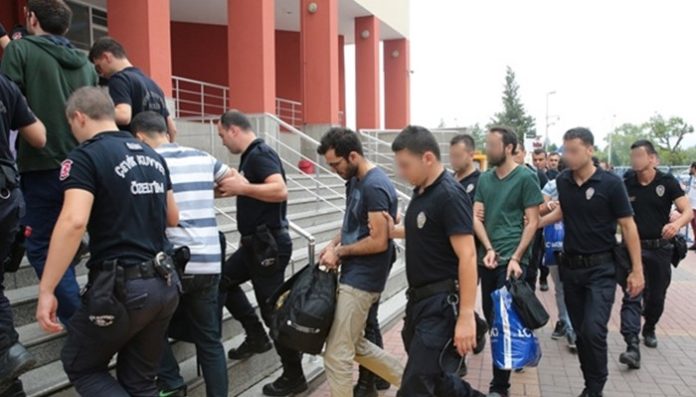
    Prosecutors in the Turkish capital of Ankara issued detention warrants on Tuesday for 36 people in two separate investigations, leading to the detention of 15 including seven lawyers due to their alleged links to the faith-based Gülen movement, the Bold Medya news website reported.

    The detention warrants were issued based on the records of their phone conversations or on witness statements. Among those detained or facing detention are former police academy students and former public servants.

    The suspects are accused of using ByLock, an encrypted messaging app considered by Turkey a secret tool of communication among supporters of the Gülen movement, and of having access to the questions on a State Personnel Examination (KPSS) held in 2013.

    Following an abortive putsch in July 2016, the Turkish government declared a state of emergency and carried out a massive purge of state institutions under the pretext of an anti-coup fight. More than 130,000 public servants, including 4,156 judges and prosecutors, as well as 29,444 members of the armed forces were summarily removed from their jobs for alleged membership in or relationships with “terrorist organizations” by emergency decree-laws subject to neither judicial nor parliamentary scrutiny.

    According to a statement from Justice Minister Bekir Bozdağ in July, 117,208 people have been convicted, with 1,366 sentenced to life in prison and 1,634 to aggravated life with no chance of parole following the coup attempt. While 87,519 people have been acquitted of charges specifically related to the Gülen movement since the coup attempt, according to Bozdağ, there are doubts about the number of people who have been acquitted of all charges by a court of law.

    Judicial experts voice skepticism about the figures announced by the minister, saying that 117,208 convictions are only those that have been upheld by an appeals court, since Justice Ministry data show that more than 265,000 people were sentenced on charges of terrorist organization membership between 2016 and 2020 due to their alleged Gülen links.
  • Head of Turkish intelligence talked to Syrian counterpart about return of refugees: report

    Hakan Fidan, the head of Turkey’s National Intelligence Organization (MİT), met with his Syrian counterpart, Ali Mamlouk, in Syria and discussed the return home of Syrians who have taken refuge in Turkey, the online newspaper Gazete Pencere reported on Thursday.

    Gazete Pencere said Fidan met with Mamlouk to find a solution to Turkey’s Syrian refugee issue, one of the reasons for the decline in support for the ruling Justice and Development Party (AKP) ahead of the 2023 elections, asking for steps to be taken that would facilitate their return.

    The Syrian side laid down the withdrawal of Turkish troops from Syria as a condition for negotiating the return of Syrian refugees in Turkey, according to Gazete Pencere.

    The country is today home to more than 3.6 million Syrian refugees who fled after the civil war broke out in 2011 in its southern neighbor.

    The claims of the meeting come a week after French intelligence website Intelligence Online reported that the heads of Turkish and Syrian intelligence had held a meeting through the mediation of Russia.

    Although Intelligence Online didn’t say whether Fidan and Mamlouk held the meeting in person or online, it reported “unsatisfactory” results of the meeting, noting that it “at least allowed the two sides to determine their demands and present their terms to each other.”

    Turkish media reports also said, citing the Arabic service of Russian news agency Sputnik, that MİT agents talked to the Syrian National Coalition for Opposition and Revolutionary Forces (SMDK) and asked Syrian dissidents in Turkey to leave the country by the end of the year at the latest, in line with a decision given by Ankara amid a process of reconciliation with the Syrian government.

    The reports further said that Turkish President Recep Tayyip Erdoğan also decided to “close all offices of the Syrian opposition” in the country and “end Turkey’s financial support” to them. It was noted that MİT told the dissidents to “find another place to stay” and “stop media and political activities” in Turkey.

    Turkey has strongly opposed Syrian Bashar al-Assad throughout the 11-year civil war and backed some rebel groups.

    But Foreign Minister Mevlüt Çavuşoğlu revealed in August that he had briefly met with his Syrian counterpart, Faisal al-Meqdad, in Belgrade last October — the first such meeting reported since 2011. Çavuşoğlu also reaffirmed Turkey’s call for the Syrian opposition to reconcile with Assad’s government.

    In a move that sharply contradicted his earlier stance against al-Assad, Erdoğan said in a statement last month that Turkey needs to take “further steps” in a newly announced process of reconciliation with the Syrian government to end the “games” being played in the region.

    The president also denied that Turkey had sought the removal of Assad.

    “There was a fight against terrorism in all the steps we have taken in Syria,” he said, adding that they have no designs on Syria and respect its territorial integrity.

    Erdoğan also noted that the Turkish government hosts millions of Syrian refugees because of its ties to the Syrian people, especially in terms of religious values, and not because they want to be “constantly at war with the regime.”

  • 6 migrants including 2 infants die at sea after Greek pushback: Turkey

    6 migrants including 2 infants die at sea after Greek pushback: Turkey


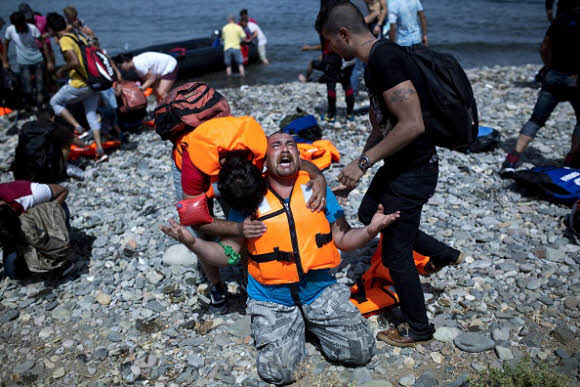
    Six migrants including two babies died at sea after Greece pushed them back to Turkish waters in the Aegean, Agence France-Presse reported, citing the Turkish coastguard on Tuesday.

    Another 73 migrants were also rescued off Muğla province in the southwest, the coastguard said.

    The migrants were pushed back to Turkish waters by Greek forces in four boats, according to the coastguard, who cited a detailed interview with the migrants.

    Their nationalities were not immediately known, but they are believed to have set out from Tripoli in Lebanon on Saturday in a wooden boat — with the ultimate goal of reaching Italy.

    But they requested assistance from Greek security forces after their fuel ran out off the Greek island of Rhodes on Monday, the Turkish coastguard said, citing migrants’ testimonies.

    “It was found out that after they were put on a Greek coastguard boat and their valuables were taken, they were put on a total of four boats at a location close to Turkish territorial waters and left to drift,” the coastguard said.

    Ankara regularly accuses Greek officials of illegally pushing migrants back into its territory, but Athens denies the claims.

    Greece in turn claims Turkey is turning a blind eye to people trying to reach Europe via its border, in violation of a 2016 deal between Ankara and the EU.

  • Sanctions imposed on Halk TV for coverage of Kurdish father given son’s remains in a bag

    The Radio and Television Supreme Council (RTÜK), Turkey’s broadcasting watchdog, has imposed penalties on the pro-opposition Halk TV due to its coverage of the handing over of the remains of a young Kurdish man to his father in a bag, a RTÜK member has announced.

    Human rights advocates and some social media users in Turkey were outraged when photos of a Kurdish father, Ali Rıza Arslan, began to circulate on social media in late August showing him carrying the remains of his son in a cloth bag after leaving the Diyarbakır courthouse in southeastern Turkey.

    Arslan’s son, Hakan, was killed during clashes between Turkish security forces and the outlawed Kurdistan Workers’ Party (PKK) in January 2016, and his remains were returned to his father nearly seven years after his death.

    RTÜK member Okan Konuralp tweeted on Wednesday that RTÜK has decided impose a fine on Halk TV and suspend five broadcasts of “Sözüm Var,” (I have something to say) hosted by journalist Şirin Payzın.

    According to RTÜK, the comments made during the program about the return of the remains of Hakan Arslan to his father were “the kind of comments that could serve the goals of terrorism,” meaning the PKK, which has been leading an armed insurgency against Turkey’s security forces since the ’80s in a campaign that has claimed the lives of some 40,000 people.

    The group is listed as a terrorist organization by Turkey and much of the international community.

    Konuralp said RTÜK also imposed two other fines on the TV station on accusations of insulting Interior Minister Süleyman Soylu during two other programs, adding that he and İlhan Taşçı, a member of RTÜK from the main opposition Republican People’s Party (CHP), voted against the sanctions on Halk TV.

    RTÜK is a controversial agency that is accused of contributing to increasing censorship in the country by imposing punitive and disproportionate sanctions on independent television and radio stations critical of the Turkish government.

    According to Reporters Without Borders (RSF), 90 percent of the national media in Turkey, which was ranked 149th among 180 countries in the RSF’s 2022 World Press Freedom Index, is owned by pro-government businessmen and toe the official line.

  • TikTok users mock Erdoğan’s call on Turks to convert foreign currency savings to lira


    As part of a new trend started by TikTok users in Turkey, videos showing people panicking and hiding their money when Turkish President Recep Tayyip Erdoğan magically appears behind them have gone viral, local media reported on Wednesday.

    In hundreds such videos that each garnered thousands of views on TikTok, Erdoğan is seen appearing behind people who are counting their money and tells them to “Get the gold [and] foreign currency savings [kept] under your pillows out,” according to Turkish media reports. The users are then seen panicking and squirreling the money away.

    The videos make fun of the fact that the president has been urging Turkish citizens and companies to convert their foreign currency savings to Turkish lira for the past few years as Ankara seeks to boost demand for the local currency.

    The lira, which has lost more than half its value against the dollar in the past year alone and has been the worst performer in emerging markets for several years running due largely to economic and monetary policy concerns under Erdoğan’s government, traded at 18.25 to the US dollar on Wednesday, down more than 27 percent so far this year.

    The Turkish economy has gone into a tailspin since last year when Erdoğan — who is up for re-election next year — put pressure on the central bank to start slashing interest rates.

    Contrary to economic orthodoxy, Erdoğan is convinced that high interest rates fuel inflation rather than rein it in.

    Over the past several years Turkey has been suffering from a deteriorating economy, with high inflation and unemployment as well as a poor human rights record. Erdoğan is criticized for mishandling the economy, emptying the state’s coffers and establishing one-man rule in the country where dissent is suppressed and opponents are jailed on politically motivated charges.

    A staggeringly high cost of living has become the new normal in Turkey, where recent increases in food and utility prices are pushing up inflation, further crippling the purchasing power of citizens.

    An increasing number of Turks have complained on social media about rising electricity bills and falling into debt. Many have said even basic foods such as vegetables have become a luxury as prices have risen by nearly 400 percent.

  • 27-year-old Turkish asylum seeker lost in Evros River after pushback

    Yunus Emre Ayyıldız (27), a Turk seeking asylum in Greece, went missing on Thursday while crossing the Evros River, the Stockholm Center for Freedom reported, citing the Bold Medya news website.

    Ayyıldız arrived safely in Greece but was pushed back to Turkey by Greek authorities and went missing on the return journey. He had arrived in Greece by boat with a group of asylum seekers, but they were detained shortly thereafter. They were loaded onto the same rubber boat, which was damaged on the way back.

    According to other people in the boat who managed to arrive in Turkey safely, Ayyıldız lost his balance, fell into the water and disappeared. It was thanks to the witnesses that Ayyıldız’s brother, Himmet Ayyıldız, was able to find out what had happened to his brother.

    ”They destroyed my brother’s future. He had no hope left, therefore he decided to flee. I’m worried about my brother’s well being because he can’t even swim,” said Himmet Ayyıldız.

    He added that together with lawyers he called police stations and hospitals close to the border. However, they could not find any trace of Ayyıldız, so he requested that the authorities and human rights organizations search for his brother.

    Ayyıldız was sentenced to seven years, six months in prison for alleged membership in the Gülen movement.

    Turkish President Recep Tayyip Erdoğan has been targeting followers of the Gülen movement, a faith-based group inspired by Muslim cleric Fethullah Gülen, since the corruption investigations of December 17-25, 2013, which implicated then-prime minister Erdoğan, his family members and his inner circle.

    Dismissing the investigations as a Gülenist coup and conspiracy against his government, Erdoğan designated the movement as a terrorist organization and began to target its members. He intensified the crackdown on the movement following a coup attempt in 2016 that he accused Gülen of masterminding. Gülen and the movement strongly deny involvement in the abortive putsch or any terrorist activity.

    According to a statement from the Turkish interior minister, a total of 332,884 people have been detained, of whom 101,000 were arrested and jailed due to alleged links to the Gülen movement since the failed coup.

    Purge victims who wanted to flee the country to avoid the post-coup crackdown took dangerous journeys across the Evros River or the Aegean Sea. Some were arrested by Turkish security forces and some were pushed back to Turkey by Greek security, while others perished on their way to Greece.

    The United Nations Refugee Agency, members of the European Parliament and human rights watchdogs have repeatedly demanded that Greek authorities investigate such incidents of pushback.

    According to Amnesty International, the practice of migrant pushbacks in Greece has become so bad that even people who have applied for asylum and have been in the country for some time are being picked up and deported.

    EU Home Affairs Commissioner Ylva Johansson during a visit to Greece in March called on the country to “do more” to investigate the allegations. However, Greek Migration Minister Notis Mitarachi denied Greek authorities’ involvement in any kind of pushback.

  • 40 face detention for alleged Gülen links in investigations in Ankara, İstanbul

    40 face detention for alleged Gülen links in investigations in Ankara, İstanbul

    Turkish prosecutors have issued detention warrants for 40 people as part of two investigations in Ankara and İstanbul due to their alleged links to the faith-based Gülen movement, the Kronos news website reported.

    The Gülen movement is accused by the Turkish government and President Recep Tayyip Erdoğan of masterminding a failed coup on July 15, 2016 and is labeled a “terrorist organization,” although the movement denies involvement in the coup attempt or any terrorist activity.

    The 25 suspects facing detention in İstanbul include former police officers, teachers and prison guards who are accused of engaging in activities within the movement such as attending religious talks. Suspects were detained in police operations in Adana, İzmir and Isparta in addition to İstanbul on Tuesday, and three of them were subsequently arrested.

    As part of the investigation in Ankara, prosecutors issued detention warrants for 15 people for having used the ByLock smart phone application and attending religious talks with other members of the movement.

    Turkish authorities consider ByLock, once widely available online, a secret tool of communication among supporters of the Gülen movement since the coup attempt, despite the lack of any evidence that ByLock messages were related to the abortive putsch, leading to the arrest of thousands who were using it.

    In a surprise move last week, a Turkish court declined to impose a sentence on a Turkish-American who holds the license for ByLock since he benefitted from the repentance law.

    The İstanbul 29th High Criminal Court last Wednesday ruled there was no need to sentence Alpaslan Demir, who changed his name to David Keynes after acquiring US citizenship, to prison, citing the fact that he had turned himself in and gave information to the authorities regarding the accusations against him voluntarily. He benefited from the repentance provision under the Turkish Penal Code (TCK).

  • Albanese government turns to super funds to help address social housing shortfall

    Albanese government turns to super funds to help address social housing shortfall

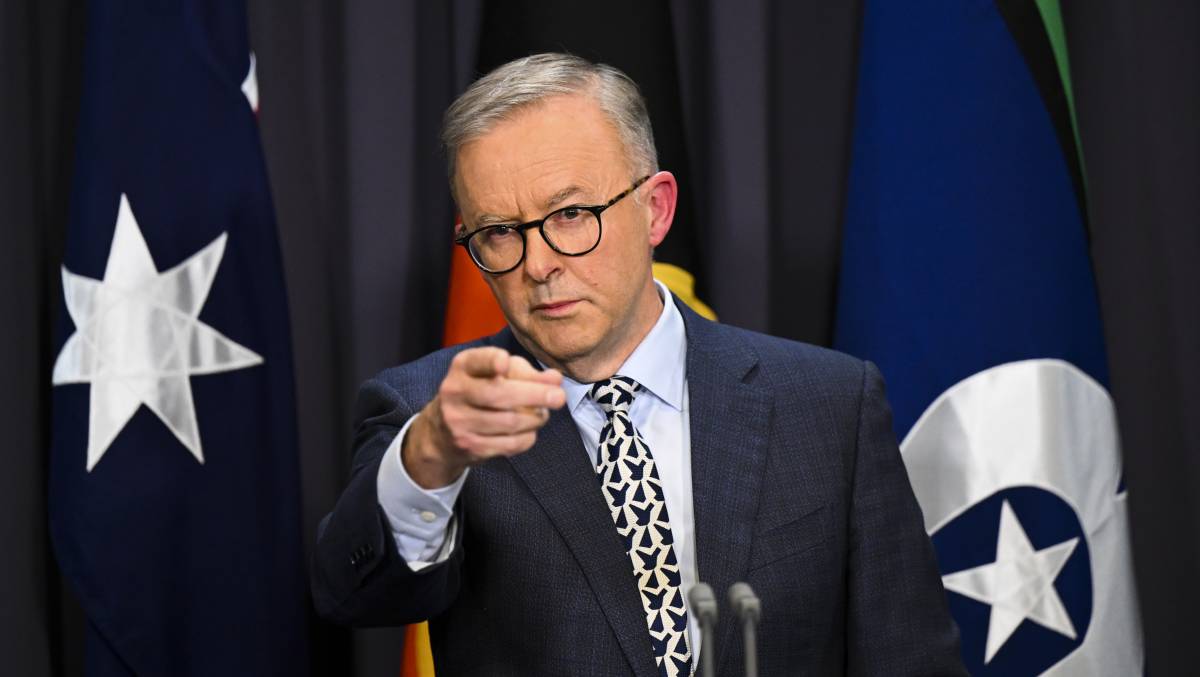
    Assistant Treasurer and Minister for Financial Services Stephen Jones held a round table with peak industry group Association of Superannuation Funds of Australia (ASFA) this week in a bid to secure their investment.

    The meeting followed the Prime Minister and Treasurer last week announcing the government would make up to $575 million from the National Housing Infrastructure Facility available to encourage private investment, particularly from superannuation.

    That move was aimed at improving the risk-reward ratio for super funds.

    The superannuation sector has not opposed the move but is yet to be convinced, citing high risk and low financial returns.

    The Assistant Treasurer told the round table there were many opportunities for joint cooperation between government and superannuation funds.

    “There are many areas where the government can partner with the super funds to advance the national interest,” Mr Jones said.

    “Super funds are already major investors in assets that earn great money for members and produce huge economic benefits for the community [and] we need to find new ways to do this.

    “Supercharging our economy with Australian workers’ own savings is smart.

    ‘Smart governments look for all available options to solve these [economic] problems. Engaging with our super funds is one way we can work together to do that.”

    Super funds wary of risk, returns
    In a communique released following the round table, ASFA said it was the start of the conversation.

    “Identifying models for investment which work economically, both for the government and for fund members, will be key,” it read.

    “Where the Commonwealth can create pathways to prove out investment methodologies, there will be greater scope for superannuation fund investment.

    “Orchestration of the policy settings will be crucial — requiring ongoing effort and collaboration by stakeholders.”

    The superannuation industry has suggested assisting with planning permissions, increasing compensation and ensuring better returns would boost the likelihood of the sector investing further.

    Housing shortage ‘endemic’ across Australia
    A report prepared for the Community Housing Industry Association estimated the shortfall of social and affordable housing will exceed 700,000 by 2036.

    A further paper from Swinburne University associate professor Christian Nygaard, released in March, found the shortage in affordable housing to be endemic across Australia.

    That study found the social and economic cost of that shortfall to be in the order of $676 million per annum, a figure projected to rise to $1,286,000,000 by 2036.

    A fifth consecutive interest rate hike on Tuesday dealt another blow to housing affordability, a message echoed by federal Housing Minister Julie Collins.

    “It will make it more difficult for more Australians to find a safe and affordable place to call home,” she told Question Time.

    Minister Collins said the decision to unlock up to $575 million to encourage super funds to invest in social and affordable housing was one part of the government’s plan to improve access.

    “This facility has been under-utilised and we want to work with the other tiers of government, social housing providers, but also to try and unlock private capital such as superannuation investment into more social and affordable housing across the country,” she said.

    “[Federal, state and territory ministers] are having another meeting at the end of this week to talk about the national plan and get things happening.

    “We want to get as many houses on the ground as quickly as possible.”

    A report by think tank Per Capita in May estimated less than 55 per cent of Australian residents born after 1990 will own their own home by the time they turn 40, compared to a historical high of nearly 72 per cent.

  • Turkey’s post-coup detention of judges and prosecutors was unlawful: ECtHR

    The European Court of Human Rights (ECtHR) on Tuesday ruled that the pretrial detention of 230 judges and prosecutors after a failed 2016 coup against President Recep Tayyip Erdoğan was unlawful, holding that Turkey is to pay 5,000 euros in non-pecuniary damages to every applicant.

    The ECtHR ruled in the cases Ataman and Others v. Türkiye, Bayram and Others v. Türkiye and Geleş and Others v. Türkiye that the pre-trial detention of the 209 applicants “had not taken place in accordance with a procedure prescribed by law.”

    In the case of “Ulusoy and Others v. Türkiye,” the Strasbourg court said the grounds for the 21 applicants’ detention were “not of a nature” to constitute “reasonable suspicion.”

    Members of the Turkish judiciary had been arrested after the failed coup as part of a mass crackdown on the Gülen movement, inspired by Turkish cleric Fethullah Gülen, whom the president blames for the coup attempt. Gülen and the movement deny any involvement.

    Following the abortive putsch, the Turkish government declared a state of emergency and carried out a massive purge of state institutions under the pretext of an anti-coup fight. More than 130,000 public servants, including 4,156 judges and prosecutors, as well as 29,444 members of the armed forces, were summarily removed from their jobs for alleged membership in or relationships with “terrorist organizations” by emergency decree-laws subject to neither judicial nor parliamentary scrutiny.

  • Turkish gov’t spent $307 mln on representation in first half of 2022


    A total of TL 5.6 billion ($307 million) was spent for representation and expenses incurred for receptions at public institutions in Turkey in the first six months of 2022, the Birgün daily reported on Friday, citing official data.

    According to Birgün’s report, which was based on figures from the Public Procurement Authority (KİK) –- a regulatory and monitoring agency –- government agencies and offices spent $307 million on such items as accommodation, travel, food and receptions that are listed as “representation and entertainment” expenses.

    Birgün reported that in most cases services were directly contracted for from a private firm without the need to hold a tender, which according to critics is a method that benefits pro-government companies.

    The statistics come as Turkey has been suffering from a deteriorating economy over the past several years, with high inflation and unemployment as well as a poor human rights record. President Recep Tayyip Erdoğan is criticized for mishandling the economy, emptying the state’s coffers and establishing one-man rule in the country where dissent is suppressed and opponents are jailed on politically motivated charges.

    A survey conducted by the Yöneylem Social Research Center revealed last month that 69.3 percent of Turks struggle to pay for food, 53.8 percent can’t meet their everyday expenses and 60.5 percent are struggling to pay their utility bills, while the majority of participants also stated that their income had decreased (69.5 percent), debts had increased (64.8 percent) and that they were depressed due to financial difficulties (65 percent).

    When they were asked, “When you think about the current state of the Turkish economy, who is responsible for this situation?” 50.5 percent of respondents answered “Turkish President Recep Tayyip Erdoğan.”

    A staggeringly high cost of living has become the new normal in Turkey, where recent increases in food and utility prices are pushing up inflation, further crippling the purchasing power of citizens.

    According to official data, consumer prices accelerated to a 24-year high of 79.6 percent in July, up from 78.6 percent in June.

    An increasing number of Turks have complained on social media about rising electricity bills and falling into debt. Many have said even basic foods such as vegetables have become a luxury as prices have risen by nearly 400 percent.