Category: World

  • Turkey ranked 149th in RSF’s 2022 World Press Freedom Index 2022

    Turkey was ranked 149th among 180 countries in the Reporters Without Borders (RSF) 2022 World Press Freedom Index, with the prominent press organization warning about rising authoritarianism in the country and declining media pluralism.

    Turkey’s 2022 ranking on the RSF index is up from the 153rd last year; however, RSF Turkey representative Erol Önderoğlu, in remarks to Deutsche Welle’s Turkish edition, interpreted the minor change for the better not as a result of the improvement of freedom of the press in the country but as a result of the war fought by civil society and press organizations for more press freedom.

    RSF released its “2022 World Press Freedom Index: a new era of polarisation” on Tuesday, which coincided with World Press Freedom Day. It assesses the state of journalism in 180 countries and territories.

    “Authoritarianism is gaining ground in Turkey, challenging media pluralism. All possible means are used to undermine critics,” said the press organization.

    RSF said since 90 percent of the national media is now under government control, the public has turned, during the past five years, to critical or independent media outlets of various political persuasions to learn about the impact of the economic and political crisis on the country. It cited local TV channels such as Fox TV, Halk TV, Tele1 and Sözcü and international news websites such as BBC Turkish, VOA Turkish and Deutsche Welle Turkish as examples.

    According to RSF, as the 2023 election approaches, Recep Tayyip Erdoğan “hyper-presidency” has stepped up its attacks on journalists in a bid to deflect attention from the country’s economic and democratic decline and to shore up its political base.

    Through a referendum in April 2017 Turkey switched from a parliamentary system of governance to an executive presidential system that granted Erdoğan and his Justice and Development Party (AKP) sweeping powers and was criticized for removing constitutional checks and balances, thus leading to a further weakening of Turkish democracy.

    “However, tactics such as near systematic censorship on the internet, frivolous lawsuits against critical media outlets or the misuse of the judicial system have, until now, enabled Erdoğan to restore his popularity rating, while he continues to be embroiled in a major case of corruption and political clientelism,” RSF says in the index.

    Turkey is scheduled to hold presidential and parliamentary elections in 2023.

    According to the Turkish Journalists’ Association (TGC), there are currently 28 journalists behind bars in Turkey; however, other media organizations estimate the figure to be higher.

    Legal framework

    In its report RSF also said discriminatory practices against critical journalists and media outlets, such as stripping them of press passes, are commonplace in Turkey, while journalists face various obstacles to performing their jobs independently.

    “Judges who do the government’s bidding are trying to limit democratic debate by censoring online articles tackling corruption and similarly sensitive topics. This makes it hard to publish quality reporting. Some journalists have nonetheless tried to remain faithful to their mission to report the news with complete independence, and they are demanding recognition of a ‘media ombudsman’.”

     Economic context

    According to RSF, public and private sector companies allied with the AKP government endanger media pluralism by channeling ads and subsidies to media outlets that give them favorable coverage. The Press Advertising Council (BIK) uses the allocation of state advertising to put financial pressure on recalcitrant dailies, while the Radio and Television Supreme Council (RTÜK) helps to weaken critical TV channels economically by imposing heavy fines. Some newspapers have had to reduce their number of pages because of the price of paper.
  • Police detain 51 in protests sparked by Gezi Park trial verdict

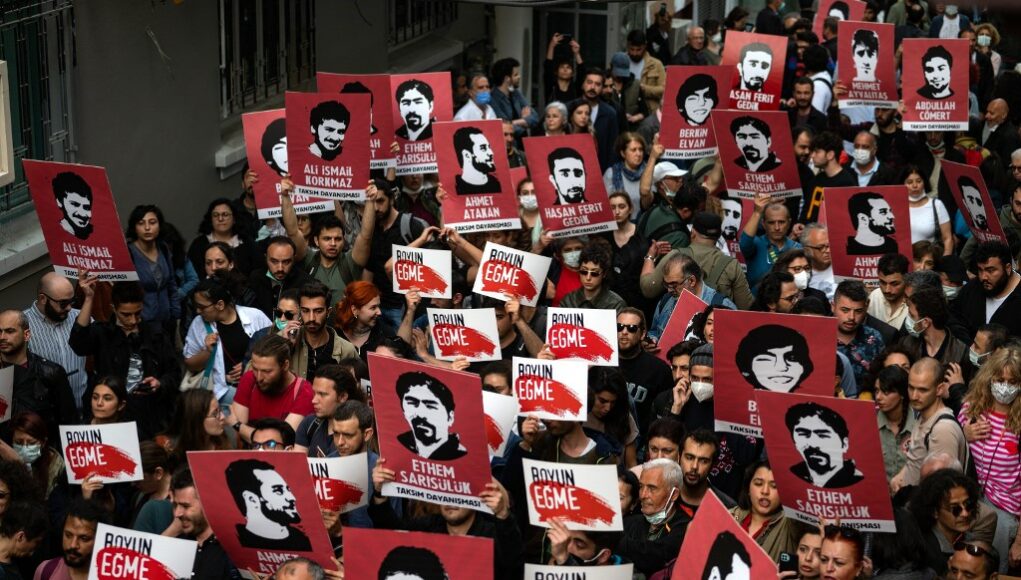
    Police detain 51 in protests sparked by Gezi Park trial verdict

    Police on Tuesday detained 51 people who had gathered in İstanbul’s Beyoğlu district to protest a verdict sentencing businessman and rights defender Osman Kavala to life in prison and seven others to 18 years each on charges of instigating the anti-government Gezi Park protests, Turkish media reported.

    The verdict sparked nationwide protests in Turkey.

    Hundreds gathered in Beyoğlu and chanted pro-Gezi slogans.

    They dispersed after a press release was read out to the crowd. Many of them were detained by the police in other parts of Beyoğlu.

    A journalist was also among those detained.

    After the press statement, protestors who wanted to march toward İstiklal Street were stopped by the police.

    “We will continue to fight until this injustice, this unfairness, this hostility ends, until our friends are released, until they are acquitted in these cases, which will leave a black stain in the history books. We will not leave our friends alone,” the protesters said in the press statement.

    The statement said that trust in the country’s rule of law had decreased and that “Turkey has become a country where architects, city planners and lawyers who object to the plunder of nature are sentenced to aggravated life imprisonment.”

    The Gezi Park demonstrations, which took place in the summer of 2013 in reaction to the Justice and Development Party (AKP) government’s attempt to destroy one of the few green spaces left in İstanbul, quickly turned into a nationwide protest against the authoritarian policies of then-prime minister and current President Recep Tayyip Erdoğan.

    Eleven protestors died and thousands more were injured as they were brutally suppressed by the police on Erdoğan’s instructions.

  • Man reaches out to Turkish MP saying incarcerated sick wife cannot access proper healthcare

    The husband of a critically ill woman serving a sentence for conviction of links to the Gülen movement said his wife did not have access to proper healthcare in prison, the Stockholm Center for Freedom reported, citing the Bold Medya news website.

    Reaching out to Peoples’ Democratic Party (HDP) deputy Ömer Faruk Gergerlioğlu, Semih Şentürk said his wife, Mehtap Şentürk, was wheel-chair bound and suffered from multiple sclerosis (MS) but that she was not provided proper treatment in prison. He asked that his wife be released or at least put under house arrest.

    “My wife is [almost totally] disabled, and she cannot take care of herself because of her disease,” he said. “Every six months she needs a certain medication; however, the prison has neglected this.”

    Mehtap Şentürk is too sick to stay in a normal cell; therefore, she is being kept in the prison infirmary. A hospital in Ankara issued a report saying she was fit to remain in prison in early March, although she is unable to use her arms and has to wear a diaper.

    Mehtap Şentürk, a science teacher, was sent to Sincan Prison in Ankara after the Supreme Court of Appeals upheld a prison sentence of seven years on charges of terrorist organization membership due to her links to the Gülen movement.

    Semih Şentürk is also in prison on similar charges. He was sentenced to nine years, nine months in prison.

    Turkish President Recep Tayyip Erdoğan has been targeting followers of the Gülen movement since the corruption investigations of December 17-25, 2013, which implicated then-prime minister Erdoğan, his family members and his inner circle.

    Dismissing the investigations as a Gülenist coup and conspiracy against his government, Erdoğan designated the movement as a terrorist organization and began to target its members. Erdoğan intensified the crackdown on the movement following a coup attempt in 2016.

    In an earlier tweet Gergerlioğlu called on authorities to do their best to ensure Şentürk‘s release from prison.

    Turkish authorities have denied political prisoners, even those with critical illnesses, release from prison so they can at least seek proper treatment. Human rights activists and opposition politicians have frequently criticized authorities for not releasing critically ill prisoners.

    Lawmaker Gergerlioğlu said ill prisoners were not released until they were at the point of no return. He claimed that prisoners did not have access to proper healthcare facilities such as hospitals and clinics.

  • Opposition leader says will take tapes of Erdoğan and son leaked during 2013 graft probe to court

    Opposition leader says will take tapes of Erdoğan and son leaked during 2013 graft probe to court

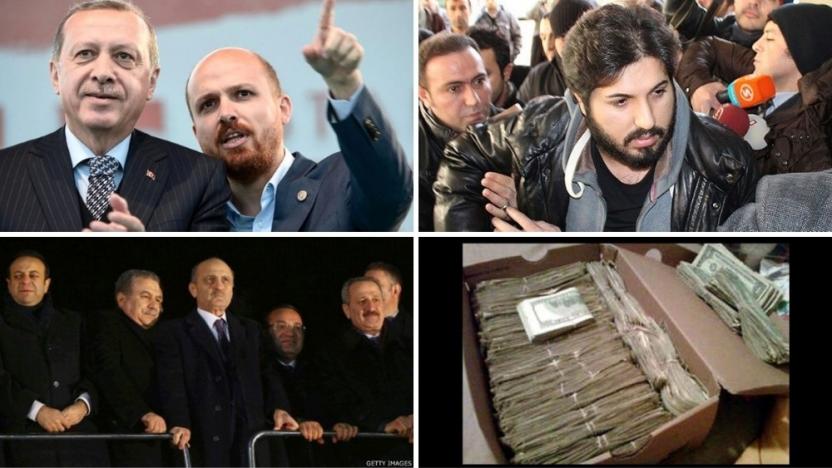
    Main opposition Republican People’s Party (CHP) leader Kemal Kılıçdaroğlu has read out in parliament the transcript of wiretapped conversations between then-prime minister and current President Recep Tayyip Erdoğan and his son Bilal Erdoğan that were leaked on the Internet during corruption investigations in late 2013, saying he will take them to court, local media reported on Tuesday.

    The December 17-25 bribery and corruption investigations, which implicated the family members of four cabinet ministers as well as the children of Erdoğan, shook the country back in 2013.

    As part of the first investigation, the sons of three then-ministers from the ruling Justice and Development Party (AKP) were detained on Dec. 17, 2013. A week later another investigation involved Bilal Erdoğan.

    Part of the transcript read out loud by Kılıçdaroğlu during his party’s group meeting on Tuesday included a conversation between Erdoğan and his son Bilal regarding secret money transfers to an offshore company based in the Isle of Man.

    Turkey’s Supreme Court of Appeals last week overturned a 2020 decision ordering Kılıçdaroğlu to pay Erdoğan, his son Ahmet Burak Erdoğan, his uncle Ziya İlgen, his brother Mustafa Erdoğan, his son’s father-in-law Osman Ketenci and his friend and businessperson Mustafa Gündoğan a total of TL 197,000 ($13,500) in damages for his allegations that they had secretly transferred money to an offshore company based in the Isle of Man.

    Kılıçdaroğlu alleged in a parliamentary group meeting in November 2017 that in 2011 the group had conducted transfers amounting to $18 million to an offshore company based in the Isle of Man, a tax haven. He produced SWIFT codes and bank receipts to back up his claims.

    Before reading out the transcript, the CHP leader said: “Burak Erdoğan, Mustafa Erdoğan and Ziya İlgen established a company called ‘BUMEZ’ on the Isle of Man. That’s where the money comes from. I’m now reading you the conversation between Erdoğan and Bilal Erdoğan.”

    Saying that he’ll also take the tapes to court, the CHP leader called on Erdoğan to resign, reiterating his earlier remarks that he would resign from the presidency if Kılıçdaroğlu proved his allegations regarding secret money transfers to an offshore company based in the Isle of Man.

    “Could the people who rob the state become president? … You promised people, you said you’d quit [if the allegations were proven]. Then do what’s necessary,” Kılıçdaroğlu said.

    Despite the scandal resulting in the resignation of the cabinet members, the 2013 investigation was dropped after prosecutors and police chiefs were removed from the case. Erdoğan, officials of the ruling AKP and the pro-government media have described the investigation as an attempt to overthrow the government, saying that the leaked recordings were “fabricated.”

    Dismissing the investigations as a conspiracy against his government by the Gülen movement, a group inspired by Muslim cleric Fethullah Gülen, Erdoğan designated the faith-based movement as a terrorist organization and began to target its members.

    He locked up thousands, including many prosecutors, judges and police officers involved in the investigation.

  • University student arrested for links to Gülen movement says he was robbed of his future

    A university student who was arrested for alleged links to the Gülen movement in a letter from prison said he had been robbed of his education and future opportunities and demanded his immediate release, the Stockholm Center Freedom reported.

    In the letter that has been circulating on Twitter since Tuesday evening, 21-year-old Ibrahim Enes Gacar said he had been an honor student before his arrest. “Even the guards say I’m harmless and have a heart of gold. I ask you, have you ever seen a harmless terrorist?” he asked. “I will be the first terrorist in history to have a heart of gold.”

    After his arrest Gacar was put in solitary confinement for two weeks under quarantine regulations. He said the cell was filthy and freezing cold and that he got sick during his stay there.

    Gacar was a student at Turkey’s prestigious Boğaziçi University. In March 2020 he moved back with his family due the COVID-19 pandemic and did his studies online for eight months. He was arrested eight months after moving in with his family and has been in Istanbul’s Silivri Prison ever since.

    Turkish President Recep Tayyip Erdoğan has been targeting followers of the Gülen movement, a faith-based group inspired by Turkish cleric Fethullah Gülen, since the corruption investigations of December 17-25, 2013, which implicated then-prime minister Erdoğan, his family members and his inner circle.

    Dismissing the investigations as a Gülenist coup and conspiracy against his government, Erdoğan designated the movement as a terrorist organization and began to target its members. He intensified the crackdown on the movement following a coup attempt on July 15, 2016 that he accused Gülen of masterminding. Gülen and the movement strongly deny involvement in the abortive putsch or any terrorist activity.

    “I was 19 years old when I was arrested,” said Gacar. “I have been under arrest for nearly 500 days, and I need the public to know this.”

    Gacar said he was arrested after a man known only as L.K. accused him of membership in the movement and that authorities had no other evidence against him.

    Human rights advocates and Boğaziçi University student groups expressed their solidarity with Gacar on social media.

    https://mobile.twitter.com/kadinkoalisyonu/status/1516541785534779396

    According to a statement from the Turkish interior minister, a total of 319,587 people have been detained while 99,962 others have been jailed due to alleged links to the Gülen movement since the failed coup.

  • Journalist Hasan Cemal acquitted of Erdoğan insult charges

    A Turkish court on Tuesday acquitted veteran journalist Hasan Cemal of charges of insulting Turkish President Recep Tayyip Erdoğan in two tweets he posted in 2016 and 2020, the T24 news website reported.

    Cemal faced eight years in prison if convicted.

    The first tweet mentioned in the indictment was shared four days after a controversial coup attempt in Turkey on July 15, 2016. In the tweet Cemal had said, “The criterion for being a democrat is not only to stand against a military coup. It is also to say no to a deepening ‘ERDOĞAN COUP’.”

    The second tweet referenced in the indictment was a comment on an opinion piece by Professor Murat Belge titled “The Caliphate.” Sharing the link to the piece, Cemal had said, “If the caliphate is to return, I suppose the caliph will be Tayyip Erdoğan.”

    In addition to a prison sentence of eight years, the prosecutor also demanded a suspension of Cemal’s right to vote and to run for public office, for the tweets.

    Tried by the İstanbul 41st Criminal Court of First Instance, Cemal, who writes for the T24 news website, said the tweets did not contain any insults and that he was exercising his right to freedom of expression.

    The court ruled that Cemal’s words included commentary and criticism but not insult.

    Insulting the president is subject to criminal charges under the controversial Article 299 of the Turkish Penal Code (TCK), and thousands of people in the country are under investigation, with most of them facing the threat of imprisonment over alleged insults of Erdoğan.

    Whoever insults the president can face up to four years in prison, a sentence that can be increased if the crime was committed through the mass media.

    The insult cases generally stem from social media posts shared by Erdoğan opponents. The Turkish police and judiciary perceive even the most minor criticism of Erdoğan or his government as an insult.

  • Main opposition leader slams Erdoğan due to change of stance on Khashoggi case


    Turkey’s main opposition leader Kemal Kılıçdaroğlu has criticized President Recep Tayyip Erdoğan due to the transfer of the trial concerning the murder of Saudi journalist Jamal Khashoggi to Saudi Arabia, recalling his former remarks about the impossibility of such a move, Turkish media outlets reported.

    In a move that attracted international condemnation and dashed hopes about the possibility of justice for Khashoggi, a Turkish court last week confirmed a halt of the trial in absentia of 26 suspects linked to the murder of Khashoggi and its transfer to Riyadh.

    The 59-year-old journalist was killed inside the Saudi Consulate General in İstanbul on Oct. 2, 2018 in a gruesome murder that shocked the world.

    Republican People’s Party (CHP) leader Kemal Kılıçdaroğlu on Tuesday recalled remarks by Erdoğan, who said in 2018 that Turkey was not a “fool,” as thought by Riyadh, that would transfer the murder case to Saudi Arabia as Turkey the Saudis would destroy evidence related the murder and would not hold a fair trial.

    Erdoğan said at the time that since the crime was committed in İstanbul, an İstanbul court should try the suspects and that Saudi Arabia should hand over the suspects it had arrested to Turkey.

    A Saudi court sentenced eight lower-level operatives found responsible for the murder to prison terms of seven to 20 years in a trial that lacked transparency.

    The Saudi authorities failed to arrest the most senior officials accused of involvement in the plot to target Khashoggi, including the former royal court adviser, Saud al-Qahtani, and the deputy intelligence chief, Ahmed al-Assiri, merely announcing their resignations.

    Kılıçdaroğlu accused Erdoğan of damaging the prestige of the Turkish state by handing the Khashoggi murder trial over to Saudi Arabia.

    “He [Erdoğan] transferred the rights and prestige of Turkish courts to Saudi Arabia over a murder that was committed in Turkey. … It has now become clear who the fool is,” Kılıçdaroğlu said, claiming that Erdoğan agreed to the transfer of the Khashoggi trial in exchange for money from Saudi Arabia.

    Ankara’s move is interpreted by many as an attempt to put relations with Saudi Arabia back on track at a time when Turkey is desperate for investment to help pull it out of an economic crisis.

    In the meantime, Turkey’s Justice Minister Bekir Bozdağ said on Monday, amid mounting criticism about the transfer of the Khashoggi trial to Riyadh, that the transfer of the case was in compliance with the law.

    To Riyadh’s dismay, Turkey pressed ahead with the Khashoggi case and Erdoğan had, at the time, said the order to kill him came from the “highest levels” of government.

    Subsequently, Saudi Arabia sought unofficially to put pressure on Turkey’s economy, with a boycott on Turkish imports.

    Last year Foreign Minister Mevlüt Çavuşoğlu visited Riyadh to mend fences with the kingdom.

    Transferring the case to Riyadh removes the last obstacle to a normalization of ties.

    Erdoğan has sought to improve ties with regional rivals including Egypt and the United Arab Emirates in the face of increasing diplomatic isolation that has caused foreign investment to dry up — particularly from the West.

    In January he said he was planning a trip to Saudi Arabia as the economy was going through a turbulent period.

    Turkey’s annual inflation has soared to 61.1 percent, according to official data last week.

  • Turkish authorities arrest pregnant women, sparking public outrage

    A five-months-pregnant woman was arrested on Sunday for alleged links to the Gülen movement, sparking outrage among activists and opposition politicians, the Stockholm Center for Freedom reported, citing the Bold Medya news website.

    Aslı Ünlü, 40, who also has a 4-year-old son, was sent to a prison in western Edirne province. She was accused of using ByLock, once widely available online and considered by the government to be a tool of secret communication among supporters of the movement since a failed coup in 2016 despite the lack of any evidence that ByLock messages were related to the abortive putsch.

    Turkish President Recep Tayyip Erdoğan has been targeting followers of the Gülen movement, a faith-based group inspired by Turkish cleric Fethullah Gülen, since the corruption investigations of December 17-25, 2013, which implicated then-prime minister Erdoğan, his family members and his inner circle.

    Dismissing the investigations as a Gülenist coup and conspiracy against his government, Erdoğan designated the movement as a terrorist organization and began to target its members. He intensified the crackdown on the movement following a coup attempt on July 15, 2016 that he accused Gülen of masterminding. Gülen and the movement strongly deny involvement in the abortive putsch or any terrorist activity.

    Peoples’ Democratic Party deputy Ömer Faruk Gergerliğolu said on Twitter it was unacceptable that pregnant women and mothers with young children were being arrested.

    The Law on the Execution of Sentences and Security Measures stipulates that even if a pregnant woman is convicted, her sentence shall be postponed. According to the law, “execution of the prison sentence is delayed for women who are pregnant or have given birth within the last year and a half.”

    Ünlü’s husband, Emre Ünlü, said his wife had already been experiencing a difficult pregnancy. “When she appeared in court, my wife could barely stand upright from the cramps. The stress of being incarcerated and hunger caused additional problems,” he said.

    Emre Ünlü added that their 4-year-old son had surgery just 10 days earlier and desperately needed his mother by his side. He demanded the release of his wife, or at least for her to be put in home arrest.

    According to a report by Solidarity with OTHERS, as of November 2021 a total of 219 pregnant women and women with children under 6 years of age were arbitrarily detained or arrested over their suspected links to the Gülen movement.

  • Company seized over alleged Gülen links being sold to pro-gov’t firm at rock bottom price

    Turkey’s Competition Authority has authorized the sale of a company owned by Naksan Holding, at one time one of Turkey’s largest corporations before it was seized by President Recep Tayyip Erdoğan’s Justice and Development Party (AKP) government following a coup attempt in 2016, to a pro-government company at a very low price, the TR724 news portal reported on Monday.

    A recent decision by the authority allowed Turkey’s Savings Deposit Insurance Fund (TMSF) to sell Naksan Holding’s Naksan Plastic Economic and Commercial Integrity to Aby Plastik Ambalaj, a pro-government plastic packaging company, for TL 1.2 billion ($81.7 million), which corresponds to one-fifth of the company’s real value, according to Turkish media reports.

    Among Naksan Plastic’s products are pallet covers, heavy-duty bags, greenhouse covers, mulch film, industrial shrink wrap, stretch film and printed bags.

    TR724 said that in the event of a sale, either the TMSF or the buyer also would have to pay Naksan Plastic’s current debt in the amount of TL 7.521 billion ($512 million).

    The Competition Authority’s decision comes after Dilek Güngör, a columnist for the pro-government Sabah daily, claimed in an article in March that the 3rd Criminal Chamber of Turkey’s Supreme Court of Appeals would decide in 20 days’ time to transfer the ownership of Naksan Holding and the Koza-İpek Group to the government.

    The Turkish government seized Naksan Holding, which comprises more than 50 companies operating in various sectors including industry, energy, construction and transportation, appointing trustees to replace its board of directors due to their alleged links to the Gülen movement, days after the abortive putsch on July 15, 2016.

    In addition to Naksan Holding, the TMSF has taken over major conglomerates including Dumankaya, Boydak Holding, the Koza Ipek Group and Kaynak Holding among 880 other private companies, according to Turkish media reports.

    Ankara deems the faith-based movement inspired by Muslim preacher Fethullah Gülen a terrorist organization and accuses Gülen as well as members of his movement of masterminding the coup attempt. Gülen and the movement strongly deny involvement in the abortive putsch or any terrorist activity.

    Following the failed coup, the AKP government launched a massive purge targeting the Gülen movement under the pretext of an anti-coup fight and has removed more than 130,000 people from civil service jobs.

    The government also seized schools, universities, media outlets, companies and buildings and the assets of individuals, corporations and organizations that were believed to have ties to the movement.

    No figures are available verifying how much personal wealth and how many assets have been seized by Erdoğan’s government during the massive post-coup purge that is still ongoing in Turkey.

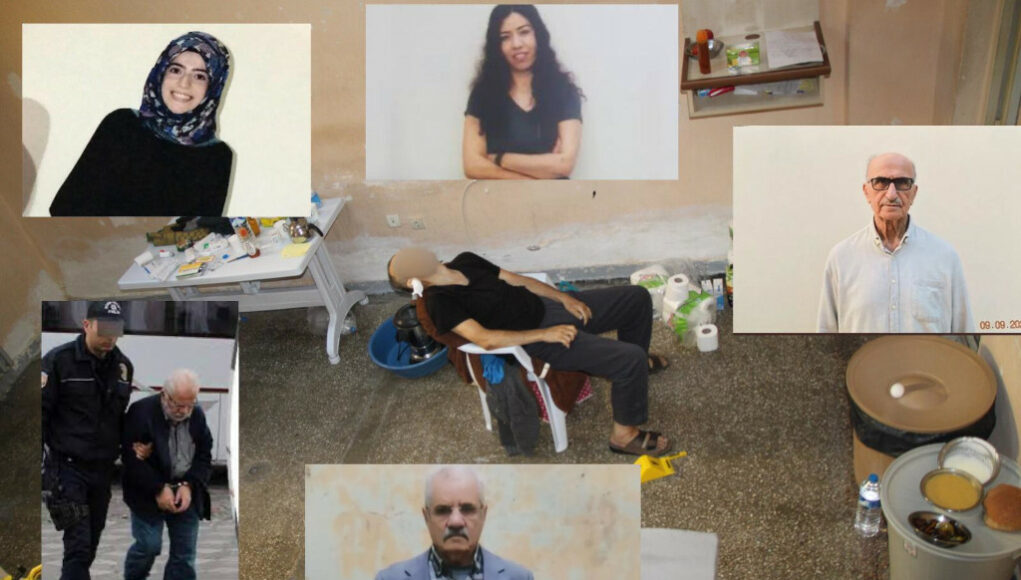
  • Torture, mistreatment not allowed in Turkish prisons, justice minister claims

    Torture, mistreatment not allowed in Turkish prisons, justice minister claims

    Turkey’s Justice Minister Bekir Bozdağ said on Saturday that the Turkish government does not allow torture and mistreatment in prisons, claiming it has one of the best penal systems in the world, the Stockholm Center for Freedom reported.

    Speaking to prisons guards at an event, Bozdağ said the government “has not closed its eyes to torture and mistreatment in its prisons” and will continue that policy.

    In response to Bozdağ, human rights defender and Peoples’ Democratic Party (HDP) lawmaker Ömer Faruk Gergerlioğlu stated that the Justice Ministry has not replied to his 175 parliamentary questions on cases in Turkish prisons since the appointment of Justice Minister Bozdağ, accusing the minister of lying.

    President Recep Tayyip Erdoğan appointed Bozdağ as Turkey’s new justice minister, replacing Abdülhamit Gül after his resignation in January. Bozdağ had previously served as justice minister between 2013 and 2015 as well as from 2015 to 2017.

    After an abortive putsch in 2016, ill-treatment and torture became widespread and systematic in Turkish detention centers. Lack of condemnation from higher officials and a readiness to cover up allegations rather than investigate them have resulted in widespread impunity for the security forces.

    An annual report by Amnesty International (AI) on the state of human rights in the world has revealed that serious and credible allegations of torture and other ill-treatment were made in Turkey last year.

    According to a report drafted by main opposition Republican People’s Party (CHP) lawmaker Sezgin Tanrıkulu, there were 2,694 deaths and 3,145 incidents of torture or maltreatment in 2021, with 925 of them taking place in prisons.

    Garibe Gezer, an inmate who alleged that she was beaten and sexually harassed by prison guards in Kocaeli’s Kandıra Prison, was found dead in her cell in December. In a letter sent to the Peoples’ Democratic Party (HDP), her brother Haşim, an inmate in Elazığ Prison, said Garibe told him in a phone call how she was abused physically and sexually by prison guards.

    Most recently, people who were detained due to alleged links to the Gülen movement, a faith-based group inspired by Turkish Muslim cleric Fethullah Gülen, were subjected to torture at a police detention center in Ankara.