Author: Zaman Australia

  • Erdoğan aide slams UK’s Financial Times for Erdoğan-Biden shot on front page

    An aide to Turkish President Recep Tayyip Erdoğan has criticized the UK-based Financial Times newspaper for using a photo from the NATO summit that shows Erdoğan, without a mask, as if he were bowing before US President Joe Biden, on its front page in its Tuesday edition.

    İsmail Cesur on Tuesday posted a tweet, sharing the front page of the FT that includes the shot taken at the NATO summit in Brussels on Monday, ahead of Erdoğan’s first meeting with Biden since his inauguration in January 2021.

    “The Financial Times’ use of this photo, which has been exploited all day to create a [false] perception [of Erdoğan], among others, is, in itself, an indication of the extent of Erdoğan’s struggle and the arenas where it has been taking place. We will stand behind you to the end, world leader,” Cesur said, addressing Erdoğan.

    According to Turkish media reports, the photo, shared by both the AFP and Reuters international news agencies, was taken while an unmasked Erdoğan was getting up from his chair to give Biden, who wears a mask, a fist bump, a manner of greeting that has beeb widely used amid the coronavirus pandemic.

    Many foreign news outlets highlighted, releasing photos of Erdoğan greeting Biden, that the Turkish president wasn’t wearing a mask although one of the issues on the NATO summit’s agenda was efforts to combat the pandemic.turkishminute

  • 15 businesspeople sentenced to prison over Gülen links

    15 businesspeople sentenced to prison over Gülen links

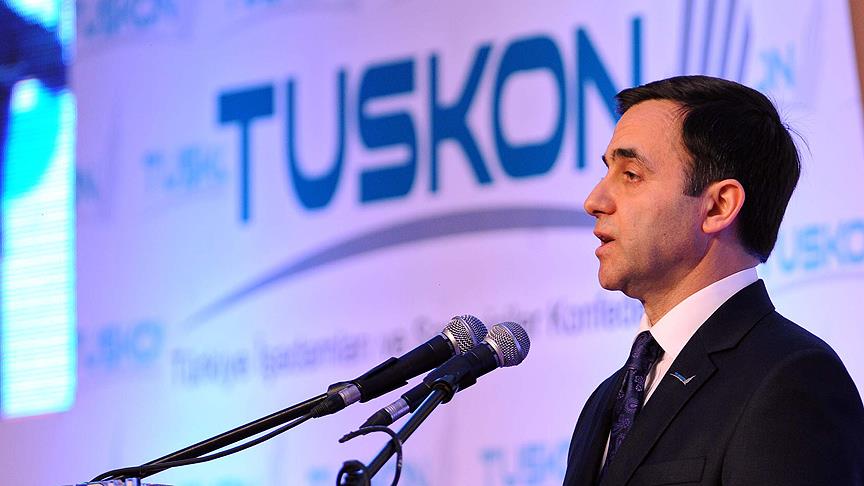
    Fifteen defendants have been sentenced to prison in a trial concerning the activities of the now-closed Turkish Confederation of Businessmen and Industrialists (TUSKON) due to their alleged links to the Gülen movement, Turkish Minute reported.

    TUSKON was one of the hundreds of civil society organizations that were closed down following a failed coup in Turkey in July 2016 due to their alleged links to the faith-based Gülen movement, accused by the Turkish government of masterminding the abortive putsch. The movement strongly denies any involvement.

    At the last hearing of the trial on Friday in which 35 mainly businesspeople were defendants, six were given prison sentences of six years, three months on charges of membership in a terrorist organization, while nine were given 25-month prison sentences on charges of aiding a terrorist organization without being members of it.

    US-based Islamic cleric Fethullah Gülen, whose views inspired the movement, TUSKON President Rızanur Meral, his wife Zeynep and the organization’s secretary-general Mustafa Günay were among the defendants. Their files were separated because they are outside Turkey.

    Turkish President Erdoğan and the Justice and Development Party (AKP) government launched an all-out war against the Gülen movement following a Dec.17-25, 2013 corruption investigation that included ministers and Erdoğan’s family.  It turned into a witch-hunt following a failed coup attempt on July 15, 2016.

    The government has been confiscating the private property of businesspeople and jailing them on alleged ties to the movement without due process on unsubstantiated charges.

  • Is Turkey facing a ‘Khashoggi moment’ in Kyrgyzstan?

    The president of a Turkish school network in Kyrgyzstan suddenly goes missing, shortly after an evening meeting at a café with a disgraced former minister and “friend” who left the country shortly thereafter. His car was found abandoned, with doors ajar and tires flattened and valuables left inside. The educator had refused a nighttime security detail recommended by the government since he had lived in Kyrgyzstan for 20 years and felt himself safe there. He hasn’t been heard from since May 31 and is believed to be held captive at the Turkish Embassy in Bishkek by Turkey’s spy agency, apparently the intended subject of a rendition to his home country as some 100 other Turkish nationals considered “enemies” of the state have been. His wife believes he is being tortured in an attempt to force him to renounce his acquired Kyrgyz citizenship, a legal barrier for Turkey simply removing him from the country.

    So what is the Turkish government to do with Orhan İnandı?

    They can’t get him out of the embassy to a private aircraft reportedly waiting at the airport in Bishkek due to the constant vigil of protestors demanding his release. They can’t let him live in the embassy forever, nor can they continue to bar all cars from entering and exiting the compound.

    So could İnandı just “disappear” permanently, as happened to Saudi journalist and Washington Post contributor Jamal Khashoggi, who entered the Saudi Consulate General in Istanbul in 2018 and never left, brutally assassinated and dismembered by a murder team sent from Riyadh?

    Turkey has been relentless in its pursuit, both at home and abroad, of alleged members of the Gülen movement — with which İnandı is affiliated — a faith-based group inspired by cleric Fethullah Gülen, a vocal critic of the current regime in Ankara led by President Recep Tayyip Erdoğan.

    Kyrgyz authorities should investigate the disappearance of İnandı amid concern that he may be forcibly deported to Turkey, Human Rights Watch said in a statement on June 9, adding that if returned to Turkey, İnandı could be at risk of mistreatment or torture and would face arbitrary detention and an unfair trial.

    A recent report by Freedom House on global transnational repression indicated that the Turkish government has pursued its perceived enemies in at least 30 countries spread across the Americas, Europe, the Middle East, Africa and Asia since a 2016 coup attempt, noting that Turkey has become number one among countries that have conducted renditions since 2014.

    In a joint letter UN rapporteurs accused the Turkish government of engaging in the systematic practice of state-sponsored extraterritorial abductions and forcible returns to Turkey, with at least 100 Turkish nationals from multiple states including Afghanistan, Albania, Azerbaijan, Afghanistan, Cambodia, Gabon, Kosovo, Kazakhstan, Lebanon and Pakistan removed to Turkey.

    Protests have taken place in Berlin, London and Brussels as well as Bishkek in support of the Turkish educator, demanding his release. The United Nations Human Rights Committee has called on Turkey to promptly take all measures necessary to establish the whereabouts of İnandı and said the government should ensure that İnandı would not be subjected to torture and inhuman treatment, guarantee his physical and mental integrity and immediately place him under the protection of the law.

    So the world is watching Turkey in this pivotal moment. Will it, due to the international backlash it is has sparked, allow İnandı to reappear as if he had simply wandered off on his own? Will it try to outlast the protestors outside the embassy and ultimately render him from Kyrgyzstan to Turkey, where he faces imprisonment and almost certain torture? Or will İnandı never reemerge from the embassy, like Jamal Khashoggi, murdered by a dictatorial regime, with no trace of him ever to be found.

    The world is watching and waiting, Turkey. Your move.

  • Scott Morrison and Joe Biden focus on Indo-Pacific in first face-to-face meeting

    Scott Morrison has met with Joe Biden on the sidelines of the G7 summit and agreed to work closely on challenges in the increasingly contested Indo-Pacific region including China.

    Regional issues dominated the Australian prime minister’s first face-to-face meeting with the US president late on Saturday – but the British prime minister, Boris Jhonson, also attended in what became a trilateral engagement.

    Morrison has been seeking support in Cornwall, England, from other leaders amid increasing tensions with China, which has rolled out a series of trade actions against Australian export sectors over the past year in a move Canberra has described as “economic coercion”.

    The references to the Indo-Pacific region point to concerns among western countries about China’s increasingly assertive actions and what they see as challenges to the rules-based order.

    But it remains unclear whether Australia and the UK will reach their own free trade agreement within the next 48 hours, with the Australian trade minister, Dan Tehan, declaring on Sunday that “the clock’s ticking and time’s running out” and “if we need more time then we’ll take more time”.

    After the G7 wraps up on Sunday, Morrison is due to travel to London for two days of further meetings with Johnson where they hope to announce an in-principle trade deal – but the Australian government has signalled it will only sign up to a “comprehensive and ambitious” agreement that opens up access to the British market for Australian agricultural exporters.

    Biden, Morrison and Johnson said in a joint statement after their meeting that they had “discussed a number of issues of mutual concern, including the Indo-Pacific region”.

    “They agreed that the strategic context in the Indo-Pacific was changing and that there was a strong rationale for deepening cooperation between the three governments,” the statement said.

    The leaders also “welcomed the forthcoming visits and exercises in the Indo-Pacific” by the British carrier strike group led by HMS Queen Elizabeth.

    At a later doorstop interview, Morrison characterised it as “a meeting of great friends and allies who share a view on the world”.

    Morrison said the meeting became a trilateral because it “was an opportunity that presented because we’re all here and so it was mutual”.

    “It was a great opportunity for my first meeting, of course, with the president. I mean I’ve known Boris for many years,” the prime minister told reporters.

    “And there was a very easy understanding amongst the three of us and as liberal democracies with a great history of friendship and partnership and a shared view on the world and its challenges and strategic challenges at that.”

    Morrison did not say how many times China came up in the trilateral meeting – but said Australia “has no greater friends than the United States and the United Kingdom”.

    “And we’ve been working together on our respective security issues for a very long time, and so we had a good opportunity to talk about those today and look to see how we can further cooperate in the future,” Morrison told reporters.

    In a Sky News interview on Sunday, Tehan described the trilateral meeting as “very historic”.

    “They were able to talk about the challenges in the Indo-Pacific and how the three countries can work together and that is something which I think all Australians should take reassurance from,” Tehan said.

    “The US under President Biden have come out very clearly and said that they’ve got our back, they won’t leave us on the field by ourselves – and I think that is also incredibly reassuring. It’s a very complex geostrategic environment now in the Indo-Pacific.”

    Before travelling to the G7, Morrison met with the Singaporean prime minister, Lee Hsien Loong, who advised him to work with China in “a long and mutually constructive process”.

    Lee said on Thursday: “There will be rough spots, and not few, and you have to deal with them, but deal with them as issues in a partnership which you want to keep going and not issues which add up to adversity, which you are trying to suppress.”

    Tehan argued on Sunday that this was the approach the Australian government had been “trying to” take.

    Tehan said constructive relations were in the interests of both Australia and China, even though there were things with which they would have to “agree to disagree”.

    Late last week a Chinese foreign ministry spokesperson responded to news of a US naval vessel and an Australian naval vessel sailing together through the South China Sea by saying: “We hope relevant countries can do more to promote regional peace and stability, rather than flex muscles.”

    The G7 also agreed on plans to set up an alternative to China’s belt and road initiative as part of a broad pushback against Beijing covering human rights, supply chains, support for Taiwan and demands to reveal more about the origins of the Covid-19 pandemic.

    Morrison, attending the G7 as one of the invited observer nations, noted Australia had previously led calls for investigations into the origin and handling of the pandemic, but these exercises were “not yet done”. China had objected to Australia’s public calls for those investigations, arguing it was being singled out.

    “The purpose of these inquiries is to understand – it’s got nothing to do with politics or frankly blame or anything else – it is about understanding it,” Morrison said.
  • Turkey sentenced 266,811 to prison for terrorism in last 4 years

    Turkey sentenced 266,811 to prison for terrorism in last 4 years

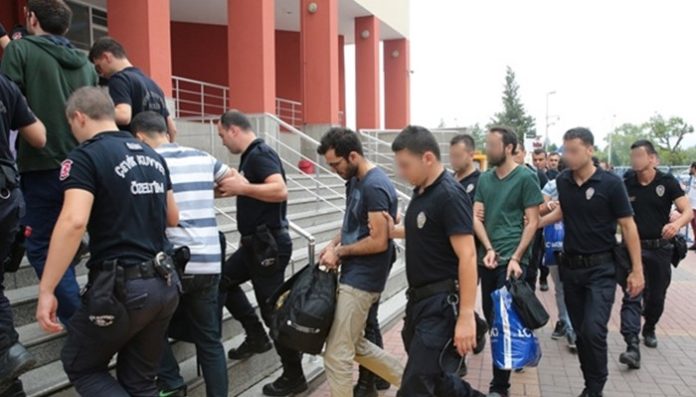
    Turkish courts sentenced 266,811 people to prison on convictions of terrorism between 2016 and 2020, abusing vague anti-terrorism legislation, according to a recent survey by the Arrested Lawyers Initiative of Justice Ministry data.

    According to the survey official statistics highlight that Turkish public prosecutors filed more than 420,000 charges under Article 314 (membership in a terrorist organization) of the Turkish Penal Code in the last eight years. 

    According to a report by the Council of Europe, Turkey has the largest population of inmates convicted of terrorism-related offenses. The report shows there are currently a total of 30,524 inmates in COE member states who were sentenced for terrorism, and of those, 29,827 are in Turkish prisons.

    “The problem is that the Turkish Penal Code contains neither the definition of what constitutes armed organizations and armed groups nor the offense of membership,” the Arrested Lawyers Initiative states. “The lack of legal definitions and criteria of what constitutes an armed terrorist organization and the offense of membership in the armed terrorist organization makes these articles prone to arbitrary application and abuse.”

    Under the Turkish Penal Code, offenses under Article 314 carry a sentence of between seven-and-a-half and 22-and-a-half years in prison.

    “Vague formulation of the criminal provisions on the security of the state and terrorism and their overly broad interpretation by Turkish judges and prosecutors make all critics, particularly lawyers, human rights defenders, journalists, and rival politicians, a potential victim of judicial harassment.

    This indistinct area under the Turkish Penal code is actively used by the Turkish government to investigate, prosecute and convict opponents,” the initiative said.

    Turkey has also been using the vague formulation of the anti-terrorism legislation in its hostage diplomacy. 

    According to a report titled “Erdogan’s Hostage Diplomacy – Western Nationals in Turkish Prisons” undertaken by the Foundation for Defence of Democracies (FDD), more than 30 Western nationals have been jailed in Turkey since a failed military coup on July 15, 2016. Almost all of these foreign citizens were accused of terrorism-related offenses.

    “Besides foreigners, deputies of People’s Democratic Party (HDP) and the Republic People’s Party (CHP), the chairperson and the director of the Amnesty (Turkey branch) Taner Kilic and Idil Eser, philanthropist businessman Osman Kavala, 1,542 lawyers, including presidents of 14 regional bar associations, more than 150 journalists, and innumerable others have all been accused of being a member of an armed terrorist organization or aiding and abetting one or more of those,” the Arrested Lawyers Initiative said.

    Turkey’s anti-terrorism legislation has been criticized by the European Union, the Council of Europe (CoE), United Nations human rights bodies and international human rights organizations for years.

    “Turkish prosecutors regularly open terrorism investigations into people for peacefully exercising rights to freedom of expression, assembly, and association,” Human Rights Watch said in a statement.

    The EU and the CoE have urged Turkey to make its anti-terrorism legislation compliant with human rights standards, including the European Convention on Human Rights and the jurisprudence of the European Court of Human Rights.turkishminute

  • Turkey accuses UN of intervening in proceedings over killing of human rights lawyer Elçi

    In its official response to a joint UN letter about the investigation into the killing of lawyer and human rights defender Tahir Elçi, the Turkish government accused UN special rapporteurs of intervening in the ongoing legal proceedings.

    “The government finally is of the view that reaching conclusions on the present case by the Special Rapporteurs before the proceedings are finalized in a manner that could be interpreted as an intervention is inappropriate and could prejudice the ongoing proceedings,” the Turkish government said in its diplomatic communiqué, conveyed by the country’s permanent mission to the UN office in Geneva, via a note verbale dated June 8.

    Elçi, the former head of the Diyarbakir Bar Association, was killed in November 2015 while delivering a speech in the southeastern province of Diyarbakir during a clash between the Turkish police and members of the outlawed Kurdistan Workers’ Party (PKK).

    Calling for a peace rally on what turned out to be the day of his death in Sur’s historic district, Elçi said he wanted no violence, war, destruction or armed operations in the area.

    The UN special rapporteurs in a joint letter sent to the Turkish government on April 9 expressed serious concern about “the significant delay and the serious defects in the investigations carried out in 2016.”

    The UN letter was sent by UN rapporteurs Irene Khan, special rapporteur on the promotion and protection of the right to freedom of opinion and expression; Mary Lawlor, special rapporteur on the situation of human rights defenders; Fernande de Varennes, special rapporteur on minority issues; and Fionnuala Ní Aoláin, special rapporteur on the promotion and protection of human rights and fundamental freedoms while countering terrorism.

    The UN rapporteurs had asked the Turkish government to provide detailed information on “the reasons behind the five-year delay in the conduct of investigations into the unlawful killing” of human rights lawyer Elçi.

    Elçi received death threats in 2015 after stating that “the PKK is not a terrorist group. While some of its actions may be called as such, it is an armed political movement with significant support” during a live TV show on CNN Türk hosted by a pro-government columnist Ahmet Hakan.

    Elçi was briefly detained in November 2015 over the remarks. He was subsequently released pending trial and faced up to seven-and-a-half years in prison.

    Turkish prosecutors claimed three police officers and a PKK member at the scene were suspects in the murder, on which no light has been shed until now.

    Three police officers — Mesut S., Fuat T. and Sinan T. — are charged in the indictment with “causing death by culpable negligence,” which carries a prison sentence of two to six years.

    On the other hand Uğur Yakışır, an alleged member of the PKK, is charged with “murdering Tahir Elçi and two police officers [who died on the same day], attempting to destroy the unity of the state and possession of a firearm.” Prosecutors demand multiple life sentences and an additional 45 years in prison for Yakışır.

    Elçi’s lawyers accuse the Turkish police and the judicial authorities of hiding a 13-second segment of video footage captured by police cameras that allegedly shows the moment Elçi was shot.

    Investigating cases of state violence and human rights violations through architectural evidence and 3D technology, Goldsmith research group Forensic Architecture refuted the claims that the PKK member had killed Elçi.stockholmcf

  • Turkish court rearrests victim of rendition immediately after release

    Ayten Öztürk, who was forcibly transported from Lebanon to Turkey in 2018 by Turkish intelligence and testified in an İstanbul court in March about the torture and inhumane treatment she was subjected to at a black site before she was “officially” detained, was rearrested immediately after her release from prison, Turkish Minute reported on Thursday.

    The İstanbul 3rd High Criminal Court on Thursday handed down two aggravated life sentences to Öztürk, also ruling to release her into house arrest.

    According to a statement on social media by the People’s Law Office, Öztürk was rearrested as she was leaving Silivri Prison in İstanbul, based on charges related to an incident that took place the same day as other activities she was accused of in her case file.

    “End this lawlessness!” the office demanded in a tweet on Thursday.

    Öztürk was detained in Lebanon, handed over to Turkish intelligence and transferred against her will to Turkey on March 8, 2018. After being held at a black site for six months under torture and ill-treatment, she was left in an vacant field where she was “officially” detained and taken to Ankara police headquarters.

    She is accused of links to the outlawed Revolutionary People’s Liberation Party/Front (DHKP/C), a militant Marxist group, based on witness testimony. DHKP-C is listed as a terrorist organization by Turkey, the United States and the European Union.

    In her testimony in March, before she was convicted, Öztürk argued that she was being held in pre-trial detention despite a lack of evidence in order to prevent her from showing the signs of torture.

    State-sponsored abductions and the forcible return of Turkish nationals have become common practice in recent years.

    The Turkish government is accused of engaging in the systematic practice of state-sponsored extraterritorial abductions and forcible returns to Turkey, with more than 100 Turkish nationals from multiple states that are dependent on Ankara for financial, political or humanitarian support — including Afghanistan, Albania, Azerbaijan, Afghanistan, Cambodia, Gabon, Kosovo, Kazakhstan, Lebanon and Pakistan — removed to Turkey.

    Some victims of forcible return have said they were subjected to torture in unknown locations for months. They claimed their families and lawyers had not heard from them during that time, and they were later handed over to the police.

    In different cases the UN Working Group on Arbitrary Detention (WGAD) concluded that the arrest, detention and forced transfer to Turkey of Turkish nationals were arbitrary and in violation of international human rights norms and standards.SCF

  • London protestors stand in solidarity with missing Turkish-Kyrgyz educator

    Sixty human rights activists gathered in front of the Turkish Embassy in London on Thursday to protest Turkish authorities’ alleged sanctioning of enforced disappearances and to stand in solidarity with a Turkish-Kyrgyz educator in Kyrgyzstan who is feared to have been abducted by Turkey.

    Organized by Human Rights Solidarity, a London-based advocacy group founded by immigrants, the protest commenced as other protests were ongoing in Bishkek where Orhan İnandı, the founder and and president of the Turkish-Kyrgyz Sapat school network operating in Kyrgyzstan, went missing on May 31, and in Brussels where activists gathered to raise European politicians’ awareness about the case of İnandı, who is feared to have been abducted by Turkey’s National Intelligence Organization (MİT) due to his alleged links to the Gülen movement.

    Turkey claims the founder of the school network is Turkish Islamic cleric Fethullah Gülen, whose movement is accused by the Turkish government of masterminding a failed coup in Turkey in July 2016. The movement strongly denies any involvement in the abortive putsch or any terrorist activity.

    “Today we are in solidarity with victims of enforced disappearances all over the world. Today we are here for people who are missing, or are kidnapped,” Merve Aslan, co-chair of Human Rights Solidarity, said in a statement she read out during the protest.

    “The Erdoğan regime has become the prime perpetrator of enforced disappearances in the world. We are here today for Yusuf Bilge Tunç who has been missing for 673 days! We are here today for Hüseyin Galip Küçüközyiğit who has been missing for 164 days!”

    A financial services specialist and one of the 130,000 civil servants removed from their jobs following the attempted coup in July 2016, Tunç disappeared in the Turkish capital of Ankara on August 6, 2019, and his whereabouts remain unknown. Küçüközyiğit has been missing since December 29. A successful lawyer who served as the chief legal counsel for the Turks Abroad and Related Communities Agency (YTB), he was fired from his job by a government decree in the aftermath of the coup attempt in July 2016 and was later sentenced to six years, three months in prison for “membership in a terrorist organization” due to his alleged ties to the Gülen movement. Küçüközyiğit was released from pretrial detention pending appeal.

    “We are here today for people kidnapped from outside Turkey and who are being tortured or tormented in Turkish prisons,” Aslan said and added, “We are here today for Orhan İnandi.”

    “He has been missing for the last 10 days. We are afraid he will be flown to Turkey, where he will be tortured. For the time being, we still have hope that he is in Kyrgyzstan. And we are here to call on Turkish and Kyrgyz authorities alike: Let Orhan be free! Set him free,” Aslan said as protesters chanted “Set Orhan free! Set them free!”

    According to a recent report by Freedom House on transnational repression, Turkey has become number one among countries that have conducted renditions from host states since 2014. The Turkish government has pursued its perceived enemies in at least 30 host countries spread across the Americas, Europe, the Middle East, Africa and Asia since July 2016.

    “Ankara’s campaign has primarily targeted people affiliated with the movement of religious leader Fethullah Gülen, which the government blames for the coup attempt,” the report said.

    The report sheds light on the corruption and co-optation of some host country institutions including local police or security services that arrested Turkish citizens, who are then held in detention for a short period before being secretly transferred to Turkish custody and immediately taken to Turkey on Turkish aircraft.

    “Turkey’s top officials openly claim credit for the kidnapping offensive against the Gülen movement, and praise the role of the MİT in the renditions,” the report stated.

    The statement read out by Aslan during the protests of London also pointed to Turkey’s campaign of transnational repression.

    “We call on Turkey to stop silencing critics of the regime in Ankara. We call on Turkey to stop using its diplomatic missions for criminal activity. We call on Turkey to release Orhan Inandi now,” Aslan said.

    “Wake up people, Erdoğan is a kidnapper,” the protesters chanted.

    On Wednesday Turkish President Recep Tayyip Erdoğan told Kyrgyz President Sadyr Japarov during his official visit to Ankara that he had no idea of İnandı’s whereabouts.

    Erdoğan’s statement, the first comment made about İnandı’s disappearance by Ankara, contradicts a claim by Orhan İnandı’s wife, Reyhan İnandı, and the family’s lawyer, Taalaigul Toktakunova, who say based on information they received, Orhan İnandı is being held at the Turkish Embassy in Bishkek. They refuse to reveal their source for security reasons.

    During the protest in London, the co-chair of the advocacy group also addressed the Kyrgyz authorities.

    “We know you are under immense pressure from Turkey. We know Ankara is blackmailing you with all kinds of threats about economic sanctions and cancellation of all deals between the two countries,” Aslan said. “This mindset ruling Turkey is a temporary one. In fact, it has become even more aggressive recently because it also knows that it is already disintegrating. Don’t invest in temporary realities! Invest in the future of Turkey. Invest in the future of Kyrgyzstan.”

    Over the past five years scores of men alleged by Turkish authorities to have links to the Gülen movement, living in countries around the world, have been arbitrarily detained and forcibly returned to Turkey. There they are incarcerated on bogus terrorism charges in violation of due process rights and protections.

    According to recent official statements by the interior ministry, more than 110 alleged members of the movement have been brought back to Turkey as part of the government’s global campaign.

  • Erdoğan’s long arm: Turks arrested and abducted abroad

    The disappearance of a Turkish teacher in Kyrgyzstan has renewed claims that Turkey’s secret services have abducted scores of the country’s citizens abroad over the past five years, according to Agence France-Presse.

    The kidnappings and forced renditions are mostly of suspected supporters of Fethullah Gülen, the Muslim preacher who Turkish President Recep Tayyip Erdoğan blames for a failed coup against him in 2016.

    Turkey has boasted that its secret service masterminded some of the cloak and dagger operations, with the justice minister saying 107 “traitors” had been captured abroad by 2019.

    Before Gülen became Erdoğan’s arch-enemy, the elderly US-based cleric — who denies any part in the coup — was one of his closest and most powerful allies.

    Gülen’s worldwide network of schools was once an important part of Turkish soft power abroad.

    Here are some of the most notorious cases:

    Orhan İnandı, a Turkish-born Kyrgyz citizen who used to head a network of Gülen-linked schools in Kyrgyzstan, went missing on May 31. His car was found near his home with the door open, tires flat and with the teacher’s phone and jacket still inside.

    While some 1,000 Kyrgyz security forces search for him, his wife claims he is being held inside the Turkish Embassy in Bishkek.

    As hundreds protest over the disappearance in the Central Asian capital, Kyrgyz President Sadyr Japarov visits Erdoğan Wednesday, who says the two leaders agree the Gülen movement “poses a national security threat to both countries”.

    Last month Gülen’s nephew Selahaddin Gülen disappears from a police station in the Kenyan capital despite a court order banning his extradition.

    He later appears handcuffed, triumphantly photographed between two Turkish flags in Ankara.

    The abduction echoed the most celebrated operation ever by Turkey’s National Intelligence Organization (MİT), when its agents seized outlawed Kurdistan Workers’ Party (PKK) leader Abdullah Öcalan in Nairobi in 1999.

    The founder of the PKK, which has fought a war against Ankara since the 1980s, has been held on an island prison off İstanbul since.

    The former head of the Kosovo Intelligence Agency, a border police chief and a top interior ministry official are charged in February with abusing their positions in handing over six Turks working in Gülen-linked schools to Turkey in March 2018.

    The men’s families say they were tortured on a private jet by Turkish agents on their way to Turkey.

    The same month, Turkish state media reports that two Gülenists had been captured and returned from Uzbekistan. 

    Europe’s top rights court condemns Moldova in June 2019 over the “extra-legal transfer” the previous September of five Turkish nationals with alleged ties to Gulen.

    They were put on a special plane back to Turkey in a joint operation between Turkish and Moldovan intelligence agencies.

    A report earlier this year by Freedom House says Erdoğan has pursued his “perceived enemies in at least 31 different countries.”

    Erdoğan hails the MİT agents who flew three suspected members of the Gülen movement from the west African state of Gabon after a secret mission in April 2018.

    Mongolian stand-off 

    Mongolia grounds a Turkish air force jet in July 2018 after Ankara denies claims it had tried to smuggle a Gülen-linked teacher from the country.

    Veysel Akçay was seized by five men as he left his home in the capital Ulaanbaatar and thrown into a minibus. He was later freed and the jet allowed to leave after a stand-off between the Mongolian and Turkish governments.

    ‘Money man’ grabbed 

    Turkey says its spies in Sudan repatriated businessman Memduh Çıkmaz in November 2017. Ankara claims he was Gülen’s “money man.” turkishminute

  • Erdoğan receives Kyrgyz president amid outrage over missing educator

    Turkish President Recep Tayyip Erdoğan on Wednesday received his Kyrgyz counterpart, Sadyr Japarov, with an official ceremony in Ankara amid ongoing protests in Kyrgyzstan about the alleged abduction of a Turkish-Kyrgyz educator by Turkey’s intelligence service.

    Japarov’s visit comes at a time of outrage in his country over the alleged abduction of Orhan İnandı, the founder and president of the Turkish-Kyrgyz Sapat school network operating in Kyrgyzstan, who went missing in Bishkek on the evening of May 31 and is feared to have been abducted by Turkey’s National Intelligence Organization (MİT) due to his alleged links to the Gülen movement.

    Turkey claims the founder of the school network is Turkish Islamic cleric Fethullah Gülen, whose movement is accused by the Turkish government of masterminding a failed coup in Turkey in July 2016. The movement strongly denies any involvement in the abortive putsch.

    It was not clear whether the two leaders would talk about İnandı during their meeting at Erdoğan’s presidential palace. Japarov ordered the State Committee for National Security and the Ministry of Internal Affairs to conduct an extensive search to locate İnandı, according to a statement on the presidency website on June 1.

    Landesgrenzen stören #Erdogan nicht, um seine KritikerInnen verschwinden zu lassen. #Orhanİnandı wurde von der türkischen Regierung entführt & sitzt nun in der Botschaft in Bishkek fest. Seine Verschleppung in die Türkei muss mit allen diplomatischen Mitteln verhindert werden!

    — Cem Özdemir (@cem_oezdemir) June 9, 2021

    Kyrgyz have been protesting since the suspicious disappearance of İnandı in the hope of finding the missing educator. The protests mostly take place in front of the Turkish Embassy building where İnandı is believed to be held and the parliament and presidential buildings in Bishkek. Some protestors direct criticism at the Kyrgyz authorities for not carrying out an effective investigation to locate İnandı.

    Orhan İnandı’s wife, Reyhan İnandı, and the family’s lawyer, Taalaigul Toktakunova, say based on information they received, Orhan İnandı is being held at the Turkish Embassy in Bishkek. She has refused to reveal her source for security reasons.

    In the meantime, Cem Özdemir, a German politician of Turkish descent from Alliance 90/The Greens expressed outrage on Twitter on Wednesday over the alleged abduction of İnandı by Turkey, saying his deportation to Turkey must be stopped using all diplomatic means.

    Over the past five years scores of men alleged by Turkish authorities to have links to the Gülen movement, living in countries around the world, have been arbitrarily detained and forcibly returned to Turkey. There they are incarcerated on bogus terrorism charges in violation of due process rights and protections.turkishminute