Author: Zaman Australia

  • German gov’t contacted Kyrgyzstan about missing educator: report

    An official from the German Foreign Ministry has revealed that the federal government contacted Kyrgyz authorities earlier this month regarding the situation of a Turkish-Kyrgyz educator in Kyrgyzstan who is allegedly being held against his will in the Turkish Embassy in Bishkek, Deutsche Welle Turkish service reported on Saturday.

    Orhan İnandı, the founder and president of the Turkish-Kyrgyz Sapat school network operating in Kyrgyzstan, went missing on May 31. The educator is feared to have been abducted by Turkey’s National Intelligence Organization (MİT) due to his alleged links to the Gülen movement.

    Turkey claims the founder of the school network is Turkish Islamic cleric Fethullah Gülen, whose movement is labeled as a terrorist organization by the Turkish government and accused of masterminding a failed coup in Turkey in July 2016. The movement strongly denies any involvement in the abortive putsch or any terrorist activity.

    The contact was revealed in response to a parliamentary question posed by Cem Özdemir, a German politician of Turkish descent from Alliance 90/The Greens, asking if the federal government had contacted Kyrgyz authorities about İnandı and whether they can guarantee that a similar incident won’t take place in Germany.

    According to DW, State Secretary of the Federal Foreign Office Miguel Berger said, in response to Özdemir’s questions, that the federal government had talked to Kyrgyz authorities on June 3 and expressed concern over the missing educator.

    Berger added that there were no signs indicating the possibility of a similar incident in Germany and that they would take the necessary steps within the law in the event that there was.

    Özdemir told DW that the federal government’s communication with Bishkek regarding the situation of İnandı, who has been missing for over two weeks, was a right and necessary move.

    Underlining that Turks living in exile around the world continued to be in danger, the politician said the practice of extraterritorial abduction is a state-backed act of terrorism that should have consequences for the parties involved.

    The educator’s wife, Reyhan İnandı, also spoke to DW, arguing that Turkish authorities had planned to render her husband to Turkey but couldn’t in the face of unexpectedly intense international support for İnandı.

    “We are supported by the locals, hundreds of our graduates [from Sapat schools] and their families,” the wife added.

    Protests have taken place in Berlin, London and Brussels as well as Bishkek in support of the Turkish educator, demanding his release. The United Nations Human Rights Committee has called on Turkey to promptly take all measures necessary to establish the whereabouts of İnandı and said the government should ensure that İnandı would not be subjected to torture and inhuman treatment, guarantee his physical and mental integrity and immediately place him under the protection of the law.

    Rights organizations such as Human Rights Watch (HRW) and the Human Rights Foundation have also asked Kyrgyz authorities to exert efforts for the release of İnandı.

    Over the past five years scores of men alleged by Turkish authorities to have links to the Gülen movement, living in countries around the world, have been arbitrarily detained and forcibly returned to Turkey. There they are incarcerated on bogus terrorism charges in violation of due process rights and protections.turkishminute

  • Kyrgyz intel agency seized video recordings from café where İnandı was last seen, lawyer claims

    The Kyrgyzstan State Committee for National Security (GKNB) seized video recordings from a cafe where Orhan İnandı, who is allegedly being held against his will in the Turkish Embassy in Bishkek, was seen talking with former Interior Minister Melis Turgunbaev, the Tr724 news website reported.

    According to Taalaygül Toktakunova, the attorney for the İnandı family, they were able to find photographs of the cafe where İnandı is seen talking to Turgunbaev and two suspicious looking men on May 31, the day he disappeared. “We went back to the cafe to request the footage from that day to understand what was going on,” she said. “But we were told the recordings were taken by the GKNB and that there were no copies.”

    İnandı, the founder and president of the Turkish-Kyrgyz Sapat school network operating in Kyrgyzstan, went missing in Bishkek on the evening of May 31 and is feared to have been abducted by Turkey’s National Intelligence Organization due to his alleged links to the Gülen movement, a faith-based group inspired by Muslim cleric Fethullah Gülen.

    Toktakunova said she made a request to the prosecutor’s office for the removal of the GKNB from the investigation team. According to Interior Ministry Press Secretary Adinay Şarşeyeva, there are currently more than a thousand policemen involved in the search for İnandı.

    Kyrgyzstan had previously denied an extradition request from Turkey for İnandı, which was conveyed through diplomatic channels in 2018, Deputy Interior Minister Nurbek Abdiev said in a parliamentary hearing held on Wednesday.

    İnandı’s wife, Reyhan İnandı, said in a June 6 statement that an undisclosed source told her that her husband was being held against his will at the Turkish Embassy, and she claimed he was being tortured to renounce his Kyrgyz citizenship. This would simplify İnandı’s forcible transfer to Turkey, she said.

    Toktakunova previously shared records from a dashcam in İnandı’s car showing suspicious individuals who could have been involved in his disappearance, which occurred right after a meeting with the former minister, who took a trip outside Kyrgyzstan soon after İnandı went missing.

    Turkish President Recep Tayyip Erdoğan has been targeting followers of the Gülen movement, inspired by US-based Turkish Muslim cleric Fethullah Gülen, since the corruption investigations of December 17-25, 2013, which implicated then-Prime Minister Erdoğan, his family members and his inner circle.

    Dismissing the investigations as a Gülenist coup and conspiracy against his government, Erdoğan designated the movement as a terrorist organization and began to target its members. He intensified the crackdown on the movement following an abortive putsch on July 15, 2016 that he accused Gülen of masterminding. Gülen and the movement strongly deny involvement in the coup attempt or any terrorist activity.

    Kyrgyz citizens, politicians and NGOs continue calling on the country’s authorities to take all possible steps to ensure İnandı’s safety. The protesters have expressed their intent to continue their demonstrations until İnandı is released and allowed to return home.

    Since June 1 protests have taken place in Berlin, London, Oslo and Brussels as well as Bishkek in support of the Turkish educator, demanding his release. The United Nations Human Rights Committee has called on Turkey to promptly take all measures necessary to establish the whereabouts of İnandı and said the government should ensure that İnandı would not be subjected to torture and inhuman treatment, guarantee his physical and mental integrity and immediately place him under the protection of the law.

    Rights organizations have also asked Kyrgyz authorities to exert efforts for the release of İnandı. Human Rights Watch (HRW) called on Kyrgyz authorities to investigate the disappearance of İnandı and “ensure his safety and that he is not unlawfully removed to Turkey.” According to HRW, allowing İnandı’s rendition to Turkey would violate Kyrgyzstan’s obligations under the Convention against Torture and Other Cruel, Inhuman, or Degrading Treatment or Punishment, which it ratified in 1997.

    In a joint letter UN rapporteurs accused the Turkish government of engaging in the systematic practice of state-sponsored extraterritorial abductions and forcible returns to Turkey, with at least 100 Turkish nationals from multiple states including Afghanistan, Albania, Azerbaijan, Afghanistan, Cambodia, Gabon, Kosovo, Kazakhstan, Lebanon and Pakistan removed to Turkey.

    In a number of cases the UN Working Group on Arbitrary Detention (WGAD) concluded that the arrest, detention and forced transfer to Turkey of Turkish nationals were arbitrary and in violation of international human rights norms and standards.

    A recent report by Freedom House on global transnational repression also revealed the intensity, geographic reach and suddenness of the Turkish government’s campaign targeting dissidents abroad, noting that Turkey has become number one among countries that have conducted renditions from host states since 2014.

  • Ultranationalist issued threats, posted photos with assault weapons before attacking HDP office

    Ultranationalist issued threats, posted photos with assault weapons before attacking HDP office

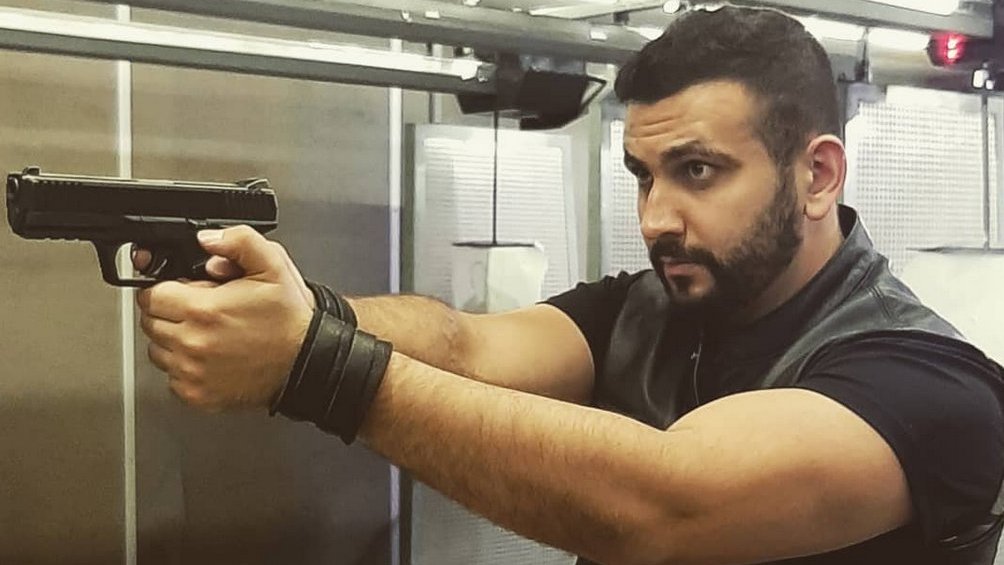
    Onur Gencer, 27, who on Thursday admittedly killed a woman in an attack on the pro-Kurdish Peoples’ Democratic Party (HDP) office in İzmir, had posted photos of himself carrying assault rifles and made threats against HDP members, calling them “Armenian spawn.”

    The HDP is the Turkish parliament’s third-largest party, which the government is trying to close over alleged links to the outlawed Kurdistan Workers’ Party (PKK). The party directed its anger over the attack at the government.

    “After months of attacks by the ruling party and interior ministry and families being told to organize outside our provincial offices to spark provocations, there was an attack today at 10:30 a.m. on our İzmir provincial building,” it said.

    Gencer, currently under arrest, claimed to be acting on his own, saying in a statement: “I am not affiliated with any group. I entered the building because I hate the PKK and fired at random.” He threatened the HDP in a social media post, expressing his resentment and promising to “make them bleed.”

    The pro-Kurdish party identified the victim as Deniz Poyraz, a party official in the western province of İzmir where the morning attack occurred.turkishminute

    Cinayetin ayrıntıları geliyor… 3 silahlı içeri giriyor. O sırada tesadüfen sadece mutfakta çalışan genç HDP'li kadın Deniz Poyraz var. Onu ateş ederek öldürüyorlar. Binayı yakmaya çalışıyorlar. 2 saldırgan kaçıyor. Yakalanan Onur Gencer'in fb profili çok şey anlatıyor… https://t.co/y4w30sw4Gk pic.twitter.com/bQ4DpxUVxP

    — Ertuğrul Kürkçü (@ekurkcuHDP) June 17, 2021

  • ‘Spider apocalypse’ hits Gippsland after heavy rains, floods

    The photographs were posted to Reddit with the caption “if the floods weren’t enough, I give you, spider apocalypse”.

    The East Gippsland region was hard hit in last week’s floods, which resulted in thousands of Victorians being evacuated from their homes.

    Like humans, it appears the spiders have sought higher, dryer ground.

    What’s occurring is known as ballooning, where cooler weather conditions have resulted in spiders covering stretches of land in cloudlike cobwebs in an attempt to shelter themselves from wet conditions on the ground.

    It’s a temporary survival tactic that allows the creatures to continue to hunt while the ground dries out.

    With more rain forecast for the end of this week, there’s a chance the arachnids will continue to make their presence known.

    Another 50mm of rain could fall in East Gippsland this week

  • Did Turkey’s Washington ambassador visit a Gülenist?

    Cevheri Güven-turkishminute

    A visit paid by Turkish Ambassador to the US Murat Mercan to Turkish businessman Yalçın Ayaslı last week has been hotly debated in Turkey. This was the first time a senior bureaucrat had officially visited someone who was accused of links to the Gülen movement and for whom an arrest warrant had been issued in Turkey. Ayaslı is also a claimant in a lawsuit alleging that his former company, Borajet, was acquired by extortion and money laundering by Sezgin Baran Korkmaz, against whom a federal racketeering complaint has been filed. The timing of the visit is surprising in that it came just before a meeting scheduled between Turkish President Recep Tayyip Erdoğan and US President Joe Biden.

    Turkey’s embassy in Washington failed to announce the visit on its official website, but Ayaslı said on Facebook: “Our Washington Ambassador Hasan Murat Mercan paid a visit to us at Concord, Massachusetts. We were glad to meet him. We wish him success at a time when the Turkish-US relations go through a challenging period.”

    Ayaslı, a businessman with investments in Turkey and the US, had filed a lawsuit in the US claiming that Korkmaz had taken over his airline, Borajet, by deceit with support from certain politicians. Starting from 2016, Ayaslı had been targeted by pro-Erdoğan media outlets with reports that he was a member of the Gülen movement and took part in a failed coup in July 2016.

    It turned out that Korkmaz had also defrauded the US Treasury and illegally transferred tens of millions of dollars to Turkey.

    A scientist and businessman with billion-dollar investments

    Ayaslı is known as a successful scientist and businessman. Born in 1946 in Turkey’s capital city of Ankara, Ayaslı graduated from a Turkish university before he completed his master’s degree and doctorate at the Massachusetts Institute of Technology in 1973. He worked as an academic in various electrical engineering departments in Turkey but left to settle in the US after a military coup in 1980.

    He conducted research on microwaves at Raytheon in Massachusetts. Ayaslı is the holder of 15 international patents. In 1985 he decided to run his own company and established Hittite Microwave Corp. Serving as CEO and chairman of the board for 20 years and making Hittite Microwave Corp. a publicly traded company on NASDAQ, Ayaslı sold it to Analog Devices Inc. for $2.45 billion in 2014.

    Following the sale, Ayaslı focused on science investments in Turkey and lobbying to improve Turkish-US ties. He established one of Turkey’s most important science centers. He served as the founder and chairman of the Turkish Cultural Foundation and the Turkish Coalition of America, with offices in Boston, Washington, D.C., and Istanbul.

    How did Ayaslı become a terrorist and coup perpetrator?

    Although Ayaslı was publicly known as an accomplished businessman, cultural ambassador and scientist, he was suddenly labeled as a terrorist and coup perpetrator by Turkish media outlets. Korkmaz and Kamil Ekim Alptekin were central figures in this swift change of heart and the developments leading to the issuance of an arrest warrant for Ayaslı.

    Alptekin is chairman of the Turkish-American Business Association (TABA) and head of the Turkey-US Business Council. A 2017 Wall Street Journal report mentioned Alptekin as the person who arranged a meeting between former US National Security Advisor Michael Flynn and Turkish ministers to discuss the extradition, or, if that was not possible, kidnapping of Fethullah Gülen. Later talking to The Associated Press, Alptekin admitted that he had arranged a meeting between Flynn and two Turkish officials.

    Alptekin also helped Korkmaz lobby in the US and introduced him to Erdoğan. Korkmaz is charged with running an extortion and international money laundering operation.

    Alptekin also introduced Korkmaz to members of the polygamous Kingston family: brothers Jacob and Isaiah, mother Rachel and Jacob’s wife Sally. The Kingstons were charged with defrauding the US Treasury of $511 million in incentives for biodiesel production and transferring a significant portion of the money unlawfully to Turkey with help from Korkmaz. Jacob and Isaiah Kingston were caught trying to flee to Turkey and subsequently reached a plea deal with the federal prosecutor in the fraud case against them. In a 22-page petition submitted to Judge Jill B. Parrish, Jacob and Isaiah Kingston described how they forged documents to cheat the US authorities and also provided a list of the funds they had deposited in Turkish banks, companies they acquired and real estate investments they made as well as the sums they invested in Turkey’s Mega Varlik Corp.

    Following these revelations, the US authorities asked Turkey to freeze Korkmaz’s assets in Turkey, a request with which the Erdoğan government long refused to comply. The assets of SBK Holding, owned by Korkmaz, were frozen in October 2020; however, it was claimed that Korkmaz was given ample time to transfer his assets out of Turkey.

    Lawsuit in the US: Taking over Borajet with a media ruse

    In 2019, Ayaslı brought legal action against Korkmaz in the US. Ayaslı maintains that Korkmaz had taken over Borajet, an airline he had owned, by deceit.

    In his petition to the court, Ayaslı argued that Alptekin, who acted as an arranger in the US on behalf of the Erdoğan government, collaborated with certain journalists and launched a media lynching against him in Turkish media outlets, which published news stories labeling him as a terrorist and coup perpetrator, that these media stories served to devalue his company, Borajet, and that Korkmaz eventually acquired its shares for a small sum.

    In his petition Ayaslı claimed that Korkmaz told Alptekin to speak to Turkish media figures and offered to pay them in return for false news reports targeting Ayaslı.

    According to Ayaslı’s petition, at a meeting held in August 2017 at the Kingstons’ villa on the Bosporus in Istanbul, certain journalists were told that they would be taken on a free European tour if they published false news stories targeting Ayaslı. Ayaslı also noted that Jacob, Isaiah, Rachel and Sally Kingston, defendants in the fraud case in the US, made other promises as well.

    In his petition Ayaslı claimed that the Kingstons met with Bülent Başkoy, Ergün Diler, Ersin Ramoğlu, Mahmut Övür, Soner Yalçın and other journalists and that following these meetings, news stories defaming him were published by their media outlets including Takvim, Sabah, OdaTV, Gazeteport, Cumhuriyet, Hürriyet, and Habertürk. In these stories Ayaslı was portrayed as close to the Gülen movement and linked to the failed coup of July 2016. Following these news reports, a Turkish court issued an arrest warrant for Ayaslı over alleged links to the Gülen movement, and Ayaslı was no longer able to travel to Turkey.

    Due to these news stories and the arrest warrant, the market value of Ayaslı’s Borajet hit rock bottom, and Korkmaz easily acquired it. However, two years later, Korkmaz had to leave Turkey due to pressure from the US and conflicts with the Turkish government over financial matters. Turkey’s ambassador to the US visited Ayaslı despite the fact that he was accused of membership in a terrorist organization by the pro-Erdoğan media and for whom an arrest warrant had been issued.

    Ahead of a meeting with Biden

    As US President Biden was scheduled to meet with Erdoğan for the first time on June 14, Ambassador Mercan’s visit to Ayaslı on June 11 raised eyebrows. The ambassador’s sudden visit was seen as an olive branch extended by the Erdoğan government, which had been attempting to talk to the Biden administration by making use of Ayaslı’s lobbing power.

    Lawsuits Ayaslı filed against Korkmaz in the US constitute another critical matter. Ambassador Mercan should have been concerned about the extent to which Ayaslı would discuss the ties between Korkmaz and Turkish government officials in the lawsuits.

    Considering that the Turkish Embassy in Washington refuses to conduct any passport or ID card renewal or transactions for people linked to the Gülen movement and that these people are even prohibited from entering the embassy building, the significance of Ambassador Mercan’s visit to a person who was indicted in Turkey over links to the Gülen movement becomes salient. For some commentators, this signifies the sheer magnitude of Ankara’s conundrum in its ties with Washington.

    Ayaslı denies any links to the Gülen movement. More than 100,000 people have been arrested in Turkey over links to the movement since 2015, and investigations into approximately 500,000 people are underway. The assets of thousands of businessmen have been confiscated in the process. According to London Advocacy, assets in excess of $32 billion have been confiscated and transferred to pro-government businessmen.
  • Conviction for insulting Erdoğan, dismissal over Facebook likes violated applicants’ rights: ECtHR

    The European Court of Human Rights (ECtHR) has faulted Turkey over the conviction of a student for insulting then-Prime Minister Recep Tayyip Erdoğan in 2012 and the dismissal of a contractual employee who had worked for the Ministry of Education for clicking the “Like” button on Facebook posts.

    In April 2016 a court ordered Ömür Çağdaş Ersoy to pay a fine of 2,524 euros, finding that he had insulted Erdoğan, noting that Ersoy’s statements had been injurious and humiliating and that he had used the insulting expression “like a rabid dog” about the prime minister.

    After his objection to the judgment and his individual application to Turkey’s Constitutional Court were unsuccessful, Ersoy submitted the case to the ECtHR.

    The ECtHR ruled that Ersoy’s remarks “were indisputably linked to a public-interest debate about the police intervention in the student demonstration of 18 December 2012 and the attitude and policies of the State authorities and the Prime Minister in respect of the ODTÜ [Middle East Technical University] students.”

    In December 2012 more than 3,000 police officers entered the ODTÜ campus to guard Prime Minister Erdoğan as he witnessed the launch of Turkey’s first-ever domestically produced satellite, Göktürk-2. Several hundred students were staging a protest at his presence when they were attacked by the police, resulting in clashes and injuries.

    “Politicians inevitably and knowingly laid themselves open to close scrutiny of their every word and deed by both journalists and the public at large, and they had therefore to display a greater degree of tolerance,” the court said in a press release on the judgment.

    The Strasbourg court ordered Turkey to pay Ersoy 2,000 euros in non-pecuniary damages and 2,000 euros for costs and expenses.

    Dismissal over liking Facebook posts

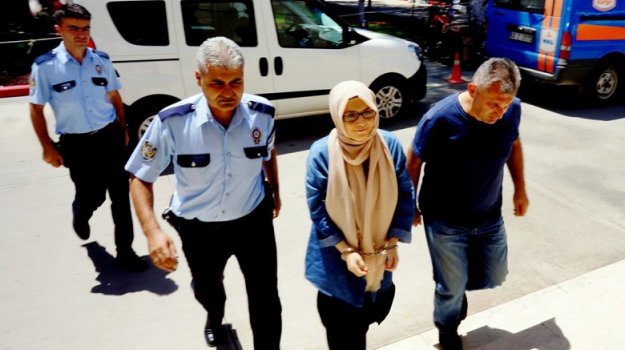
    Selma Melike, a contractual employee at the Ministry of Education, was dismissed in September 2016 by a disciplinary committee for having clicked “Like” on various Facebook articles.

    Melike was employed as a janitor at the Seyhan National Education Directorate in Adana and had been working in public institutions since 1996 as a permanent employee.

    The posts in question disturbed the peace and tranquillity of the workplace as they alleged that teachers had committed rapes and contained accusations against political leaders, according to Turkish authorities.

    The ECtHR noted that “the content in question consisted of virulent political criticism of allegedly repressive practices by the authorities.”

    “The disciplinary commission, whose decision had been endorsed by the national courts, applied in her case the maximum penalty provided for by the collective labour agreement, namely immediate termination of the employment contract without entitlement to compensation,” the court noted and ordered Turkey to pay Melike 2,000 euros in non-pecuniary damages.

    Turkey was ranked first among the 47 Council of Europe (CoE) member states in the number of judgments from the ECtHR concerning violations of freedom of expression in 2020, according to an activity report announced by the court in January.

  • Turkish journalist released on probation after five years in prison

    Turkish journalist released on probation after five years in prison

    Turkish journalist Büşra Erdal has recently been released on probation after serving a total of 4 years, 8 months in İstanbul’s Bakırköy Prison on terror charges.

    Erdal used to work for the Zaman and Yeni Hayat dailies, both of which were closed down by the Turkish government due to their links to the Gülen group.

    A high criminal court in İstanbul in March 8 concluded the trial of Erdal and dozens of other journalists and handed down a jail sentence of six years, three months to her on charges of membership in a terrorist organization.

    The Turkish government accuses the Gülen group of masterminding a failed coup attempt on July 15, 2016 and labels it a “terrorist organization,” although the movement denies involvement in the coup attempt.

  • The UK and Australia have struck a free trade deal

    The UK and Australia have struck a free trade deal, which has been hailed as a “new dawn” by Boris Johnson.

    But, as always, the devil is in the detail.

    We don’t know everything that is in the deal – the final agreement in principle is set to be published this week.

    This is a summary of what has been revealed so far.

    • Britons under the age of 35 will be able to travel and work in Australia more freely, with working holiday visa holders enjoying expanded rights and the ability to stay in Australia for three years

    • Downing Street said the deal will help distillers by scrapping tariffs of up to 5% on Scotch whisky, while car manufacturers in the Midlands and the north of England will see tariffs of up to 5% cut

    • Number 10 said more than 450 businesses in Wales exported to Australia last year and stand to benefit, while “life science companies and chemicals manufacturers are set to benefit in particular”

    • It said that in Northern Ireland, 90% of all exports to Australia are “machinery and manufacturing goods used extensively in Australia’s mining, quarrying and recycling sectors”, and under the deal tariffs will be removed and customs procedures “simplified”

    • Australia’s trade minister, Dan Tehan, said the deal will see “professionals will benefit from provisions to support mutual recognition of qualifications and greater certainty for skilled professionals entering the UK labour market”

    Fears have been expressed about the impact the deal could have on British farmers, who fear they may end up being unable to compete with Australian imports.

    Downing Street has insisted that the government is “absolutely not compromising our high animal welfare and food safety standards”, but there have been calls for more details.

    On farming, we so far know that the deal says:

    • British farmers will be protected by a cap on tariff-free imports for 15 years, with other “safeguards” to protect them

    • Hormone-fed beef will not be allowed to be sold in British supermarkets

    • Australia says that beef tariffs will be eliminated after 10 years, sheep meat tariffs after 10 years, sugar tariffs after eight years and dairy tariffs over five years, with quotas in place during the transition to tariff-free access

    • With beef and sheep meat, safeguards will then apply for five years

    The signing of UK’s first major post-Brexit trade deal is big news. Hard to know impact for sure. Docs expected in “coming days”.In meantime Australia just published this, which provides more detail on the agri side of things than anything coming from UK https://t.co/2BmTYYOzVw pic.twitter.com/OAfkOBz6H8

    — Ed Conway (@EdConwaySky) June 15, 2021

  • Jailed air force cadet not allowed to attend parents’ funeral

    Murat Can Güney, 27, a former air force cadet sentenced to life imprisonment on coup charges, was not allowed to attend his parents’ funeral after the local gendarmerie command claimed it would be difficult to take the necessary precautions due to the COVID-19 pandemic, the Stockholm Center for Freedom reported, citing Turkish media.

    According to a document shared by his lawyer, Ayça Çiçek, local authorities in Ordu province’s Fatsa district said security in the neighborhood was adequate. Yet, they ultimately did not want Güney to attend the funeral, saying, “Considering the size of the crowd that will gather for the funeral and the number of COVID-19 cases in the neighborhood, pandemic-related regulations could lead to vulnerabilities and problems with security measures.”

    Güney’s parents died in a traffic accident on Saturday. Çiçek said staff at İstanbul’s Silivri Prison had completed all the preparations for him to attend the funeral.

    Sezgin Tanrıkulu, a deputy from the main opposition Republican People’s Party (CHP) and a human rights defender, asked the authorities to let Güney attend the ceremony. “Don’t prevent the inmate from exercising his legal rights and be known for that,” he said in a tweet.

    Güney is one of the air force cadets who were arrested and sentenced to life in prison after a coup attempt in July 2016. The cadets were in the western city Yalova for training during the coup. They were taken to İstanbul’s Bosporus Bridge by bus that night, where some of them were attacked by a pro-government mob, claiming the lives of two of the cadets, Murat Tekin and Ragıp Enes Katran.

    The cadets said they were unaware that a coup was underway as the putschist bid unfolded. According to CCTV footage, they were not involved in any acts of violence despite the fact that their bus was attacked by the mob.

    In the case of one of the cadets, Ahmet Dinçer Sakaoğlu, the United Nations Working Group on Arbitrary Detention (WGAD) said in a recent opinion that the Turkish government deprived him of his liberty on an arbitrary basis.

    “The military cadets, including Mr. Sakaoğlu, did not take any action other than to obey simple military orders for support against the said terrorist attack, such as ‘get on the bus,’ ‘get off the bus,’ ‘stop’ and ‘walk.’ Such orders were given by the military commanders, who were appointed by their state-appointed superiors,” WGAD said.

    The working group’s opinion is considered to have set a precedent for the more than 300 other former military cadets who were also sentenced to life in prison for allegedly participating in the abortive putsch.

    Social media users started a campaign on Twitter to ask authorities to allow Güney to attend the funeral with the hashtag #MurataCenazeizniVerilsin.

    Hüda Kaya, a deputy from the pro-Kurdish rights Peoples’ Democratic Party (HDP), said Güney was only a student, yet he was sentenced to life on coup charges, asking the authorities to allow him to attend the funeral.

    Another HDP lawmaker, Hüseyin Kaçmaz, appealed to the Ministry of Justice on Twitter to allow Güney to attend the funeral.

    “It is against the law and the conscience of the nation not to allow him attend the funeral citing security reasons,” Kaçmaz said. turkishminute

  • Turkish citizens’ abduction sparks panic in South Africa: report

    Turkish citizens’ abduction sparks panic in South Africa: report

    The recent abduction of a teacher by Turkish government operatives in Kenya and the suspicious disappearance of an educator in Kyrgyzstan have sent shivers among Turkish immigrants living in South Africa, the Citizen reported.

    According to Eric Naci, political editor of the Citizen, they fear being kidnapped and sent back home to face arbitrary arrest and prison.

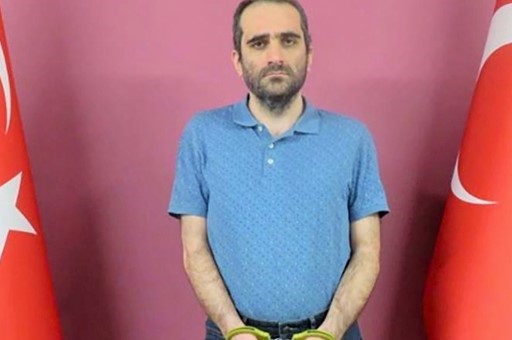
    Selahaddin Gülen, a nephew living in Kenya of Islamic scholar Fethullah Gülen, was brought back to Turkey by agents from Turkey’s National Intelligence Organization (MIT) in May. Then, he was arrested on June 5 by an Ankara court on charges of “managing an armed terrorist organization.”

    Orhan İnandı, the founder and president of the Turkish-Kyrgyz Sapat school network operating in Kyrgyzstan, went missing in Bishkek on the evening of May 31 and is feared to have been abducted by Turkey’s National Intelligence Organization due to his alleged links to the Gülen movement.

    İnandı’s  wife, Reyhan İnandı, said in a June 6 statement that an undisclosed source told her that her husband was being held against his will at the Turkish Embassy, and she claimed he was being tortured to renounce his Kyrgyz citizenship. This would simplify İnandı’s forcible transfer to Turkey, she said.

    “What happened in Kenya and Kyrgyzstan has left us traumatised because we don’t know when they will strike and abduct one of us,” said a member of the small Turkish community in South Africa.

    A Turkish immigrant, Dr Aydın İnal, director of the Turquoise Harmony Institute in the Western Cape, said: “Given the history of Turkish intelligence, it is not unthinkable that they could do more serious things, including targeting of individuals in the Gulen Movement [in South Africa].”

    Turkish intelligence has intensified its efforts to target dissidents abroad.

    In a joint letter UN rapporteurs accused the Turkish government of engaging in the systematic practice of state-sponsored extraterritorial abductions and forcible returns to Turkey, with at least 100 Turkish nationals from multiple states including Afghanistan, Albania, Azerbaijan, Afghanistan, Cambodia, Gabon, Kosovo, Kazakhstan, Lebanon and Pakistan removed to Turkey.

    In a number of cases the UN Working Group on Arbitrary Detention (WGAD) concluded that the arrest, detention and forced transfer to Turkey of Turkish nationals were arbitrary and in violation of international human rights norms and standards.

    A recent report by Freedom House on global transnational repression also revealed the intensity, geographic reach and suddenness of the Turkish government’s campaign targeting dissidents abroad, noting that Turkey has become number one among countries that have conducted renditions from host states since 2014.

    According to the report, Ankara’s campaign has primarily targeted people affiliated with the Gülen movement, but the government has started applying the same tactics to Kurdish and leftist individuals living abroad.

    The Freedom House report also indicated that the Turkish government has pursued its perceived enemies in at least 30 host countries spread across the Americas, Europe, the Middle East, Africa and Asia since a 2016 coup attempt.

    According to official statements by its interior ministry, Turkey has sent 800 extradition requests to 105 countries since the attempt, and more than 110 alleged members of the movement have been brought back to Turkey as part of the government’s global campaign.