Author: Zaman Australia

  • Interpol election raises rights concerns about fair policing: report

    Interpol election raises rights concerns about fair policing: report

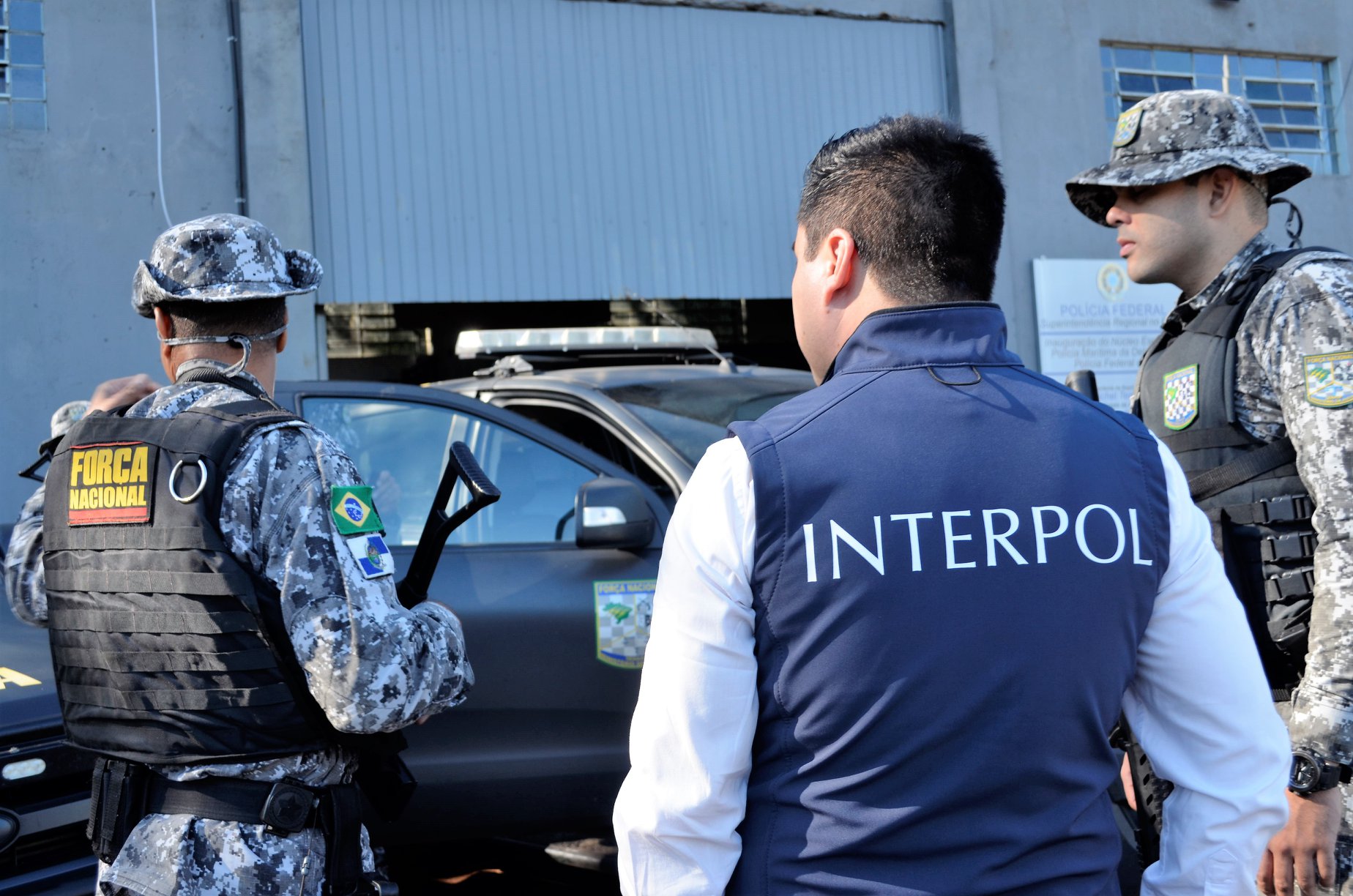
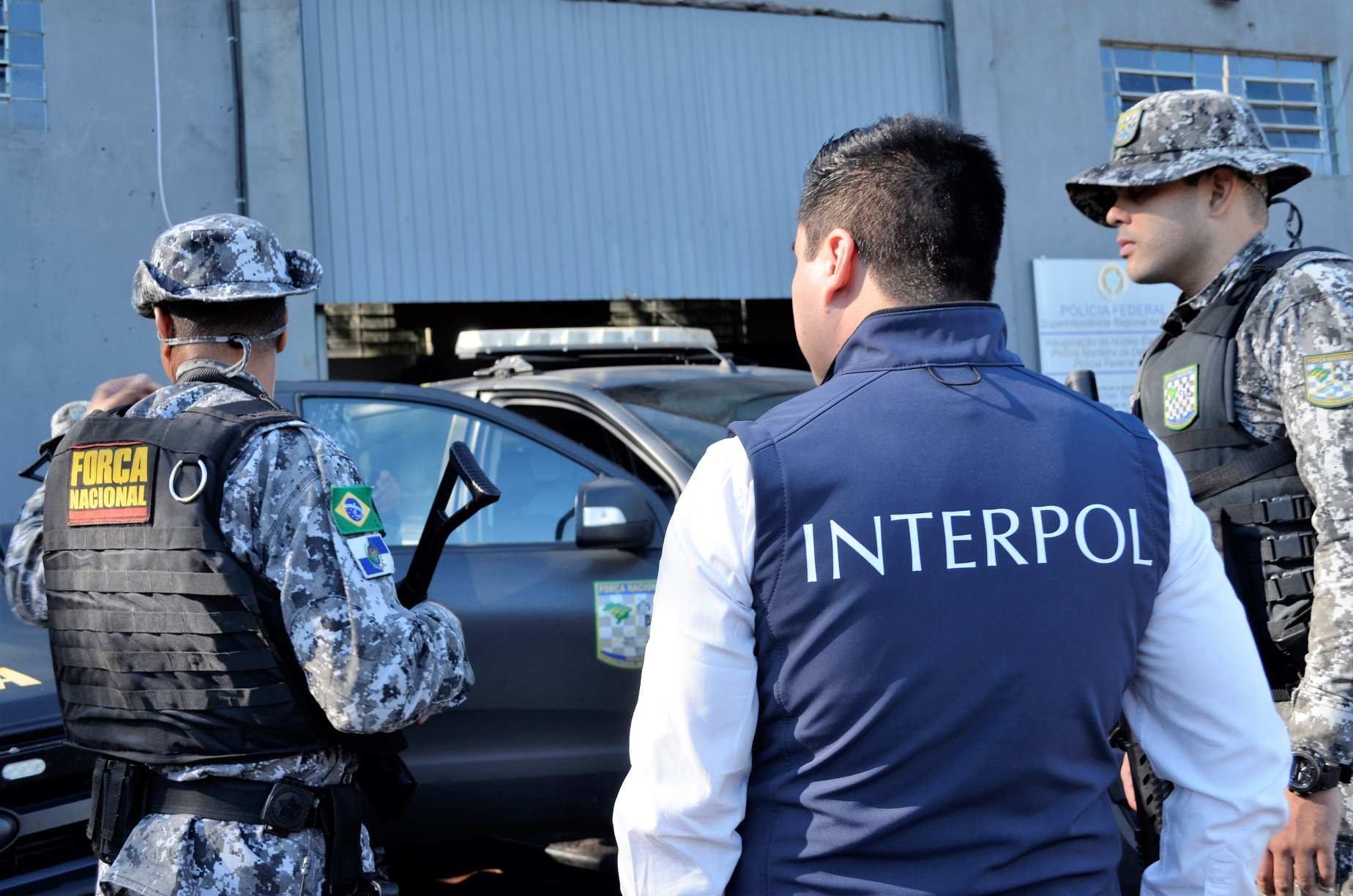
    Human rights groups and Western lawmakers are warning that Interpol’s powerful network of global police officers could end up under the sway of authoritarian governments, as the world police agency meets in İstanbul this week to elect new leadership, the Stockholm Center for Freedom reported on Monday, citing The Associated Press.

    Representatives of countries like China and the United Arab Emirates are bidding for top posts in the French-based policing body when its general assembly convenes in Turkey on Tuesday.

    Interpol says it refuses to be used for political ends. Critics contend that if these candidates win, instead of hunting down drug smugglers, human traffickers, war crimes suspects and alleged extremists, their countries would use Interpol’s global reach to apprehend exiled dissidents and even political opponents at home.

    According to Barbara Surk’s story, two candidates have drawn special criticism: Maj. Gen. Ahmed Naser al-Raisi, inspector general at the UAE’s interior ministry, who is seeking to be elected Interpol’s president for a four-year term; and Hu Binchen, an official at China’s ministry of public security, expected to be up for a vacant spot on Interpol’s executive committee.

    A vote is expected Thursday. Interpol’s president and executive committee set policy and direction. They also supervise the body’s secretary-general, who handles the day-to-day operations and is its public face. That post is filled by German official Juergen Stock.

    Al-Raisi is accused of torture and has criminal complaints against him in five countries, including in France, where Interpol has its headquarters, and in Turkey, where the election is taking place.

    And Hu is backed by China’s government, which is suspected to have used the global police agency to hunt down exiled dissidents and of disappearing its citizens.

    Appointing Hu could be fraught with peril — including, possibly, for himself. Meng Hongwei of China was elected Interpol president in 2016, only to vanish on a return trip to China two years later. He is now serving a thirteen-and-a-half-year jail sentence for corruption, charges that his wife Grace Meng, now living in France with her children under police protection, insisted in an interview with The Associated Press were trumped up and politically motivated.

    Al-Raisi, already a member of Interpol’s executive committee, contended in a LinkedIn post Saturday that the UAE prioritizes “the protection of human rights at home and abroad.”

    But a recent report by the MENA Rights Group describes routine rights violations by the UAE security system, in which lawyers, journalists and activists have been forcibly disappeared, tortured, arbitrarily detained and intimidated for peacefully asking for basic rights and freedoms.

    Matthew Hedges, a British doctoral student who was imprisoned in the UAE for nearly seven months in 2018 on spying charges, visibly struggled at a news conference in Paris as he described torture and months of being held in solitary confinement with no access to a lawyer.

    “I was given a cocktail of medication … to alter my mental state,” Hedges said. “I am still dependent on most of this medication now. I would hear screams coming from other rooms, and there was evidence on the floor of torture, physical torture, beatings.”

    Hedges was pardoned by UAE President Sheikh Khalifa bin Zayed Al Nahyan, but Emirati officials still insist Hedges was spying for Britain’s MI6 intelligence agency, without offering definitive proof to support their claims. He, his family and British diplomats have repeatedly denied the charges.

    “There is no way that a country’s police force that is willing to do this to foreign citizens, let alone their own, should be given the honor of holding one of the highest positions at Interpol,” Hedges said.

    “Electing al-Raisi, the man responsible for what was happening to me, would be a slap in the face of justice and an embarrassment to other police forces who believe in upholding the rule of law.”

    He and fellow Briton Ali Issa Ahmad, a soccer fan who says he was tortured by UAE security agents during the 2019 Asia Cup soccer tournament, have filed a lawsuit against al-Raisi and other Emirati security officials in the UK. They also filed criminal complaints in Norway, Sweden and in France.

    If French prosecutors decide to pursue the case, al-Raisi could be detained and questioned about alleged crimes committed in another country if he enters France or French territory.

    Ahmad said he was attacked by plainclothes UAE security agents at a match between Iraq and Qatar in Abu Dhabi. He was wearing a fan T-shirt with a Qatari flag at a time of a bitter diplomatic dispute between Qatar and other Gulf countries.

    He said the agents attacked him on the beach, threw him in a car, handcuffed him and put a plastic bag over his head. Using pocketknives, they carved the outlines of the Qatari flag on his chest as they cut out the emblem from his T-shirt, he said. Ahmad was jailed for two weeks and was released only after pleading guilty to the charge of “wasting police time.” Police say he already was hurt when he presented himself to a police station in Sharjah.

    Another torture complaint under the principle of universal jurisdiction is pending in France against al-Raisi, filed in June over the alleged torture of prominent Emirati human rights defender and blogger Ahmed Mansoor, currently serving a 10-year sentence for charges of insulting the “status and prestige of the UAE” and its leaders in social media posts.

    A major concern for dissidents is potential abuse of the Interpol Red Notice — the equivalent of putting someone on a global “most-wanted” list, meaning a suspect could be arrested anywhere they travel.

    Interpol insists that any country’s request for a Red Notice is verified for compliance with its constitution, “under which it is strictly forbidden for the organization to undertake any intervention or activities of a political, military, religious or racial character.” But critics say Interpol has been used in the past by its member governments for political ends, and that this could get worse under new leadership.

    Al-Raisi has run a slick campaign for the presidential post, traveling the world to meet lawmakers and government officials and boasting academic degrees from the UK and the US and years of experience of policing.

    In an opinion piece for the government-run newspaper in Abu Dhabi, al-Raisi said he wants to “modernize and transform” Interpol, drawing on “the UAE’s role as a leader in tech-driven policing and a bridge builder in the international community.”

    The UAE, particularly the skyscraper-studded city-state of Dubai, long have been identified as a major money-laundering hub for both criminals and rogue nations. But in recent months the Emirati police have announced a series of busts targeting suspected international drug dealers and gangsters living there. Residents also note low reported levels of street crime and harassment, likely an effect of residency visas all being tied to employment.

    Prominent French human rights lawyer William Bourdon said UAE officials can’t hide behind a facade of modernity and progress.

    “Behind the beaches and the palm trees,” he said, “there are people, and they are screaming because they are being tortured.”
  • Rights activist Avazyan briefly detained by Turkish police at airport

    Natali Avazyan, a Turkish-Armenian human rights activist, tweeted on Wednesday that she was being taken into police custody at an airport in the southern city of Adana.

    She was accused by authorities of insulting Turkish President Recep Tayyip Erdoğan in a social media post in 2014, she said in another tweet. She was released following a brief detention.

    She had also been detained and her brother’s apartment raided by the police on February 11, 2020. Her detention last year came after she tried to raise awareness for Ahmet Burhan Ataç, an 8-year-old boy with cancer.

    Ahmet Burhan was diagnosed with bone cancer in September 2018 while his father was in pre-trial detention for alleged membership in the Gülen movement.

    Ahmet Burhan succumbed to his illness in May 2020 after a travel ban on his mother delayed his treatment in Germany for a month.

    Avazyan was arrested in October 2019 due to a tweet she posted regarding Turkish Foreign Minister Mevlüt Çavuşoğlu.

    Avazyan posted a photo of the Çavuşoğlu family from what she said was the year 1988 with a message saying that Çavuşoğlu’s father was known as the “thief, Kurdish Osman” at the time. SCF

  • International students to return to NSW quarantine free

    International students to return to NSW quarantine free

    Fully vaccinated international students will be able to return to NSW without quarantining, the NSW Government has announced.
    The first chartered flight carrying 250 students from 15 countries will arrive in Sydney on December 6. The state government has brought the rules for international students in line with returning Australians.

    NSW Premier Dominic Perrottet said international education plays a “vital role in connecting NSW to the rest of the world.”
    “This is a significant milestone in our roadmap to recovery and I can’t wait to welcome back such an important part of our community,” Mr Perrottet said.

    Deputy Premier Stuart Ayres added students will require Commonwealth Government approval to travel to Australia.
    “I welcome continued collaboration with the Commonwealth Government in supporting international students as they return to NSW,” Mr Ayres said.
    Students will return on flights to NSW from December under the NSW International Student Arrivals Pilot Plan.

    Return of skilled migrants

    The federal government’s post-COVID economic recovery plan includes the return of skilled migrants.
    “We are going to have a business led recovery here in Australia,” Prime Minister Scott Morrison said.
    The plan would also offer incentives to get workers back into the office to rejuvenate struggling CBD businesses.
    Since Australia shut its borders, businesses and industries have been struggling with a shortage of workers. 9NEWS

  • Gov’t denies assistance to autistic teen due to father’s alleged links to Gülen movement

    A district governor’s office in Hatay province has been refusing to provide assistance to the family of Rüveyda Tekgöz, a 16-year-old autistic girl because her father was fired from his job due to alleged links to the Gülen movement, the Bold Medya news website reported.

    According to a report by a state hospital, Tekgöz is considered 70 percent disabled and is entitled to TL 800 ($80) in government assistance provided to the families of disabled individuals. Yet, the family has been denied assistance since August 2019.

    Rüveyda’s father Mehmet Ali Tekgöz, a teacher, was dismissed from his job by an emergency decree-law on September 1, 2016 due to his alleged links to the Gülen movement. He was later sentenced to six years, three months’ imprisonment for membership in a terrorist organization. An appeals court overturned his conviction and he was released in January 2018, after spending 16 months in prison. His retrial will start in December.

    Turkish President Recep Tayyip Erdoğan has been targeting followers of the Gülen movement since the corruption investigations of December 17-25, 2013, which implicated then-prime minister Erdoğan, his family members and his inner circle.

    Dismissing the investigations as a Gülenist coup and conspiracy against his government, Erdoğan designated the movement as a terrorist organization and began to target its members. He intensified the crackdown on the movement following a coup attempt on July 15, 2016 that he accused Gülen of masterminding. Gülen and the movement strongly deny involvement in the abortive putsch or any terrorist activity.

    Mehmet Ali Tekgöz is one of tens of thousands of former public servants who were removed from their jobs for alleged membership in or relationships with “terrorist organizations” by emergency decree-laws following the coup attempt.

    Former public servants were not only fired from their jobs; they were also banned from working again in the public sector and getting a passport. Their families also faced discrimination.

    Rüveyda’s family brought the case to the ombudsman’s office, which investigates claims of rights violations by public institutions and officials. Human rights defender and Peoples’ Democratic Party (HDP) deputy Ömer Faruk Gergerlioğlu asked the office about the case but was told they had not received an application concerning it.

    In a tweet on Wednesday, however, Gergerlioğlu shared a copy of the ombudsman’s office’s decision about the case, which stated that the application was denied.

    There have been other cases where disabled children were denied public benefits. Financial assistance paid by the Turkish government to the family of Nurbanu Aydın, a “spastic quadriplegia cerebral palsy” patient, was cut off after her father, Muammer Aydın, was arrested on trumped-up terrorism charges.

    Nurefşan Ketenci, who suffers from Cri-du-chat syndrome, also known as 5p minus syndrome, was forced to leave a public special needs school because her father used to work for an institution that was shut down by a government decree for its affiliation with the Gülen movement . She is totally disabled and according to the doctors her heart function is similar to that of a 94-year-old. SCF

  • I felt encouraged to speak out against China after NBA supported players fighting other injustices, Enes Kanter says

    “I felt encouraged to speak out against China after NBA officials said they were giving their players the freedom to talk about injustices happening around the world,” Enes Kanter said in an interview with CNN’s Christiane Amanpour.

    “[The] NBA made me do this,” the Boston Celtics star said. “Because every time when one of the NBA teams or the commissioner comes out to speak, they say we are encouraging players to talk about whatever they want to talk about.

    “We are giving freedom to our players to talk about all the injustices happening around the world, all the human rights abuses around the world. So, they gave me this right.”

    In recent months Kanter has used social media posts and specially designed clothing during NBA games to bring awareness to China’s treatment of the Uyghur community, Tibet, Taiwan and Hong Kong.

    His posts and comments have caused a backlash in China, with Celtics games being pulled by Chinese video-streaming site Tencent and the government criticizing the 29-year-old’s comments.

    Kanter says he sat down privately with NBA officials and commissioner Adam Silver and that Silver backed his right to freedom of speech.

    The Celtics center says he has no intention of breaking NBA rules but is concerned as to why the NBA has yet to release a public statement on the issue.

    “If they were really supporting me, they would have put something out there. They would have put out some kind of statement,” he said.

    Kanter is an outspoken critic of Turkish President Recep Tayyip Erdoğan’s increasingly authoritarian policies and human rights record. Turkish prosecutors are seeking a four-year prison sentence for his alleged membership in the Gülen movement, a religious group inspired by US-based Turkish cleric Fethullah Gülen.

    Turkey had revoked Kanter’s passport in 2017 and attempted to have him deported from Romania on May 20, 2017 during one of his international trips. His passport was briefly seized by the Romanian police upon a request from the Turkish government. The NBA said it had worked with the State Department to ensure Kanter’s release in Romania.

    Erdoğan has been targeting followers of the movement since the corruption investigations of December 17-25, 2013, which implicated then-Prime Minister Erdoğan, his family members and his inner circle.

    Dismissing the investigations as a Gülenist coup and conspiracy against his government, Erdoğan designated the movement as a terrorist organization and began to target its members. Erdoğan intensified the crackdown on the movement following a coup attempt on July 15, 2016 that he accused Gülen of masterminding. Gülen strongly denies involvement in the abortive putsch or any terrorist activity. Following the allegations, he called on the Turkish government to allow for an international investigation. SCF

  • NSW’s most wanted man, Mostafa Baluch, found on Queensland border

    The most wanted man in NSW has allegedly been found hiding in the back of a truck after a costly search spanning four states and several weeks ended in a “great day” for police.

    Police say they pulled over the truck as it crossed the Queensland border about 1am today.

    Officers claim they knocked on a shipping container the truck was transporting and that Mostafa Baluch, who had been on the run since last month, knocked back.

    Police allege Mr Baluch was hiding in a Mercedes 4WD which was inside the container.

    Police had been searching for the 33-year-old since he allegedly cut off an ankle tracking bracelet and disappeared from his home on Sydney’s northern beaches on October 25 while on bail.

    Mr Baluch was charged over an attempt to import 900 kilograms of cocaine into NSW and just days before he disappeared he had been granted bail.

    A multi-agency investigation involving police in NSW, Queensland, Victoria and South Australia has been working around the clock for the past 17 days in an attempt to find him.

    Police said the truck was stopped after officers received a tip off Mr Baluch could be hiding inside a vehicle trying to cross the border.

    Police claim they had been checking trucks travelling through Tweed Heads when they noticed an unlocked container on the back of the truck Mr Baluch was on.

    Detective Superintendent Robert Critchlow said Mr Baluch was a “bit shocked” he had been found.

    He was arrested and remains in custody in Southport. He is expected to face court later today.

    Detectives are now travelling to Queensland to seek Mr Baluch’s extradition to NSW.

    Police Minister David Elliott said he would be “skipping around all day”.

    “Today will be considered one of the great days of NSW Police,” he said.

    Mr Elliott described the decision to grant the 33-year-old bail as “questionable” and said it proved the current review into the state’s bail laws was justified.

    NSW Police Assistant Commissioner Stuart Smith said the investigation had cost an “extraordinary” amount of money.

    “I’d have nightmares if I even started to think about it. But if it’s $1, it’s $1 unnecessarily spent,” Mr Elliott said.

    The man police claim was driving the truck has been arrested in Grafton in northern NSW and will face charges in relation to conveying a wanted person out of a jurisdiction.

    The trucking company which he works for will now be investigated by police with a “fine-toothed comb”, Detective Superintendent Critchlow said.

    “We understand they’ll have few trucks left on the road tomorrow,” he said.

    Last week, police alleeged Mr Baluch had a “senior role” in a wider criminal network and that they had concerns for the public’s safety while he remained at large.

    In relation to the investigation, police raided two properties in Potts Hill and Yagoona five days ago and seized $250,000 in cash, 200 grams of cocaine, mobile phones, money-counting machines and 458 grams of an “unknown substance”.

    They also seized a black Range Rover with Queensland number plates after it was captured on CCTV driving through the M4 tunnel near Croydon only hours after Mr Baluch fled his Bayview home.

    The state has seized Mr Baluch’s northern beaches home, which was put forward as bail surety.

    Police said the property was valued at $4 million.

    Assistant Commissioner Smith said police would seize more of Mr Baluch’s assets.

    Mr Baluch is facing charges over an alleged attempt to import cocaine into Australia from Ecuador.

    The cocaine was seized from a vessel travelling off the coast of Ecuador in April and had a street value of $270 million. ABC

  • Huge New Zealand potato weighing 7.9kg could claim world record

    A giant 7.9kg potato found in a New Zealand couple’s overgrown garden may set a new world record for the largest of its kind ever to be discovered.

    Colin and Donna Craig-Brown’s were doing a spot of weeding in their Hamilton back yard, when Colin’s hoe hit something below the ground.

    “So I said to Donna this must be one of those white kūmara (sweet potato) that we grew,” he told Stuff, “because some of them just grew massive here.”

    He tasted it, discovered it was potato and set about excavating it from the soil.

    The bulbous tuber weighs the same as an extra-large turkey and would exceed the allowance for check-in luggage. The couple named their new discovery Doug, and have grown pretty fond of him.

    “We put a hat on him. We put him on Facebook, taking him for a walk, giving him some sunshine,” Colin told the NZ Herald. “It’s all a bit of fun. It’s amazing what entertains people.”

    The couple say they’ve applied to Guinness to have Doug recognised and are waiting to hear back.

    The couple could not recall when they last planted potatoes in their garden, but guessed it must have been about two or three years ago. Colin thinks perhaps Doug self-seeded.

    “It’s a mystery to me,” Colin said. “It’s one of nature’s little pleasant surprises.”

    “It’s fair to say our veggie garden can sometimes get a bit feral. There are some parts of the garden you need to pack a lunch and advise your next of kin before heading in to,” he told Stuff.

    The couple have wrapped Doug in plastic-bags to keep him from drying out, and Colin, an amateur brewer, says he is now keen to turn the oversized tuber into vodka. The Guardian

  • I was electrocuted, beaten and made impotent, torture victim says

    Ayhan Demir, 45, said he was made impotent as a result of the sexual torture and electrocution he was subjected to during his detention in the Mersin Police Department’s counterterrorism unit in September 2016, due to his alleged links to the Gülen movement.

    “They beat you, slap you and nothing permanent happens,” he said. “But I was beaten to death. They hit my genitals on purpose. They wired something around my genitals and electrocuted me. I had bloody urine for four years. I have been receiving treatment, but my genitals are full of burns.”

    Demir talked about his ordeal to the Bold Medya news website. In the video interview his legs were constantly shaking due to his condition.

    Demir was working as an accountant at a university preparation school affiliated with the faith-based Gülen movement. He was first detained for four days in May 20, 2016 after the government shut down the school. He was detained again in September 2016, shortly after an abortive putsch on July 15, 2016, which the government accused the Gülen movement of masterminding.

    Turkish President Recep Tayyip Erdoğan has been targeting followers of the Gülen movement, inspired by Turkish cleric Fethullah Gülen, since the corruption investigations of December 17-25, 2013, which implicated then-Prime Minister Erdoğan, his family members and his inner circle.

    Dismissing the investigations as a Gülenist coup and conspiracy against his government, Erdoğan designated the movement as a terrorist organization and began to target its members. He intensified the crackdown on the movement following the coup attempt. Gülen and the movement strongly deny involvement in the abortive putsch or any terrorist activity.

    Demir was working in İstanbul when he received a call from his neighbors who said the police were searching his house despite the fact that no one was home. They had confiscated some of his belongings, including his children’s computers. He called the police and asked what they wanted from him. They said they wanted to get his statement. Demir traveled to Mersin and went to the police department. He was immediately put in detention, accused of links to a terrorist organization.

    He was held on the fifth floor of the counterterrorism unit for eight days. They hit him in the neck with a hard object, leading to the dislocation of his spine. He was also electrocuted and beaten on his genitals.

    “A tall officer told me ‘I will rape your wife, you son of a bitch, you terrorist!” Demir said. “I don’t know his name, but he was the one who hit my genitals.”

    Despite being in very bad condition and telling the judge about the torture he endured, he was arrested and sent first to Mersin then to Osmaniye Prison. His ordeal continued there. He was in constant pain and had difficulty keeping his balance, but the prison administration didn’t send him to hospital.

    On the night of January 12, 2017, he lost his balance when trying to go to the restroom downstairs and fell from the stairs, badly hitting his head and passing out.

    He was taken to the hospital only to be administered a medication and sent back to the prison. In the coming days he constantly demanded to visit the hospital, but he was only given painkillers in the infirmary.

    “If the prison staff had let me get the necessary treatment, I wouldn’t be like this today,” Demir said. “After that day my hands and feet started shaking constantly.”

    Following the incident, he couldn’t go to the bedroom upstairs in the ward and had to sleep under the stairs in kitchen. “I couldn’t take care of myself,” he said. “My cellmates gave me food, I couldn’t even drink tea without help.”

    He submitted a petition to the prison administration demanding they release the CCTV footage showing how he fell so that the doctors would take care of him. He never received a response.

    After 14 months in pretrial detention, he was released on November 7, 2017. He visited the hospital and had surgery.

    He couldn’t walk for a long time. He still can’t lie down on his back and is prescribed opioids to help with his pain. “After I take the medication, I become so numb that I wouldn’t feel it if you stabbed me,” Demir said. “Once I slept for a day after I got the medication.” According to a disability report issued by Mersin University Hospital he is 87 percent disabled.

    Demir’s wife was also detained while he was in prison. He says the police officers threatened her with rape. With pressure from her family, she filed for divorce.

    Demir says he came across his torturer in the police department after he was released from prison. “When he saw me, he fled to another room,” he said. “He will be prosecuted one day. Their names must be on the duty list for that day, I won’t let him go.”

    After the abortive putsch, ill-treatment and torture became widespread and systematic in Turkish detention centers as evidenced by the UN special rapporteur on torture and other cruel, inhuman, or degrading treatment or punishment in a report based on his mission to Turkey between November 27 and December 2, 2016. Lack of condemnation from higher officials and a readiness to cover up allegations rather than investigate them have resulted in widespread impunity for the security forces.

    According to the UN special rapporteur, “torture and other forms of ill-treatment were widespread” in Turkey. “[T]here seemed to be a serious disconnect between declared government policy and its implementation in practice,” the special rapporteur noted.

    The report found there were numerous consistent allegations received by the special rapporteur in the immediate aftermath of the failed coup in 2016 and that torture and other forms of ill-treatment were widespread.

    The special rapporteur heard persistent reports of severe beatings, punches and kicking, blows with objects, threats and verbal abuse, being forced to strip naked, rape with objects and other sexual violence or threats thereof, sleep deprivation, stress positions and extended blindfolding and/or handcuffing for several days, according to the report. SCF

  • Will INTERPOL offer Erdoğan a lifeline?

    Will INTERPOL offer Erdoğan a lifeline?

    Cevheri Güven-turkishminute

    Murat Acar, a professor of radiology, was one of tens of thousands of Turkish citizens whose passports were cancelled by the government after a failed military coup in July 2016. He had previously received an invitation from Bahrain’s King Hamad University in December 2015 and had moved to the Gulf country to work. A few days after the failed putsch in Turkey, his passport as well as those of his family members were cancelled in a mass cancellation campaign led by the Interior Ministry as part of post-coup state of emergency measures, beginning with some 50,000 people and to ultimately reach 250,000. The Turkish police communicated this to INTERPOL’s systems.

    In August 2016, at the initiative of Hatun Demirer, the Turkish ambassador to Bahrain, the Bahraini police confiscated the passports of the Acar family, who then lodged an asylum application with the office of the United Nations High Commissioner for Refugees out of fear that they might be the subject of an extradition to Turkey and a politically motivated arrest. On Oct. 7, 2016 the Bahraini police raided their home, forcibly took them to the airport and handed them over to a police team from Turkey. The family was rendered to Turkey and kept at a police station close to Atatürk Airport from Oct. 8 to 12. Yet no entry about them was made in the official police records, and they were officially “at large” during that time. Acar and his wife were later brought to the Ankara Police Department, where they spent 18 days undergoing repeated unofficial interrogations full of verbal insults and threats, without their lawyers. They were held at a gym located in the police department’s garden, handcuffed, together with hundreds of people who were tortured. During that time, Acar encountered Nuri Akpınar, a professor who was also rendered from Bahrain and who showed signs of torture on his body. It has been widely documented that the department in Ankara was a torture center after the coup. Arrested by a court, Acar remained behind bars for 30 months.

    The team that rendered Akpınar to Turkey was a group of officers with the Turkish INTERPOL. According to Acar and Akpınar’s case file, these officers were officially tasked with going to Bahrain and bringing back the people handed over by the local authorities. Yet the file contains no documents pointing to an official extradition procedure. That’s why Acar describes the incident as an abduction.

    Because INTERPOL police was involved in his rendition, Acar wrote a letter from prison to the organization’s headquarters in Lyon, France, asking whether they were aware of what had happened. In response, the organization said its databases showed no entry made by Turkish or Bahraini authorities about him. In his court statement Acar described the incident as “an abduction in which INTERPOL police were involved, unbeknownst to INTERPOL itself.”

    After several cases similar to Acar’s, INTERPOL stopped accepting passport cancellation notices from Turkey on the grounds that they were politically motivated. Turkish Interior Minister Süleyman Soylu’s harsh reaction was not enough to change the organization’s stance.

    While the Turkish government has failed to obtain a positive outcome from its enterprises with INTERPOL, it does perceive opportunities at the upcoming 89th INTERPOL General Assembly, scheduled to be held in İstanbul Nov.21-25. While many countries have been refraining from hosting international events due to COVID-19, Turkey was willing to host the meeting.

    The event will be attended by the INTERPOL representatives of 194 member states. Each country has one vote at the meeting.

    The Turkish government has been conducting an intensive lobbying campaign to alter INTERPOL’s policies concerning its passport cancellations. All participants have been invited along with their family members, and the Turkish government will cover all their expenses.

    In addition to passport cancellations, Turkey also sent thousands of Red Notice requests after the coup, mostly for alleged members of the Gülen movement, which the Turkish government accuses of orchestrating the abortive putsch. These requests were rejected by INTERPOL on the grounds that they were political. Article 3 of the organization’s constitution prohibits INTERPOL’s involvement in crimes with a military, political, religious or racial dimension. While the Turkish side insists that their requests concern terrorism, sending several delegations to Lyon, it has thus far not been able to convince its interlocutors.

    In 2017 Turkey changed strategy and started to flag its dissidents’ passports as lost or stolen on INTERPOL’s relevant database as a backdoor method to cancel the passports. After a wave of complaints, INTERPOL established that Ankara was in violation of regulations and restricted Turkey’s access to the system. One of the Turkish government’s aims at the İstanbul meeting will be the lifting of these measures.

    Highlighting the importance attached to the upcoming event, Deputy Foreign Minister Yavuz Selim Kıran said at a parliamentary meeting in June that INTERPOL was failing to honor its obligations in fighting terrorism.

    “In our cooperation with INTERPOL, we are facing problems such as the rejection of Red Notice … requests, the deletion of existing Red Notices and the blocking of Turkey’s access to the Stolen and Lost Travel Document Database. By hosting this meeting, we will explain our anti-terror policies, particularly concerning FETÖ,” Kıran said, using the Turkish government’s derogatory term to refer to the Gülen movement. “From this perspective, the event will be a significant opportunity.”

    Lütfi Çiçek, the chair of Turkey’s national INTERPOL bureau, announced that the delegates were expected with their family members and that they were preparing “social programs that include many activities.”

    Oğuzhan Albayrak, a former Turkish diplomat and the director of the German-based Human Rights Defenders, considers the possible outcomes of Turkey’s efforts to convince INTERPOL.

    “The Turkish government attaches great importance to the meeting. Rather than a general assembly, they have prepared an impressive holiday program for the INTERPOL members, that is why families were included,” Albayrak says.
    “Turkey will seek the removal of restrictions on its Red Notice requests, passport cancellations and lost and stolen passport entries. Turkey has thus far abducted more than 100 Gülen movement members, mostly in countries with lower democratic standards, and forcibly rendered them to Turkey. If Erdoğan’s requests are approved in the general assembly, hundreds will be added to this. His critics are currently stuck in many countries around the world, and they are unable to return out of fear of getting arrested. Taking their passports away will only mean cooperation with the regime and destruction of the democratic values that INTERPOL represents.”

  • Jailed Kurdish leaders mark 5 years behind bars on terrorism charges

    Former co-chairs of the pro-Kurdish Peoples’ Democratic Party (HDP) Selahattin Demirtaş and Figen Yüksekdağ, who were jailed on Nov. 4, 2016 on terrorism-related charges, on Thursday passed the five-year mark behind bars.

    The HDP on Thursday described in a tweet the former members’ arrest as “a coup” that targeted the party.

    “Our former co-chairs Demirtaş and Yüksekdağ and elected officials have been imprisoned since 2016. Those who kidnapped our friends are now reaching the point of exhaustion. We will win! The people will win!” they added, referring to President Recep Tayyip Erdoğan and his Justice and Development Party (AKP).

    Başak Demirtaş, the wife of Selahattin Demirtaş, also released a video on social media, giving messages of hope.

    “Exactly five years have passed since Selahattin and his friends were taken out of their homes, unlawfully. We’re entering the sixth year. … Despite everything, we have never lost hope over the last five years. Neither our will nor our faith was broken. We know that justice, freedom and equality aren’t far away,” she said in a video released on Twitter on Thursday.

    The Kurdish leader has remained in prison for five years despite two European Court of Human Rights (ECtHR) rulings in 2018 and 2020 that said he was imprisoned for “political” reasons and not for “legal” reasons, ordering his “immediate release.” The Council of Europe also called on Turkey to immediately release the Kurdish politician on Sept. 17, 2021.

    Although the ECtHR rulings are legally binding, there have been many instances in which Turkey has not implemented them. Erdoğan has dismissed both rulings on Demirtaş, accusing the court of applying a double standard and of hypocrisy.

    Demirtaş also said they hadn’t been the only ones who had paid a price in past years, referring to Erdoğan and his government’s crackdown on dissidents, which culminated in the aftermath of a July 15, 2016 coup attempt.

    “Think about it, the night when Selahattin and his friends were unlawfully imprisoned, the Turkish lira was worth around 3 to the dollar. Today, the dollar is around 9.5 lira due to the economic collapse caused by all the injustice in the country. So, just to silence the opposition, [they have caused] the value of our currency [to] have decreased by about 300 percent,” she said.

    Demirtaş stated that the AKP government “completely destroyed the already incomplete peace and joy of the country and made people feel tired of their lives,” adding that they made three out of every four youngsters in Turkey think about leaving the country for a better future abroad.

    Meanwhile, the Evrensel daily on Thursday reported that the pro-Kurdish HDP would submit its first written defense to the Constitutional Court on either Nov. 5 or 8 as part of a case launched after the court in June accepted an indictment seeking the closure of Turkey’s second-largest opposition party.

    According to the report, the defense will be examined by Bekir Şahin, the chief public prosecutor of the Supreme Court of Appeals who had submitted the 850-page indictment calling for the imposition of a political ban on 451 party members as well as a freeze on the party’s bank accounts. Şahin will then present his opinion within the coming month.

    The HDP is accused in the indictment of links to the outlawed Kurdistan Workers’ Party (PKK), listed as a terrorist organization by Turkey, the US and the EU, and of posing a threat to the “indivisible integrity of the state.”

    Erdoğan and his ruling AKP have long portrayed the HDP as the political front of the PKK. The party denies links to PKK and says it is working to achieve a peaceful solution to Turkey’s Kurdish issue, which refers to the demand for equal rights by the country’s Kurdish population and their struggle for recognition, and is only coming under attack because of its strong opposition to Erdoğan’s 19-year rule.turkishminute