Author: Zaman Australia

  • Dismissed teacher reinstated 6 months after he died of cancer

    Atilla Yalçıntaş, 59, a primary school teacher who was fired from his job by a government decree without due process, was reinstated six months after his death, sparking outrage among human rights activists.

    According to the AydınHaberleri news website, the Yalçıntaş family received a call on Tuesday from local representatives of the Education Ministry informing them that Atilla Yalçıntaş had been reinstated to his job.

    Yalçıntaş was one of more than 130,000 civil servants who were removed from their jobs for alleged membership in or relationships with “terrorist organizations” by emergency decree-laws subject to neither judicial nor parliamentary scrutiny.

    According to his family, Yalçıntaş was a social person loved by his students and colleagues. After he lost his job, he was socially isolated and became introverted. They think this triggered his illness.

    Following a coup attempt on July 15, 2016, the Turkish government declared a state of emergency and carried out a massive purge of state institutions against its political opponents under the pretext of an anti-coup fight. In addition to firing more than 130,000 civil servants as well as 29,444 members of the armed forces, the government also shut down 164 media organizations, 1,058 educational institutions and 1,769 NGOs with emergency decree-laws without any due process.

    Atilla Yalçıntaş’s widow Munise said they would go to court about the people who filed the complaints against her husband that led to his dismissal. “Who are these people that … led to my husband’s death?” she asked. “They committed a crime, and they should pay for it.”

    Former public servants were not only fired from their jobs; they were also banned from working again in the public sector and getting a passport. The government made it difficult for them to work formally in the private sector, too. Notes were put on the social security database about dismissed public servants to deter potential employers.

    According to a joint report by the Justice for Victims Platform and Peoples’ Democratic Party (HDP) deputy Ömer Faruk Gergerlioğlu, the two-year-long state of emergency declared after the coup in Turkey caused immense suffering among public servants who were dismissed from their jobs by the government as well as their families.

    The dismissed public servants lost 70 percent of their average monthly income, a circumstance that reduced them to dire financial straits, according to a survey conducted for the report.

    According to the victims’ family members taking part in the survey, the biggest problem they have been facing is economic hardship (97.9 percent) followed by psychological problems (88.6 percent), loss of social prestige and social exclusion (83.7 percent), disintegration of social circles (83.1 percent), unemployment/lack of employment (80.4 percent) and lack of social security (73.2 percent).

    The survey indicates that 99.1 percent of the victims are college or university graduates or holders of master’s or doctoral degrees, which means an immense loss of human resources for Turkey’s public administration. SCF

  • Australia to send troops and police to Solomon Islands amid unrest

    Australia is dispatching a peacekeeping force to the Solomon Islands after internal political tensions sparked two days of rioting and looting in the capital Honiara and the burning of public buildings and shops.

    Scott Morrison announced the deployment of 73 Australian Federal Police and 43 Australian Defence Force personnel to the country late on Thursday following a request from the nation’s embattled Prime Minister, Manasseh Sogavare.

    An initial contingent of 23 AFP Specialist Response Group members departed Canberra on an RAAF C-130 Hercules on Thursday night to assist Solomon Islands police with riot control.

    However, the Prime Minister stressed the Australian peacekeepers would only help restore security and stability, and would not “in any way” intervene in the nation’s domestic politics.

    “Our purpose here is to provide stability and security to enable the normal constitutional processes in the Solomon Islands to be able to deal with the various issues that have arisen, and that that be done in a climate of peace, stability and security,” Mr Morrison said.

    Mr Sogavare — a longtime critic of Australia who has forged strong relations with China — made the request under a 2017 bilateral security treaty as he faced rioters’ demands for his resignation.

    Protesters looted businesses and torched public and private buildings including a police station, a high school, a large bank branch, and many Chinese and locally owned shops. There were reports of shooting in the capital.

    The tensions, predominantly driven by economic issues, have been inflamed by divisions over the Sogavare government’s decision to break diplomatic ties with Taiwan in favour of China in 2019.

    The initial AFP deployment will be followed by ADF personnel from Townsville, who will protect Honiara’s airport, and up to 50 additional AFP members who will guard critical infrastructure assets. An Australian patrol boat will also be sent to the area.

    “It is not the Australian government’s intention in any way to intervene in the internal affairs of the Solomon Islands. That is for them to resolve,’’ Mr Morrison said. “Our presence there does not indicate any position on the internal issues of the Solomon Islands.”

    Mr Morrison said the deployment was expected to last weeks. The Australian personnel would be armed with “lethal and non-lethal weapons … for force protection purposes”, he said.

    Of the ADF personnel to be deployed to Honiara, 30 are from the army’s 3rd Brigade, with -additional support provided by medical specialists and military police. The decision to deploy Australian personnel was made during a meeting of cabinet’s national security committee, and followed talks between Mr Morrison and key regional leaders.

    The Morrison government is wary of being drawn into a lengthy intervention, following the 2003-17 Regional Assistance Mission to Solomon Islands, which cost more than $2.6bn.

    Former RAMSI leader and Australian high commissioner to the Solomon Islands, James Batley, now a distinguished fellow at the Australian National University, said Australia had little choice but to intervene. “The alternative is to have a country descending into anarchy on our doorstep,” he said. “Australia wants to be the leader in South Pacific security matters and the partner of choice in the region. It would not be a good look for us to be seen to be standing by and let events take their course.”

    Solomon Islands opposition MP Peter Kenilorea Jnr said he welcomed the “light” deployment, saying if the force was larger it would convey the impression Australia was backing Mr Sogavare.

    Mr Kenilorea reiterated Opposition Leader Matthew Wale’s demand for Mr Sogavare to resign, but said he was concerned that Australia’s intervention might enable the Prime Minister to dig in. “I don’t know how the Prime Minister will spin this now,” said Mr Kenilorea, the chair of the Solomon Islands parliament’s foreign relations committee. “The timing of it has come at a delicate time, when government ministers were looking to resign. It should not be seen as propping up a leader that many view as corrupt.”

    Malaita Premier Daniel Suidani demanded Mr Sogavare’s immediate resignation, saying he had “elevated the interest of foreigners above those of Solomon Islanders”.

    The rioters, who ignored a 36-hour lockdown imposed by Mr Sogavare, were predominantly from the province of Malaita, which continues to support diplomatic relations with Taiwan despite the country’s switch to recognise China two years ago.

    They were protesting alleged corruption by the Sogavare government, and had the backing of many public servants whose wages had recently been garnished to pay for a Honiara Chinese housing development.

    People from the main island of Guadalcanal are also enraged with the government, amid proposed reforms of the administration of customary land.

    Mr Sogavare said his government was still in control, and vowed protesters would “face the full brunt of the law”.

    Opposition Leader Anthony Albanese said Labor supported the government’s decision to send AFP and ADF personnel to the Solomons. Australian

  • Emirati general accused of torture elected new INTERPOL president at İstanbul meeting

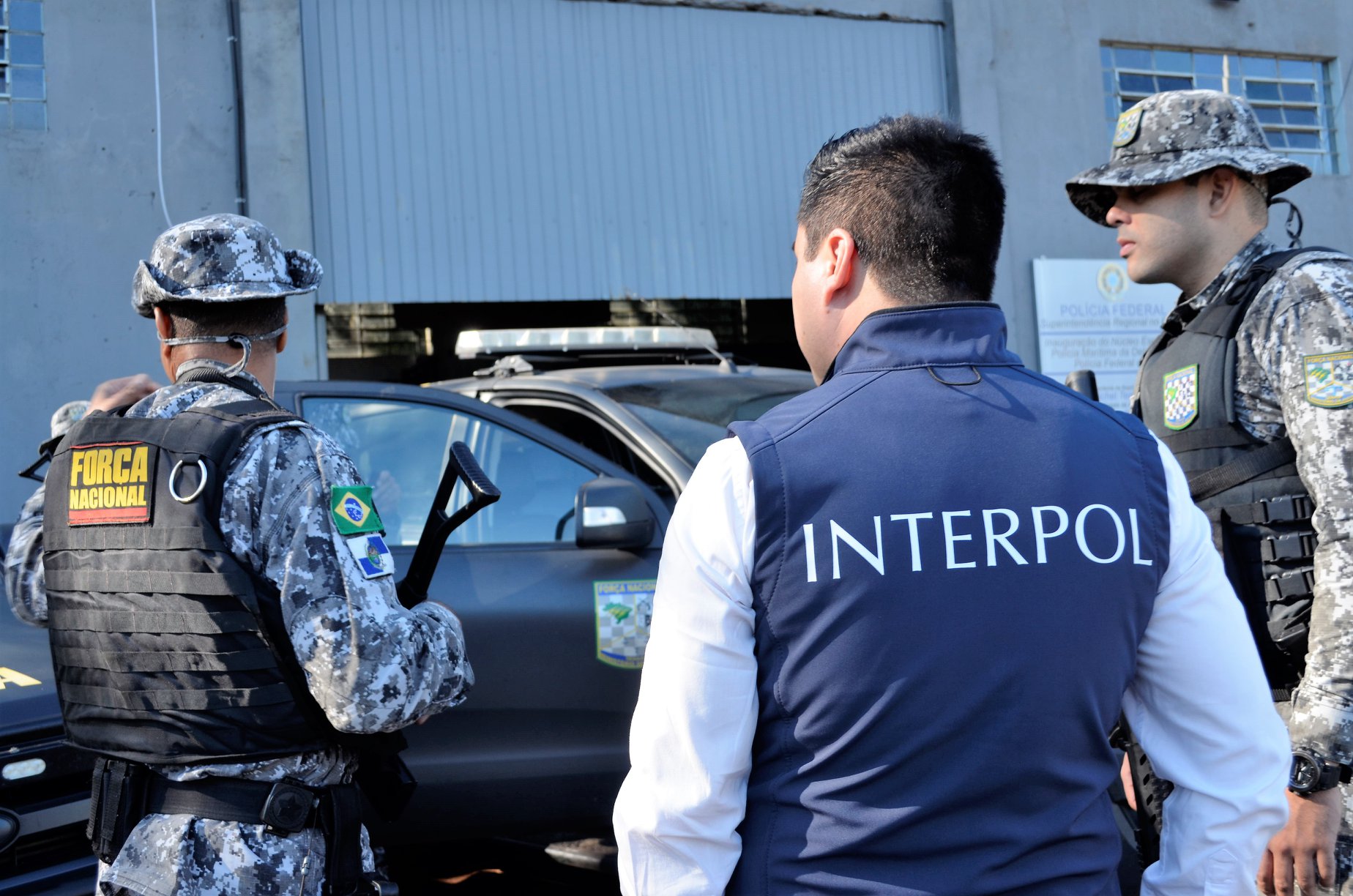
    An Emirati general accused of torture was elected president of INTERPOL at the organization’s meeting in İstanbul on Thursday, despite the concerns of human rights organizations who fear the agency will be at risk of exploitation by repressive regimes, Agence France-Presse reported.

    The decision follows generous funding by the United Arab Emirates for the Lyon, France-based body and accusations Abu Dhabi has abused INTERPOL’s system of so-called “red notices” for wanted suspects to persecute political dissidents.

    Emirati General Ahmed Nasser Al Raisi was elected following three rounds of voting during which he received 68.9 percent of votes cast by member countries, INTERPOL said in a statement.

    Raisi, head of the UAE’s security forces, will take on a largely ceremonial and voluntary role for a four-year term.

    It is INTERPOL Secretary General Juergen Stock who handles day-to-day management of the organization. Stock was given a second five-year term in 2019.

    South Korean Kim Jong-yang was president since the 2018 arrest of his predecessor Meng Hongwei in China, where he had served as a vice minister of public security.

    Complaints of “torture” were filed against the Emirati general in recent months in France and Turkey, which is hosting INTERPOL’s general assembly in İstanbul this week.

    Only the Czech Republic’s Sarka Havrankova, a veteran officer overseeing the country’s international cooperation in police matters, stood against the general for the post.

    ‘Undermine INTERPOL ’

    Raisi joined the Emirati police force in 1980 and worked there for several decades.

    Three European Parliament members wrote a letter dated November 11 to European Commission President Ursula von der Leyen to warn of the impact the general’s appointment would have on INTERPOL .

    “The election of General Al Raisi would undermine the mission and reputation of INTERPOL and severely affect the ability of the organization to carry out its mission effectively,” they wrote.

    And in October 2020, 19 NGOs, including Human Rights Watch, expressed concern about the possible choice of Raisi, whom they described as being “part of a security apparatus that continues to systematically target peaceful critics.”

    One of the complainants against Raisi, British national Matthew Hedges, said he was detained and tortured between May and November 2018 in the United Arab Emirates after he was arrested on false charges of espionage during a study trip.

    In another complaint, lawyers for the Gulf Centre for Human Rights accuse the general of “acts of torture and barbarism” committed against government critic Ahmed Mansoor.

    Mansoor has been detained since 2017 in a four-square-meter (43-square-foot) cell “without a mattress or protection against the cold” and “without access to a doctor, hygiene, water and sanitary facilities”, the lawyers said.

    These complaints have not resulted in any formal proceedings against the general.

    ‘Defamation campaign’

    Anwar Gargash, a former UAE minister of state for foreign affairs who now advises the country’s president, described the general’s election as “a testament to our country’s achievements and efficiency in the fields of law enforcement and security.”

    Gargash dismissed the accusations against Raisi as an “organized and intense smear and defamation campaign” which the election had now “crushed on the rock of truth.”

    The UAE donated $54 million (48 million euros) to INTERPOL in 2017 — almost equivalent to the required contributions of all the organization’s 195 member countries which amounted to $68 million in 2020.

    The UAE gave or had pledged to INTERPOL around 10 million euros in 2019, approximately seven percent of its total annual budget.

    INTERPOL Secretary General Stock welcomed the general’s appointment, saying “I look forward to working closely with him in ensuring that INTERPOL continues to fulfil its mandate and support international police cooperation.” SCF

  • We will use INTERPOL General Assembly to persuade the delegates to take a stance against Gülen movement: Turkish minister

    We will use the INTERPOL General Assembly, which began in İstanbul on Tuesday, to persuade officials and delegates to take a stance against the Gülen movement, Turkey’s Interior Minister Süleyman Soylu told Turkish media, the Stockholm Center for Freedom reported.

    Speaking to journalists about the International Criminal Police Organization’s general assembly, Soylu said INTERPOL has been rejecting Turkey’s Red Notice requests since an abortive coup on July 15, 2016 that his government blames on the Gülen movement.

    “It is not difficult to guess that this is an international position,” Soylu said. “We will take the INTERPOL meeting as an opportunity to … talk about our requests.”

    A Red Notice is a request to locate and provisionally arrest an individual pending extradition.

    In a video address to the meeting, Turkish President Recep Tayyip Erdoğan said his government expected the same level of cooperation that they have enjoyed in criminal cases from the INTERPOL Secretariat and member states in terrorism-related cases, too.

    “We expect strong solidarity especially in the case of FETÖ [a derogatory acronym used to refer to the Gülen movement as a terrorist organization] fugitives and the leaders of the separatist organization [referring to the outlawed Kurdistan Workers’ Party (PKK)], Erdoğan said.”

    Erdoğan has been targeting followers of the Gülen movement, a faith-based group inspired by Turkish cleric Fethullah Gülen, since the corruption investigations of December 17-25, 2013, which implicated then-Prime Minister Erdoğan, his family members and his inner circle.

    Dismissing the investigations as a Gülenist coup and conspiracy against his government, Erdoğan designated the movement as a terrorist organization and began to target its members. He locked up thousands including many prosecutors, judges and police officers involved in the investigations as well as journalists who reported on them.

    Erdoğan said Turkey is among the top countries in terms of the number of data/requests submitted to INTERPOL. “With over 2,000 Red Notices, Turkey is among the top 10,” he said.

    In an apparent reference to the rising criticism against the abuse of INTERPOL by authoritarian regimes to target their critics abroad, Erdoğan criticized what he called interference from some Western countries and international organizations in INTERPOL’s work. “It is important for INTERPOL to support the fight against terrorism unconditionally, without adjusting its approach based on the views of the member states,” he said.

    Erdoğan intensified the crackdown on the movement following the coup attempt in July 2016 that he accused Gülen of masterminding. Gülen and the movement strongly deny involvement in the abortive putsch or any terrorist activity.

    A total of 319,587 people were detained and 99,962 arrested in operations against supporters of the Gülen movement since the abortive putsch.

    In his address to the general assembly, Interior Minister Soylu said, “While in the 20 years between 1996 to 2016, 100 Red Notice requests that we filed were rejected, in the past five years since 2016, 982 Red Notice requests that we filed were denied.”

    According to Soylu, despite the fact that only 20 Red Notices issued in response to Turkey’s requests were cancelled from 1996 to 2016, the number of cancelled Red Notices had spiked to 374 since 2016.

    In the first day of the general assembly, Soylu met with INTERPOL President Kim Jong Yang as well as his counterparts from South Africa, Angola, Azerbaijan, Nigeria and Serbia.

  • Heating system doesn’t work in İstanbul’s Silivri Prison despite freezing temperatures

    Peoples’ Democratic Party (HDP) lawmaker Ömer Faruk Gergerlioğlu in a Monday tweet criticized the worsening conditions in İstanbul’s Silivri Prison, saying the heating system doesn’t work despite the extremely cold temperatures affecting the city.

    Sharing a letter from an inmate’s family member, Gergerlioğlu revealed that heating and warm water are currently not provided in Silivri Prison. “Is the prison administration trying to freeze inmates to death?” he asked.

    Prison conditions in Turkey have been the subject of much criticism. The European Court of Human Rights (ECtHR) posed a series of questions to the Turkish government about the abysmal conditions of Turkish prisons in April.

    The questions concerned complaints about overcrowding, unsanitary conditions and lack of access to open air areas as well as what social, cultural and sports activities the inmates are allowed to participate in.

    Inmates previously have complained about not being able to access proper healthcare.

    Since April 2020 four seriously ill prisoners over the age of 70 have died in penal institutions; five inmates suffering from cancer passed away shortly after they were released; and 16 died of chronic illnesses while imprisoned.

    The purge of thousands of dissidents in the aftermath of a coup attempt in July 2016 has filled Turkey’s prisons, which today are overcrowded with tens of thousands of political prisoners. As COVID-19 infections increased in the country, outbreaks in prisons became commonplace and disproportionately affected political prisoners.

    The Turkish parliament passed an early parole law on April 14 aimed at reducing the inmate population of the country’s overcrowded prisons due to the coronavirus pandemic. Yet, the legislation excluded political prisoners, including opposition politicians, journalists, lawyers, academics and human rights defenders convicted under the country’s controversial counterterrorism laws. The law prompted calls from the UN, the EU and rights groups for the non-discriminatory reduction of prison populations. SCF

  • ECtHR condemns Turkey over post-coup arrests of judges


    The European Court of Human Rights on Tuesday ruled that Turkey had acted unlawfully by arresting over 400 judges and prosecutors after a failed 2016 coup against President Recep Tayyip Erdoğan, Agence France-Presse reported. Responding to a complaint brought by 427 members of the Turkish judiciary who were arrested after the failed putsch, the court said their detentions were marked by “unlawfulness” and ordered Ankara to pay damages, 5,000 euros, to each applicant.

    They had been arrested as part of a mass crackdown on supporters of the US-based Islamic preacher Fethullah Gülen, who the president blamed for the coup bid.

    The ruling is the latest by the Strasbourg-based ECtHR against Turkey, a member of the Council of Europe of which the court is a part since 1950.

    It said the detentions had violated the European Convention on Human Rights, which the court enforces, “on account of the unlawfulness of the initial pre-trial detention of the applicants.”

    The court has previously in separate rulings ordered Turkey to free jailed Kurdish politician Selahattin Demirtaş and civil society leader Osman Kavala who were arrested in 2016 and 2017 respectively.

    The Council of Europe’s committee of ministers has said Turkey’s defiance of the ECtHR ruling on Kavala could lead it to open infringement proceedings against Ankara at its next meeting beginning later this month, a procedure that as only been used once before in the history of the court.

  • 319,587 people detained, 99,962 arrested in terrorism operations against the Gülen movement

    319,587 people detained, 99,962 arrested in terrorism operations against the Gülen movement


    A total of 319,587 people were detained and 99,962 arrested in operations against supporters of the Gülen movement since a coup attempt on July 15, 2016, Turkey’s Interior Minister Süleyman Soylu said on Monday, the Stockholm Center for Freedom reported.

    Speaking to parliament’s Planning and Budget Committee, Soylu said 22,340 people with alleged links to the movement are currently in prison, including both those who are serving sentences and those in pre-trial detention. A further 25,026 individuals are currently wanted on terrorism charges due to Gülen movement links, he added.

    Turkish President Recep Tayyip Erdoğan has been targeting followers of the Gülen movement, a faith-based group inspired by Turkish cleric Fethullah Gülen, since the corruption investigations of December 17-25, 2013, which implicated then-Prime Minister Erdoğan, his family members and his inner circle.

    Dismissing the investigations as a Gülenist coup and conspiracy against his government, Erdoğan designated the movement as a terrorist organization and began to target its members. He intensified the crackdown on the movement following a coup attempt on July 15, 2016 that he accused Gülen of masterminding. Gülen and the movement strongly deny involvement in the abortive putsch or any terrorist activity.

    According to Soylu, a total of 42,044 public servants were dismissed from the Interior Ministry due to alleged links to the Gülen movement. Investigations are continuing into an additional 2,855 officials who have been suspended until they are cleared of the allegations. The figures include police, gendarmes and members of the coast guard as well as other bureaucrats serving at the ministry including governors and district governors.

    Following the coup attempt the Turkish government accepted such activities as having an account at the now-closed Bank Asya, one of Turkey’s largest commercial banks at the time; using the encrypted messaging app ByLock, which was available on Apple’s App Store and Google Play; receiving calls from payphones; and subscribing to the Zaman daily or other publications affiliated with members of the movement as benchmarks for identifying and arresting alleged followers of the Gülen movement on charges of membership in a terrorist organization.

    According to the statistics shared by Soylu, a total of 99,328 people face terrorism charges for using ByLock. Critics say the use of a tech app is not a criminal activity nor is it evidence of membership in a terrorist organization.

    The European Court of Human Rights (ECtHR) ruled in June in the case of a former police officer that use of the ByLock application is not an offense in itself and does not constitute sufficient evidence for arrest. The Strasbourg court’s ruling has come as a source of hope for thousands of people who were arrested or sentenced on terrorism charges based mainly on a National Intelligence Organization (MİT) report that detailed users of ByLock.

    The UN Human Rights Council’s Working Group on Arbitrary Detention also stated in October 2018 that detention, arrest and conviction based on ByLock use in Turkey violated of Articles 19, 21 and 22 of the International Covenant on Civil and Political Rights.

    According to Soylu, the total number of people that were targeted in the so-called “payphone investigations” is 25,275. Over 23,000 of these individuals were detained and 2,472 are at large.

    Payphone investigations are based on call records. The prosecutors assume that a member of the Gülen movement used the same payphone to call all his contacts consecutively. Based on that assumption, when an alleged member of the movement is found in call records, it is assumed that other numbers called right before or after that call also belong to people with Gülen links. Receiving calls from a payphone periodically is also considered a red flag.

    The authorities do not have the actual content of the phone calls in question and they do not know if there actually was a phone conversation or if the call was unanswered. According to human rights lawyers, under normal circumstances such call records cannot be considered legal evidence.

  • Federal Health Minister Hunt, confirms domestic travellers don’t have to pay for COVID-19 tests

    Federal Health Minister Hunt, confirms domestic travellers don’t have to pay for COVID-19 tests

    There has been confusion over whether it would be a user-pays requirement for entry into Queensland, at a cost of up to $150 per person.

    States such as South Australia, Queensland, Tasmania and Western Australia require negative PCR COVID-19 tests 72 hours before entry under their re-opening border rules.

    Mr Hunt has confirmed in a statement the Commonwealth and States jointly fund tests for people that require one under a public health order, such as a domestic travel requirement.

    Queensland Premier Annastacia Palaszczuk has welcomed the commitment.

    “I said we work best when we work together,” Ms Palaszczuk said. “This proves it.

    Queensland is set to open to fully vaccinated people who return a negative COVID test 72 hours before travel on December 17, or earlier once the state reaches 80 per cent fully vaccinated.

    For days, Queensland ministers have been trying to pressure the federal government to pay for the tests so that travellers would not have to foot the bill.

    Earlier on Tuesday, the Queensland Premier Annastacia Palaszczuk said she did not want to argue with the Commonwealth.

    “Now is not the time to fight. Now is the time to work together,” Ms Palaszczuk said.

    “Greg Hunt can quite easily make it a Medicare rebate. He can do that with the stroke of a pen.”

    Mr Hunt had written to the Queensland Health Minister to “raise concerns” over why the state is testing travellers and questioning why it wasn’t considering rapid antigen testing.

    He referenced an Australian Health Protection Principal Committee statement saying “large-scale, non-targeted, asymptomatic testing in Australia should be strongly discouraged”.

    Turns out, it’s free for travellers
    The days of back-and-forth over whether a family of four would pay $600 for testing to enter seems to be a moot point.

    Mr Hunt’s office confirmed travellers do not have to pay if they require a test as a result of a state or territory public health order and only a text message is required for the result.

    “This includes travel domestically as a result of a state’s border restriction, close contacts without symptoms — i.e., where a positive case may have attended a shopping centre — [and] workplace testing requirements in high-risk settings,” Mr Hunt said in a statement.with abcnews

  • Interpol election raises rights concerns about fair policing: report

    Interpol election raises rights concerns about fair policing: report

    Human rights groups and Western lawmakers are warning that Interpol’s powerful network of global police officers could end up under the sway of authoritarian governments, as the world police agency meets in İstanbul this week to elect new leadership, the Stockholm Center for Freedom reported on Monday, citing The Associated Press.

    Representatives of countries like China and the United Arab Emirates are bidding for top posts in the French-based policing body when its general assembly convenes in Turkey on Tuesday.

    Interpol says it refuses to be used for political ends. Critics contend that if these candidates win, instead of hunting down drug smugglers, human traffickers, war crimes suspects and alleged extremists, their countries would use Interpol’s global reach to apprehend exiled dissidents and even political opponents at home.

    According to Barbara Surk’s story, two candidates have drawn special criticism: Maj. Gen. Ahmed Naser al-Raisi, inspector general at the UAE’s interior ministry, who is seeking to be elected Interpol’s president for a four-year term; and Hu Binchen, an official at China’s ministry of public security, expected to be up for a vacant spot on Interpol’s executive committee.

    A vote is expected Thursday. Interpol’s president and executive committee set policy and direction. They also supervise the body’s secretary-general, who handles the day-to-day operations and is its public face. That post is filled by German official Juergen Stock.

    Al-Raisi is accused of torture and has criminal complaints against him in five countries, including in France, where Interpol has its headquarters, and in Turkey, where the election is taking place.

    And Hu is backed by China’s government, which is suspected to have used the global police agency to hunt down exiled dissidents and of disappearing its citizens.

    Appointing Hu could be fraught with peril — including, possibly, for himself. Meng Hongwei of China was elected Interpol president in 2016, only to vanish on a return trip to China two years later. He is now serving a thirteen-and-a-half-year jail sentence for corruption, charges that his wife Grace Meng, now living in France with her children under police protection, insisted in an interview with The Associated Press were trumped up and politically motivated.

    Al-Raisi, already a member of Interpol’s executive committee, contended in a LinkedIn post Saturday that the UAE prioritizes “the protection of human rights at home and abroad.”

    But a recent report by the MENA Rights Group describes routine rights violations by the UAE security system, in which lawyers, journalists and activists have been forcibly disappeared, tortured, arbitrarily detained and intimidated for peacefully asking for basic rights and freedoms.

    Matthew Hedges, a British doctoral student who was imprisoned in the UAE for nearly seven months in 2018 on spying charges, visibly struggled at a news conference in Paris as he described torture and months of being held in solitary confinement with no access to a lawyer.

    “I was given a cocktail of medication … to alter my mental state,” Hedges said. “I am still dependent on most of this medication now. I would hear screams coming from other rooms, and there was evidence on the floor of torture, physical torture, beatings.”

    Hedges was pardoned by UAE President Sheikh Khalifa bin Zayed Al Nahyan, but Emirati officials still insist Hedges was spying for Britain’s MI6 intelligence agency, without offering definitive proof to support their claims. He, his family and British diplomats have repeatedly denied the charges.

    “There is no way that a country’s police force that is willing to do this to foreign citizens, let alone their own, should be given the honor of holding one of the highest positions at Interpol,” Hedges said.

    “Electing al-Raisi, the man responsible for what was happening to me, would be a slap in the face of justice and an embarrassment to other police forces who believe in upholding the rule of law.”

    He and fellow Briton Ali Issa Ahmad, a soccer fan who says he was tortured by UAE security agents during the 2019 Asia Cup soccer tournament, have filed a lawsuit against al-Raisi and other Emirati security officials in the UK. They also filed criminal complaints in Norway, Sweden and in France.

    If French prosecutors decide to pursue the case, al-Raisi could be detained and questioned about alleged crimes committed in another country if he enters France or French territory.

    Ahmad said he was attacked by plainclothes UAE security agents at a match between Iraq and Qatar in Abu Dhabi. He was wearing a fan T-shirt with a Qatari flag at a time of a bitter diplomatic dispute between Qatar and other Gulf countries.

    He said the agents attacked him on the beach, threw him in a car, handcuffed him and put a plastic bag over his head. Using pocketknives, they carved the outlines of the Qatari flag on his chest as they cut out the emblem from his T-shirt, he said. Ahmad was jailed for two weeks and was released only after pleading guilty to the charge of “wasting police time.” Police say he already was hurt when he presented himself to a police station in Sharjah.

    Another torture complaint under the principle of universal jurisdiction is pending in France against al-Raisi, filed in June over the alleged torture of prominent Emirati human rights defender and blogger Ahmed Mansoor, currently serving a 10-year sentence for charges of insulting the “status and prestige of the UAE” and its leaders in social media posts.

    A major concern for dissidents is potential abuse of the Interpol Red Notice — the equivalent of putting someone on a global “most-wanted” list, meaning a suspect could be arrested anywhere they travel.

    Interpol insists that any country’s request for a Red Notice is verified for compliance with its constitution, “under which it is strictly forbidden for the organization to undertake any intervention or activities of a political, military, religious or racial character.” But critics say Interpol has been used in the past by its member governments for political ends, and that this could get worse under new leadership.

    Al-Raisi has run a slick campaign for the presidential post, traveling the world to meet lawmakers and government officials and boasting academic degrees from the UK and the US and years of experience of policing.

    In an opinion piece for the government-run newspaper in Abu Dhabi, al-Raisi said he wants to “modernize and transform” Interpol, drawing on “the UAE’s role as a leader in tech-driven policing and a bridge builder in the international community.”

    The UAE, particularly the skyscraper-studded city-state of Dubai, long have been identified as a major money-laundering hub for both criminals and rogue nations. But in recent months the Emirati police have announced a series of busts targeting suspected international drug dealers and gangsters living there. Residents also note low reported levels of street crime and harassment, likely an effect of residency visas all being tied to employment.

    Prominent French human rights lawyer William Bourdon said UAE officials can’t hide behind a facade of modernity and progress.

    “Behind the beaches and the palm trees,” he said, “there are people, and they are screaming because they are being tortured.”
  • Rights activist Avazyan briefly detained by Turkish police at airport

    Natali Avazyan, a Turkish-Armenian human rights activist, tweeted on Wednesday that she was being taken into police custody at an airport in the southern city of Adana.

    She was accused by authorities of insulting Turkish President Recep Tayyip Erdoğan in a social media post in 2014, she said in another tweet. She was released following a brief detention.

    She had also been detained and her brother’s apartment raided by the police on February 11, 2020. Her detention last year came after she tried to raise awareness for Ahmet Burhan Ataç, an 8-year-old boy with cancer.

    Ahmet Burhan was diagnosed with bone cancer in September 2018 while his father was in pre-trial detention for alleged membership in the Gülen movement.

    Ahmet Burhan succumbed to his illness in May 2020 after a travel ban on his mother delayed his treatment in Germany for a month.

    Avazyan was arrested in October 2019 due to a tweet she posted regarding Turkish Foreign Minister Mevlüt Çavuşoğlu.

    Avazyan posted a photo of the Çavuşoğlu family from what she said was the year 1988 with a message saying that Çavuşoğlu’s father was known as the “thief, Kurdish Osman” at the time. SCF