Tag: Turkey detains

  • Turkey detains 21 over alleged Gülen links, including 7 accused of aiding prisoners’ families

    Turkey detains 21 over alleged Gülen links, including 7 accused of aiding prisoners’ families

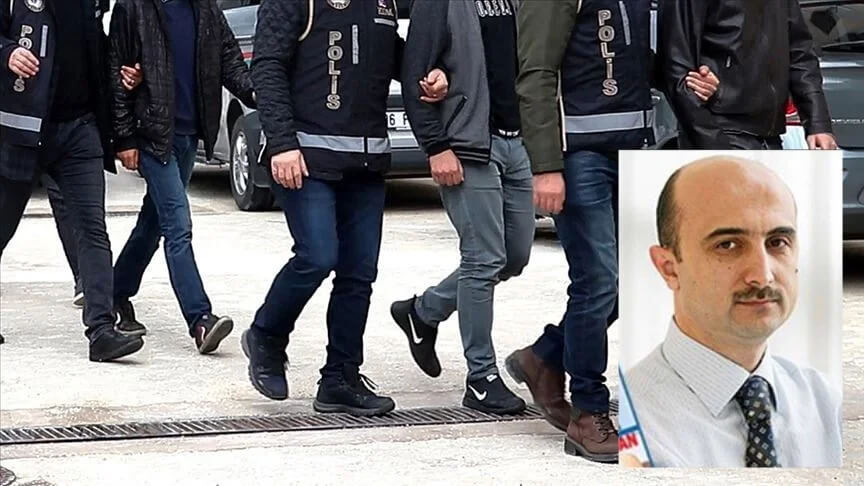
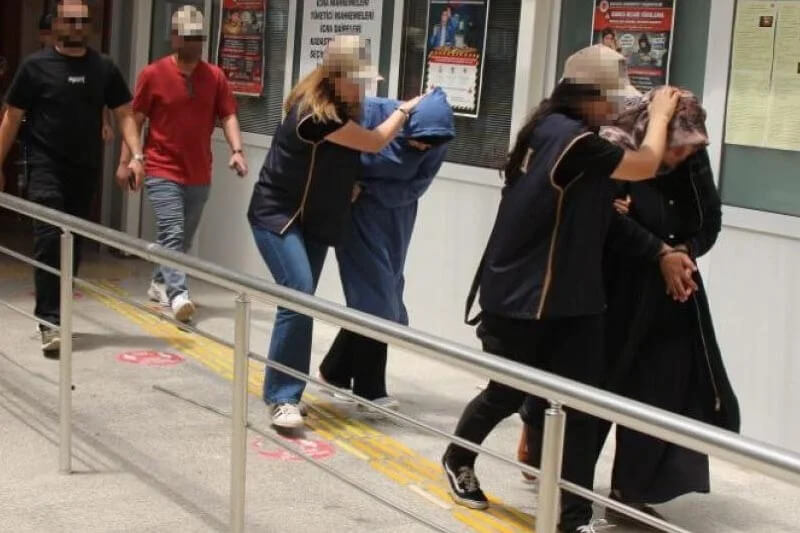
    Turkish police detained 21 people on Tuesday in two investigations into alleged links to the faith-based Gülen movement, including seven accused of providing financial assistance to prisoners’ families, the TRT haber state broadcaster reported.

    The Ankara Chief Public Prosecutor’s Office issued detention warrants for 25 people in the two investigations, with police continuing to search for four who remained at large.

    Turkish President Recep Tayyip Erdoğan has targeted the faith-based Gülen movement, inspired by Muslim cleric Fethullah Gülen, who died in 2024, since corruption investigations in December 2013 implicated him as well as some members of his family and inner circle. He dismissed the probes as a Gülenist conspiracy and designated the movement as a terrorist organization in May 2016, intensifying a sweeping crackdown after a coup attempt in July of the same year that he accused Gülen of orchestrating. The movement denies involvement in the attempted coup or any terrorist activity.

    The first investigation targeted 11 people accused of providing financial support to alleged members of the movement and engaging in unspecified ongoing activities associated with it. Seven were detained, while police were searching for the remaining four. The Bold Medya news website reported that the allegations also involved providing financial assistance to families of people in prison.

    Turkish authorities have repeatedly targeted people accused of providing financial assistance to families affected by the crackdown on the movement.

    In April police detained 42 people, most of them women, over assistance provided during the Muslim holy month of Ramadan to families of people jailed or dismissed from their jobs over alleged Gülen links. A court subsequently ordered 24 of them jailed pending trial, while the remaining 18 were released under judicial supervision.

    United Nations experts warned in October 2025 that people had reportedly been arrested over family relationships or lawful activities by relatives, including financial transactions, describing the practice as guilt by association that was inconsistent with the principle of individual responsibility.

    The latest detentions follow another round of nationwide operations targeting alleged Gülen movement members. Authorities announced on Monday that 72 people had been detained across 32 provinces, with courts ordering 41 of them jailed pending trial.

    In the second investigation, police detained all 14 people named in detention warrants during simultaneous raids across 10 provinces, including the Turkish capital of Ankara. Prosecutors accused them of participating in what authorities described as the movement’s clandestine network within public institutions. The investigation was conducted by the National Intelligence Organization (MİT) and the counterterrorism department of the Ankara Police Department.

    The prosecutor’s office did not specify what activities the 14 detainees allegedly carried out in public institutions or explain what ongoing activities were attributed to those targeted in the financial investigation. Details of the detainees’ questioning and custody status beyond their initial detention were not immediately available.

    According to the latest figures from the justice ministry, more than 127,000 people have been convicted of alleged links to the movement, and authorities had initiated legal proceedings against 720,338 people since 2016, with 10,485 still in prison. Investigations or trials involving another 83,404 are still ongoing.

    This article is republished from the Stockholm Center for Freedom.
  • Turkey accused of blocking Kurdish visitors from returning home to Germany

    Turkey accused of blocking Kurdish visitors from returning home to Germany

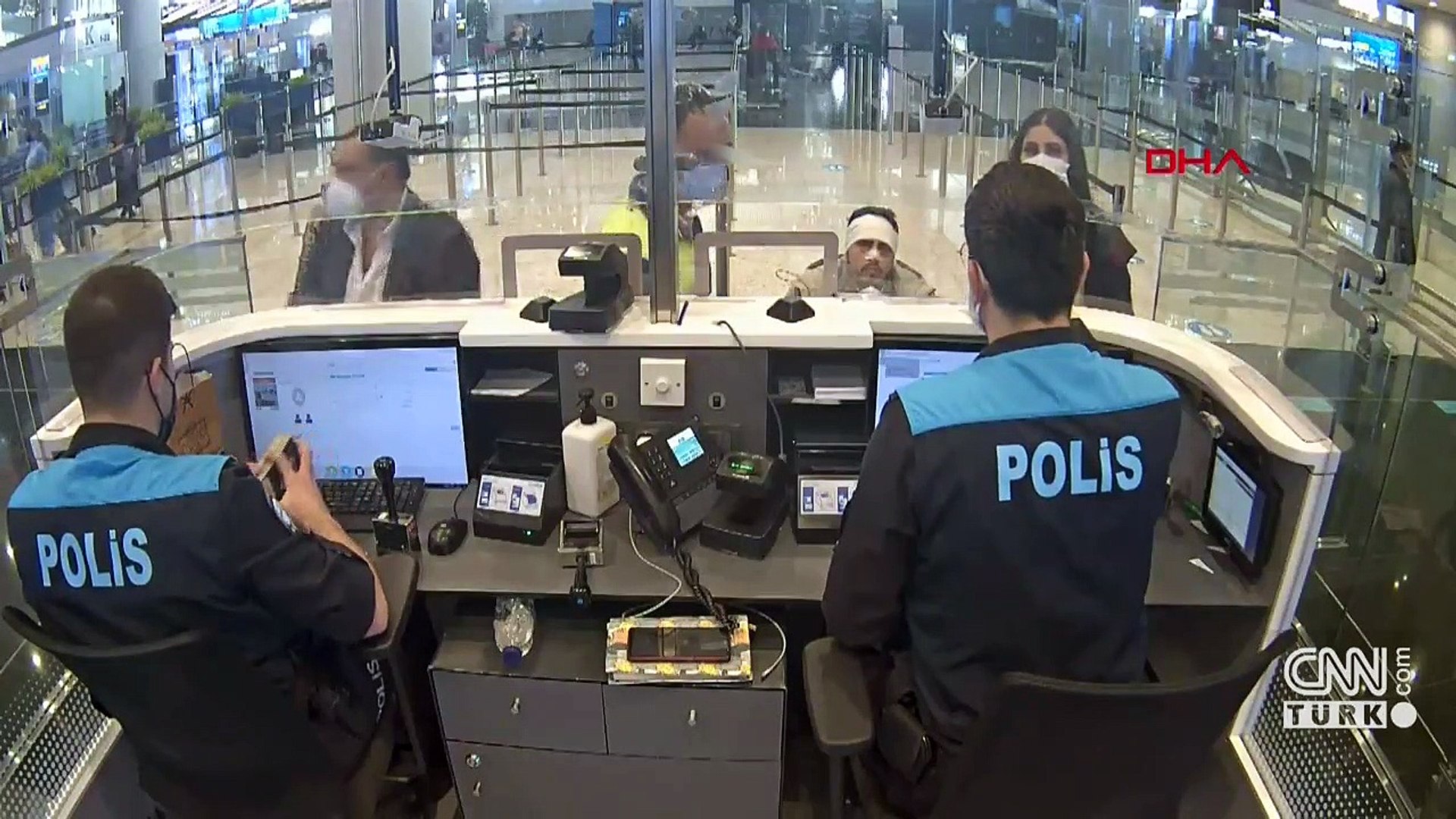
    Turkey is preventing Kurdish visitors from returning to their homes in Germany through bans on leaving the country, a Kurdish community organization said Wednesday, calling for German diplomatic intervention, Deutsche Welle reported.

    The Kurdish Community in Germany (KGD) said reports had increased in recent weeks of people unable to return after vacations or family visits to Turkey, including some of its members. Those affected also included Kurdish residents of other European countries.

    In an October 28 statement the organization said numerous people faced exit bans and investigations into alleged terrorist propaganda. It did not provide a total number of cases.

    The group also cited reports that some people had been asked to pay up to 10,000 euros to have the bans lifted. It called for an urgent, independent investigation into those allegations but did not identify who allegedly demanded the money.

    The KGD urged the German government to summon Turkey’s ambassador for an explanation and provide diplomatic assistance to those affected, particularly German citizens and permanent residents, within the scope of available consular support.

    The organization said the cases reflected a longstanding pattern of questioning, detention, criminal investigations and travel restrictions targeting people visiting Turkey from Germany, particularly Kurds.

    Such proceedings frequently involve accusations of insulting the president, spreading terrorist propaganda or having links to banned organizations, the group said. It said the accusations often concern criticism of the Turkish government, social media posts or participation in political events in Germany.

    KGD Deputy Chairman Mehmet Tanrıverdi said people should not face prosecution during visits to Turkey for exercising freedom of expression and assembly in Germany.

    The group said the pressure created a climate of intimidation beyond Turkey’s borders and called on Berlin to make protecting those affected a priority in relations with Ankara.

    Germany’s Foreign Office warns in its travel advice for Turkey that German citizens can face arbitrary detention and exit bans. It says participation in demonstrations in Germany, signing petitions supporting Kurdish independence or membership in legally registered associations advocating for Kurdish rights can lead to prosecution or travel restrictions in Turkey, even years later.This article is republished from the  https://stockholmcf.org/


  • Turkish court bars jailed preacher Alparslan Kuytul’s weekend family visits

    Turkish court bars jailed preacher Alparslan Kuytul’s weekend family visits

    A Turkish court upheld a prison administration’s refusal to allow the children of jailed Islamic preacher and government critic Alparslan Kuytul to visit him in prison on weekends, six days after overturning the same refusal, his lawyer said.

    Kuytul asked to move his prison visiting day from Thursday to the weekend so his children would not miss school, as prison rules permit weekend visits despite the usual weekday schedule. The Erzurum 1st High Criminal Court overturned the prison administration’s refusal on October 15, finding that Thursday visits interfered with the children’s education. Although the court declared its decision final, it upheld the prison administration’s refusal on October 21, following an objection by prosecutors, citing security and staffing concerns.

    Kuytul, the founder of the Furkan movement, is being held pending trial in Erzurum province, about 845 kilometers from Adana, where four of his five children attend school.

    His lawyer, Ömer Hakseven, said the 15-hour journey to Erzurum for weekday visits requires the children to miss two days of school each time.

    Their mother, Semra Kuytul, is also jailed pending trial in Samsun province. The Furkan movement said visiting both parents once a month could cause the children to miss about 27 school days over the nine-month academic year.

    Kuytul and his wife were among 35 people jailed on August 23 in an investigation into alleged organized crime, money laundering, fraud and forgery. The Furkan movement denies the allegations and says the investigation is politically motivated.

    Kuytul submitted documents confirming his children’s school enrollment, but the prison’s Administration and Observation Board denied his request for weekend visits on September 29, citing security and staffing concerns.

    The Erzurum 1st Enforcement Judge upheld the decision on October 5, prompting Hakseven to appeal to the high criminal court.

    In its October 15 ruling, the court found that denying weekend visits violated the right to respect for family life and that prison officials had failed to substantiate their staffing concerns or explain how weekend visits would threaten security or disrupt prison operations. Hakseven said the enforcement judge issued a certificate confirming the decision was final on October 16.

    In reversing its decision following the prosecutors’ October 19 objection, the court cited prison security, additional staffing requirements and concerns that similar requests from other prisoners could disrupt prison operations.

    Hakseven questioned how the court could reverse a ruling that had already been declared final and accused authorities of interfering in the judicial process.

    Under Article 271 of Turkey’s Code of Criminal Procedure, court decisions on objections are final, except for those ordering pretrial detention for the first time.

    Kuytul, an Islamic scholar, founded the Furkan Education and Service Foundation in 1994. The group has frequently criticized the government of President Recep Tayyip Erdoğan and has faced repeated police interventions, administrative penalties and criminal investigations.

    He was jailed in 2018 after criticizing Turkey’s military offensive in Afrin, northern Syria. He was acquitted of terrorism-related charges in 2020.

    Kuytul was also arrested in 2022 in connection with the abduction of a businessman in Adana, facing charges of instigating unlawful deprivation of liberty, extortion, bodily harm and torture. He denied the charges and was released pending trial in June 2023. Stockholmcf.org

  • Ailing Turkish prisoner jailed over alleged Gülen links dies after repeated calls for medical release go unheeded

    Ailing Turkish prisoner jailed over alleged Gülen links dies after repeated calls for medical release go unheeded

    A 73-year-old Turkish prisoner convicted over alleged links to the faith-based Gülen movement died Monday after authorities kept him incarcerated despite his deteriorating health, repeated appeals for his release and warnings that he could die without urgent medical intervention, the TR724 news website reported.

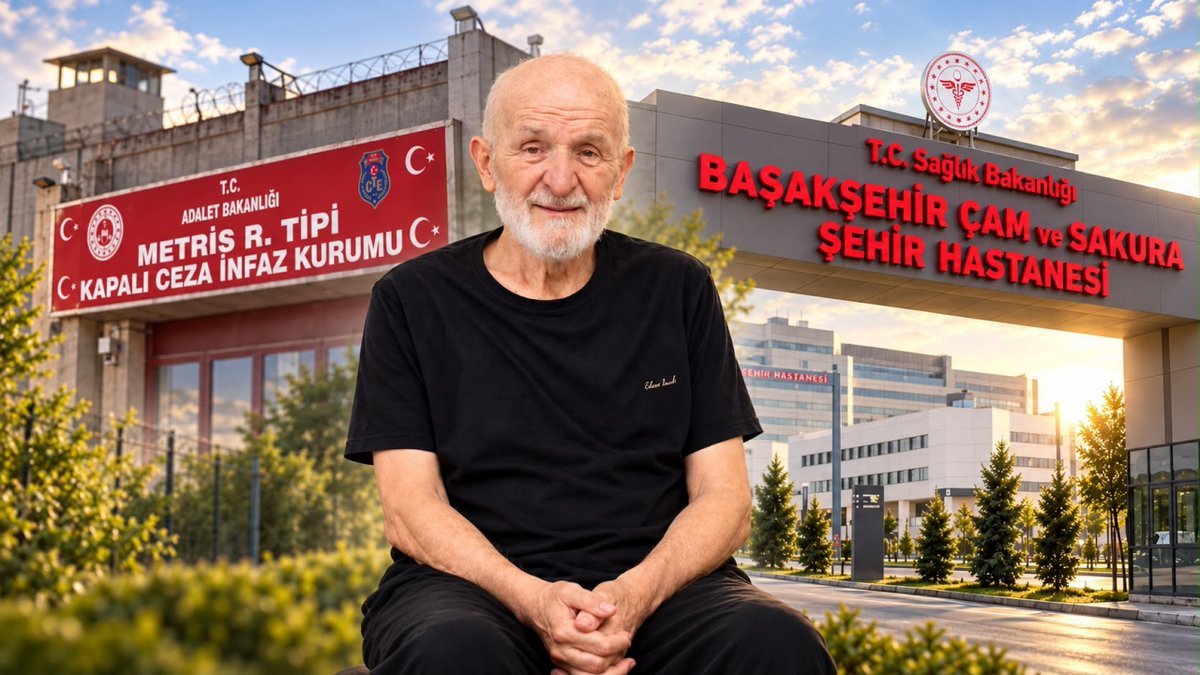
    Abdullah Tırpan died at İstanbul’s Başakşehir Çam and Sakura City Hospital, where he had been transferred from Metris Prison last week. His left leg was amputated below the knee on October 22 due to advanced gangrene, but doctors subsequently considered a second operation to remove more of the limb because the infection had spread farther up his leg.

    His condition worsened following the surgery, and he was transferred to intensive care and placed on a ventilator on Sunday.

    His daughter, Esra Tırpan Yakut, said Sunday that the family had learned of his transfer to intensive care through Turkey’s electronic health records system because they had not been adequately informed about his condition.

    “My father’s heart stopped, and they are keeping it beating with medication,” she said, describing what the family had been told. “They have already intubated him. Please pray for him. There is nothing more we can do.”

    Tırpan’s death came after months of appeals from his family, lawmakers and human rights advocates for the suspension of his prison sentence on medical grounds.

    Despite suffering from diabetes, hypertension, nerve damage and serious circulatory problems, Tırpan had repeatedly been found fit to remain in prison by state medical authorities.

    Turkey’s Council of Forensic Medicine, a state body responsible for assessing prisoners’ fitness to remain incarcerated, concluded on December 17, 2025, that he could continue serving his sentence. Medical boards at Tekirdağ City Hospital reached similar conclusions in May and June 2026.

    The June report documented several chronic illnesses but concluded that Tırpan could manage his daily activities without assistance and did not require the suspension of his sentence. Another examination on October 6 reportedly found no medical obstacle to his continued imprisonment.

    Independent lawmaker Mustafa Yeneroğlu, who visited Tırpan at Metris Prison earlier this month, warned on October 9 that the prisoner could die without urgent medical intervention.

    Yeneroğlu said Tırpan had advanced gangrene, severe discoloration and large open wounds on his left leg. He was unable to stand or meet his basic needs on his own, according to the lawmaker, who questioned medical assessments finding him capable of remaining in prison.

    Tırpan was serving a seven-and-a-half-year sentence for membership in an armed terrorist organization over his alleged involvement in the Gülen movement, inspired by the late Muslim cleric Fethullah Gülen.

    Turkish President Recep Tayyip Erdoğan has targeted the movement since corruption investigations in December 2013 implicated him as well as some members of his family and inner circle. He dismissed the investigations as a Gülenist conspiracy and designated the movement as a terrorist organization in May 2016, intensifying a sweeping crackdown after a coup attempt in July of that year that he accused Gülen of orchestrating. The movement denies involvement in the coup attempt or any terrorist activity.

    Tırpan’s daughter appealed on X on October 20 for the suspension of her father’s sentence after doctors obtained the family’s consent to amputate his leg.

    “We are asking for the suspension of his sentence in the name of justice and humanity,” she wrote. “Please help make our voices heard. Our entire family is devastated.”

    On Monday morning, before Tırpan’s death was announced, Ömer Faruk Gergerlioğlu, a lawmaker from the pro-Kurdish Peoples’ Equality and Democracy Party (DEM Party), shared his latest medical report on X and criticized authorities for keeping him incarcerated despite his life-threatening condition.

    “Who is responsible for this?” Gergerlioğlu asked, saying authorities had failed to explain why Tırpan’s sentence had not been suspended.

    The lawmaker said he was taking legal steps against those he held responsible for the handling of the case.

    “Everyone will be held accountable before the courts,” he wrote.

    Under Article 16 of Turkey’s Law on the Execution of Sentences, a prison sentence may be suspended in certain cases involving serious illness or disability when a prisoner cannot sustain life under prison conditions and is not considered a serious danger to society.

    The Justice Ministry says authorities can reopen the medical review process if a prisoner’s health deteriorates, even after an earlier request has been rejected.

    Tırpan, a father of five who worked as a butcher for 55 years in the northwestern province of Tekirdağ, was convicted on August 8, 2019. Turkey’s Supreme Court of Appeals upheld his conviction on March 7, 2022.

    According to earlier SCF reporting, the evidence cited against him included having shares in a company operating a private school allegedly affiliated with the Gülen movement, attending religious discussion meetings, making charitable donations to the movement, subscribing to the now-closed Zaman newspaper and maintaining an account at Bank Asya, a bank formerly affiliated with the movement.

    The court also cited his decision to send his children and grandchildren to movement-associated schools and his possession of religious publications.

    Tırpan denied the criminal allegations.

    Since the coup attempt in 2016, the Turkish government has accepted such activities as having an account at the now-shuttered Bank Asya, one of Turkey’s largest commercial banks at the time; using the ByLock messaging application, an encrypted messaging app that was available on Apple’s App Store and Google Play; and subscribing to the now-shut-down Zaman daily or other publications affiliated with members of the movement as benchmarks for identifying and arresting alleged followers of the Gülen movement on charges of membership in a terrorist organization.

    He was first arrested in August 2016 and spent approximately 19 months in pretrial detention before being released pending the outcome of his legal proceedings. He was imprisoned again in February 2025 following the finalization of his sentence.

    Tırpan’s death comes amid longstanding criticism of Turkey’s treatment of seriously ill prisoners. Human rights organizations have repeatedly warned that delays in medical treatment and decisions by the Council of Forensic Medicine finding seriously ill inmates fit to remain incarcerated can put their lives at risk.

    This article is republished from the Stockholm Center for Freedom.
  • Turkey jails journalist Mehmet Yılmaz over alleged Gülen links

    Turkey jails journalist Mehmet Yılmaz over alleged Gülen links

    A Turkish court has jailed journalist Mehmet Yılmaz, a former editor at newspapers shut down by the government following a coup attempt in 2016 over alleged links to the faith-based Gülen movement, the state-run TRT Haber news website reported.

    Police detained Yılmaz, whom the authorities had been seeking for a decade, along with Abdullah Ilık, convicted on terrorism charges over alleged Gülen links, and Serdar Uluocak, a dismissed police officer, during raids in four İstanbul districts. The two other men were also jailed.

    Yılmaz previously worked as an editor at the Bugün daily and held various positions at the Zaman newspaper before becoming editor-in-chief of the Özgür Düşünce newspaper.

    Following a July 2016 coup attempt, Turkish authorities shut down more than 160 media outlets by emergency decree and jailed scores of journalists, many over alleged links to the Gülen movement.

    Police accused Yılmaz of using ByLock, an encrypted messaging app, once widely available on Apple’s App Store and Google Play, that Turkish authorities claim was used as a secret communication tool for Gülen supporters.

    Turkish President Recep Tayyip Erdoğan has targeted the faith-based Gülen movement, inspired by Muslim cleric Fethullah Gülen, who died in 2024, since corruption investigations in December 2013 implicated Erdoğan as well as some members of his family and inner circle. He dismissed the probes as a Gülenist conspiracy and designated the movement as a terrorist organization in May 2016, intensifying a sweeping crackdown after the coup attempt in July of the same year that he accused Gülen of orchestrating. The movement denies involvement in the coup attempt or any terrorist activity.

    Ilık had been sought by authorities for three years and had previously been sentenced to more than six years in prison for membership in an armed terrorist organization over alleged links to the Gülen movement.

    The report did not specify the charges against Uluocak or whether he had been previously convicted of any crime.

    According to the latest figures from the justice ministry, more than 127,000 people have been convicted of alleged links to the movement since 2016, with 10,485 still in prison and legal proceedings ongoing against 83,404 individuals.

    This article is republished from the Stockholm Center for Freedom.
  • Thousands protest media crackdown in Turkey

    Thousands protest media crackdown in Turkey

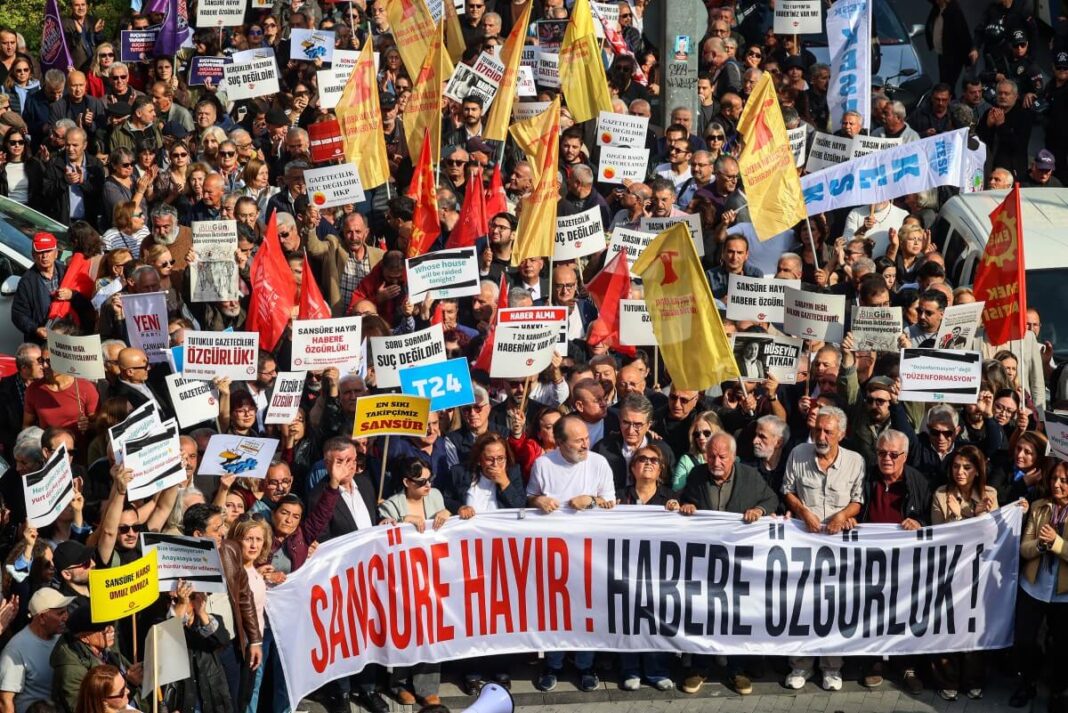
    Thousands rallied in İstanbul and Ankara on Saturday against what they described as growing pressure on journalists in Turkey, including arrests, media shutdowns and the appointment of government administrators to run news outlets.

    Press freedom has been increasingly constrained in Turkey since a failed coup attempt in 2016, with sweeping prosecutions, digital censorship and government accusations that journalists are spreading fake news.

    “Enough!” shouted marchers, mainly journalists, rights activists and opposition party representatives. “We can no longer breathe!”

    On İstanbul’s Asian side, protesters held up photos of jailed journalists, chanting: “We will not be silenced. Enough is enough!” and “We will not bow to pressure”.

    At least 3,000 people attended each protest, according to police counts.

    Recent weeks have seen what rights advocates describe as mounting pressure on independent journalism.

    Eleven journalists have been jailed in the past two months and several media outlets shut down, according to the Turkish Journalists’ Union (TGS).

    Earlier this month, police raided Turkey’s most-watched news channel, Halk TV, halting broadcasts and installing a government-appointed administrator.

    The takeover was the latest move against media outlets seen as critical of President Recep Tayyip Erdoğan and his government.

    It followed the blocking of leading digital news outlet T24’s website and social media accounts over what Turkish officials described as “LGBT propaganda”.

    ‘Intimidation’

    “This gathering is not simply about standing up for journalists,” veteran journalist Zafer Arapkirli told Agence France-Presse after the İstanbul protest.

    “It is also about defending respect for society’s right to access information and news through journalists and independent media,” said the columnist for the BirGün daily.

    Arapkirli, who himself faces lawsuits, said the response and determination to resist must grow as the pressure intensifies.

    “What the regime wants is to intimidate, silence and frighten society through such pressure — by arresting individual journalists, seizing media outlets, banning news coverage and blocking access to social media,” he said.

    “We must show that we will not allow this to happen.

    “We have done so up to now. I believe we are now moving towards demonstrating this determination on a much larger scale”.

    TGS President Gökhan Durmuş said the nature of “the government’s attacks” on the media had changed.

    “If we look at the recent restrictions, access bans and trustee appointments, they have targeted some of the most widely followed and watched broadcasters, news channels and media platforms,” he told AFP.

    “We are seeing a system emerge in which everything is uniform: one voice, one source of news, one centralised operation,” he said.

    ‘Let us do our job’

    In Ankara, protesters chanted against censorship and called for the release of jailed journalists.

    “Today’s protest was important both because it brought journalists together to make their voices heard and because it defended citizens’ right to access information,” T24 journalist Gökçer Tahincioğlu told AFP in Ankara.

    “Journalists are determined to get one message across: we want to practise journalism, and we want to be able to do so freely,” he said.

    The government has repeatedly denied that journalists are arrested or imprisoned for doing their jobs.

    At the Ankara protest, a letter from jailed BirGün journalist İsmail Arı was read to the crowd.

    “I am being held in prison for no reason other than doing my job as a journalist. Days are being stolen from my life,” Arı wrote from Sincan prison on the outskirts of Ankara.

    “We will defend journalism to the very end. Take your hands off us, comply with the constitution and let us do our job.”

    Arı was jailed pending trial on October 21 for the second time in seven months, accused of publicly disseminating misleading information following a complaint by former broadcasting watchdog chief Ebubekir Şahin. He was also investigated on suspicion of insulting a public official.

    © Agence France-Presse

  • 19 more jailed in investigation targeting Süleymanlılar religious community

    19 more jailed in investigation targeting Süleymanlılar religious community

    A Turkish court has ordered the pretrial detention of 19 people in the latest phase of a financial crimes investigation targeting individuals linked to the Süleymanlılar religious community, the DHA news agency reported on Friday.

    Five others were released under judicial supervision after 24 suspects were brought before a court following questioning by police and prosecutors.

    The decisions follow the fifth round of raids in the investigation, led by the Ankara Chief Public Prosecutor’s Office. Police searched 28 homes and 16 workplaces across 12 provinces after prosecutors issued detention warrants for 38 people.

    Twenty-two people were initially detained in the October 19 raids. The number subsequently rose to 24, according to DHA.

    Prosecutors are investigating allegations of establishing, leading or belonging to a criminal organization, money laundering, defrauding public institutions and violations of tax laws.

    The investigation has targeted community leader Alihan Kuriş, who has been jailed pending trial since August. Kuriş has denied leading a criminal organization or participating in money laundering or fraud.

    The case has expanded through successive operations targeting people and businesses linked to the community. In September, prosecutors issued warrants for 29 suspects and secured the appointment of court-supervised trustees to 23 companies.

    The Süleymanlılar trace their roots to Islamic scholar Süleyman Hilmi Tunahan. The community runs Quran courses, student dormitories, charities and businesses in Turkey and Europe, particularly Germany. Kuriş, a grandson of Tunahan, became its leader in 2016.

    The investigation has prompted questions about possible political motives. The community has remained outside President Recep Tayyip Erdoğan’s ruling Justice and Development Party’s (AKP) close circle of religious allies and has at times reportedly supported opposition parties.

    Former education minister Hüseyin Çelik, a founding AKP member, warned in August that investigations into religious communities risked becoming a way to punish groups whose leaders opposed the government.

    He questioned whether the Süleymanlılar would have faced similar action had their leadership supported the ruling party.

    The government denies targeting the community over its beliefs or political position. Justice Minister Akın Gürlek has claimed that the investigation concerns alleged financial crimes rather than religious activities.

  • 2 deputy mayors among 7 jailed in Ankara corruption probe

    2 deputy mayors among 7 jailed in Ankara corruption probe

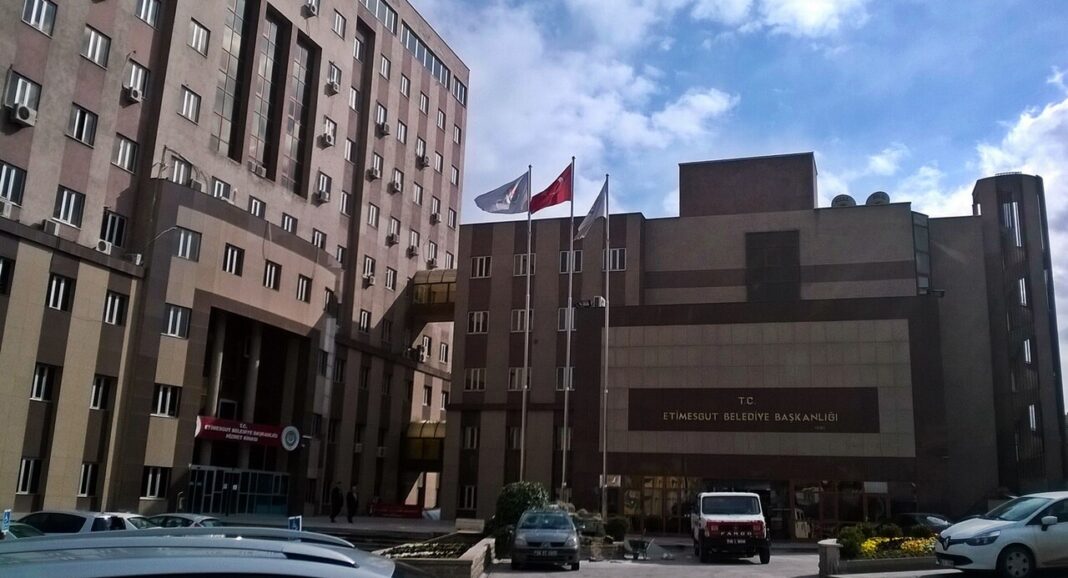
    A Turkish court on Saturday jailed two deputy mayors and five other people pending trial in a corruption investigation into Ankara’s opposition-run municipality of Etimesgut.

    Deputy Mayors Gültekin Bayındır and Fikret Gözüoğlu were among those jailed, while four other suspects were put under house arrest.

    The court decisions followed the detention of 25 people, five of them municipal employees, in raids across five provinces on October 13.

    Etimesgut, in western Ankara, is governed by the opposition Republican People’s Party (CHP).

    The investigation concerns allegations of forged documents and irregularities in municipal contracts, along with improper benefits connected to parking lot leases, zoning decisions and construction permits, according to the Ankara West Chief Public Prosecutor’s Office.

    The offenses under investigation range from bribery, embezzlement and extortion by public officials to forming a criminal organization, rigging tenders and misconduct in carrying out public contracts.

    Nine detainees gave statements under provisions offering leniency for cooperation with investigators, while prosecutors requested judicial supervision for five others, according to a prosecution statement carried by state media.

    The court jailed seven of the 11 suspects whose pretrial detention prosecutors had requested, ordering house arrest for the other four.

    The case had already led to the jailing of Etimesgut Mayor Erdal Beşikçioğlu and 39 others pending trial on August 3, following the detention of 55 people on July 30.

    The Interior Ministry suspended Beşikçioğlu from office the day he was jailed.

    Beşikçioğlu, an actor who plays a homicide detective in the television series “Behzat Ç.,” was elected mayor in 2024.

    He has denied wrongdoing, arguing that some of the irregularities cited in audit reports were uncovered through an internal review he ordered.

    He also denied personal or commercial ties to the companies under investigation and maintained that the municipal tenders in question were outside his direct authority.

    CHP candidate Seda Dilber was elected acting mayor by the city council on August 10, with the support of members from President Recep Tayyip Erdoğan’s ruling party, defeating the New Party’s Mehmet Özdemir.

    The New Party was formed in July by former CHP leader Özgür Özel and lawmakers who left the party after a court removed him as chairman.

    The Etimesgut investigation is part of a series of cases targeting opposition-run municipalities following the CHP’s victory over Erdoğan’s Justice and Development Party (AKP) in the March 2024 local elections.

    Opposition politicians accuse the government of using the investigations to weaken Erdoğan’s rivals and reverse their electoral gains.

  • Turkish gov’t takes control of leading pro-opposition news channel as pressure on media grows

    Turkish gov’t takes control of leading pro-opposition news channel as pressure on media grows

    The Turkish government took control of popular pro-opposition news channel Halk TV through state-appointed trustees early Wednesday, halting its live broadcasts as police raided its İstanbul headquarters, the channel reported.

    The İstanbul Chief Public Prosecutor’s Office said the operation was part of an investigation into Halk TV owner Cafer Mahiroğlu over allegations of bribery, bid rigging and money laundering. Prosecutors ordered the detention of 17 suspects, 11 of whom were taken into custody, the DHA news agency reported.

    Mahiroğlu condemned the raid on Wednesday, saying seven members of his family were among those detained.

    “Today is a dark day for Turkey. The public’s right to information is being seized for political reasons,” he said in a video posted on X.


    The state-run Savings Deposit Insurance Fund (TMSF) was appointed as trustee to Halk TV and companies linked to Mahiroğlu.Police blocked the road outside the channel’s headquarters and prevented employees from entering while officers searched the building. Halk TV reporter Gamze Altunay said hundreds of officers were involved.


    Halk TV said Editor-in-Chief Suat Toktaş asked the incoming trustee to allow live programming to continue, but his request was rejected. Toktaş also refused a proposal to work with the new management, describing the takeover as unlawful. MediaRadar news website subsequently reported that prerecorded footage of a Halk TV program remained on air.

    Prosecutors allege that 14.46 million lira (about $293,000) in unrecorded bribes had been paid in connection with İzmir Metropolitan Municipality tenders and that proceeds were transferred to companies owned by or linked to Mahiroğlu. They cited financial intelligence reports and witness statements in support of the allegations.

    Prosecutors also said Mahiroğlu was already wanted on suspicion of bid rigging in a separate investigation into İstanbul Metropolitan Municipality and had left Turkey on March 10, 2025.

    İzmir, Turkey’s third-largest city and a longtime opposition stronghold, had been governed by the Republican People’s Party (CHP) for more than two decades. Mayor Cemil Tugay, elected on the CHP ticket in 2024, joined President Recep Tayyip Erdoğan’s ruling Justice and Development Party (AKP) on October 7 after leaving the CHP in June.

    Mahiroğlu announced the raid on social media, directing criticism at CHP leader Kemal Kılıçdaroğlu and his allies. His initial post did not address the financial allegations.

    Days before the takeover, Halk TV came under attack from Kılıçdaroğlu, who was restored in May as leader of the CHP by a court ruling overturning the party congress at which he lost the leadership in 2023.

    Speaking on KRT television on October 9, Kılıçdaroğlu accused Halk TV of broadcasting false news “24 hours a day” and questioned why its owner, Mahiroğlu, remained abroad.

    He also said his colleagues had complained to broadcasting regulator RTÜK, which responded that the matter fell outside its remit.

    Mahiroğlu rejected the criticism, accusing Kılıçdaroğlu of targeting independent media and elected opposition politicians.

    Özgür Özel, leader of the opposition New Party, condemned the raid and trustee appointment, saying such an operation against a television station was something only dictators would do.

    The takeover coincided with jailed İstanbul Mayor Ekrem İmamoğlu beginning his defense in a corruption trial involving alleged bribery, bid rigging and money laundering at the municipality.

    Özel questioned the timing, pointing to both the trial and public demands for accountability over an investment fund scandal involving alleged market manipulation and political connections that has left investors unable to recover their savings.

    Özel and 90 other lawmakers left the CHP in July to establish the New Party after Kılıçdaroğlu was restored as party leader.

    The takeover of Halk TV comes amid mounting pressure on independent media in Turkey, following the recent blocking of news website T24 and sweeping restrictions on the X accounts of journalists, news organizations and rights groups.

    On September 30 an İstanbul court’s order blocked access to T24’s website and social media accounts over coverage prosecutors described as “LGBT propaganda.” Prosecutors cited 118 items published over the previous year. T24 said the decision followed a campaign of online defamation against the outlet.

    The Freedom of Expression Association (İFÖD) said at least 1,270 X accounts were subject to blocking orders in September, with the platform subsequently withholding about 90 percent of them in Turkey.

    Those affected included journalists, news organizations, academics, economists and rights groups. İFÖD’s own account and its EngelliWeb censorship-monitoring project were also targeted by blocking orders in October.

    Halk TV has also faced criminal investigations and broadcasting penalties. Toktaş was jailed in January 2025 over the broadcast of a telephone conversation with a court-appointed expert witness.

    A court ordered his release in March after 34 days in pretrial detention and acquitted him and four colleagues of attempting to influence judicial officials.

    A separate charge concerning the recording and publication of the conversation was referred for mediation.

    Halk TV, one of Turkey’s leading news channels, began broadcasting on January 10, 2005. It attracted a wide audience with its live coverage of the 2013 anti-government Gezi Park protests, which began over plans to redevelop an İstanbul park and grew into nationwide antigovernment demonstrations.

    Mahiroğlu bought the channel in 2020.

    Turkey’s media crackdown intensified after a failed coup in July 2016, when the government used emergency decrees to shut down newspapers, television channels, radio stations and publishers. By the end of 2017, some 166 media outlets and publishing houses had been closed and their assets confiscated without compensation, the UN human rights office reported.

    Turkey ranked 163rd among 180 countries and territories in Reporters Without Borders’ 2026 World Press Freedom Index, down from 159th in 2025. The group estimates that 90 percent of national media outlets are under government control.

  • Turkish comedian says he has no regrets after 88 days in jail

    Turkish comedian says he has no regrets after 88 days in jail

    Turkish comedian Deniz Göktaş has said he never regretted the stand-up performance that landed him in jail for 88 days, telling The New York Times that the experience strengthened his confidence and his commitment to speaking freely.

    “Not even one second,” he said when asked whether he had regretted releasing the show. “It was the period of my life when I felt the least lonely.”

    In his first interview since leaving prison last month, Göktaş told the newspaper that he had wanted his courtroom defense to encourage other comedians to speak without fear, even after people close to him warned that it could prolong his detention.

    “I didn’t want to be apologetic,” he said. “Spending three months in prison is terrible, but I wanted to demonstrate that it isn’t something an artist can’t handle in defense of a principle.”

    The 32-year-old was convicted on September 28 of insulting President Recep Tayyip Erdoğan and publicly insulting religious values. The court sentenced him to just over 19 months in prison but ordered his release pending appeal. It acquitted him of praising crime and criminals.

    The prosecution concerned remarks in his second stand-up special, “Ölü Deniz” (Dead Sea), a 90-minute performance that moves between political satire and observations about Turkish society. Its subjects include Erdoğan, jailed İstanbul Mayor Ekrem İmamoğlu, religion, nationalism, universities, public protests and the secular children of conservative families.

    Behind Göktaş onstage sits a giant replica of his own severed head. He told the Times that the image was intended to evoke a guillotine because the show was built around death and censorship.

    One joke described Erdoğan’s evolution from a “shy dictator” into one who had become confident and at peace with himself. Göktaş said he had performed the material across Turkey for three years without facing the same consequences. The special reached a much larger audience after its release on YouTube, attracting 15 million views.

    At his trial Göktaş defended political comedy as part of Turkey’s longstanding tradition of satire. His remarks repeatedly drew laughter in the courtroom as he challenged the prosecution’s interpretation of his jokes.

    “Dictator is not an insult: it is a political characterization,” he said, arguing that a political comedy show that avoided mentioning the country’s president would have little connection to reality.

    He said similar jokes had been made in the past without prosecution and attributed the change to leaders’ declining tolerance of criticism.

    His defense also invoked American comedian Lenny Bruce, who was prosecuted over a comedy routine in 1964. Asked by the Times what he drew from Bruce’s work, Göktaş pointed to being true to oneself and retaining a mischievous lack of restraint.

    Göktaş was detained at İstanbul Airport on July 2 after returning from a trip abroad and jailed the following day. A court later ordered access to the video blocked in Turkey, citing national security and public order concerns.

    In late August a court approved his release, but prosecutors secured a new detention order before he could leave prison. The additional accusation of praising crime and criminals concerned a passage from the same show mentioning the Daltonlar criminal gang. Göktaş denied praising the group, saying the joke criticized crime and violence.

    Speaking to the Times, he described how growing success had initially made him more cautious.

    “As I got bigger and more established, I had more to lose. I started self-censoring my work. That bugged me,” he said.

    He felt that members of his audience, including students and retirees, were showing more courage in their daily lives than he was onstage. He eventually decided to return to saying whatever he found funny, regardless of the consequences.

    “It might be a bit romantic, but my first day in the cell, I slept the best sleep of my life.”

    Göktaş wrote about 20 minutes of new material in prison that he hopes to perform next year. But one of his first diary entries reminded him not to let the case dominate his future shows.

    His prosecution brought renewed attention to Article 299 of Turkey’s penal code, which criminalizes insulting the president. In 2021 the European Court of Human Rights ruled that giving a head of state special protection under criminal law was incompatible with freedom of expression and called for the provision to be amended.

    Göktaş said comedy could offer empathy, motivation and the courage to speak, although he did not see it as capable of defeating authoritarianism on its own.

    “Ultimately, I don’t think they’re only going after comedians,” he said. “They want to silence everyone.”

    Asked about American comedians’ complaints over cancel culture and online attacks, he answered with a joke: “I don’t want to brag, but we have cancel culture — and jail.”