Tag: Recep Tayyip Erdoğan

  • Turkey jails former minister in investment fund scandal

    Turkey jails former minister in investment fund scandal

    A former Turkish minister and senior ruling party official was jailed pending trial Friday as part of an investigation into a multibillion-dollar investment fund scandal, Turkey’s state-run Anadolu news agency reported.

    An İstanbul court ordered Fatma Betül Sayan Kaya jailed on charges of violating capital markets law and belonging to a criminal organization, the agency said.

    Kaya served as family minister from 2016 to 2018 and until recently was a deputy chair of President Recep Tayyip Erdoğan’s ruling Justice and Development Party (AKP).

    She stepped down on September 26 following allegations by the main opposition New Party that she had profited from an investment scandal that had emerged earlier that month.

    A New Party lawmaker sought clarification over allegations that she and her husband had made millions through share transactions before the scandal broke, raising questions about insider trading.

    She later left the ruling party.

    The scandal erupted in mid-September, prompting an investigation into allegations of market manipulation affecting the savings of nearly 500,000 investors.

    Justice Minister Akın Gürlek announced Tuesday that 112 people had been jailed pending trial in the investigation, adding that investigators had uncovered a “comprehensive criminal network” that infiltrated the highest levels of Turkey’s financial markets.

    © Agence France-Presse

  • Turkey detains 10 over alleged Gülen links in 3 provinces

    Turkey detains 10 over alleged Gülen links in 3 provinces

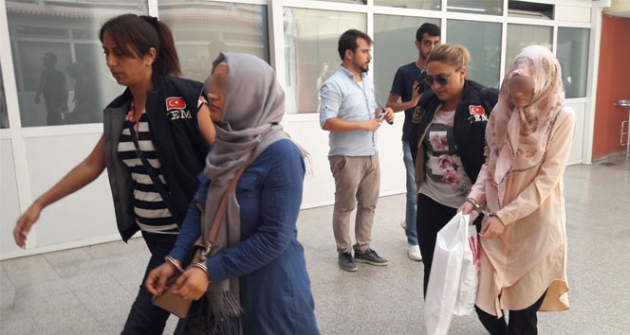
    Turkish police detained 10 people on Friday over alleged links to the faith-based Gülen movement in raids across three provinces, the TRT Haber state broadcaster reported.

    The simultaneous raids took place in İstanbul and the western provinces of Aydın and İzmir. Police alleged that some of those detained had previously held coordinating roles in the movement and had resumed those activities.

    Turkish President Recep Tayyip Erdoğan has targeted the faith-based Gülen movement, inspired by Muslim cleric Fethullah Gülen, who died in 2024, since corruption investigations in December 2013 implicated him as well as some members of his family and inner circle. He dismissed the probes as a Gülenist conspiracy and designated the movement as a terrorist organization in May 2016, intensifying a sweeping crackdown after a coup attempt in July of the same year that he accused Gülen of orchestrating. The movement denies involvement in the attempted coup or any terrorist activity.

    The authorities also cited alleged past use of ByLock, an encrypted messaging app that was available on Apple’s App Store and Google Play, and increases in deposits at Bank Asya before its closure. They in addition named the alleged collection of donations on behalf of the movement and the organizing of religious discussion meetings.

    Since the coup attempt in 2016, the Turkish government has accepted such activities as having an account at the now-shuttered Bank Asya, one of Turkey’s largest commercial banks at the time; using the ByLock messaging application; and subscribing to the now-shut-down Zaman daily or other publications affiliated with members of the movement as benchmarks for identifying and arresting alleged followers of the Gülen movement on charges of membership in a terrorist organization.

    Turkish authorities have considered ByLock to be a secret tool of communication among supporters of the Gülen movement since the coup attempt on July 15, 2016, despite a lack of evidence that ByLock messages were related to the abortive putsch.

    Although the European Court of Human Rights (ECtHR) has in many cases made clear that use of the ByLock messaging app does not constitute a criminal offense, detentions and arrests of individuals continue in Turkey for their alleged use of the ByLock application.

    Police said they seized Turkish lira, foreign currency and gold worth 12.85 million lira (about $257,000), along with digital materials and documents they described as related to the movement.

    The detainees were taken to police headquarters. The reports did not identify them or include statements from their lawyers.

    This article is republished from the Stockholm Center for Freedom.

  • Turkey’s main opposition plans European court challenge to chairman’s ouster from CHP leadership

    Turkey’s main opposition plans European court challenge to chairman’s ouster from CHP leadership

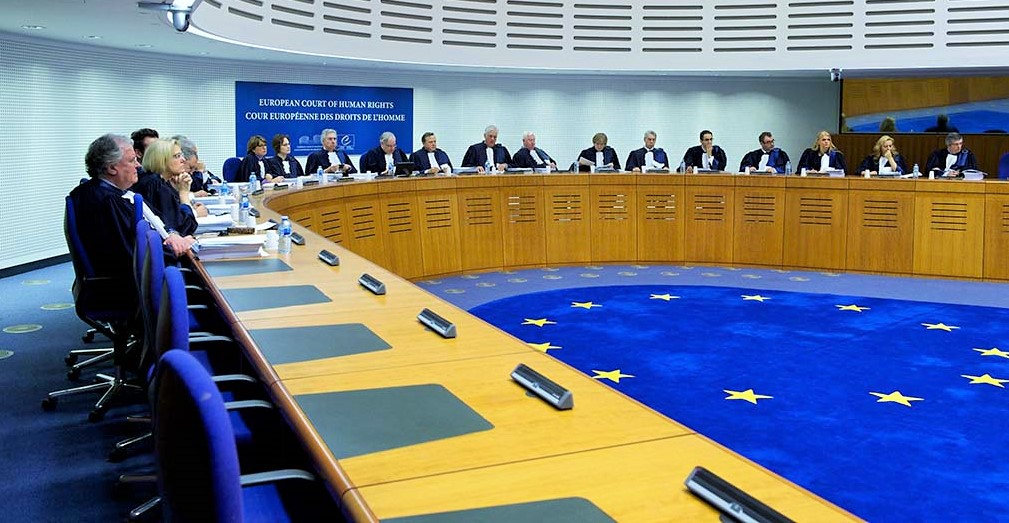
    Turkey’s main opposition New Party is preparing an application to the European Court of Human Rights (ECtHR) challenging a ruling that removed its leader, Özgür Özel, from the Republican People’s Party (CHP) leadership, the ANKA news agency reported Tuesday.

    The petition is still being drafted. The party plans to apply without waiting for Turkey’s Supreme Court of Appeals to rule on its appeal, arguing that the courts are being used to reshape the country’s main opposition, party officials told ANKA.

    The 36th Civil Chamber of the Ankara Regional Court of Justice annulled the CHP’s November 2023 congress on May 21 and ordered Özel and his leadership team removed as an interim measure, reinstating his predecessor, Kemal Kılıçdaroğlu.

    The ruling applied the legal concept of “absolute nullity,” meaning the congress at which Özel was elected was treated as legally invalid from the outset.

    The case concerned allegations of vote buying and manipulation at the congress, where Özel defeated Kılıçdaroğlu. Özel and his allies have denied wrongdoing and described the proceedings as political interference.

    The domestic appeal reached the Supreme Court of Appeals on July 17, and its Third Civil Chamber began a preliminary examination on July 26, according to ANKA.

    The European Convention on Human Rights generally requires applicants to exhaust domestic legal remedies before the ECtHR can examine a complaint. ANKA did not explain the legal basis for seeking review before the domestic appeal concludes.

    Özel and 90 other lawmakers left the CHP to establish the New Party on July 24 after efforts to regain control of the CHP failed. The new party began with 91 seats in Turkey’s 600-member parliament, becoming its largest opposition group, while the CHP’s representation fell to 44.

    Before his removal, Özel had led the CHP to first place nationwide in the March 2024 local elections, defeating President Recep Tayyip Erdoğan’s ruling Justice and Development Party (AKP). The party retained İstanbul and Ankara and won municipalities in provinces previously dominated by the AKP.

    Özel and his allies accuse Erdoğan’s government of using the judiciary to weaken the opposition.

  • Thousands protest media crackdown in Turkey

    Thousands protest media crackdown in Turkey

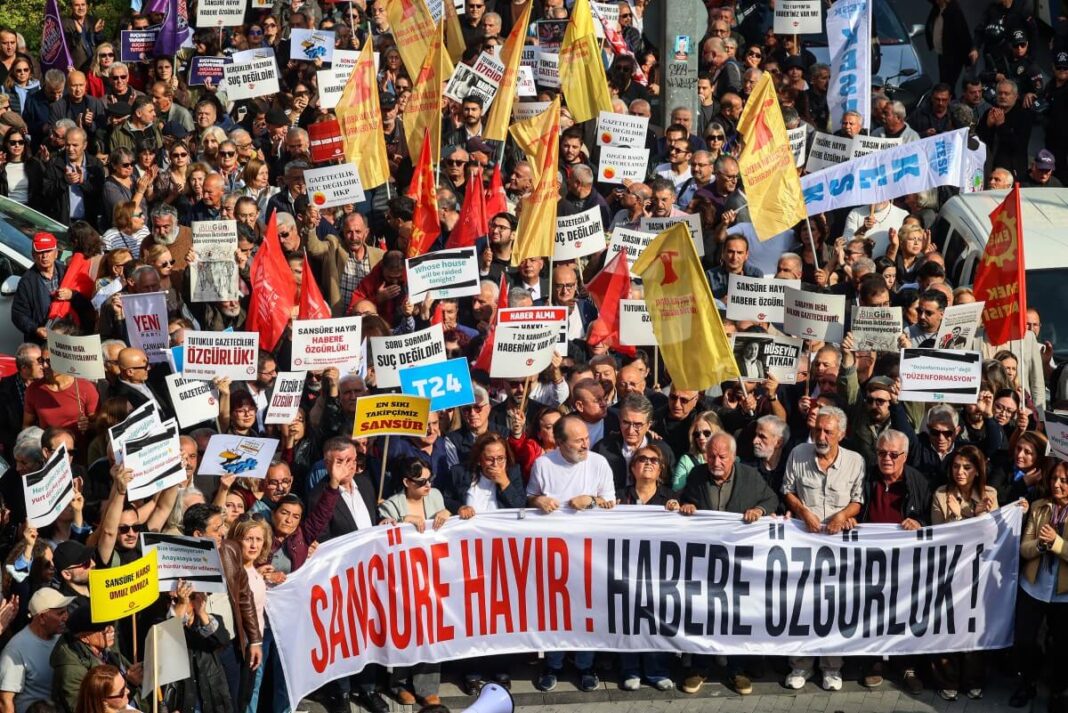
    Thousands rallied in İstanbul and Ankara on Saturday against what they described as growing pressure on journalists in Turkey, including arrests, media shutdowns and the appointment of government administrators to run news outlets.

    Press freedom has been increasingly constrained in Turkey since a failed coup attempt in 2016, with sweeping prosecutions, digital censorship and government accusations that journalists are spreading fake news.

    “Enough!” shouted marchers, mainly journalists, rights activists and opposition party representatives. “We can no longer breathe!”

    On İstanbul’s Asian side, protesters held up photos of jailed journalists, chanting: “We will not be silenced. Enough is enough!” and “We will not bow to pressure”.

    At least 3,000 people attended each protest, according to police counts.

    Recent weeks have seen what rights advocates describe as mounting pressure on independent journalism.

    Eleven journalists have been jailed in the past two months and several media outlets shut down, according to the Turkish Journalists’ Union (TGS).

    Earlier this month, police raided Turkey’s most-watched news channel, Halk TV, halting broadcasts and installing a government-appointed administrator.

    The takeover was the latest move against media outlets seen as critical of President Recep Tayyip Erdoğan and his government.

    It followed the blocking of leading digital news outlet T24’s website and social media accounts over what Turkish officials described as “LGBT propaganda”.

    ‘Intimidation’

    “This gathering is not simply about standing up for journalists,” veteran journalist Zafer Arapkirli told Agence France-Presse after the İstanbul protest.

    “It is also about defending respect for society’s right to access information and news through journalists and independent media,” said the columnist for the BirGün daily.

    Arapkirli, who himself faces lawsuits, said the response and determination to resist must grow as the pressure intensifies.

    “What the regime wants is to intimidate, silence and frighten society through such pressure — by arresting individual journalists, seizing media outlets, banning news coverage and blocking access to social media,” he said.

    “We must show that we will not allow this to happen.

    “We have done so up to now. I believe we are now moving towards demonstrating this determination on a much larger scale”.

    TGS President Gökhan Durmuş said the nature of “the government’s attacks” on the media had changed.

    “If we look at the recent restrictions, access bans and trustee appointments, they have targeted some of the most widely followed and watched broadcasters, news channels and media platforms,” he told AFP.

    “We are seeing a system emerge in which everything is uniform: one voice, one source of news, one centralised operation,” he said.

    ‘Let us do our job’

    In Ankara, protesters chanted against censorship and called for the release of jailed journalists.

    “Today’s protest was important both because it brought journalists together to make their voices heard and because it defended citizens’ right to access information,” T24 journalist Gökçer Tahincioğlu told AFP in Ankara.

    “Journalists are determined to get one message across: we want to practise journalism, and we want to be able to do so freely,” he said.

    The government has repeatedly denied that journalists are arrested or imprisoned for doing their jobs.

    At the Ankara protest, a letter from jailed BirGün journalist İsmail Arı was read to the crowd.

    “I am being held in prison for no reason other than doing my job as a journalist. Days are being stolen from my life,” Arı wrote from Sincan prison on the outskirts of Ankara.

    “We will defend journalism to the very end. Take your hands off us, comply with the constitution and let us do our job.”

    Arı was jailed pending trial on October 21 for the second time in seven months, accused of publicly disseminating misleading information following a complaint by former broadcasting watchdog chief Ebubekir Şahin. He was also investigated on suspicion of insulting a public official.

    © Agence France-Presse
  • Azerbaijan seeks to contain Azerbaijan dispute ahead of regional summit

    Azerbaijan seeks to contain Azerbaijan dispute ahead of regional summit

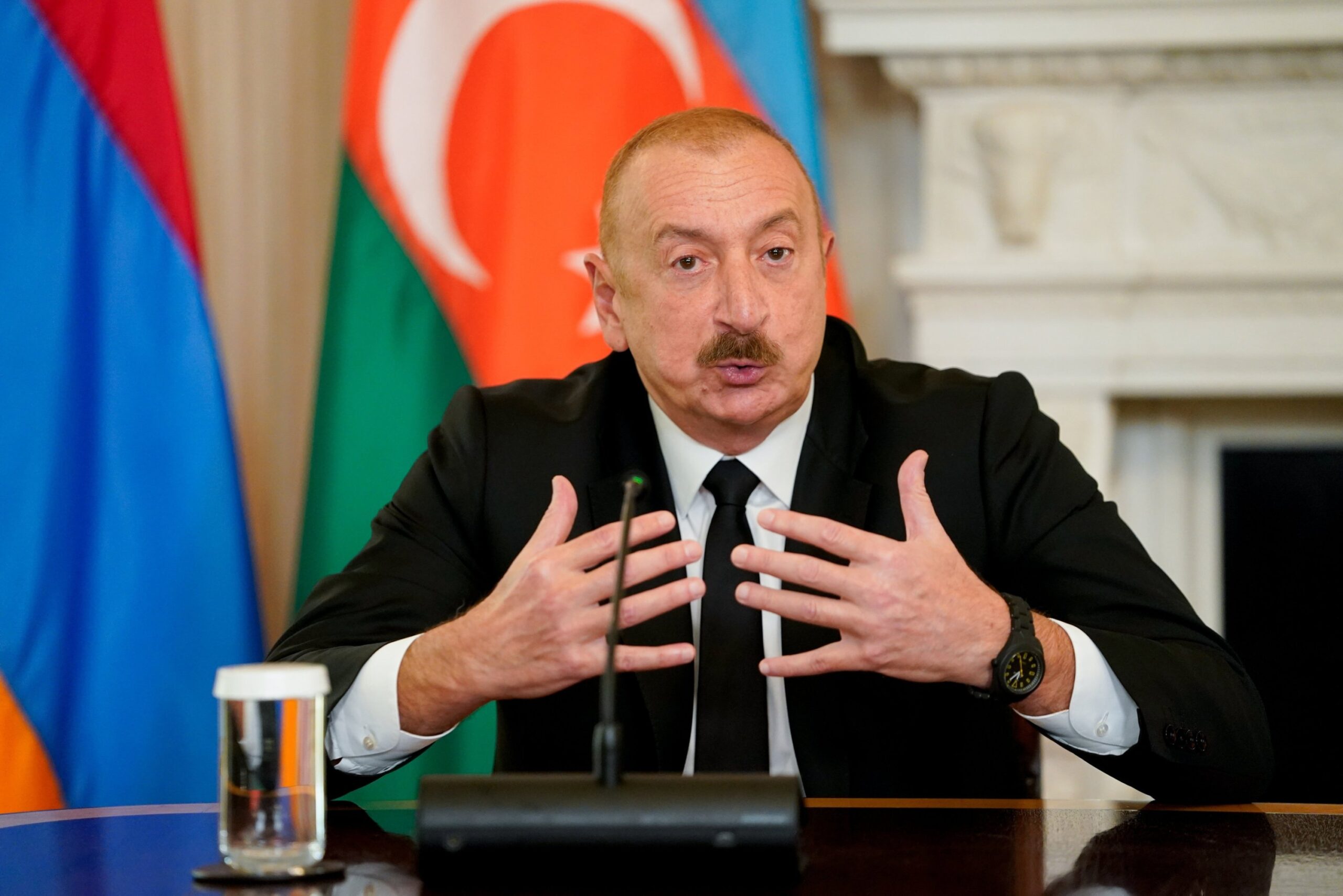
    Turkey is seeking to contain a growing dispute with Azerbaijan over criticism of school headscarf restrictions, as reports of demands from Baku and uncertainty over President Ilham Aliyev’s attendance at an upcoming regional summit put the relationship under pressure.

    Azerbaijan’s decision to bar 31 Turkish nationals from entering the country on Wednesday expanded the dispute beyond the seven Turkish citizens facing arrest in absentia over alleged calls to overthrow the Azerbaijani government. The entry ban list includes opposition politicians, media figures and religious writers, with Azerbaijani officials accusing those named of making statements that threaten the country’s sovereignty and national security.

    The dispute began after Azerbaijan amended its school uniform rules on September 21 to prohibit clothing considered incompatible with prescribed uniforms or secular education. Although the rules do not explicitly mention headscarves, reports that girls wearing them were turned away from classrooms prompted protests and criticism from Turkish politicians.

    On October 12 Oktay Saral, a chief adviser to Turkish President Recep Tayyip Erdoğan, called the restrictions unacceptable and urged Azerbaijan to reverse them. Members of Erdoğan’s ruling Justice and Development Party (AKP) also criticized the policy. The following day, Azerbaijan’s ruling New Azerbaijan Party (YAP) accused Saral and AKP lawmakers of making “populist and irresponsible” statements and interfering in the country’s domestic affairs.

    A Middle East Eye report published October 19, citing three officials and a source familiar with the matter, said Baku had asked Ankara to dismiss Saral, prosecute social media commentators who had insulted Aliyev and block accounts identified by Azerbaijani officials. Turkey blocked some of the accounts but had taken no further action.

    Azerbaijani media outlets close to the government subsequently accused Turkish Foreign Minister Hakan Fidan of encouraging unrest against Aliyev following Fidan’s visit to Baku. The Turkish Embassy rejected the allegations, denying that Fidan had held secret meetings or issued instructions to interfere in Azerbaijan’s domestic affairs. Azerbaijani news outlet Qafqazinfo removed passages targeting Fidan after the embassy’s denial. Azerbaijan’s Press Council also criticized some Turkish media coverage, accusing outlets of exceeding the bounds of press freedom.

    Turkish political figures have sought to limit the fallout. Former prime minister Binali Yıldırım said Saral’s comments did not represent official Turkish policy, while Nationalist Movement Party (MHP) leader Devlet Bahçeli called for common sense.

    The dispute comes as Turkey and Azerbaijan prepare for the 13th summit of the Organization of Turkic States in Ankara, where Turkey is due to take over the group’s chairmanship from Azerbaijan. Foreign ministers are scheduled to meet on October 29, followed by the heads-of-state summit on October 30.

    Turkish Foreign Ministry sources told the Cumhuriyet newspaper that all leaders had been invited and that Aliyev’s attendance was expected. Middle East Eye’s sources, however, said his participation remained unconfirmed.

    Separately, Turkey’s Center for Combating Disinformation, part of the Presidential Communications Directorate, said on October 20 that social media claims that someone had attempted to remove the Turkish flag in Azerbaijan relied on old footage. The center said the flag had not been taken down and accused those circulating the footage as recent of seeking to damage relations between the two countries.

    Azerbaijan’s Interior Ministry has said 37 people were detained during protests against enforcement of the school uniform rules. The dispute has put pressure on a relationship built on close political, military and cultural ties, which the two governments often describe with the phrase “one nation, two states.”