Tag: investigates

  • Ailing Turkish prisoner has leg amputated after repeated ‘fit for prison’ assessments

    Ailing Turkish prisoner has leg amputated after repeated ‘fit for prison’ assessments

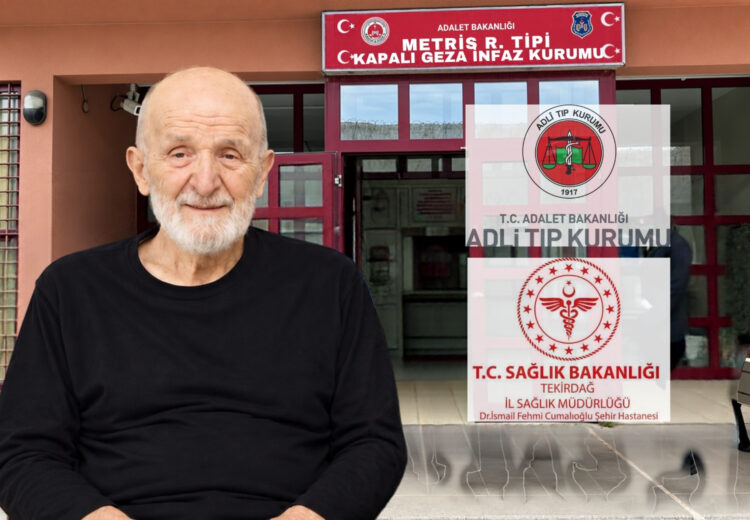
    A Turkish prisoner convicted over alleged links to the faith-based Gülen movement has had his left leg amputated below the knee after repeated medical assessments found him fit to remain incarcerated despite his deteriorating health, his daughter said on Friday.

    Abdullah Tırpan underwent surgery at İstanbul’s Başakşehir Çam and Sakura City Hospital, where he had been transferred from Metris Prison earlier this week, the TR724 news website reported.

    His daughter, Esra Tırpan Yakut, said doctors had amputated his left leg below the knee but were planning a second operation to remove more of the limb above the knee because the infection had spread farther up his leg.

    “I don’t know what to say or how to express my feelings,” she said. “I’m very sad.”

    The amputation follows a series of medical assessments that concluded Tırpan could remain in prison despite multiple serious health problems, including diabetes, nerve damage and circulatory disorders.

    Turkey’s Council of Forensic Medicine, a state body that assesses prisoners’ fitness to remain incarcerated, concluded on December 17, 2025, that Tırpan could remain in prison. Medical boards at Tekirdağ City Hospital reached similar conclusions on May 7 and June 30, 2026.

    The June report documented several chronic illnesses but concluded that Tırpan could manage his daily activities without assistance and did not require the suspension of his sentence on medical grounds.

    Another examination on October 6 reportedly found no medical obstacle to his continued imprisonment, less than three weeks before the amputation.

    Independent lawmaker Mustafa Yeneroğlu, who visited Tırpan at Metris Prison earlier this month, warned on October 9 that the prisoner could die without urgent medical intervention.

    Yeneroğlu said Tırpan had advanced gangrene, severe discoloration and large open wounds on his left leg. He was unable to stand or meet his basic needs on his own, according to the lawmaker, who questioned medical assessments concluding otherwise.

    Tırpan’s daughter announced on X on October 20 that doctors had obtained the family’s consent to amputate her father’s leg and appealed to authorities to suspend his sentence so he could receive treatment outside prison.

    The family continues to seek the suspension of his sentence. It was not immediately clear whether authorities had initiated a new medical assessment following the amputation.

    Under Article 16 of Turkey’s Law on the Execution of Sentences, the enforcement of a prison sentence may be suspended in certain cases involving serious illness or disability. The Justice Ministry says authorities can reopen the review process when a prisoner’s health deteriorates, even after an earlier request has been rejected.

    Tırpan, a father of five who worked as a butcher for 55 years in the northwestern province of Tekirdağ, was sentenced to seven-and-a-half years in prison on August 8, 2019, for membership in an armed terrorist organization over his alleged involvement in the Gülen movement. Turkey’s Supreme Court of Appeals upheld his conviction on March 7, 2022.

    Turkish President Recep Tayyip Erdoğan has targeted the faith-based Gülen movement, inspired by Muslim cleric Fethullah Gülen, who died in 2024, since corruption investigations in December 2013 implicated him as well as some members of his family and inner circle. He dismissed the probes as a Gülenist conspiracy and designated the movement as a terrorist organization in May 2016, intensifying a sweeping crackdown after a coup attempt in July of the same year that he accused Gülen of orchestrating. The movement denies involvement in the coup attempt or any terrorist activity.

    The evidence cited in his conviction included having shares in a company operating a private school allegedly affiliated with the movement, participating in religious discussion meetings, making charitable donations to the movement, subscribing to the now-closed Zaman newspaper and maintaining an account at Bank Asya, a bank formerly affiliated with the movement.

    The court also cited his decision to send his children and grandchildren to schools associated with the movement and his possession of certain religious publications.

    Since the coup attempt in 2016, the Turkish government has accepted such activities as having an account at now-shuttered Bank Asya, one of Turkey’s largest commercial banks at the time; using the ByLock messaging application, an encrypted messaging app that was available on Apple’s App Store and Google Play; and subscribing to the now-shut-down Zaman daily or other publications affiliated with members of the movement as benchmarks for identifying and arresting alleged followers of the Gülen movement on charges of membership in a terrorist organization.

    Tırpan denied the criminal allegations. He was first arrested in August 2016 and spent approximately 19 months in pretrial detention before being released pending the outcome of his legal proceedings. He was imprisoned again in February 2025 following the finalization of his sentence.
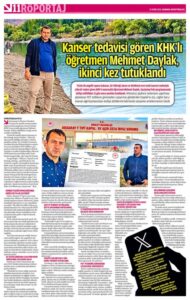
  • Turkish teacher facing possible cancer recurrence jailed again over alleged Gülen links

    Turkish teacher facing possible cancer recurrence jailed again over alleged Gülen links

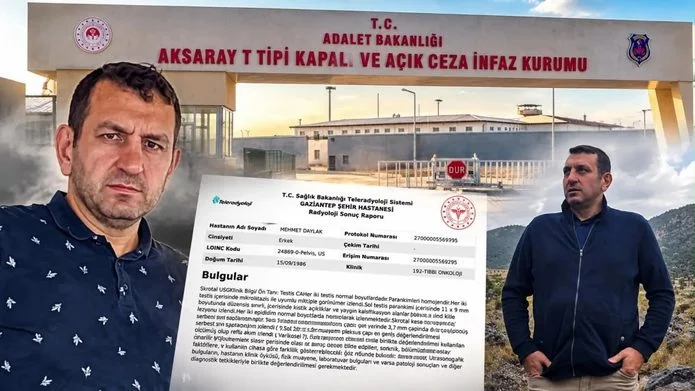
    A former Turkish teacher who underwent extensive treatment for advanced cancer has been jailed again over alleged links to the faith-based Gülen movement 13 days after his release, preventing him from undergoing a medical examination for a possible recurrence of the disease, the TR724 news website reported.

    Mehmet Daylak, who has been assessed as 86 percent disabled under Turkey’s medical disability classification, indicating a severe loss of bodily function, was taken into custody on October 7, a day before he was scheduled to undergo a PET scan, according to his wife.

    The Gaziantep 2nd High Criminal Court sentenced Daylak to more than seven years in prison on September 24 for membership in an armed terrorist organization over alleged links to the Gülen movement but ordered his release pending appeal. His conviction is not yet final.

    Daylak was arrested on May 5, 2025, as part of an investigation into the alleged restructuring of the Gülen movement.

    His wife said recent MRI and CT scans had shown abnormalities suggesting the cancer might have returned. After his release in September, Daylak visited Hacettepe University Hospital in Ankara, where a PET scan was scheduled for October 8.

    Police detained Daylak in the central province of Aksaray following a prosecutor’s objection to a court order for his release. His wife said the family had submitted medical reports and requests for examinations to the authorities but had been unable to secure his release. Daylak is currently being held at Aksaray Prison.

    Turkish President Recep Tayyip Erdoğan has targeted the faith-based Gülen movement, inspired by Muslim cleric Fethullah Gülen, who died in 2024, since corruption investigations in December 2013 implicated Erdoğan as well as some members of his family and inner circle. He dismissed the probes as a Gülenist conspiracy and designated the movement as a terrorist organization in May 2016, intensifying a sweeping crackdown after a coup attempt in July of the same year that he accused Gülen of orchestrating. The movement denies involvement in the coup attempt or any terrorist activity.

    Daylak was diagnosed with testicular cancer in 2014, which later progressed to stage four and spread to several parts of his body. According to his wife, he underwent multiple surgeries, intensive chemotherapy and a stem cell transplant. His treatment included the removal of his left kidney, gallbladder and part of his liver.

    Daylak also suffers from diabetes and gout, which sometimes leave him unable to walk for extended periods, his wife said. She expressed concern that his health could deteriorate further in prison and called for uninterrupted access to medical examinations and treatment.

    Pro-Kurdish Peoples’ Equality and Democracy Party (DEM Party) lawmaker and human rights defender Ömer Faruk Gergerlioğlu criticized the decision to return Daylak to prison despite his serious health problems, accusing authorities of disregarding the health of seriously ill prisoners and adding to overcrowding in prisons.

    Following his cancer treatment, Daylak was appointed as a mathematics teacher in 2015 through a government recruitment program for people with disabilities and began working in Osmaniye.

    Daylak was first jailed in 2017 over alleged links to the Gülen movement and released seven months later on health grounds. He was subsequently sentenced to more than eight years in prison on terrorism charges based on activities including depositing money in Bank Asya, a now-closed bank linked to the movement. The Supreme Court of Appeals overturned the conviction, and the case remains pending.

    According to the latest figures from the justice ministry, more than 127,000 people have been convicted of alleged links to the movement since 2016, with 10,485 still in prison and legal proceedings ongoing against 83,404 individuals.

  • 19 more jailed in investigation targeting Süleymanlılar religious community

    19 more jailed in investigation targeting Süleymanlılar religious community

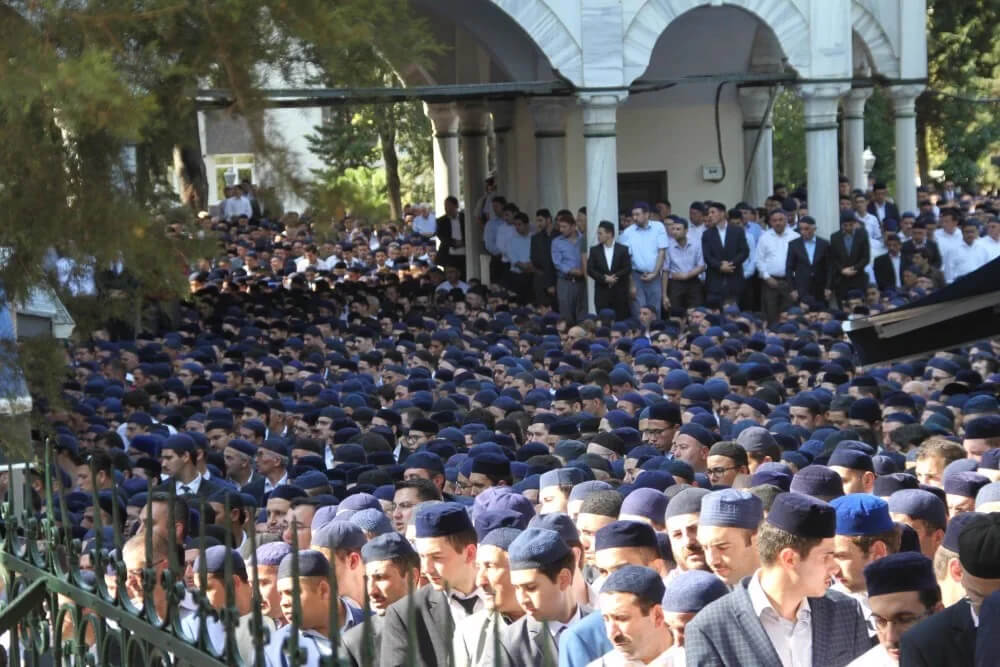
    A Turkish court has ordered the pretrial detention of 19 people in the latest phase of a financial crimes investigation targeting individuals linked to the Süleymanlılar religious community, the DHA news agency reported on Friday.

    Five others were released under judicial supervision after 24 suspects were brought before a court following questioning by police and prosecutors.

    The decisions follow the fifth round of raids in the investigation, led by the Ankara Chief Public Prosecutor’s Office. Police searched 28 homes and 16 workplaces across 12 provinces after prosecutors issued detention warrants for 38 people.

    Twenty-two people were initially detained in the October 19 raids. The number subsequently rose to 24, according to DHA.

    Prosecutors are investigating allegations of establishing, leading or belonging to a criminal organization, money laundering, defrauding public institutions and violations of tax laws.

    The investigation has targeted community leader Alihan Kuriş, who has been jailed pending trial since August. Kuriş has denied leading a criminal organization or participating in money laundering or fraud.

    The case has expanded through successive operations targeting people and businesses linked to the community. In September, prosecutors issued warrants for 29 suspects and secured the appointment of court-supervised trustees to 23 companies.

    The Süleymanlılar trace their roots to Islamic scholar Süleyman Hilmi Tunahan. The community runs Quran courses, student dormitories, charities and businesses in Turkey and Europe, particularly Germany. Kuriş, a grandson of Tunahan, became its leader in 2016.

    The investigation has prompted questions about possible political motives. The community has remained outside President Recep Tayyip Erdoğan’s ruling Justice and Development Party’s (AKP) close circle of religious allies and has at times reportedly supported opposition parties.

    Former education minister Hüseyin Çelik, a founding AKP member, warned in August that investigations into religious communities risked becoming a way to punish groups whose leaders opposed the government.

    He questioned whether the Süleymanlılar would have faced similar action had their leadership supported the ruling party.

    The government denies targeting the community over its beliefs or political position. Justice Minister Akın Gürlek has claimed that the investigation concerns alleged financial crimes rather than religious activities.

  • Turkey investigates suspected tipoffs behind $8.1 billion in fund withdrawals

    Turkey investigates suspected tipoffs behind $8.1 billion in fund withdrawals

    Prosecutors in Turkey are investigating whether tipoffs about impending action helped investors withdraw 401.3 billion lira ($8.1 billion) from investment funds before regulators intervened, the Cumhuriyet daily reported on Monday.

    The İstanbul Chief Public Prosecutor’s Office is examining transactions by 440 investors between September 1 and 16, seeking to establish whether they acted on information that had not been made public.

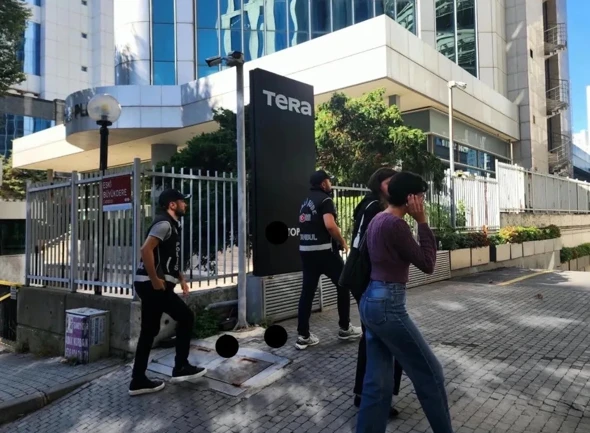
    Withdrawals from Tera funds totaled 335.9 billion lira ($6.8 billion), involving 168 investors who each withdrew at least 100 million lira ($2 million). Another 272 investors withdrew at least 50 million lira ($1 million) each from Pusula funds, with their withdrawals totaling 65.4 billion lira ($1.3 billion).

    The figures represent withdrawals, rather than profits. Investigators are examining their timing and whether investors received advance warning about the investigation or restrictions on their accounts. The withdrawals alone do not establish wrongdoing.

    The Capital Markets Board (SPK), Turkey’s securities regulator, ordered the liquidation of 131 investment funds managed by seven companies on September 17, affecting 455,758 investors.

    The funds pooled investors’ money to buy securities, but some invested in stocks with few buyers and struggled to sell their holdings as prices fell and investors requested their money back. Prosecutors are investigating suspected share price manipulation.

    The inquiry has also led to the freezing of bank accounts belonging to 141 people and 73 companies identified as having earned a combined 187.7 billion lira ($3.8 billion) from funds managed by Tera, Pusula and Hedef. Courts imposed travel bans on the individuals and company managers..

    The Savings Deposit Insurance Fund (TMSF), the state agency handling the recovery of these gains, has begun notifying those on the list to return the money for payments to investors who suffered losses.

    Prosecutors separately announced an investigation Monday into people who shared documents marked confidential from the fund inquiry on social media, citing a law against violating investigation secrecy.

    Vice President Cevdet Yılmaz said Monday that investors would receive payments from fund assets, returned gains and proceeds from assets seized from people and companies implicated in the case, with no public money used.

    Nearly 44,000 investors had received payments following the liquidation of funds managed by A1 Capital, Bulls and Pardus, while negotiations continued over whether Atlas funds could be liquidated through the same procedure, Yılmaz explained during an interview with the state-run Anadolu news agency.

    A bill awaiting parliamentary approval would allow interim payments of up to 1 million lira ($20,000) based on investors’ net contributions. Previous withdrawals would count toward the recovery of their principal, excluding investors who had already recovered the amount they put in.

    A parliamentary committee is due to consider the bill Wednesday. Payments could begin this month if it becomes law, but some funds may lack enough assets to pay the proposed maximum, Yılmaz said.

    The government’s handling of the scandal has prompted demands to identify investors who benefited and examine their political connections.

    Abdullah Güler, parliamentary group chairman of President Recep Tayyip Erdoğan’s ruling Justice and Development Party (AKP), defended withholding the names of the 214 people and companies Friday, citing privacy protections and the presumption of innocence, the ANKA news agency reported.

    “We attach importance to the presumption of innocence,” Güler said.

    He urged investors who considered their gains unjustified to return them voluntarily. Under the proposed legislation, a return would not constitute an admission of liability, but would not remove any civil or criminal responsibility arising from unlawful conduct.

    AKP lawmakers and their allies in the Nationalist Movement Party (MHP) rejected five opposition proposals Thursday to advance parliamentary inquiries into the scandal, which sought scrutiny of political connections, suspected fraud and whether regulators ignored warnings.

    Criticism has also come from former AKP lawmaker Orhan Miroğlu, who accused people pursuing wealth of gaining influence in the party and state institutions. He described the scandal as “the most organized and collective betrayal” in Turkey’s history, Cumhuriyet reported Monday.

    An October survey by polling company ASAL Research put AKP support at 31.6 percent, compared with its 35.61 percent share in the 2023 parliamentary election. The main opposition New Party received 25.2 percent, the BirGün news website reported Monday.