Tag: Gülen’s legacy

  • Turkey detains 21 over alleged Gülen links, including 7 accused of aiding prisoners’ families

    Turkey detains 21 over alleged Gülen links, including 7 accused of aiding prisoners’ families

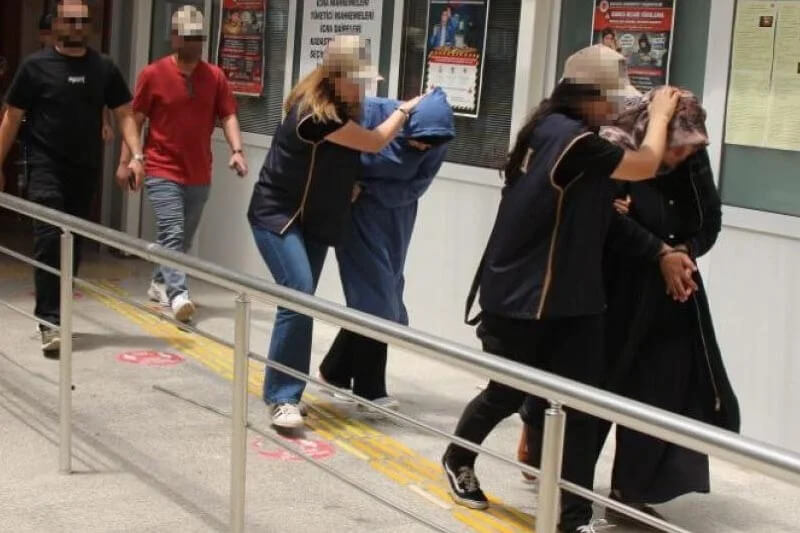
    Turkish police detained 21 people on Tuesday in two investigations into alleged links to the faith-based Gülen movement, including seven accused of providing financial assistance to prisoners’ families, the TRT haber state broadcaster reported.

    The Ankara Chief Public Prosecutor’s Office issued detention warrants for 25 people in the two investigations, with police continuing to search for four who remained at large.

    Turkish President Recep Tayyip Erdoğan has targeted the faith-based Gülen movement, inspired by Muslim cleric Fethullah Gülen, who died in 2024, since corruption investigations in December 2013 implicated him as well as some members of his family and inner circle. He dismissed the probes as a Gülenist conspiracy and designated the movement as a terrorist organization in May 2016, intensifying a sweeping crackdown after a coup attempt in July of the same year that he accused Gülen of orchestrating. The movement denies involvement in the attempted coup or any terrorist activity.

    The first investigation targeted 11 people accused of providing financial support to alleged members of the movement and engaging in unspecified ongoing activities associated with it. Seven were detained, while police were searching for the remaining four. The Bold Medya news website reported that the allegations also involved providing financial assistance to families of people in prison.

    Turkish authorities have repeatedly targeted people accused of providing financial assistance to families affected by the crackdown on the movement.

    In April police detained 42 people, most of them women, over assistance provided during the Muslim holy month of Ramadan to families of people jailed or dismissed from their jobs over alleged Gülen links. A court subsequently ordered 24 of them jailed pending trial, while the remaining 18 were released under judicial supervision.

    United Nations experts warned in October 2025 that people had reportedly been arrested over family relationships or lawful activities by relatives, including financial transactions, describing the practice as guilt by association that was inconsistent with the principle of individual responsibility.

    The latest detentions follow another round of nationwide operations targeting alleged Gülen movement members. Authorities announced on Monday that 72 people had been detained across 32 provinces, with courts ordering 41 of them jailed pending trial.

    In the second investigation, police detained all 14 people named in detention warrants during simultaneous raids across 10 provinces, including the Turkish capital of Ankara. Prosecutors accused them of participating in what authorities described as the movement’s clandestine network within public institutions. The investigation was conducted by the National Intelligence Organization (MİT) and the counterterrorism department of the Ankara Police Department.

    The prosecutor’s office did not specify what activities the 14 detainees allegedly carried out in public institutions or explain what ongoing activities were attributed to those targeted in the financial investigation. Details of the detainees’ questioning and custody status beyond their initial detention were not immediately available.

    According to the latest figures from the justice ministry, more than 127,000 people have been convicted of alleged links to the movement, and authorities had initiated legal proceedings against 720,338 people since 2016, with 10,485 still in prison. Investigations or trials involving another 83,404 are still ongoing.

    This article is republished from the Stockholm Center for Freedom.
  • Ailing Turkish prisoner has leg amputated after repeated ‘fit for prison’ assessments

    Ailing Turkish prisoner has leg amputated after repeated ‘fit for prison’ assessments

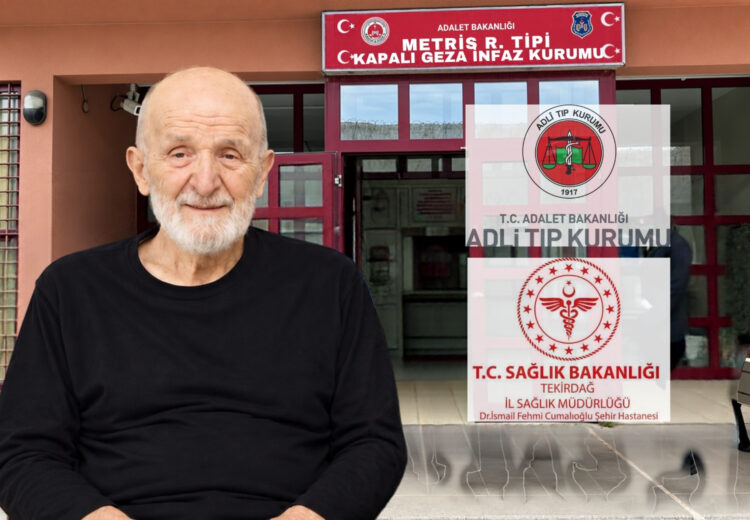
    A Turkish prisoner convicted over alleged links to the faith-based Gülen movement has had his left leg amputated below the knee after repeated medical assessments found him fit to remain incarcerated despite his deteriorating health, his daughter said on Friday.

    Abdullah Tırpan underwent surgery at İstanbul’s Başakşehir Çam and Sakura City Hospital, where he had been transferred from Metris Prison earlier this week, the TR724 news website reported.

    His daughter, Esra Tırpan Yakut, said doctors had amputated his left leg below the knee but were planning a second operation to remove more of the limb above the knee because the infection had spread farther up his leg.

    “I don’t know what to say or how to express my feelings,” she said. “I’m very sad.”

    The amputation follows a series of medical assessments that concluded Tırpan could remain in prison despite multiple serious health problems, including diabetes, nerve damage and circulatory disorders.

    Turkey’s Council of Forensic Medicine, a state body that assesses prisoners’ fitness to remain incarcerated, concluded on December 17, 2025, that Tırpan could remain in prison. Medical boards at Tekirdağ City Hospital reached similar conclusions on May 7 and June 30, 2026.

    The June report documented several chronic illnesses but concluded that Tırpan could manage his daily activities without assistance and did not require the suspension of his sentence on medical grounds.

    Another examination on October 6 reportedly found no medical obstacle to his continued imprisonment, less than three weeks before the amputation.

    Independent lawmaker Mustafa Yeneroğlu, who visited Tırpan at Metris Prison earlier this month, warned on October 9 that the prisoner could die without urgent medical intervention.

    Yeneroğlu said Tırpan had advanced gangrene, severe discoloration and large open wounds on his left leg. He was unable to stand or meet his basic needs on his own, according to the lawmaker, who questioned medical assessments concluding otherwise.

    Tırpan’s daughter announced on X on October 20 that doctors had obtained the family’s consent to amputate her father’s leg and appealed to authorities to suspend his sentence so he could receive treatment outside prison.

    The family continues to seek the suspension of his sentence. It was not immediately clear whether authorities had initiated a new medical assessment following the amputation.

    Under Article 16 of Turkey’s Law on the Execution of Sentences, the enforcement of a prison sentence may be suspended in certain cases involving serious illness or disability. The Justice Ministry says authorities can reopen the review process when a prisoner’s health deteriorates, even after an earlier request has been rejected.

    Tırpan, a father of five who worked as a butcher for 55 years in the northwestern province of Tekirdağ, was sentenced to seven-and-a-half years in prison on August 8, 2019, for membership in an armed terrorist organization over his alleged involvement in the Gülen movement. Turkey’s Supreme Court of Appeals upheld his conviction on March 7, 2022.

    Turkish President Recep Tayyip Erdoğan has targeted the faith-based Gülen movement, inspired by Muslim cleric Fethullah Gülen, who died in 2024, since corruption investigations in December 2013 implicated him as well as some members of his family and inner circle. He dismissed the probes as a Gülenist conspiracy and designated the movement as a terrorist organization in May 2016, intensifying a sweeping crackdown after a coup attempt in July of the same year that he accused Gülen of orchestrating. The movement denies involvement in the coup attempt or any terrorist activity.

    The evidence cited in his conviction included having shares in a company operating a private school allegedly affiliated with the movement, participating in religious discussion meetings, making charitable donations to the movement, subscribing to the now-closed Zaman newspaper and maintaining an account at Bank Asya, a bank formerly affiliated with the movement.

    The court also cited his decision to send his children and grandchildren to schools associated with the movement and his possession of certain religious publications.

    Since the coup attempt in 2016, the Turkish government has accepted such activities as having an account at now-shuttered Bank Asya, one of Turkey’s largest commercial banks at the time; using the ByLock messaging application, an encrypted messaging app that was available on Apple’s App Store and Google Play; and subscribing to the now-shut-down Zaman daily or other publications affiliated with members of the movement as benchmarks for identifying and arresting alleged followers of the Gülen movement on charges of membership in a terrorist organization.

    Tırpan denied the criminal allegations. He was first arrested in August 2016 and spent approximately 19 months in pretrial detention before being released pending the outcome of his legal proceedings. He was imprisoned again in February 2025 following the finalization of his sentence.

  • New documentary explores Gülen’s legacy as his movement faces crackdown and exile

    New documentary explores Gülen’s legacy as his movement faces crackdown and exile

    Fatma Zibak

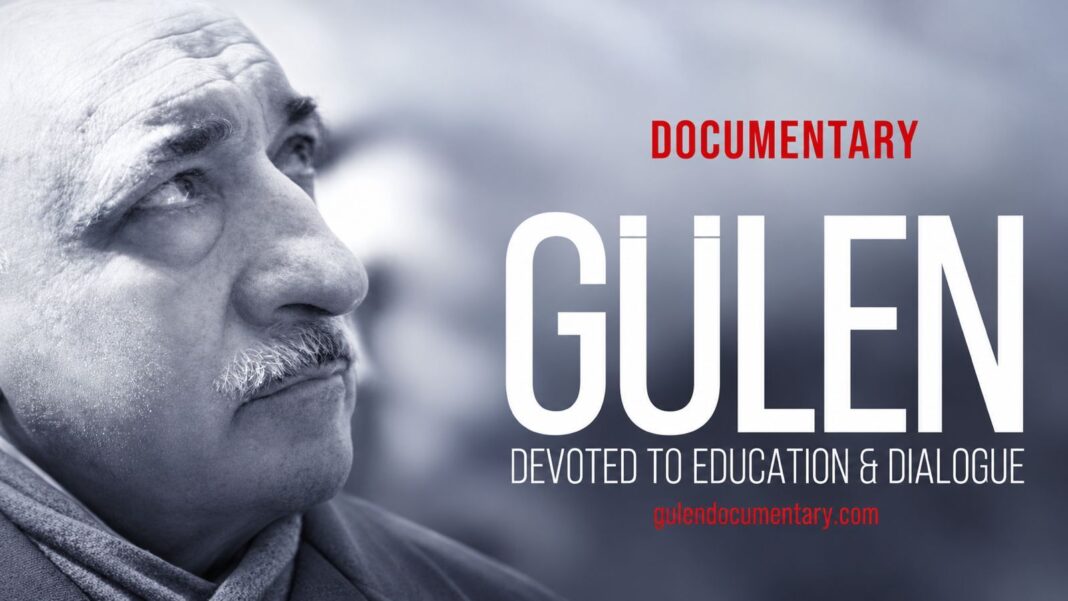
    A new documentary premiering on YouTube on October 17 examines how Turkish Muslim cleric Fethullah Gülen’s teachings encouraged followers to establish schools and promote dialogue around the world, and how his movement is navigating repression, exile and life after his death, according to its producers.

    The 90-minute film, “GULEN: Devoted to Education & Dialogue,” features 35 interviewees from 14 countries. Its release comes three days before the second anniversary of Gülen’s death on October 20, 2024.

    Directed by Ahmet Ünal and produced by Raindrops Productions LLC, with Rıdvan Kızıltepe as project coordinator, the documentary follows Gülen’s ideas beyond Turkey through interviews with academics, observers and people who knew him or participated in his movement.

    Education was central to Gülen’s teachings. He encouraged his followers to open schools that taught both academic subjects and moral values, saying that science and religious faith could go hand-in-hand.

    That approach helped the movement, known as Hizmet, or “service” in Turkish, expand internationally. Schools established by its participants became its most visible institutions, along with charities, professional associations and organizations promoting dialogue between religions.

    By the time of Gülen’s death institutions associated with the movement had operated in more than 100 countries, according to The Associated Press. Their reach extended from Central Asia and Africa to Europe and the United States.

    The documentary examines that educational work along with Gülen’s views on science, faith, peace and social change. Organized into nine thematic chapters, it begins with personal encounters with the cleric before considering how his teachings influenced communities in different countries, the producers said.

    Gülen’s support for interfaith dialogue included a meeting with Pope John Paul II in 1998. His followers subsequently established organizations that brought people from different religious traditions together.

    But the movement’s international growth was followed by a rupture with the Turkish government and a crackdown that reshaped its institutions and scattered many of its participants abroad.

    Gülen and his followers initially supported Recep Tayyip Erdoğan’s government against Turkey’s military-backed secular establishment. Their alliance later broke down amid disagreements over government policy and corruption investigations targeting Erdoğan’s inner circle. Erdoğan denied the corruption allegations and accused Gülen’s followers of building a parallel state within the police and the judiciary.

    After a failed coup on July 15, 2016, that claimed the lives of 251 people, the government accused Gülen and his movement of organizing the uprising. Gülen strongly denied involvement and condemned the coup attempt.

    Turkey sought his extradition from the United States, where he had lived since traveling there for medical treatment in 1999. Washington requested further evidence and never extradited him. He was not charged with a crime in the United States.

    The crackdown that followed brought tens of thousands of arrests, the dismissal of nearly 130,000 people from public service under emergency decrees and the closure of schools, businesses and media organizations associated with the movement.

    The campaign against alleged members has continued beyond Gülen’s death. Turkish officials have claimed that the movement remains a security threat, while its supporters describe the prosecutions as punishment for their religious beliefs and associations.

    Against that background, the film examines the movement’s future after Gülen’s death along with the coup attempt and its aftermath, including exile and the challenges of keeping communities together outside Turkey.

    Scott C. Alexander, a professor of Islamic studies at Catholic Theological Union in Chicago and a board member of the Hizmet-associated Alliance for Shared Values, claims that the movement’s future depends on its participants and their ability to endure what he describes as an exceptionally severe challenge: a powerful state using its economic, political and, to some extent, military power against unarmed civilians.

    “Many in the movement were traumatized. That is only natural. But what I have seen is that the movement is surviving the trauma,” he says in the documentary.

    The scale of the crackdown is reflected in figures Turkish Justice Minister Akın Gürlek released in July: More than 720,000 people had faced legal proceedings since 2016 and more than 127,000 had been convicted. Investigations or trials involving another 83,404 people were ongoing, while 10,485 people were in prison over alleged movement membership or involvement in the coup attempt.

    The crackdown has also driven people accused of links to the movement to flee Turkey, sometimes taking dangerous routes across the Evros River into Greece or attempting sea crossings in small boats.

    The state’s treatment of the movement is a central question for Anwar Alam, a scholar of international relations and Islamic movements interviewed in the documentary.

    He sees the conflict as a struggle over the relationship between the state and civil society, arguing that Gülen’s encouragement of civic participation challenged political traditions that placed the state at the center of public life.

    “Whereas the Hizmet movement was trying to deepen the democracy, the state found that it is no more in control of civil society,” Alam says in the documentary.

    Other interviews explore women’s efforts to gain a greater voice in decision-making and the challenge of passing the movement’s values to younger generations.

    Those questions lead into the documentary’s final chapter, which considers how Hizmet will continue without the religious figure whose teachings brought its participants together.

    Gülen died at a Pennsylvania hospital at the age of 83 after years of ill health. The local coroner said his death was from natural causes.

    The documentary is scheduled to premiere on the Gulen Documentary YouTube channel, with teasers, interview clips and excerpts to be released beforehand.