Category: Turkey

  • Ailing Turkish prisoner has leg amputated after repeated ‘fit for prison’ assessments

    Ailing Turkish prisoner has leg amputated after repeated ‘fit for prison’ assessments

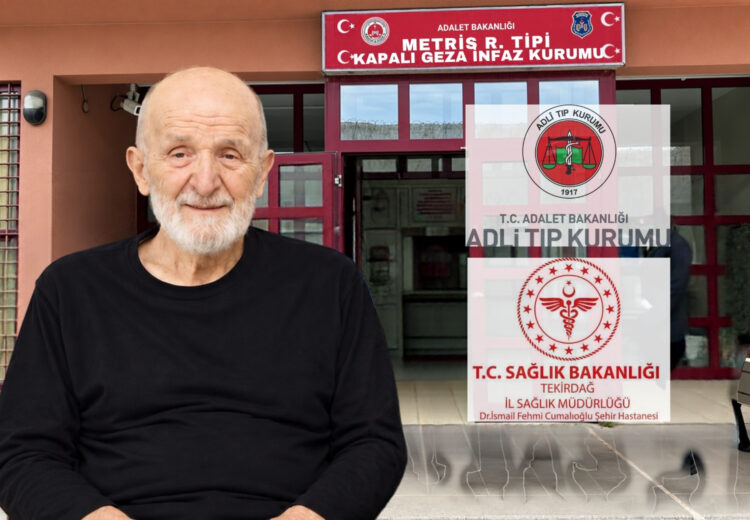
    A Turkish prisoner convicted over alleged links to the faith-based Gülen movement has had his left leg amputated below the knee after repeated medical assessments found him fit to remain incarcerated despite his deteriorating health, his daughter said on Friday.

    Abdullah Tırpan underwent surgery at İstanbul’s Başakşehir Çam and Sakura City Hospital, where he had been transferred from Metris Prison earlier this week, the TR724 news website reported.

    His daughter, Esra Tırpan Yakut, said doctors had amputated his left leg below the knee but were planning a second operation to remove more of the limb above the knee because the infection had spread farther up his leg.

    “I don’t know what to say or how to express my feelings,” she said. “I’m very sad.”

    The amputation follows a series of medical assessments that concluded Tırpan could remain in prison despite multiple serious health problems, including diabetes, nerve damage and circulatory disorders.

    Turkey’s Council of Forensic Medicine, a state body that assesses prisoners’ fitness to remain incarcerated, concluded on December 17, 2025, that Tırpan could remain in prison. Medical boards at Tekirdağ City Hospital reached similar conclusions on May 7 and June 30, 2026.

    The June report documented several chronic illnesses but concluded that Tırpan could manage his daily activities without assistance and did not require the suspension of his sentence on medical grounds.

    Another examination on October 6 reportedly found no medical obstacle to his continued imprisonment, less than three weeks before the amputation.

    Independent lawmaker Mustafa Yeneroğlu, who visited Tırpan at Metris Prison earlier this month, warned on October 9 that the prisoner could die without urgent medical intervention.

    Yeneroğlu said Tırpan had advanced gangrene, severe discoloration and large open wounds on his left leg. He was unable to stand or meet his basic needs on his own, according to the lawmaker, who questioned medical assessments concluding otherwise.

    Tırpan’s daughter announced on X on October 20 that doctors had obtained the family’s consent to amputate her father’s leg and appealed to authorities to suspend his sentence so he could receive treatment outside prison.

    The family continues to seek the suspension of his sentence. It was not immediately clear whether authorities had initiated a new medical assessment following the amputation.

    Under Article 16 of Turkey’s Law on the Execution of Sentences, the enforcement of a prison sentence may be suspended in certain cases involving serious illness or disability. The Justice Ministry says authorities can reopen the review process when a prisoner’s health deteriorates, even after an earlier request has been rejected.

    Tırpan, a father of five who worked as a butcher for 55 years in the northwestern province of Tekirdağ, was sentenced to seven-and-a-half years in prison on August 8, 2019, for membership in an armed terrorist organization over his alleged involvement in the Gülen movement. Turkey’s Supreme Court of Appeals upheld his conviction on March 7, 2022.

    Turkish President Recep Tayyip Erdoğan has targeted the faith-based Gülen movement, inspired by Muslim cleric Fethullah Gülen, who died in 2024, since corruption investigations in December 2013 implicated him as well as some members of his family and inner circle. He dismissed the probes as a Gülenist conspiracy and designated the movement as a terrorist organization in May 2016, intensifying a sweeping crackdown after a coup attempt in July of the same year that he accused Gülen of orchestrating. The movement denies involvement in the coup attempt or any terrorist activity.

    The evidence cited in his conviction included having shares in a company operating a private school allegedly affiliated with the movement, participating in religious discussion meetings, making charitable donations to the movement, subscribing to the now-closed Zaman newspaper and maintaining an account at Bank Asya, a bank formerly affiliated with the movement.

    The court also cited his decision to send his children and grandchildren to schools associated with the movement and his possession of certain religious publications.

    Since the coup attempt in 2016, the Turkish government has accepted such activities as having an account at now-shuttered Bank Asya, one of Turkey’s largest commercial banks at the time; using the ByLock messaging application, an encrypted messaging app that was available on Apple’s App Store and Google Play; and subscribing to the now-shut-down Zaman daily or other publications affiliated with members of the movement as benchmarks for identifying and arresting alleged followers of the Gülen movement on charges of membership in a terrorist organization.

    Tırpan denied the criminal allegations. He was first arrested in August 2016 and spent approximately 19 months in pretrial detention before being released pending the outcome of his legal proceedings. He was imprisoned again in February 2025 following the finalization of his sentence.

  • Thousands protest media crackdown in Turkey

    Thousands protest media crackdown in Turkey

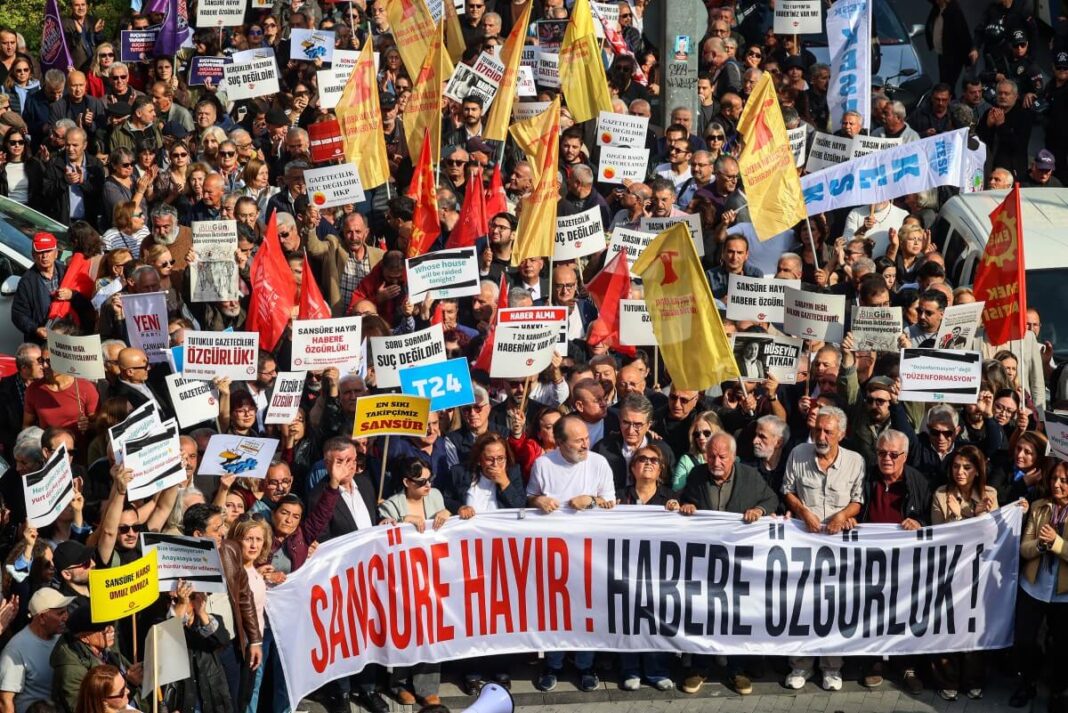
    Thousands rallied in İstanbul and Ankara on Saturday against what they described as growing pressure on journalists in Turkey, including arrests, media shutdowns and the appointment of government administrators to run news outlets.

    Press freedom has been increasingly constrained in Turkey since a failed coup attempt in 2016, with sweeping prosecutions, digital censorship and government accusations that journalists are spreading fake news.

    “Enough!” shouted marchers, mainly journalists, rights activists and opposition party representatives. “We can no longer breathe!”

    On İstanbul’s Asian side, protesters held up photos of jailed journalists, chanting: “We will not be silenced. Enough is enough!” and “We will not bow to pressure”.

    At least 3,000 people attended each protest, according to police counts.

    Recent weeks have seen what rights advocates describe as mounting pressure on independent journalism.

    Eleven journalists have been jailed in the past two months and several media outlets shut down, according to the Turkish Journalists’ Union (TGS).

    Earlier this month, police raided Turkey’s most-watched news channel, Halk TV, halting broadcasts and installing a government-appointed administrator.

    The takeover was the latest move against media outlets seen as critical of President Recep Tayyip Erdoğan and his government.

    It followed the blocking of leading digital news outlet T24’s website and social media accounts over what Turkish officials described as “LGBT propaganda”.

    ‘Intimidation’

    “This gathering is not simply about standing up for journalists,” veteran journalist Zafer Arapkirli told Agence France-Presse after the İstanbul protest.

    “It is also about defending respect for society’s right to access information and news through journalists and independent media,” said the columnist for the BirGün daily.

    Arapkirli, who himself faces lawsuits, said the response and determination to resist must grow as the pressure intensifies.

    “What the regime wants is to intimidate, silence and frighten society through such pressure — by arresting individual journalists, seizing media outlets, banning news coverage and blocking access to social media,” he said.

    “We must show that we will not allow this to happen.

    “We have done so up to now. I believe we are now moving towards demonstrating this determination on a much larger scale”.

    TGS President Gökhan Durmuş said the nature of “the government’s attacks” on the media had changed.

    “If we look at the recent restrictions, access bans and trustee appointments, they have targeted some of the most widely followed and watched broadcasters, news channels and media platforms,” he told AFP.

    “We are seeing a system emerge in which everything is uniform: one voice, one source of news, one centralised operation,” he said.

    ‘Let us do our job’

    In Ankara, protesters chanted against censorship and called for the release of jailed journalists.

    “Today’s protest was important both because it brought journalists together to make their voices heard and because it defended citizens’ right to access information,” T24 journalist Gökçer Tahincioğlu told AFP in Ankara.

    “Journalists are determined to get one message across: we want to practise journalism, and we want to be able to do so freely,” he said.

    The government has repeatedly denied that journalists are arrested or imprisoned for doing their jobs.

    At the Ankara protest, a letter from jailed BirGün journalist İsmail Arı was read to the crowd.

    “I am being held in prison for no reason other than doing my job as a journalist. Days are being stolen from my life,” Arı wrote from Sincan prison on the outskirts of Ankara.

    “We will defend journalism to the very end. Take your hands off us, comply with the constitution and let us do our job.”

    Arı was jailed pending trial on October 21 for the second time in seven months, accused of publicly disseminating misleading information following a complaint by former broadcasting watchdog chief Ebubekir Şahin. He was also investigated on suspicion of insulting a public official.

    © Agence France-Presse

  • Turkish teacher facing possible cancer recurrence jailed again over alleged Gülen links

    Turkish teacher facing possible cancer recurrence jailed again over alleged Gülen links

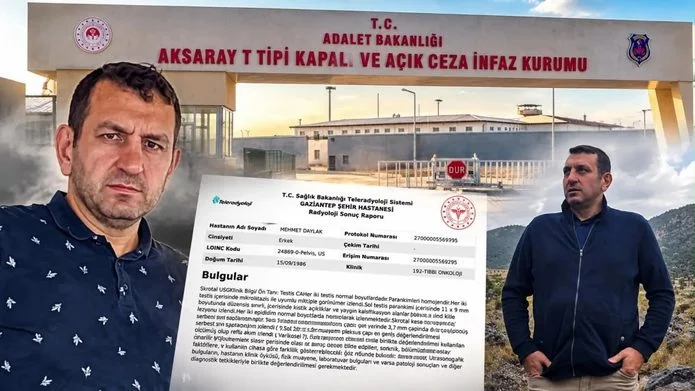
    A former Turkish teacher who underwent extensive treatment for advanced cancer has been jailed again over alleged links to the faith-based Gülen movement 13 days after his release, preventing him from undergoing a medical examination for a possible recurrence of the disease, the TR724 news website reported.

    Mehmet Daylak, who has been assessed as 86 percent disabled under Turkey’s medical disability classification, indicating a severe loss of bodily function, was taken into custody on October 7, a day before he was scheduled to undergo a PET scan, according to his wife.

    The Gaziantep 2nd High Criminal Court sentenced Daylak to more than seven years in prison on September 24 for membership in an armed terrorist organization over alleged links to the Gülen movement but ordered his release pending appeal. His conviction is not yet final.

    Daylak was arrested on May 5, 2025, as part of an investigation into the alleged restructuring of the Gülen movement.

    His wife said recent MRI and CT scans had shown abnormalities suggesting the cancer might have returned. After his release in September, Daylak visited Hacettepe University Hospital in Ankara, where a PET scan was scheduled for October 8.

    Police detained Daylak in the central province of Aksaray following a prosecutor’s objection to a court order for his release. His wife said the family had submitted medical reports and requests for examinations to the authorities but had been unable to secure his release. Daylak is currently being held at Aksaray Prison.

    Turkish President Recep Tayyip Erdoğan has targeted the faith-based Gülen movement, inspired by Muslim cleric Fethullah Gülen, who died in 2024, since corruption investigations in December 2013 implicated Erdoğan as well as some members of his family and inner circle. He dismissed the probes as a Gülenist conspiracy and designated the movement as a terrorist organization in May 2016, intensifying a sweeping crackdown after a coup attempt in July of the same year that he accused Gülen of orchestrating. The movement denies involvement in the coup attempt or any terrorist activity.

    Daylak was diagnosed with testicular cancer in 2014, which later progressed to stage four and spread to several parts of his body. According to his wife, he underwent multiple surgeries, intensive chemotherapy and a stem cell transplant. His treatment included the removal of his left kidney, gallbladder and part of his liver.

    Daylak also suffers from diabetes and gout, which sometimes leave him unable to walk for extended periods, his wife said. She expressed concern that his health could deteriorate further in prison and called for uninterrupted access to medical examinations and treatment.

    Pro-Kurdish Peoples’ Equality and Democracy Party (DEM Party) lawmaker and human rights defender Ömer Faruk Gergerlioğlu criticized the decision to return Daylak to prison despite his serious health problems, accusing authorities of disregarding the health of seriously ill prisoners and adding to overcrowding in prisons.

    Following his cancer treatment, Daylak was appointed as a mathematics teacher in 2015 through a government recruitment program for people with disabilities and began working in Osmaniye.

    Daylak was first jailed in 2017 over alleged links to the Gülen movement and released seven months later on health grounds. He was subsequently sentenced to more than eight years in prison on terrorism charges based on activities including depositing money in Bank Asya, a now-closed bank linked to the movement. The Supreme Court of Appeals overturned the conviction, and the case remains pending.

    According to the latest figures from the justice ministry, more than 127,000 people have been convicted of alleged links to the movement since 2016, with 10,485 still in prison and legal proceedings ongoing against 83,404 individuals.

  • 19 more jailed in investigation targeting Süleymanlılar religious community

    19 more jailed in investigation targeting Süleymanlılar religious community

    A Turkish court has ordered the pretrial detention of 19 people in the latest phase of a financial crimes investigation targeting individuals linked to the Süleymanlılar religious community, the DHA news agency reported on Friday.

    Five others were released under judicial supervision after 24 suspects were brought before a court following questioning by police and prosecutors.

    The decisions follow the fifth round of raids in the investigation, led by the Ankara Chief Public Prosecutor’s Office. Police searched 28 homes and 16 workplaces across 12 provinces after prosecutors issued detention warrants for 38 people.

    Twenty-two people were initially detained in the October 19 raids. The number subsequently rose to 24, according to DHA.

    Prosecutors are investigating allegations of establishing, leading or belonging to a criminal organization, money laundering, defrauding public institutions and violations of tax laws.

    The investigation has targeted community leader Alihan Kuriş, who has been jailed pending trial since August. Kuriş has denied leading a criminal organization or participating in money laundering or fraud.

    The case has expanded through successive operations targeting people and businesses linked to the community. In September, prosecutors issued warrants for 29 suspects and secured the appointment of court-supervised trustees to 23 companies.

    The Süleymanlılar trace their roots to Islamic scholar Süleyman Hilmi Tunahan. The community runs Quran courses, student dormitories, charities and businesses in Turkey and Europe, particularly Germany. Kuriş, a grandson of Tunahan, became its leader in 2016.

    The investigation has prompted questions about possible political motives. The community has remained outside President Recep Tayyip Erdoğan’s ruling Justice and Development Party’s (AKP) close circle of religious allies and has at times reportedly supported opposition parties.

    Former education minister Hüseyin Çelik, a founding AKP member, warned in August that investigations into religious communities risked becoming a way to punish groups whose leaders opposed the government.

    He questioned whether the Süleymanlılar would have faced similar action had their leadership supported the ruling party.

    The government denies targeting the community over its beliefs or political position. Justice Minister Akın Gürlek has claimed that the investigation concerns alleged financial crimes rather than religious activities.

  • Azerbaijan seeks to contain Azerbaijan dispute ahead of regional summit

    Azerbaijan seeks to contain Azerbaijan dispute ahead of regional summit

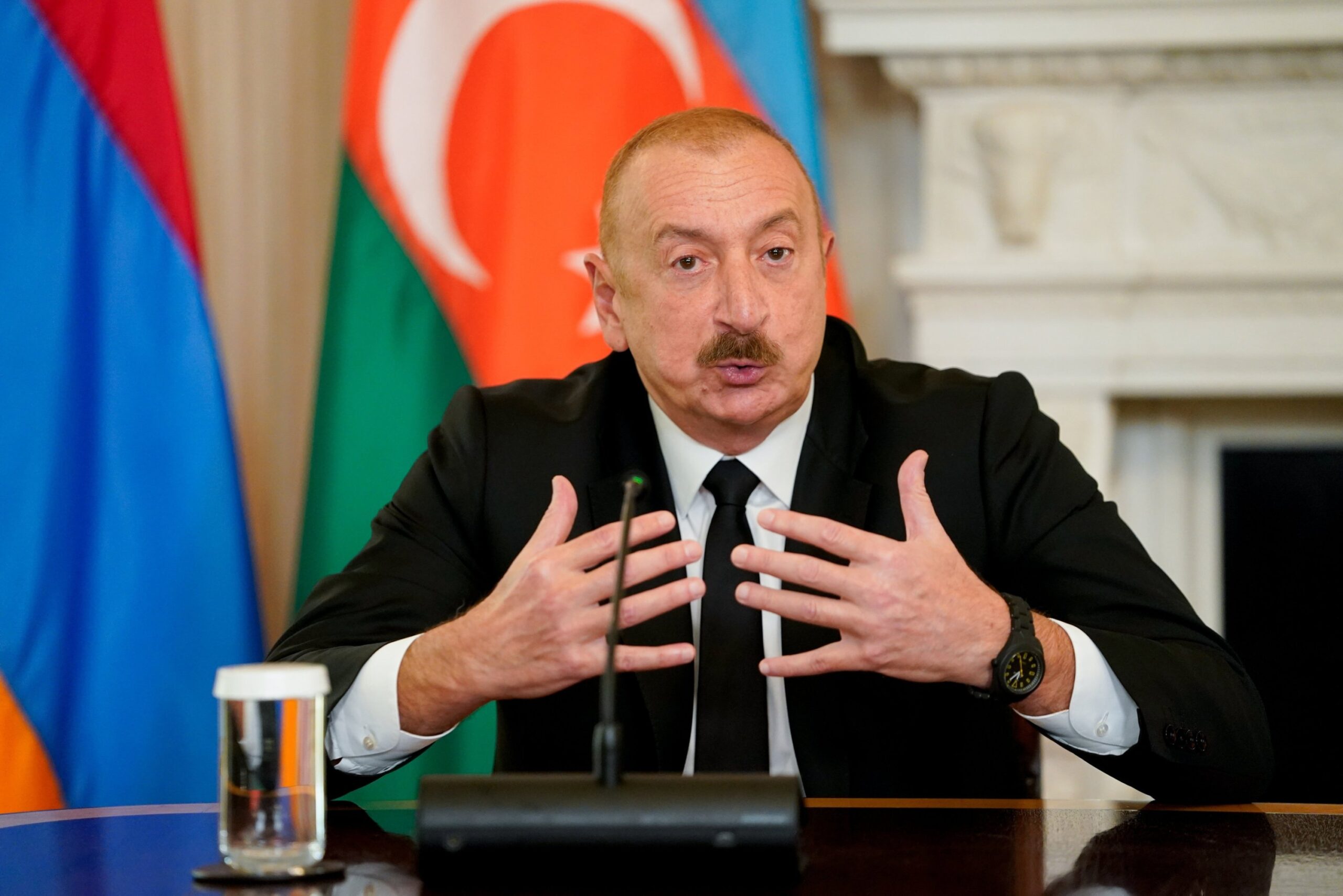
    Turkey is seeking to contain a growing dispute with Azerbaijan over criticism of school headscarf restrictions, as reports of demands from Baku and uncertainty over President Ilham Aliyev’s attendance at an upcoming regional summit put the relationship under pressure.

    Azerbaijan’s decision to bar 31 Turkish nationals from entering the country on Wednesday expanded the dispute beyond the seven Turkish citizens facing arrest in absentia over alleged calls to overthrow the Azerbaijani government. The entry ban list includes opposition politicians, media figures and religious writers, with Azerbaijani officials accusing those named of making statements that threaten the country’s sovereignty and national security.

    The dispute began after Azerbaijan amended its school uniform rules on September 21 to prohibit clothing considered incompatible with prescribed uniforms or secular education. Although the rules do not explicitly mention headscarves, reports that girls wearing them were turned away from classrooms prompted protests and criticism from Turkish politicians.

    On October 12 Oktay Saral, a chief adviser to Turkish President Recep Tayyip Erdoğan, called the restrictions unacceptable and urged Azerbaijan to reverse them. Members of Erdoğan’s ruling Justice and Development Party (AKP) also criticized the policy. The following day, Azerbaijan’s ruling New Azerbaijan Party (YAP) accused Saral and AKP lawmakers of making “populist and irresponsible” statements and interfering in the country’s domestic affairs.

    A Middle East Eye report published October 19, citing three officials and a source familiar with the matter, said Baku had asked Ankara to dismiss Saral, prosecute social media commentators who had insulted Aliyev and block accounts identified by Azerbaijani officials. Turkey blocked some of the accounts but had taken no further action.

    Azerbaijani media outlets close to the government subsequently accused Turkish Foreign Minister Hakan Fidan of encouraging unrest against Aliyev following Fidan’s visit to Baku. The Turkish Embassy rejected the allegations, denying that Fidan had held secret meetings or issued instructions to interfere in Azerbaijan’s domestic affairs. Azerbaijani news outlet Qafqazinfo removed passages targeting Fidan after the embassy’s denial. Azerbaijan’s Press Council also criticized some Turkish media coverage, accusing outlets of exceeding the bounds of press freedom.

    Turkish political figures have sought to limit the fallout. Former prime minister Binali Yıldırım said Saral’s comments did not represent official Turkish policy, while Nationalist Movement Party (MHP) leader Devlet Bahçeli called for common sense.

    The dispute comes as Turkey and Azerbaijan prepare for the 13th summit of the Organization of Turkic States in Ankara, where Turkey is due to take over the group’s chairmanship from Azerbaijan. Foreign ministers are scheduled to meet on October 29, followed by the heads-of-state summit on October 30.

    Turkish Foreign Ministry sources told the Cumhuriyet newspaper that all leaders had been invited and that Aliyev’s attendance was expected. Middle East Eye’s sources, however, said his participation remained unconfirmed.

    Separately, Turkey’s Center for Combating Disinformation, part of the Presidential Communications Directorate, said on October 20 that social media claims that someone had attempted to remove the Turkish flag in Azerbaijan relied on old footage. The center said the flag had not been taken down and accused those circulating the footage as recent of seeking to damage relations between the two countries.

    Azerbaijan’s Interior Ministry has said 37 people were detained during protests against enforcement of the school uniform rules. The dispute has put pressure on a relationship built on close political, military and cultural ties, which the two governments often describe with the phrase “one nation, two states.”

  • [OPINION] Can Erdoğan say no to Trump?

    [OPINION] Can Erdoğan say no to Trump?

    Adem Yavuz Arslan* 

    For Turkish citizens trying to understand whether their country could become embroiled in Yemen’s war, the most revealing recent statement came from Washington.

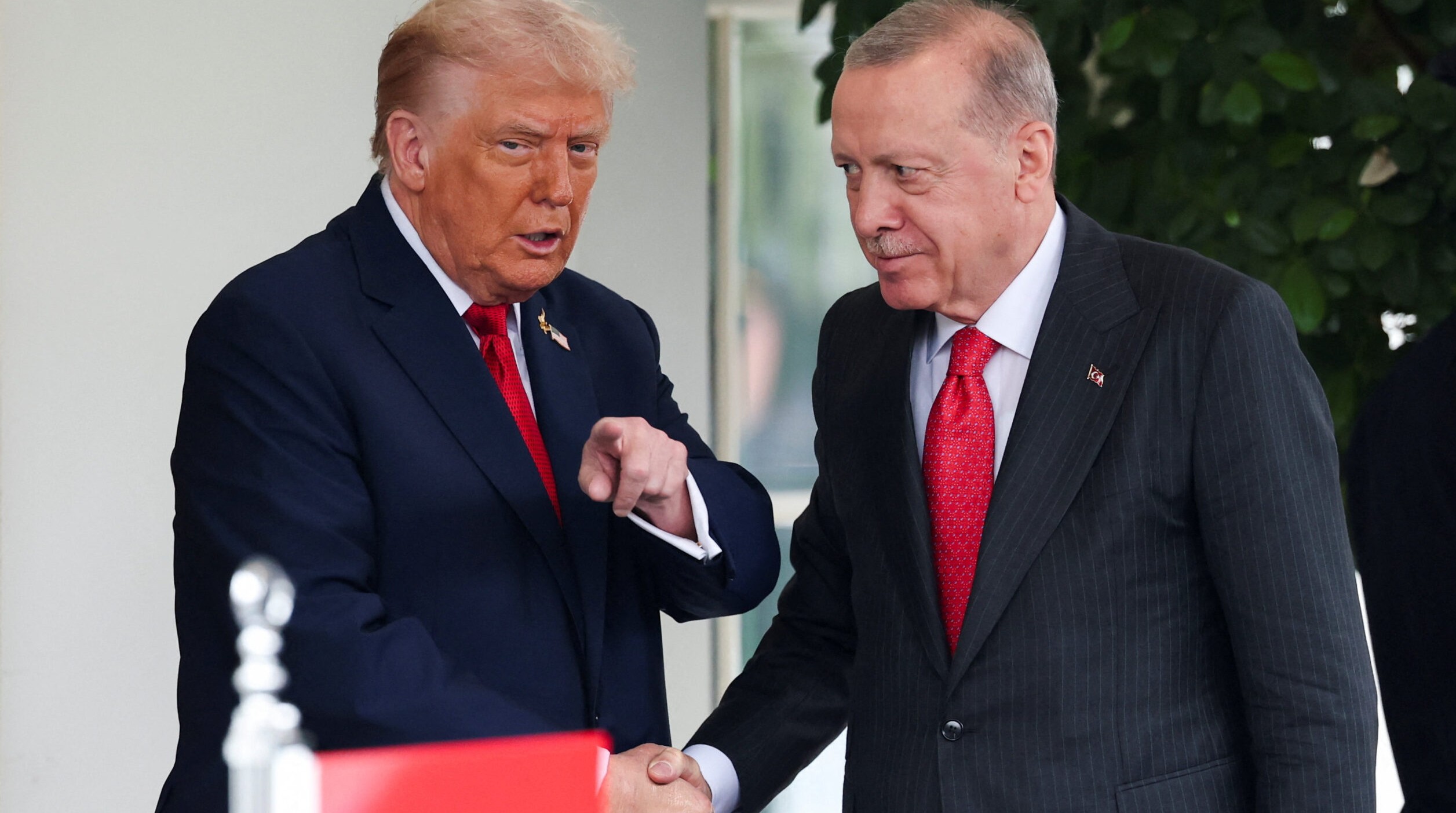
    Speaking to reporters before departing for Alaska on October 13, President Donald Trump suggested he might ask Turkey to help counter Houthi attacks on Saudi Arabia. He appeared confident about the answer: “President Erdogan, I think, would do as I ask.”

    There is no announced Turkish combat deployment to Yemen. Trump’s remark establishes neither that a request has been made nor that President Recep Tayyip Erdoğan has accepted one. But it raises a question with implications beyond the conflict: Why does an American president speak so confidently about his ability to secure another country’s military cooperation?

    Part of the answer may lie in Trump’s habitual exaggeration of his influence. Another part lies in the way Erdoğan governs. By concentrating authority at home and making personal access central to foreign policy, Turkey’s president has made himself the indispensable negotiating partner. He has also made his own vulnerabilities more consequential for the country.

    The Yemen crisis could test how much room that leaves him to refuse Washington.

    Turkey’s involvement already extends beyond diplomatic expressions of solidarity. Ankara had decided to provide Saudi Arabia with defensive and technical assistance, including drone operators, intelligence sharing and logistical support, according to an October 7 Reuters report citing Turkish and US officials.

    The broader framework is the Mecca Joint Defence Agreement, signed by Turkey, Pakistan and Saudi Arabia in August. Its publicly announced principle is sweeping: An armed attack on one signatory is to be treated as an attack on all three. That establishes a collective security commitment but does not, by itself, explain which military actions each government must undertake in a particular crisis.

    Parliament had yet to approve the agreement when Foreign Minister Hakan Fidan discussed it on October 8. He ruled out Turkish participation in offensive operations while describing support for Saudi Arabia’s defense.

    On October 15 Turkey’s Defense Ministry said parliamentary approval of the agreement and the necessary authorization procedures for sending Turkish forces abroad had yet to be completed. Reuters reported that assistance provided before ratification was largely bilateral.

    Erdoğan has left greater flexibility. In responses to Newsweek published on September 25, he said the extent of assistance would depend on the threat and could include more advanced military support. He also cautioned against assuming that every incident would automatically trigger a military response.

    These statements leave substantial questions unanswered about the limits of Turkey’s commitment. They do not justify claiming that Ankara has already agreed to fight in Yemen. Nor does Trump’s confidence prove that Washington possesses a secret undertaking. It does, however, sharpen the need to explain how Turkish decisions will be made — and whose priorities will determine them.

    Saudi Arabia has compelling reasons to seek help. Houthi attacks have brought the war into the kingdom’s economic and political centers. A strike on Riyadh’s King Khalid International Airport on October 10 killed at least 13 people and wounded more than 300.

    The threat reaches beyond the immediate casualties. Disrupted aviation, vulnerable energy infrastructure and uncertainty over the security of major cities undermine the conditions on which Saudi Arabia’s economic transformation depends.

    Military assistance would also carry substantial risks. The Houthis have demonstrated an ability to penetrate defenses supplied at enormous expense, exposing the difficulty of protecting a vast territory against adaptable missile and drone attacks.

    For Turkey, helping intercept an incoming missile and joining a campaign against launch sites inside Yemen would entail different objectives, legal questions and risks. Yet those missions can become connected. Personnel sent to operate defensive equipment may require protection. An attack on them may generate pressure for retaliation. Retaliation may create demands for further operations.

    Such escalation is a possibility, not an inevitability. Preventing it requires that clear limits be established before a deployment becomes politically difficult to reverse.

    Trump’s language offers little reassurance that he views those limits as central.

    On June 24, during a meeting with NATO Secretary-General Mark Rutte, he praised Erdoğan and Turkey’s military while saying he had asked the Turkish leader to stay out of the Iran war and that Erdoğan had complied.

    Whether that account accurately captures Ankara’s reasoning is a separate matter. Its significance lies in the relationship Trump presents to the public: He makes a request and Erdoğan delivers.

    Erdoğan benefits from this presentation in one respect. A friendly American president offers recognition and access. But the same arrangement allows Trump to portray Turkey’s policy choices as personal accommodations.

    That can weaken Erdoğan’s negotiating position. If cooperation is publicly treated as evidence of friendship, refusal becomes a test of the relationship. A disagreement over national interests acquires the character of a personal rebuff.

    Trump has previously shown that praise can coexist with coercion. In October 2019 he threatened to destroy Turkey’s economy and sent Erdoğan a letter containing the admonition, “Don’t be a fool!”

    The friendly language of the present cannot erase that history. Erdoğan is dealing with a president who has demonstrated a willingness to use economic pressure against Turkey and to advertise that pressure publicly.

    The resolution of the Halkbank prosecution adds another dimension.

    On June 17 US District Judge Richard Berman dismissed the criminal indictment against the Turkish state-owned lender after an agreement with the Trump administration. The decision ended a prosecution that had weighed on relations between the two countries for years.

    There is no public evidence connecting that outcome to a Turkish commitment over Yemen. Any claim of an exchange would exceed the available facts.

    Nevertheless, a favorable outcome in a politically important case can influence a relationship without a documented bargain. Trump may regard the resolution as an accomplishment for which Erdoğan owes him consideration. Whether Erdoğan shares that understanding is unknown.

    The distinction matters. An analysis of potential leverage should not become an allegation of a secret deal. But neither should the absence of evidence for a specific bargain end scrutiny of the incentives surrounding future decisions.

    Turkey’s exposure to financial pressure supplies another constraint. A confrontation with Washington can affect investor expectations and the perceived stability of the economy. For any Turkish government, those costs would require consideration. In a system centered on one leader, they may also intersect with concerns about political survival and international acceptance.

    Erdoğan is not without leverage. Turkey’s military capabilities and strategic position give Washington reasons to seek cooperation. His willingness to pursue policies opposed by Western allies also makes blanket descriptions of obedience unconvincing.

    The question is narrower: Can he use Turkey’s assets to negotiate clear limits, or does his reliance on a personal relationship make those limits harder to defend?

    Accountability is essential to answering it.

    Unresolved corruption allegations and politically sensitive financial cases become foreign policy concerns when the public cannot determine whether they influence decisions. Their existence does not prove that a leader is being coerced. The danger arises when independent institutions cannot credibly investigate potential conflicts between the leader’s interests and those of the state.

    Under those conditions even a defensible military decision can become difficult to assess. Citizens cannot know whether their government is responding to a genuine security threat, honoring a clearly defined obligation or protecting a relationship whose full terms remain beyond scrutiny.

    Religious solidarity could further complicate that assessment. A deployment presented as protecting Mecca and Medina would carry emotional force in Turkey. But the protection of holy sites cannot settle questions about command, geographic limits, escalation or withdrawal. Those require specific answers.

    The decisive issue, then, is not Erdoğan’s personal courage in confronting Trump. It is whether Turkey has a decision-making process capable of distinguishing the country’s interests from its president’s needs.

    Before any expanded military commitment, Ankara should explain the threat it intends to address, the limits of its mission and the conditions for ending it. Parliament and the public need enough information to judge those choices.

    Trump may believe Erdoğan will do as he asks. Turkey’s institutions should ensure that belief is never sufficient grounds for sending Turkish soldiers to war.

    *Adem Yavuz Arslan is a journalist with over two decades of experience in political reporting, investigative journalism and international conflict coverage. His work has focused on Turkey’s political landscape, including detailed reporting on the 2016 coup attempt and its aftermath, as well as broader issues related to media freedom and human rights. He has reported from conflict zones such as Bosnia, Kosovo and Iraq, and has conducted in-depth research on high-profile cases, including the assassination of Turkish-Armenian journalist Hrant Dink. Arslan is the author of four books and has received journalism awards for his investigative work. Currently living in exile in Washington, D.C., he continues his journalism through digital media platforms, including his YouTube channel, Turkish Minute, TR724 and X.

    Disclaimer: The views expressed in this opinion piece are those of the author and do not necessarily reflect the editorial stance of Turkish Minute. Turkishminute
  • Jailed İstanbul mayor accuses Erdoğan gov’t of shielding corruption in trial defense

    Jailed İstanbul mayor accuses Erdoğan gov’t of shielding corruption in trial defense

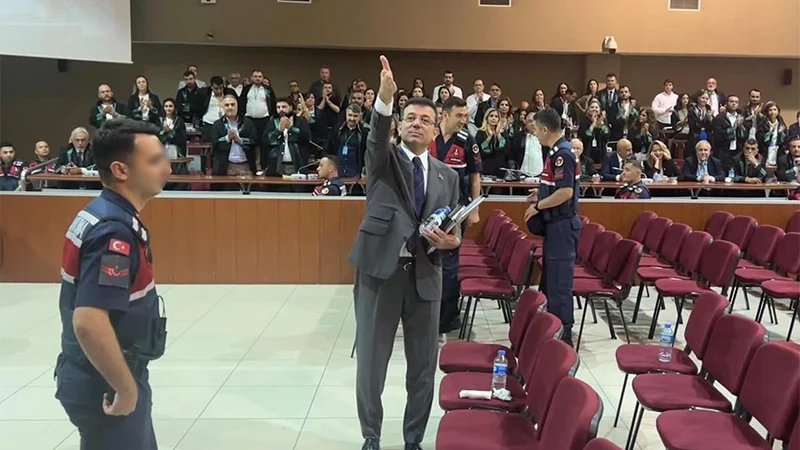
    Jailed İstanbul Mayor Ekrem İmamoğlu, President Recep Tayyip Erdoğan’s main political rival, on Wednesday accused Turkey’s government of using prosecutions and pressure on the media to shield corruption as he began his defense in a trial he says is intended to block his presidential bid.

    İmamoğlu began presenting his defense nearly 19 months after he was jailed pending trial, appearing before a court at the Marmara Prison complex in Silivri, west of İstanbul, where he has been imprisoned since March 23, 2025.

    The case concerns allegations of bribery, bid rigging, money laundering and an organized crime network at the İstanbul Metropolitan Municipality, with 436 defendants, 53 of them in pretrial detention.

    İmamoğlu denies the accusations and faces more than 2,400 years in prison if convicted on all counts, with prosecutors alleging that he used municipal resources to enrich himself and finance his political ambitions.

    In the opening of his defense, he accused those behind his prosecution of protecting people involved in Turkey’s investment fund scandal while portraying him as the leader of a criminal organization, according to a transcript published by the Medyascope news website.

    “They looked in the mirror and wrote what they saw into the indictment against me,” he said.

    İmamoğlu focused on Justice Minister Akın Gürlek, who was İstanbul’s chief public prosecutor when the investigations into the mayor began, accusing him of pursuing opposition politicians while failing to act with the same urgency over suspected financial wrongdoing.

    He told the court that Gürlek’s office sent a request to the Capital Markets Board (SPK), Turkey’s securities regulator, concerning investment funds on February 26, 2025, but failed to follow it with further investigative demands or police operations, the Bianet news website reported.

    He contrasted that response with letters prosecutors sent to İstanbul University on February 24 and March 11, 2025, which he described as pressure to revoke his diploma before police detained him on March 19.

    The university revoked his degree on March 18, 2025, citing alleged irregularities in his university transfer decades earlier, a decision that threatens his presidential candidacy because Turkey requires candidates to have a university degree.

    The fund crisis erupted in September after some funds could not meet withdrawal requests amid suspected share-price manipulation, prompting the regulator to order the liquidation of 131 funds managed by seven companies with 455,758 individual investors.

    İmamoğlu accused officials of failing to secure evidence and allowing companies implicated in the scandal to continue operating, arguing that political connections explained the difference between their treatment and the dawn raids against municipal officials.

    He also condemned Wednesday’s takeover of Halk TV, a broadcaster that covers the opposition, linking the intervention to efforts to prevent the public from hearing about the fund scandal and his defense.

    Police raided the station’s İstanbul headquarters and halted live broadcasts as the state-run Savings Deposit Insurance Fund (TMSF) took control under an investigation into owner Cafer Mahiroğlu over alleged bribery, bid rigging and money laundering.

    İmamoğlu urged people to support Halk TV and journalists, arguing that viewers should decide whether a broadcaster survives and that the government was using the judiciary to compensate for its losses at the ballot box.

    He cited the imprisonment of journalists Mustafa Balcı and Şaban Sevinç and the house arrest of İsmail Saymaz and Murat Ağırel, whose cases concern coverage of alleged links between government figures and the fund scandal.

    Turning to his own trial, İmamoğlu argued that pretrial detention had become a means of punishment and accused officials of transferring defendants to distant prisons and pressuring them after they refused demands he described as unlawful.

    He also challenged the ban on his book, “Millet Şahidimdir” (The Nation Is My Witness), which contains the defense he prepared after a dispute over speaking time prevented him from presenting it in July.

    Police initially justified their intervention at the printing house by alleging that the book lacked required publication labels but switched to examining its contents after the labels were found, he told the court.

    Beyond the allegations against him, İmamoğlu argued that Turkey’s institutions had lost their ability to restrain executive power and that prosecutions against elected politicians threatened the public’s right to replace the government through elections.

    “The real test of popular sovereignty is not how a government is elected, but whether the people can change it,” he said.

    İmamoğlu is the presidential candidate of the opposition New Party, whose leader, Özgür Özel, attended Wednesday’s hearing.

    Özel founded the party in July after he and 90 other lawmakers left the Republican People’s Party (CHP), following a court ruling that removed him as CHP leader and reinstated his predecessor, Kemal Kılıçdaroğlu.

    İmamoğlu won İstanbul’s mayoral election in 2019, ending decades of rule by Erdoğan’s political camp in Turkey’s largest city, and won again in a rerun after the first result was annulled before securing re-election in 2024.

    İmamoğlu and his lawyers have been allotted four days, through October 17, to present their defense in the trial, which began on March 9.

  • Turkey detains 32 people over alleged links to Gülen movement

    Turkey detains 32 people over alleged links to Gülen movement

    Turkish authorities have detained 32 people in operations across several provinces over alleged links to the faith-based Gülen movement, Justice Minister Akın Gürlek said Wednesday.

    The operations were part of three investigations launched by prosecutors in Eskişehir and İzmir provinces that targeted 34 people. It was not immediately clear whether any of the detainees had been released or brought before a court.

    In Eskişehir, authorities detained nine of the 10 people included in an investigation into payments made through a US-based company allegedly linked to the Gülen movement. Prosecutors launched the investigation on suspicion that the payments, which were related to food products exported from Turkey, were connected to the movement.

    Turkish President Recep Tayyip Erdoğan has targeted the faith-based Gülen movement, inspired by Muslim cleric Fethullah Gülen, who died in 2024, since corruption investigations in December 2013 implicated Erdoğan as well as some members of his family and inner circle. He dismissed the probes as a Gülenist conspiracy and designated the movement as a terrorist organization in May 2016, intensifying a sweeping crackdown after a coup attempt in July of the same year that he accused Gülen of orchestrating. The movement denies involvement in the coup attempt or any terrorist activity.

    In a separate investigation conducted by the İzmir Chief Public Prosecutor’s Office, authorities detained 21 people across four provinces over allegations that they were involved in the Gülen movement’s ongoing activities.

    Prosecutors said the detainees’ names appeared in digital materials seized from people allegedly linked to the movement. Police also seized digital materials and documents during the raids.

    In a third investigation also led by prosecutors in İzmir, authorities detained two people in İzmir and Aydın over allegations of membership in a terrorist organization. A third person included in the investigation was reported to be abroad.

    Prosecutors cited ByLock messages, records from the now-closed Bank Asya and phone records as evidence of alleged links to the movement. ByLock is an encrypted messaging app once widely available on Apple’s App Store and Google Play that Turkish authorities claim was used as a secret communication tool by Gülen supporters.

    In a landmark 2023 ruling in Yüksel Yalçınkaya v. Türkiye, the European Court of Human Rights (ECtHR) found that convictions based on ByLock use and other alleged Gülen-linked activities, such as having an account at a movement-affiliated bank, violated the rights to a fair trial, no punishment without law and freedom of association.

    Gürlek said the government would continue operations against the Gülen movement and would not tolerate any of its activities.

    According to the latest figures from the justice ministry, more than 127,000 people have been convicted of alleged links to the movement since 2016, with 10,485 still in prison and legal proceedings ongoing against 83,404 individuals.

    This article is republished from the Stockholm Center for Freedom.

  • Flooding brings İstanbul to a standstill as death toll rises to 2

    Flooding brings İstanbul to a standstill as death toll rises to 2

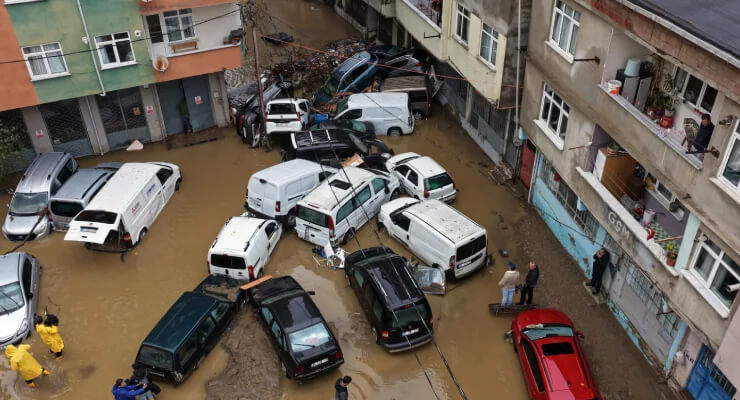
    The death toll from severe flooding in İstanbul rose to two on Thursday as emergency crews continued rescue operations, flights were disrupted and school closures were extended through Friday.


    Torrential rain submerged roads, swept away cars and flooded homes and businesses across Turkey’s largest city, home to around 16 million people. Governor Davut Gül said crews had rescued more than 2,700 people.

    A 34-year-old man died after slipping while trying to cross a flooded street in the northern district of Sarıyer. He struck his head on a curb and was unable to get out of the water. Bystanders pulled him out, but he later died in a hospital, the state-run Anadolu news agency reported.

    His death followed the electrocution of a 14-year-old boy Wednesday evening at a park in Balat, a historic neighborhood on the city’s European side. The boy stepped into a pool of water and was taken to a hospital unconscious but could not be saved, the governor’s office said. Investigations were opened into both deaths.

    Emergency teams worked through the night to evacuate people from flooded buildings. Rescue operations were continuing at 14 locations Thursday, while three people remained hospitalized with injuries that were not life-threatening, Gül said.

    Residents unable to return home were being accommodated in hotels and public facilities.

    Rainfall reached 273.1 millimeters — about 10.8 inches — in Beykoz on the Asian side, according to updated municipal figures. That is equivalent to roughly 273 liters of water falling on every square meter of ground. Sarıyer and Eyüpsultan recorded more than 200 millimeters each.

    At İstanbul Airport, 51 incoming flights were diverted and 19 arrivals and departures were canceled, Gül said.

    Schools will remain closed Friday while teams inspect buildings for electrical faults and other hazards.

    Gül urged residents to avoid unnecessary travel, warning that rain was expected to continue for another two to three days and that the ground was already saturated.

    Turkey is highly vulnerable to climate hazards because of its geography, population exposure and reliance on sectors such as agriculture, the World Bank says.

    Global warming intensifies heavy rainfall, while urban expansion and paved surfaces increase runoff and strain drainage systems, according to the UN’s Intergovernmental Panel on Climate Change.

    The flooding comes less than a month before Turkey hosts the COP31 UN climate conference in the Mediterranean city of Antalya from November 9 to 20.https://x.com/AustraliaZaman/status/2110587851167633585

  • Turkish gov’t takes control of leading pro-opposition news channel as pressure on media grows

    Turkish gov’t takes control of leading pro-opposition news channel as pressure on media grows

    The Turkish government took control of popular pro-opposition news channel Halk TV through state-appointed trustees early Wednesday, halting its live broadcasts as police raided its İstanbul headquarters, the channel reported.

    The İstanbul Chief Public Prosecutor’s Office said the operation was part of an investigation into Halk TV owner Cafer Mahiroğlu over allegations of bribery, bid rigging and money laundering. Prosecutors ordered the detention of 17 suspects, 11 of whom were taken into custody, the DHA news agency reported.

    Mahiroğlu condemned the raid on Wednesday, saying seven members of his family were among those detained.

    “Today is a dark day for Turkey. The public’s right to information is being seized for political reasons,” he said in a video posted on X.


    The state-run Savings Deposit Insurance Fund (TMSF) was appointed as trustee to Halk TV and companies linked to Mahiroğlu.Police blocked the road outside the channel’s headquarters and prevented employees from entering while officers searched the building. Halk TV reporter Gamze Altunay said hundreds of officers were involved.


    Halk TV said Editor-in-Chief Suat Toktaş asked the incoming trustee to allow live programming to continue, but his request was rejected. Toktaş also refused a proposal to work with the new management, describing the takeover as unlawful. MediaRadar news website subsequently reported that prerecorded footage of a Halk TV program remained on air.

    Prosecutors allege that 14.46 million lira (about $293,000) in unrecorded bribes had been paid in connection with İzmir Metropolitan Municipality tenders and that proceeds were transferred to companies owned by or linked to Mahiroğlu. They cited financial intelligence reports and witness statements in support of the allegations.

    Prosecutors also said Mahiroğlu was already wanted on suspicion of bid rigging in a separate investigation into İstanbul Metropolitan Municipality and had left Turkey on March 10, 2025.

    İzmir, Turkey’s third-largest city and a longtime opposition stronghold, had been governed by the Republican People’s Party (CHP) for more than two decades. Mayor Cemil Tugay, elected on the CHP ticket in 2024, joined President Recep Tayyip Erdoğan’s ruling Justice and Development Party (AKP) on October 7 after leaving the CHP in June.

    Mahiroğlu announced the raid on social media, directing criticism at CHP leader Kemal Kılıçdaroğlu and his allies. His initial post did not address the financial allegations.

    Days before the takeover, Halk TV came under attack from Kılıçdaroğlu, who was restored in May as leader of the CHP by a court ruling overturning the party congress at which he lost the leadership in 2023.

    Speaking on KRT television on October 9, Kılıçdaroğlu accused Halk TV of broadcasting false news “24 hours a day” and questioned why its owner, Mahiroğlu, remained abroad.

    He also said his colleagues had complained to broadcasting regulator RTÜK, which responded that the matter fell outside its remit.

    Mahiroğlu rejected the criticism, accusing Kılıçdaroğlu of targeting independent media and elected opposition politicians.

    Özgür Özel, leader of the opposition New Party, condemned the raid and trustee appointment, saying such an operation against a television station was something only dictators would do.

    The takeover coincided with jailed İstanbul Mayor Ekrem İmamoğlu beginning his defense in a corruption trial involving alleged bribery, bid rigging and money laundering at the municipality.

    Özel questioned the timing, pointing to both the trial and public demands for accountability over an investment fund scandal involving alleged market manipulation and political connections that has left investors unable to recover their savings.

    Özel and 90 other lawmakers left the CHP in July to establish the New Party after Kılıçdaroğlu was restored as party leader.

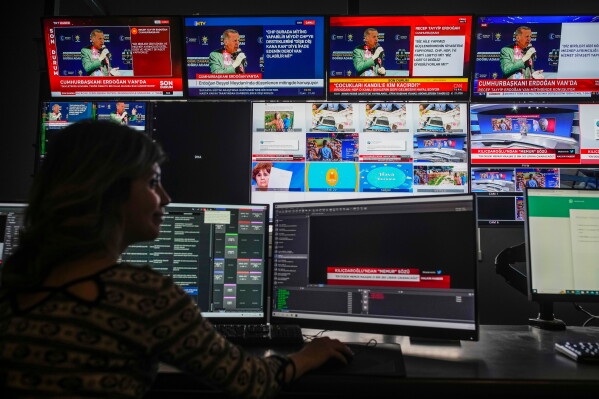
    The takeover of Halk TV comes amid mounting pressure on independent media in Turkey, following the recent blocking of news website T24 and sweeping restrictions on the X accounts of journalists, news organizations and rights groups.

    On September 30 an İstanbul court’s order blocked access to T24’s website and social media accounts over coverage prosecutors described as “LGBT propaganda.” Prosecutors cited 118 items published over the previous year. T24 said the decision followed a campaign of online defamation against the outlet.

    The Freedom of Expression Association (İFÖD) said at least 1,270 X accounts were subject to blocking orders in September, with the platform subsequently withholding about 90 percent of them in Turkey.

    Those affected included journalists, news organizations, academics, economists and rights groups. İFÖD’s own account and its EngelliWeb censorship-monitoring project were also targeted by blocking orders in October.

    Halk TV has also faced criminal investigations and broadcasting penalties. Toktaş was jailed in January 2025 over the broadcast of a telephone conversation with a court-appointed expert witness.

    A court ordered his release in March after 34 days in pretrial detention and acquitted him and four colleagues of attempting to influence judicial officials.

    A separate charge concerning the recording and publication of the conversation was referred for mediation.

    Halk TV, one of Turkey’s leading news channels, began broadcasting on January 10, 2005. It attracted a wide audience with its live coverage of the 2013 anti-government Gezi Park protests, which began over plans to redevelop an İstanbul park and grew into nationwide antigovernment demonstrations.

    Mahiroğlu bought the channel in 2020.

    Turkey’s media crackdown intensified after a failed coup in July 2016, when the government used emergency decrees to shut down newspapers, television channels, radio stations and publishers. By the end of 2017, some 166 media outlets and publishing houses had been closed and their assets confiscated without compensation, the UN human rights office reported.

    Turkey ranked 163rd among 180 countries and territories in Reporters Without Borders’ 2026 World Press Freedom Index, down from 159th in 2025. The group estimates that 90 percent of national media outlets are under government control.