Category: Opinion

  • [OPINION] Can Erdoğan say no to Trump?

    [OPINION] Can Erdoğan say no to Trump?

    Adem Yavuz Arslan* 

    For Turkish citizens trying to understand whether their country could become embroiled in Yemen’s war, the most revealing recent statement came from Washington.

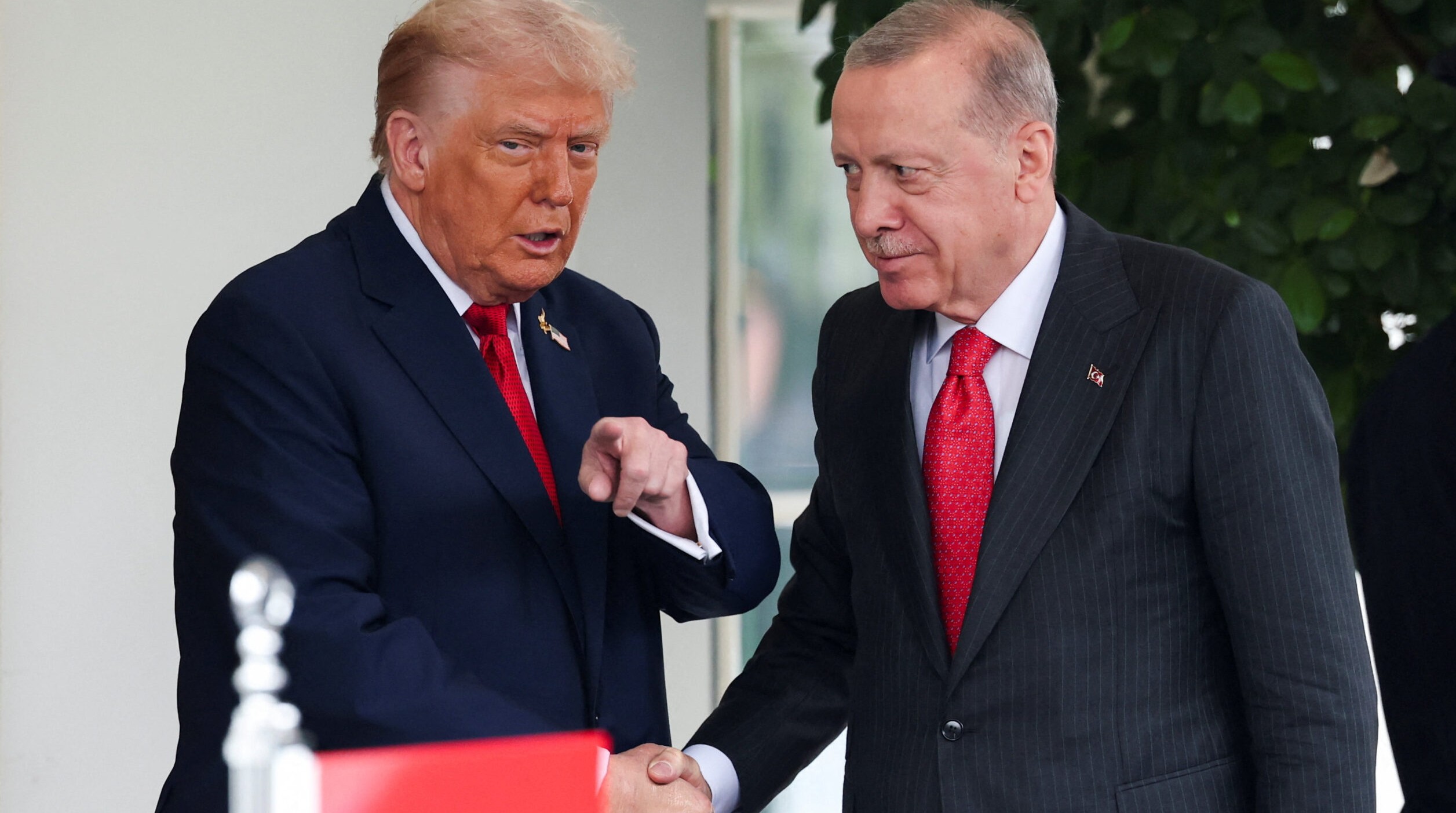
    Speaking to reporters before departing for Alaska on October 13, President Donald Trump suggested he might ask Turkey to help counter Houthi attacks on Saudi Arabia. He appeared confident about the answer: “President Erdogan, I think, would do as I ask.”

    There is no announced Turkish combat deployment to Yemen. Trump’s remark establishes neither that a request has been made nor that President Recep Tayyip Erdoğan has accepted one. But it raises a question with implications beyond the conflict: Why does an American president speak so confidently about his ability to secure another country’s military cooperation?

    Part of the answer may lie in Trump’s habitual exaggeration of his influence. Another part lies in the way Erdoğan governs. By concentrating authority at home and making personal access central to foreign policy, Turkey’s president has made himself the indispensable negotiating partner. He has also made his own vulnerabilities more consequential for the country.

    The Yemen crisis could test how much room that leaves him to refuse Washington.

    Turkey’s involvement already extends beyond diplomatic expressions of solidarity. Ankara had decided to provide Saudi Arabia with defensive and technical assistance, including drone operators, intelligence sharing and logistical support, according to an October 7 Reuters report citing Turkish and US officials.

    The broader framework is the Mecca Joint Defence Agreement, signed by Turkey, Pakistan and Saudi Arabia in August. Its publicly announced principle is sweeping: An armed attack on one signatory is to be treated as an attack on all three. That establishes a collective security commitment but does not, by itself, explain which military actions each government must undertake in a particular crisis.

    Parliament had yet to approve the agreement when Foreign Minister Hakan Fidan discussed it on October 8. He ruled out Turkish participation in offensive operations while describing support for Saudi Arabia’s defense.

    On October 15 Turkey’s Defense Ministry said parliamentary approval of the agreement and the necessary authorization procedures for sending Turkish forces abroad had yet to be completed. Reuters reported that assistance provided before ratification was largely bilateral.

    Erdoğan has left greater flexibility. In responses to Newsweek published on September 25, he said the extent of assistance would depend on the threat and could include more advanced military support. He also cautioned against assuming that every incident would automatically trigger a military response.

    These statements leave substantial questions unanswered about the limits of Turkey’s commitment. They do not justify claiming that Ankara has already agreed to fight in Yemen. Nor does Trump’s confidence prove that Washington possesses a secret undertaking. It does, however, sharpen the need to explain how Turkish decisions will be made — and whose priorities will determine them.

    Saudi Arabia has compelling reasons to seek help. Houthi attacks have brought the war into the kingdom’s economic and political centers. A strike on Riyadh’s King Khalid International Airport on October 10 killed at least 13 people and wounded more than 300.

    The threat reaches beyond the immediate casualties. Disrupted aviation, vulnerable energy infrastructure and uncertainty over the security of major cities undermine the conditions on which Saudi Arabia’s economic transformation depends.

    Military assistance would also carry substantial risks. The Houthis have demonstrated an ability to penetrate defenses supplied at enormous expense, exposing the difficulty of protecting a vast territory against adaptable missile and drone attacks.

    For Turkey, helping intercept an incoming missile and joining a campaign against launch sites inside Yemen would entail different objectives, legal questions and risks. Yet those missions can become connected. Personnel sent to operate defensive equipment may require protection. An attack on them may generate pressure for retaliation. Retaliation may create demands for further operations.

    Such escalation is a possibility, not an inevitability. Preventing it requires that clear limits be established before a deployment becomes politically difficult to reverse.

    Trump’s language offers little reassurance that he views those limits as central.

    On June 24, during a meeting with NATO Secretary-General Mark Rutte, he praised Erdoğan and Turkey’s military while saying he had asked the Turkish leader to stay out of the Iran war and that Erdoğan had complied.

    Whether that account accurately captures Ankara’s reasoning is a separate matter. Its significance lies in the relationship Trump presents to the public: He makes a request and Erdoğan delivers.

    Erdoğan benefits from this presentation in one respect. A friendly American president offers recognition and access. But the same arrangement allows Trump to portray Turkey’s policy choices as personal accommodations.

    That can weaken Erdoğan’s negotiating position. If cooperation is publicly treated as evidence of friendship, refusal becomes a test of the relationship. A disagreement over national interests acquires the character of a personal rebuff.

    Trump has previously shown that praise can coexist with coercion. In October 2019 he threatened to destroy Turkey’s economy and sent Erdoğan a letter containing the admonition, “Don’t be a fool!”

    The friendly language of the present cannot erase that history. Erdoğan is dealing with a president who has demonstrated a willingness to use economic pressure against Turkey and to advertise that pressure publicly.

    The resolution of the Halkbank prosecution adds another dimension.

    On June 17 US District Judge Richard Berman dismissed the criminal indictment against the Turkish state-owned lender after an agreement with the Trump administration. The decision ended a prosecution that had weighed on relations between the two countries for years.

    There is no public evidence connecting that outcome to a Turkish commitment over Yemen. Any claim of an exchange would exceed the available facts.

    Nevertheless, a favorable outcome in a politically important case can influence a relationship without a documented bargain. Trump may regard the resolution as an accomplishment for which Erdoğan owes him consideration. Whether Erdoğan shares that understanding is unknown.

    The distinction matters. An analysis of potential leverage should not become an allegation of a secret deal. But neither should the absence of evidence for a specific bargain end scrutiny of the incentives surrounding future decisions.

    Turkey’s exposure to financial pressure supplies another constraint. A confrontation with Washington can affect investor expectations and the perceived stability of the economy. For any Turkish government, those costs would require consideration. In a system centered on one leader, they may also intersect with concerns about political survival and international acceptance.

    Erdoğan is not without leverage. Turkey’s military capabilities and strategic position give Washington reasons to seek cooperation. His willingness to pursue policies opposed by Western allies also makes blanket descriptions of obedience unconvincing.

    The question is narrower: Can he use Turkey’s assets to negotiate clear limits, or does his reliance on a personal relationship make those limits harder to defend?

    Accountability is essential to answering it.

    Unresolved corruption allegations and politically sensitive financial cases become foreign policy concerns when the public cannot determine whether they influence decisions. Their existence does not prove that a leader is being coerced. The danger arises when independent institutions cannot credibly investigate potential conflicts between the leader’s interests and those of the state.

    Under those conditions even a defensible military decision can become difficult to assess. Citizens cannot know whether their government is responding to a genuine security threat, honoring a clearly defined obligation or protecting a relationship whose full terms remain beyond scrutiny.

    Religious solidarity could further complicate that assessment. A deployment presented as protecting Mecca and Medina would carry emotional force in Turkey. But the protection of holy sites cannot settle questions about command, geographic limits, escalation or withdrawal. Those require specific answers.

    The decisive issue, then, is not Erdoğan’s personal courage in confronting Trump. It is whether Turkey has a decision-making process capable of distinguishing the country’s interests from its president’s needs.

    Before any expanded military commitment, Ankara should explain the threat it intends to address, the limits of its mission and the conditions for ending it. Parliament and the public need enough information to judge those choices.

    Trump may believe Erdoğan will do as he asks. Turkey’s institutions should ensure that belief is never sufficient grounds for sending Turkish soldiers to war.

    *Adem Yavuz Arslan is a journalist with over two decades of experience in political reporting, investigative journalism and international conflict coverage. His work has focused on Turkey’s political landscape, including detailed reporting on the 2016 coup attempt and its aftermath, as well as broader issues related to media freedom and human rights. He has reported from conflict zones such as Bosnia, Kosovo and Iraq, and has conducted in-depth research on high-profile cases, including the assassination of Turkish-Armenian journalist Hrant Dink. Arslan is the author of four books and has received journalism awards for his investigative work. Currently living in exile in Washington, D.C., he continues his journalism through digital media platforms, including his YouTube channel, Turkish Minute, TR724 and X.

    Disclaimer: The views expressed in this opinion piece are those of the author and do not necessarily reflect the editorial stance of Turkish Minute. Turkishminute
  • [OPINION] Corruption behind the mask of religion

    [OPINION] Corruption behind the mask of religion


    When allegations emerged that Fatma Betül Sayan Kaya, a former minister and one of the most senior figures in President Recep Tayyip Erdoğan’s ruling Justice and Development Party (AKP,) and her husband had turned a combined investment of about 163 million Turkish lira ($3.3 million) into more than 2 billion lira (about $41 million) in proceeds from stock sales within months, Kaya resigned from her positions in the party.

    The figures were recently disclosed by opposition politician Zeynel Emre.

    Yet while Turkey and the world were watching what has been described as one of the country’s biggest financial scandals, Kaya had been part of Erdoğan’s delegation at the United Nations summit, appearing as though nothing unusual had happened.

    The Kaya couple, who are widely regarded as being close to the Erdoğan family and his political circle, reportedly invested about 163 million lira between them, much of it in Özata Denizcilik shares, beginning in April 2026.

    According to allegations made by New Party spokesperson Emre, Kaya invested about 63.4 million lira ($1.3 million) and later withdrew about 1.34 billion lira ($27.3 million), while her husband, İlyas Kaya, invested about 99.7 million lira ($2 million) and withdrew about 826 million lira ($16.9 million). Emre alleged that they sold their holdings before the financial crisis and market turmoil that erupted in mid-September.

    Meanwhile, hundreds of thousands of ordinary Turkish investors were caught in the collapse. The crisis has affected more than 450,000 investors across 131 funds, with more than $18 billion in assets held in funds now being liquidated.

    The Kaya couple have reportedly transferred approximately 2.2 billion lira ($44.9 million) to an account designated by the Ministry of Treasury and Finance.

    But returning the money does not, by itself, establish that they committed a crime or constitute a legal admission of wrongdoing. Their transactions, their source of information and the circumstances surrounding the trades still require independent investigation.

    Prosecutors have since moved to freeze the assets of Kaya and her husband as part of the fund investigation.

    That raises much bigger questions.

    Why did no one in Erdoğan’s government seriously ask how a senior ruling-party figure and her husband acquired the capital to make such a large investment, why they invested in this particular stock at precisely that time, and how they managed to exit after such a spectacular rise in its value?

    How can a stock rise so dramatically in only a few months without attracting extraordinary scrutiny? And when such extraordinary and potentially manipulative movements occur, why did the institutions responsible for monitoring the stock market and protecting investors fail to intervene earlier?

    These questions are particularly important because the institutions responsible for regulating and overseeing Turkey’s financial markets are headed by people appointed by the government and operating within Erdoğan’s political system.

    And there is an even bigger question.

    How was a crisis involving 131 funds with assets worth more than $18 billion allowed to develop in the first place? Who benefited from the extraordinary price movements now under investigation?

    There is also a striking contrast in the way Erdoğan’s government treats political opponents and figures close to the ruling establishment. Opposition figures, including İstanbul Mayor Ekrem İmamoğlu, have been arrested and imprisoned amid corruption allegations. In Kaya’s case, prosecutors have now moved to freeze her and her husband’s assets, but neither has been detained or charged over the alleged trades. Where is the same level of scrutiny?

    And why did Kaya remain silent when the allegations first emerged? Her resignation statement said she was stepping aside so the allegations could be investigated independently, but she did not directly address Emre’s detailed claims about the trades.

    If opposition politicians had not publicly disclosed her name and the details of the transactions, would she have voluntarily come forward to explain how she and her husband had allegedly made such extraordinary gains from these trades?

    But perhaps the most painful question is not financial. It is moral.

    Erdoğan, Fatma Betül Sayan Kaya and many other figures in the ruling party regularly present themselves to the public through religious language, symbols and imagery.

    What happens to religion when politicians who invoke it so frequently become associated with privilege, extraordinary wealth and allegations of corruption?

    What happens when religious language becomes a political shield against demands for transparency and accountability?

    What does it do to faith when politicians who constantly invoke Islam and religious values are accused of benefiting from extraordinary financial transactions while ordinary citizens bear the losses?

    And do genuinely religious people recognize the damage that this kind of Islamist politics, using religion as a political shield, can inflict on religion itself?

    The AKP’s rise to power was fueled in large part by the sense of grievance created in the 1990s, when Turkey’s secular establishment imposed severe restrictions on women who wore the headscarf, particularly in universities and public institutions.

    Today, however, the AKP has taken the repression it once condemned to a level far beyond what those old regimes imposed on their opponents. And there is a particularly striking irony in the fact that one of the figures now at the center of corruption allegations is herself a woman who wears the headscarf.

    Sadly, this also seems to have vindicated the warnings that Islamist politicians may embrace democracy, justice and freedoms most enthusiastically when they are in opposition. Once they gain power, the temptation can be to treat those principles as instruments rather than universal values.

    Erdoğan himself has long been widely quoted as expressing such an instrumental view of democracy during his years as mayor of İstanbul: “Democracy is like a tram. You ride it until you reach your destination, then you get off.”

    *Abdülhamit Bilici is the former editor-in-chief of the now-defunct Zaman daily who currently lives in exile in Washington, D.C.

    Disclaimer: The views expressed in this opinion piece are those of the author and do not necessarily reflect the editorial stance of Turkish Minute. Turkishminute
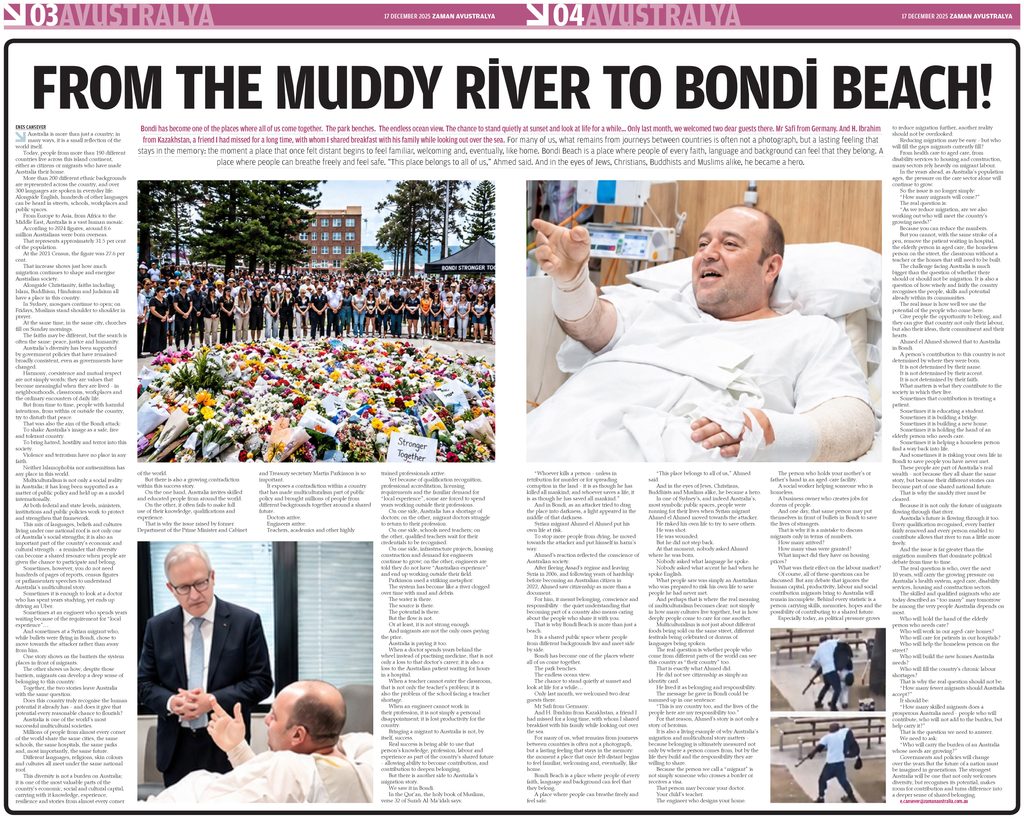
  • From the Muddy River to Bondi Beach!

    From the Muddy River to Bondi Beach!

    Australia is more than just a country; in many ways, it is a small reflection of the world itself.

    Today, people from more than 190 different countries live across this island continent, either as citizens or migrants who have made Australia their home.

    More than 200 different ethnic backgrounds are represented across the country, and over 300 languages are spoken in everyday life. Alongside English, hundreds of other languages can be heard in streets, schools, workplaces and public spaces.

    From Europe to Asia, from Africa to the Middle East, Australia is a vast human mosaic.

    According to 2024 figures, around 8.6 million Australians were born overseas.

    That represents approximately 31.5 per cent of the population.

    At the 2021 Census, the figure was 27.6 per cent.

    That increase shows just how much migration continues to shape and energise Australian society.

    Alongside Christianity, faiths including Islam, Buddhism, Hinduism and Judaism all have a place in this country.

    In Sydney, mosques continue to open; on Fridays, Muslims stand shoulder to shoulder in prayer.

    At the same time, in the same city, churches fill on Sunday mornings.

    The faiths may be different, but the search is often the same: peace, justice and humanity.

    Australia’s diversity has been supported by government policies that have remained broadly consistent, even as governments have changed.

    Harmony, coexistence and mutual respect are not simply words; they are values that become meaningful when they are lived — in neighbourhoods, classrooms, workplaces and the ordinary encounters of daily life.

    But from time to time, people with harmful intentions, from within or outside the country, try to disturb that peace.

    That was also the aim of the Bondi attack:

    To shake Australia’s image as a safe, free and tolerant country.

    To bring hatred, hostility and terror into this society.

    Violence and terrorism have no place in any faith.

    Neither Islamophobia nor antisemitism has any place in this world.

    Multiculturalism is not only a social reality in Australia; it has long been supported as a matter of public policy and held up as a model internationally.

    At both federal and state levels, ministers, institutions and public policies work to protect and strengthen that framework.

    This mix of languages, beliefs and cultures living under one national roof is not only one of Australia’s social strengths; it is also an important part of the country’s economic and cultural strength — a reminder that diversity can become a shared resource when people are given the chance to participate and belong.

    Sometimes, however, you do not need hundreds of pages of reports, census figures or parliamentary speeches to understand Australia’s multicultural story.

    Sometimes it is enough to look at a doctor who has spent years studying, yet ends up driving an Uber.

    Sometimes at an engineer who spends years waiting because of the requirement for “local experience”…

    And sometimes at a Syrian migrant who, while bullets were flying in Bondi, chose to move towards the attacker rather than away from him.

    One story shows us the barriers the system places in front of migrants.

    The other shows us how, despite those barriers, migrants can develop a deep sense of belonging to this country.

    Together, the two stories leave Australia with the same question:

    Does this country truly recognise the human potential it already has — and does it give that potential every reasonable chance to flourish?

    Australia is one of the world’s most successful multicultural societies.

    Millions of people from almost every corner of the world share the same cities, the same schools, the same hospitals, the same parks and, most importantly, the same future.

    Different languages, religions, skin colours and cultures all meet under the same national roof.

    This diversity is not a burden on Australia; it is one of the most valuable parts of the country’s economic, social and cultural capital, carrying with it knowledge, experience, resilience and stories from almost every corner of the world.

    But there is also a growing contradiction within this success story.

    On the one hand, Australia invites skilled and educated people from around the world.

    On the other, it often fails to make full use of their knowledge, qualifications and experience.

    That is why the issue raised by former Department of the Prime Minister and Cabinet and Treasury secretary Martin Parkinson is so important.

    It exposes a contradiction within a country that has made multiculturalism part of public policy and brought millions of people from different backgrounds together around a shared future.

    Doctors arrive.

    Engineers arrive.

    Teachers, academics and other highly trained professionals arrive.

    Yet because of qualification recognition, professional accreditation, licensing requirements and the familiar demand for “local experience”, some are forced to spend years working outside their professions.

    On one side, Australia has a shortage of doctors; on the other, migrant doctors struggle to return to their profession.

    On one side, schools need teachers; on the other, qualified teachers wait for their credentials to be recognised.

    On one side, infrastructure projects, housing construction and demand for engineers continue to grow; on the other, engineers are told they do not have “Australian experience” and end up working outside their field.

    Parkinson used a striking metaphor:

    The system has become like a river clogged over time with mud and debris.

    The water is there.

    The source is there.

    The potential is there.

    But the flow is not.

    Or at least, it is not strong enough.

    And migrants are not the only ones paying the price.

    Australia is paying it too.

    When a doctor spends years behind the wheel instead of practising medicine, that is not only a loss to that doctor’s career; it is also a loss to the Australian patient waiting for hours in a hospital.

    When a teacher cannot enter the classroom, that is not only the teacher’s problem; it is also the problem of the school facing a teacher shortage.

    When an engineer cannot work in their profession, it is not simply a personal disappointment; it is lost productivity for the country.

    Bringing a migrant to Australia is not, by itself, success.

    Real success is being able to use that person’s knowledge, profession, labour and experience as part of the country’s shared future — allowing ability to become contribution, and contribution to deepen belonging.

    But there is another side to Australia’s migration story.

    We saw it in Bondi.

    In the Qur’an, the holy book of Muslims, verse 32 of Surah Al-Ma’idah says:

    “Whoever kills a person — unless in retribution for murder or for spreading corruption in the land — it is as though he has killed all mankind; and whoever saves a life, it is as though he has saved all mankind.”

    And in Bondi, as an attacker tried to drag the place into darkness, a light appeared in the middle of that darkness.

    Syrian migrant Ahmed el Ahmed put his own life at risk.

    To stop more people from dying, he moved towards the attacker and put himself in harm’s way.

    Ahmed’s reaction reflected the conscience of Australian society.

    After fleeing Assad’s regime and leaving Syria in 2006, and following years of hardship before becoming an Australian citizen in 2022, Ahmed saw citizenship as more than a document.

    For him, it meant belonging, conscience and responsibility — the quiet understanding that becoming part of a country also means caring about the people who share it with you.

    That is why Bondi Beach is more than just a beach.

    It is a shared public space where people from different backgrounds live and meet side by side.

    Bondi has become one of the places where all of us come together.

    The park benches.

    The endless ocean view.

    The chance to stand quietly at sunset and look at life for a while…

    Only last month, we welcomed two dear guests there.

    Mr Safi from Germany.

    And H. Ibrahim from Kazakhstan, a friend I had missed for a long time, with whom I shared breakfast with his family while looking out over the sea.

    For many of us, what remains from journeys between countries is often not a photograph, but a lasting feeling that stays in the memory: the moment a place that once felt distant begins to feel familiar, welcoming and, eventually, like home.

    Bondi Beach is a place where people of every faith, language and background can feel that they belong.

    A place where people can breathe freely and feel safe.

    “This place belongs to all of us,” Ahmed said.

    And in the eyes of Jews, Christians, Buddhists and Muslims alike, he became a hero.

    In one of Sydney’s, and indeed Australia’s, most symbolic public spaces, people were running for their lives when Syrian migrant Ahmed el Ahmed moved towards the attacker.

    He risked his own life to try to save others.

    He was shot.

    He was wounded.

    But he did not step back.

    At that moment, nobody asked Ahmed where he was born.

    Nobody asked what language he spoke.

    Nobody asked what accent he had when he spoke English.

    What people saw was simply an Australian who was prepared to risk his own life to save people he had never met.

    And perhaps that is where the real meaning of multiculturalism becomes clear: not simply in how many cultures live together, but in how deeply people come to care for one another.

    Multiculturalism is not just about different foods being sold on the same street, different festivals being celebrated or dozens of languages being spoken.

    The real question is whether people who come from different parts of the world can see this country as “their country” too.

    That is exactly what Ahmed did.

    He did not see citizenship as simply an identity card.

    He lived it as belonging and responsibility.

    The message he gave in Bondi could be summed up in one sentence:

    “This is my country too, and the lives of the people here are my responsibility too.”

    For that reason, Ahmed’s story is not only a story of heroism.

    It is also a living example of why Australia’s migration and multicultural story matters — because belonging is ultimately measured not only by where a person comes from, but by the life they build and the responsibility they are willing to share.

    Because the person we call a “migrant” is not simply someone who crosses a border or receives a visa.

    That person may become your doctor.

    Your child’s teacher.

    The engineer who designs your home.

    The person who holds your mother’s or father’s hand in an aged-care facility.

    A social worker helping someone who is homeless.

    A business owner who creates jobs for dozens of people.

    And one day, that same person may put themselves in front of bullets in Bondi to save the lives of strangers.

    That is why it is a mistake to discuss migrants only in terms of numbers.

    How many arrived?

    How many visas were granted?

    What impact did they have on housing prices?

    What was their effect on the labour market?

    Of course, all of these questions can be discussed.

    But any debate that ignores the human capital, productivity, labour and social contribution migrants bring to Australia will remain incomplete. Behind every statistic is a person carrying skills, memories, hopes and the possibility of contributing to a shared future.

    Especially today, as political pressure grows to reduce migration further, another reality should not be overlooked:

    Reducing migration may be easy — but who will fill the gaps migrants currently fill?

    From health care to aged care, from disability services to housing and construction, many sectors rely heavily on migrant labour.

    In the years ahead, as Australia’s population ages, the pressure on the care sector alone will continue to grow.

    So the issue is no longer simply:

    “How many migrants will come?”

    The real question is:

    “As we reduce migration, are we also working out who will meet the country’s growing needs?”

    Because you can reduce the numbers.

    But you cannot, with the same stroke of a pen, remove the patient waiting in hospital, the elderly person in aged care, the homeless person on the street, the classroom without a teacher or the homes that still need to be built.

    The challenge facing Australia is much bigger than the question of whether there should or should not be migration. It is also a question of how wisely and fairly the country recognises the people, skills and potential already within its communities.

    The real issue is how well we use the potential of the people who come here.

    Give people the opportunity to belong, and they can give that country not only their labour, but also their ideas, their commitment and their hearts.

    Ahmed el Ahmed showed that to Australia in Bondi.

    A person’s contribution to this country is not determined by where they were born.

    It is not determined by their name.

    It is not determined by their accent.

    It is not determined by their faith.

    What matters is what they contribute to the society in which they live.

    Sometimes that contribution is treating a patient.

    Sometimes it is educating a student.

    Sometimes it is building a bridge.

    Sometimes it is building a new home.

    Sometimes it is holding the hand of an elderly person who needs care.

    Sometimes it is helping a homeless person find a way back into life.

    And sometimes it is risking your own life in Bondi to save people you have never met.

    These people are part of Australia’s real wealth — not because they all share the same story, but because their different stories can become part of one shared national future.

    That is why the muddy river must be cleared.

    Because it is not only the future of migrants flowing through that river.

    Australia’s future is flowing through it too. Every qualification recognised, every barrier fairly removed and every person enabled to contribute allows that river to run a little more freely.

    And the issue is far greater than the migration numbers that dominate political debate from time to time.

    The real question is who, over the next 10 years, will carry the growing pressure on Australia’s health system, aged care, disability services, housing and construction sectors.

    The skilled and qualified migrants who are today described as “too many” may tomorrow be among the very people Australia depends on most.

    Who will hold the hand of the elderly person who needs care?

    Who will work in our aged-care homes?

    Who will care for patients in our hospitals?

    Who will help the homeless person on the street?

    Who will build the new homes Australia needs?

    Who will fill the country’s chronic labour shortages?

    That is why the real question should not be:

    “How many fewer migrants should Australia accept?”

    It should be:

    “How many skilled migrants does a prosperous Australia need — people who will contribute, who will not add to the burden, but help carry it?”

    That is the question we need to answer.

    We need to ask:

    “Who will carry the burden of an Australia whose needs are growing?”

    Governments and policies will change over the years.

    But the future of a nation must be imagined in generations. The strongest Australia will be one that not only welcomes diversity, but recognises its potential, makes room for contribution and turns difference into a deeper sense of shared belonging.

    [email protected]

  • [OPINION] Militant secularists meddle in politicking ahead of crucial Turkish elections

    [OPINION] Militant secularists meddle in politicking ahead of crucial Turkish elections

    Türkmen Terzi- Turkishminute

    Although 99 percent of Turkey’s population is Muslim, the country is constitutionally a secular state with no official religion. As a result, the people of Turkey have never enjoyed domestic peace due to constant tensions between different ethnic, cultural and ideological groups spanning many decades. Turkey’s “deep state,” which refers to a clandestine network consisting of bureaucratic and security officials operating outside official channels to protect Turkey’s secular Republican regime, has traditionally played a key role in increasing social tension. However, the formation of the Ata (Ancestral) Alliance—an electoral alliance created on March 11 to compete in the 2023 Turkish presidential election—suggests that the deep state has moved from secretive operations to direct political involvement.

    Throughout modern Turkish history, the deep state, which can be described as a group spearheaded by military members, has targeted communists and Greek and Armenian minorities, Islamists and Kurdish politicians to maintain absolute secularist rule. This fact has been publicly admitted by former Turkish presidents Kenan Evren and Süleyman Demirel as well as former prime minister Bülent Ecevit. Nevertheless, Islamist President Recep Tayyip Erdoğan, himself a victim of the military establishment, managed to form a coalition with the deep state by sharing executive power with infamous figures, including former generals, controversial bureaucrats and mafia leaders since the early 2010s. Erdoğan aimed to cover up his corruption and purge Gülen movement members from key government institutions. He prevented Turkish police and the judiciary from carrying out the December 17-25, 2013 corruption and bribery operation that involved several ministers and his son Bilal Erdoğan. Erdoğan called the corruption case an “international plot” and accused Gülen movement members within the police and judiciary of carrying out these operations. To stay in power, Erdoğan formed an alliance with Doğu Perinçek, the leader of Turkey’s ultranationalist Motherland Party who wields significant influence in the Defense Ministry. As a result, members of the deep state have filled key state positions over the last 10 years, and they are now likely preparing for the final blow to Erdoğan, whose power is waning.

    The main opposition Republican People’s Party (CHP), formed by Mustafa Kemal Atatürk, founder of the modern Turkish Republic, is a social democrat party representing a center-left, secular ideology. Following the collapse of the Ottoman Empire, Ataturk’s CHP implemented modern reforms and promoted a European lifestyle. The members of the ATA alliance, including the Victory Party, the Justice Party, the Homeland Party (Memleket) and the Turkish Alliance Party, are also secular, nationalist parties, like the main opposition CHP and Erdoğan’s ally, the Nationalist Movement Party (MHP).

    However, the CHP is not a militarist party, and the MHP is a nationalist yet conservative party that does not share the anti-Ottoman, anti-Islamic view. The CHP and MHP maintain a more balanced view of ethnic minorities and Syrian refugees. These parties would like the Syrians to return to their homeland but are not provoking the public against them. On the other hand, ATA members such as Victory Party leader Ümit Özdağ often make statements regarding the need for Syrians to leave Turkey and have organized campaigns against refugees. The presidential candidate of the ATA Alliance, Dr. Sinan Oğan, shares similar extreme views with Perinçek and Özdağ. Oğan frequently expresses far-right opinions regarding Syrian refugees. In March 2017 he commented on CNN TURK that Turkey must send 500,000 Syrians to Europe. In a recent election video, Dr. Oğan vows to send Syrians back home and threatens political parties that have coalitions with pro-Kurdish parties and those promoting Pan-Turanism, an ideology aiming to unite all Turkic peoples.

    Election polls indicate that President Erdoğan will face the greatest test of his political career in the upcoming election scheduled for May 14. Erdoğan has relied on the nationalist vote since the pro-Kurdish opposition Peoples’ Democratic Party (HDP) surpassed the 10 percent electoral threshold, causing Erdoğan’s Justice and Development Party (AKP) to lose its majority of seats in parliament in the June 2015 general election and the loss of the İstanbul Municipality to the CHP in 2019. Turkey’s third-largest party, the HDP, has not fielded a presidential candidate this time, allowing Kurds to vote for Erdoğan’s main rival, Kemal Kılıçdaroğlu, the leader of the main opposition CHP. Erdoğan formed an electoral alliance with the MHP in 2018 and has been sharing executive power with the ultranationalist Motherland Party since 2013.

    Erdoğan’s 20-year-long regime has been difficult for Turkey’s secularists, who have lost their privileges and feel stifled under his authoritarian rule. Turkey now faces a new nationalism as militant secularists have vowed to take revenge on the AKP rulers. Although their vote potential is minimal, they enjoy strong representation in key state institutions. Furthermore, they share a similar ideology with the CHP, the party that has a chance to emerge victorious in the May 14 presidential and parliamentary elections. If Erdoğan loses the upcoming presidential election, these militant secular parties, whose leaders are known for their affiliation with the deep state and their anti-Islamic, anti-Ottoman and anti-European Union views, may launch a purge of AKP members with the aim of re-establishing their absolute secular regime.

  • [OPINION] Not the top court but Erdoğan will seal the fate of the pro-Kurdish HDP

    [OPINION] Not the top court but Erdoğan will seal the fate of the pro-Kurdish HDP


    Ali Yıldız*-turkishminute.

    The Turkish Supreme Court of Appeals’ Chief Public Prosecutor Bekir Şahin on March 17, 2021 lodged a case for the closure of the pro-Kurdish Peoples’ Democratic Party (HDP) with the Turkish Constitutional Court. Şahin also asked the court to ban more than 450 Kurdish politicians from politics for five years. The indictment charges the pro-Kurdish party and its members with “aiming to disrupt and destroy the … unity of the state with their statements and actions.” The prosecutor claims “[The HDP] has never sided with Turkey in any national issue, and to the contrary has chosen to side with those against Turkey.”

    Şahin was appointed as the Supreme Court of Appeals’ chief public prosecutor by President Recep Tayyip Erdoğan. It would not be unfair to call him hand-picked because Erdoğan appointed him despite his finishing fourth in the election for the post, ignoring the democratic choice of electors who were his fellow judges and prosecutors.

    After the HDP presented its preliminary defense to the court, the prosecutor’s office submitted its opinion, urging that the objections and arguments raised by the HDP be dismissed and the HDP be permanently closed. The prosecution argued that the HDP “has become a focal point of acts against the indivisible integrity of the state.” The request for a political ban was also reiterated.

    Why has the HDP been targeted?

    The Constitutional Court has shut down pro-Kurdish parties several times in the past. A total of seven Kurdish parties have been either closed by the court or dissolved themselves to avoid closure. Similarly, two Islamist parties that are regarded as the predecessors of the ruling Justice and Development Party (AKP) were also closed by the Constitutional Court. And Erdoğan’s AKP itself avoided closure in 2008, prompting Erdoğan to take the Constitutional Court under his control.

    Erdoğan constantly said in the past that he was against the closure of political parties. “Individuals, not an entire party, should be punished for their mistakes. … It is unjust to penalize an entire party because of its leader or one member,” said Erdoğan. Yet he has refrained from expressing his opinion on the closure case against the HDP.

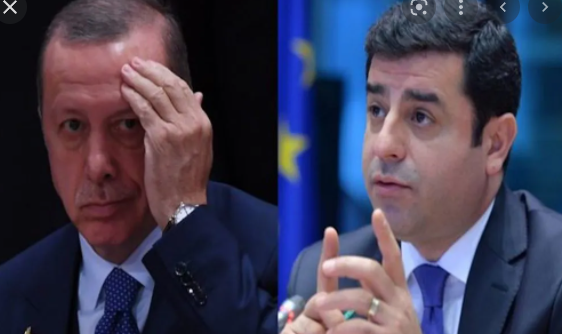
    Erdoğan’s grudge against the HDP and its former co-chair Selahattin Demirtaş culminated in 2015 when Demirtaş launched a political campaign prior to the June elections, telling Erdoğan, “We won’t let you become president.” The campaign was a success as the AKP lost its majority in parliament for the first time since it came to power in 2002, triggering a new election. After this political campaign, the HDP and its members became the target of the AKP, leading to the imprisonment of Demirtaş and scores of deputies and mayors from the Kurdish party, and eventually to the closure case.

    With the HDP closure case underway, the AKP strengthened its influence at Turkey’s top court, which has exclusive jurisdiction over cases for closure/dissolution of political parties. On Jan. 20, 2022 the AKP-controlled parliament elected lawyer Kenan Yaşar to the Constitutional Court for a 12-year term. Yaşar, who was chair of the Çorum Bar Association, was also an executive at the AKP provincial branch in the same city and a former candidate for parliament from the AKP.

    AKP’s longstanding court packing strategy

    The AKP and its chairperson President Erdoğan have never ignored the importance of controlling the judiciary to remain in power. To this end, they carried out so-called constitutional reforms in 2010 and 2017 to change the structure and judges of the Constitutional Court. The court currently consists of 15 judges, 12 of whom are either selected or appointed by the president, while three are elected by parliament. As Erdoğan’s AKP has been controlling the parliament since 2002 and holding the presidency of the republic since 2007, 12 of the incumbent judges were appointed either by former president Abdullah Gül (5/15) or by the incumbent president, Erdoğan (7/15) — both founders of the AKP — while the remaining three were elected by a parliament controlled by the AKP.

    Without doubt, the political affiliation and personal loyalty of the candidates have been the main factors in these appointments and elections. As the AKP no longer hides its desire to gain absolute control over the judiciary, the partisanship of the recently appointed judges is more significant. For instance Yıldız Seferinoğlu, who was appointed to the court in 2019, had been a member of parliament from the AKP between 2015 and 2018. Selahaddin Menteş and Basri Bağcı were deputy ministers of justice in the AKP government before their appointment to the Constitutional Court.Former İstanbul chief public prosecutor İrfan Fidan, who was appointed to the top court by Erdoğan last year, was responsible for several politically motivated prosecutions and sham trials to suppress critics of the government. One of those cases was that of businessman and philanthropist Osman Kavala, which triggered an infringement procedure against Turkey at the Council of Europe as Turkey did not comply with a ruling from the European Court of Human Rights (ECtHR) for his release. The infringement procedure bears the risk of Turkey’s expulsion from Europe’s most important human rights body.

    As a result of these political appointments, the Constitutional Court has been packed with pro-AKP figures, and it eventually has aligned its judgments with those of the executive body, namely the will of President Erdoğan. The AKP’s hand-picked judges at the top court will decide on the fate of the party’s rival, the HDP.

    It is hard to predict the outcome of the ongoing case as a decision from the court will not be based on law, facts or evidence. On the contrary, many domestic and international factors including the AKP’s political strategies will determine the outcome. From its initiation to the end, the closure case against the HDP has been designed to serve the political interests of the AKP and its leader Erdoğan and has nothing to do with the rule of law or the right to a fair trial. In a nutshell the AKP has put its rival on trial, and it will make a decision in line with its own political interests.

    * Ali Yıldız is a Brussels-based lawyer and founder of The Arrested Lawyers Initiative.

  • [OPINION] Why legitimate Kurdish politics disturbs Erdoğan

    [OPINION] Why legitimate Kurdish politics disturbs Erdoğan

    Türkmen Terzi https://www.turkishminute.com/

    Recent election surveys show that the electoral alliance between Turkish President Recep Tayyip Erdoğan’s Justice and Development Party (AKP) and the Nationalist Movement Party (MHP) is failing to secure sufficient support for the next general election, slated for June 18, 2023. For Erdoğan to be elected president for a second term under the presidential system, Kurdish votes are crucial and he has thus sought to create a rift in the Kurdish political movement to secure these votes.

    Erdoğan’s recent comments indicate ulterior motives in his Kurdish policy as he attempts to pit pro-Kurdish Peoples’ Democratic Party (HDP) former co-chair Selahattin Demirtaş, who has been in jail since 2016, against the jailed leader of the outlawed Kurdistan Workers’ Party (PKK), Abdullah Öcalan, to secure Kurdish votes.

    “The one in Edirne will be called to account by the one in İmralı,” he said, referring to the prisons where Demirtaş and Öcalan are held.

    Öcalan and Demirtaş, who both remain imprisoned, are still considered a threat by Erdoğan. Öcalan is considered a threat to Turkey’s national security, being the founder of the PKK. Tens of thousands of armed PKK militants still regard Öcalan as their symbolic and sublime leader. Erdoğan, however, views Demirtaş as an even bigger threat than Öcalan since the young Demirtaş has risen in popularity among Kurds, and this will likely complicate the election outcome for him.

    Erdoğan secured 52 percent of the vote, while his main rival, Ekmeleddin İhsanoğlu, secured 38 percent of the vote in the first presidential election by popular vote in 2014, and this huge victory meant there was no need for a runoff. The HDP’s candidate Demirtaş garnered 9.76 percent of the vote and was the first presidential candidate in Turkish history who did not hesitate to reveal his Kurdish identity during an election campaign.

    While Demirtaş did not win the election, he paved the way for the HDP to participate in the general election a year later, also adopting a more left-wing rhetoric that addresses Turkey’s general problems. Demirtaş’s “peace”-oriented politics bore fruit in the June 2015 election, with his party, the HDP, gaining the highest number of votes in the party’s history, surpassing the 10 percent election threshold and garnering 13.1 percent of the vote, thereby securing 80 seats in parliament. Turkey’s ruling AKP lost its parliamentary majority for the first time in 13 years but remained the largest party. Of course, Erdoğan refused to accept the election results and a snap election was announced by him on Aug. 24, 2015. The AKP secured 49.5 percent of the vote in the November 2015 election. The HDP managed to secure 10.8 percent despite the violence they faced following the June victory.

    Former Prime Minister Ahmed Davutoğlu, who resigned as AKP chairman and prime minister in May 2016 following pressure from Erdoğan, told the media in August 2019 that the days between June 7 and Nov. 1, 2015 were among the darkest in Turkish history as many bomb blasts hit several Turkish cities and hundreds of Kurds lost their lives. He accused the AKP administrators of being responsible for these brutal acts, which transpired despite Turkey’s counterterrorism policy. Erdoğan ended a settlement process between the HDP and his government that aimed at solving Turkey’s decades-long Kurdish issue by declaring on June 17, 2015 that he no longer recognized the “Dolmabahçe Agreement,” which was signed between the AKP and the HDP in February 2015. The document outlined a 10-item list as a roadmap for a final solution to Turkey’s Kurdish issue and a 30-year-long PKK armed insurgency.

    Demirtaş who has been imprisoned since 2016, was Turkey’s first presidential candidate who from a jail cell secured 8.32 percent of the vote in the 2018 presidential election. Turkish courts accuse Demirtaş of disseminating terrorist propaganda and refuse to release him despite a landmark judgment issued by the European Court of Human Rights on Dec. 22, 2020 requiring his immediate release.

    The HDP’s latest blow to Erdoğan’s AKP was the main opposition Republican People’s Party’s (CHP) victory in the İstanbul municipal election held on June 23, 2019. The election was a repeat of the March 2019 mayoral election, which was annulled by the Supreme Election Board (YSK) on May 6, 2019. The HDP’s votes contributed to the victory of CHP candidate Ekrem İmamoğlu.

    It is ironic that Erdoğan had long recognized PKK leader Öcalan as an interlocutor in the Kurdish settlement process that was initiated in 2009 as part of a meeting between Turkish intelligence officers and Öcalan, but not the legitimate pro-Kurdish party HDP leader Demirtaş. Öcalan’s PKK has been involved in an armed struggle against the Turkish state since 1984 that has resulted in the deaths of tens of thousands of Turkish soldiers and civilians. Erdoğan also allowed Öcalan’s “peace” letter to be read to a crowd of hundreds of thousands celebrating the traditional spring festival of Nowruz in Turkey’s Kurdish-majority southeastern city of Diyarbakır in March 2015. Turkey’s state-owned Kurdish-language TV channel TRT Kurdi aired an interview with Öcalan’s younger brother, Osman Öcalan, who called on the Kurds in Turkey to remain impartial in the Istanbul municipal election rerun on June 23 and criticized CHP candidate İmamoğlu for failing in service delivery to the Kurds.

    On the other hand, the Turkish president shows no mercy for Demirtaş, who was involved only in legitimate politics in parliament and who received not only the Kurdish vote but also support from various segments of Turkish society, such as leftists, liberals and conservatives.

    Erdoğan fully backed the Kurdish peace process between 2013 to 2015 but then found an excuse to launch a war against Kurds following his party’s loss of its parliamentary majority in the June 2015 general election. Prominent journalist Hasan Cemal, well-known for his extensive writing on the Kurdish issue, predicted Erdoğan’s real intention and asserts that Erdoğan’s objective with regard to the Kurdish peace process was merely to secure the Kurdish vote, and when he lost Kurdish support, did not hesitate to launch a full-fledged war on Kurds and shed blood.

    Demirtaş has continued challenging Erdoğan and just last week issued a statement criticizing Erdoğan for keeping Öcalan in complete isolation for years.

    Erdoğan has no intention of solving the Kurdish issue but has his sights set on Kurdish votes. The AKP government has no qualms about sitting with members of the outlawed PKK or HDP leaders to gain more votes; however, when the party loses votes, the AKP without hesitation destroys Kurdish cities to please its nationalist allies.

  • Perpetrator of 3 Syrian men’s murder admits to committing hate crime

    Perpetrator of 3 Syrian men’s murder admits to committing hate crime

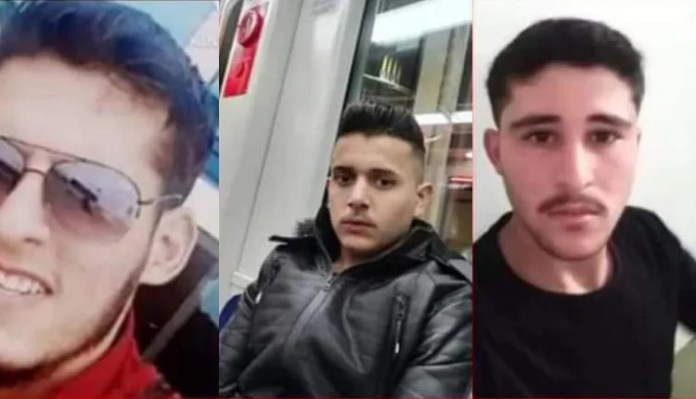
    The perpetrator of the murder of three Syrian men, which took place in Turkey’s İzmir province in November, has admitted in his testimony to a prosecutor to have committed a hate crime, Turkish Minute reported.

    The Turkish man poured gasoline over the Syrians, identified as Mamoun al-Nabhan, 23; Ahmed al-Ali, 21; and Muhammed el-Bish, 17, while they were asleep and set them on fire on Nov. 16, according to Evrensel.

    The daily said the perpetrator, born in 1981, was offered a chance to take part in the extrajudicial operations of JİTEM by his commander while he was doing his military service in the 2000s and that he accepted the offer.

    JİTEM, the Gendarmerie Intelligence and Anti-terror Unit, was a clandestine military organization accused of involvement in the torture, disappearance and execution of many Kurdish politicians and businesspeople during the 1990s, a period of bloody conflict between the Turkish state and Kurdish militants.

    “I can’t talk about them [JİTEM operations] now, it’s a state secret. Then I came back to İzmir, my hometown. … One day I found a note on my car saying ‘Begin duty.’ After a while I found another note saying ‘Continue duty.’ A third note then said ‘Start cleansing,’” said the perpetrator, who then explained that he interpreted the third note as someone ordering him to “cleanse Turkey of Syrians,” Evrensel said.

    The perpetrator then told the prosecutor that he had five liters of gasoline in his car on the night of the attack and that he used it to set the three Syrians on fire. They were all working for the Birlik Beton construction company and staying in the same room, according to Evrensel.

    The daily further said that after taking his statement, the prosecutor’s office requested a psychological evaluation of the attacker.

    Meanwhile, human rights defender and Peoples’ Democratic Party (HDP) deputy Ömer Faruk Gergerlioğlu on Thursday questioned the reason why the hate attack targeting the three Syrians was kept a secret from the public for over a month and why people only recently found out about it in the news.

    “This was a hate crime. … The public shouldn’t be talking about anything but this right now. Unfortunately, this hatred [of Syrians] has turned into a culture of lynching,” the MP said during a press conference in parliament.

    Mustafa Yeneroğlu, a deputy from Turkey’s opposition Democracy and Progress Party (DEVA), on Thursday asked in a parliamentary question posed to Interior Minister Süleyman Soylu if claims that the perpetrator of the hate crime was only arrested after he killed two Turks in the aftermath of setting the three Syrians on fire were true.

    “It was claimed that the killing of the three Syrians wasn’t investigated as a murder [case] and that an investigation was launched only after the suspect stabbed two Turkish citizens to death and that only then was the suspect arrested,” the MP said, asking Soylu the reason why there wasn’t an effective investigation launched into the hate crime before the murder of the two Turks.

    Yeneroğlu also asked whether the allegation that the families of the murdered Syrians were summoned to the police station afterward and warned to keep quiet about the attack was true.

    Refugees in Turkey have been increasingly targeted by hate speech and hate crimes and are blamed for many of Turkey’s social and economic troubles.

    Turkish media including pro-government and opposition outlets fuel and exploit the flames of hatred against people who fled their countries and sought refuge in Turkey.

    According to the latest figures provided by Interior Minister Süleyman Soylu on Nov. 22, Turkey is home to a total of 4,038,857 refugees from around the world. Speaking to parliament’s Planning and Budget Committee, Soylu said 3,731,028 of these were Syrian refugees who are residing in Turkey under temporary protection status. The number of refugees with international protection status is 307,829. SCF

  • Journalist Hasan Cemal faces 8 years in prison on Erdoğan insult charges

    Veteran journalist Hasan Cemal is facing eight years in prison charges of insulting Turkish President Recep Tayyip Erdoğan for two tweets he posted in 2016 and 2020, the T24 news website reported on Friday.

    The first tweet mentioned in the indictment was shared four days after a controversial coup attempt in Turkey on July 15, 2016. In the tweet Cemal had said, “The criterion for being a democrat is not only to stand against a military coup. It is also to say no to a deepening ‘ERDOĞAN COUP’.”

    The second tweet referenced in the indictment is a comment on an opinion piece by Professor Murat Belge titled “The Caliphate.” Sharing the link to the piece, Cemal had said, “If the caliphate is to return, I suppose the caliph will be Tayyip Erdoğan.”

    In his first testimony in October, Cemal, who writes for T24 news website, said the tweets do not contain any insults and that he was exercising his right to freedom of expression.

    In addition to a prison sentence, the prosecutor also demanded a ban on certain civil rights including voting and running for office.

    Insulting the president is subject to criminal charges under the controversial Article 299 of the Turkish Penal Code (TCK), and thousands of people in the country are under investigation, with most of them facing the threat of imprisonment over alleged insults of Erdoğan. Whoever insults the president can face up to four years in prison, a sentence that can be increased if the crime was committed through the mass media.

    The insult cases generally stem from social media posts shared by Erdoğan opponents. The Turkish police and judiciary perceive even the most minor criticism of Erdoğan or his government as an insult. SCF

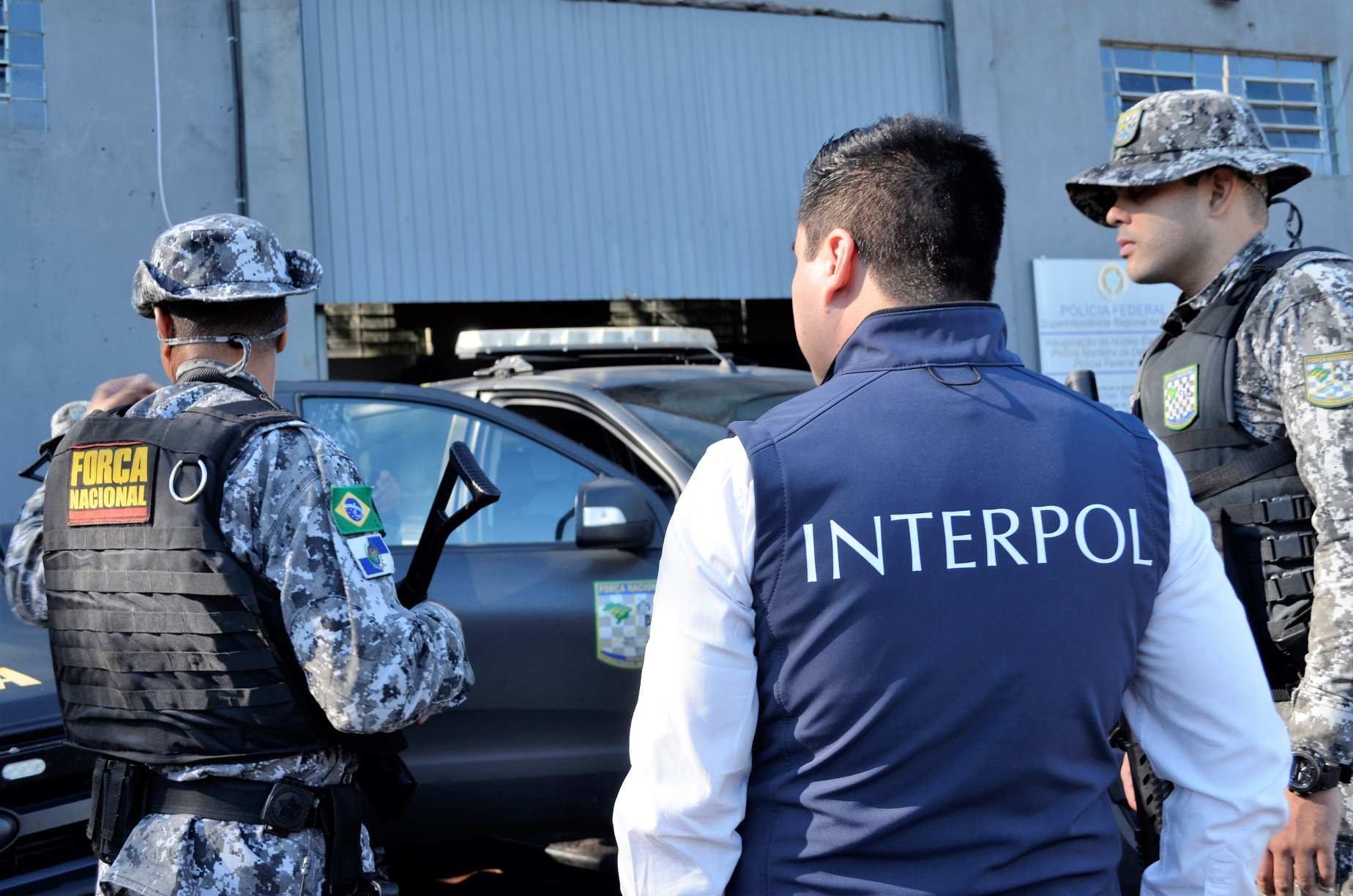
  • Will INTERPOL offer Erdoğan a lifeline?

    Will INTERPOL offer Erdoğan a lifeline?

    Cevheri Güven-turkishminute

    Murat Acar, a professor of radiology, was one of tens of thousands of Turkish citizens whose passports were cancelled by the government after a failed military coup in July 2016. He had previously received an invitation from Bahrain’s King Hamad University in December 2015 and had moved to the Gulf country to work. A few days after the failed putsch in Turkey, his passport as well as those of his family members were cancelled in a mass cancellation campaign led by the Interior Ministry as part of post-coup state of emergency measures, beginning with some 50,000 people and to ultimately reach 250,000. The Turkish police communicated this to INTERPOL’s systems.

    In August 2016, at the initiative of Hatun Demirer, the Turkish ambassador to Bahrain, the Bahraini police confiscated the passports of the Acar family, who then lodged an asylum application with the office of the United Nations High Commissioner for Refugees out of fear that they might be the subject of an extradition to Turkey and a politically motivated arrest. On Oct. 7, 2016 the Bahraini police raided their home, forcibly took them to the airport and handed them over to a police team from Turkey. The family was rendered to Turkey and kept at a police station close to Atatürk Airport from Oct. 8 to 12. Yet no entry about them was made in the official police records, and they were officially “at large” during that time. Acar and his wife were later brought to the Ankara Police Department, where they spent 18 days undergoing repeated unofficial interrogations full of verbal insults and threats, without their lawyers. They were held at a gym located in the police department’s garden, handcuffed, together with hundreds of people who were tortured. During that time, Acar encountered Nuri Akpınar, a professor who was also rendered from Bahrain and who showed signs of torture on his body. It has been widely documented that the department in Ankara was a torture center after the coup. Arrested by a court, Acar remained behind bars for 30 months.

    The team that rendered Akpınar to Turkey was a group of officers with the Turkish INTERPOL. According to Acar and Akpınar’s case file, these officers were officially tasked with going to Bahrain and bringing back the people handed over by the local authorities. Yet the file contains no documents pointing to an official extradition procedure. That’s why Acar describes the incident as an abduction.

    Because INTERPOL police was involved in his rendition, Acar wrote a letter from prison to the organization’s headquarters in Lyon, France, asking whether they were aware of what had happened. In response, the organization said its databases showed no entry made by Turkish or Bahraini authorities about him. In his court statement Acar described the incident as “an abduction in which INTERPOL police were involved, unbeknownst to INTERPOL itself.”

    After several cases similar to Acar’s, INTERPOL stopped accepting passport cancellation notices from Turkey on the grounds that they were politically motivated. Turkish Interior Minister Süleyman Soylu’s harsh reaction was not enough to change the organization’s stance.

    While the Turkish government has failed to obtain a positive outcome from its enterprises with INTERPOL, it does perceive opportunities at the upcoming 89th INTERPOL General Assembly, scheduled to be held in İstanbul Nov.21-25. While many countries have been refraining from hosting international events due to COVID-19, Turkey was willing to host the meeting.

    The event will be attended by the INTERPOL representatives of 194 member states. Each country has one vote at the meeting.

    The Turkish government has been conducting an intensive lobbying campaign to alter INTERPOL’s policies concerning its passport cancellations. All participants have been invited along with their family members, and the Turkish government will cover all their expenses.

    In addition to passport cancellations, Turkey also sent thousands of Red Notice requests after the coup, mostly for alleged members of the Gülen movement, which the Turkish government accuses of orchestrating the abortive putsch. These requests were rejected by INTERPOL on the grounds that they were political. Article 3 of the organization’s constitution prohibits INTERPOL’s involvement in crimes with a military, political, religious or racial dimension. While the Turkish side insists that their requests concern terrorism, sending several delegations to Lyon, it has thus far not been able to convince its interlocutors.

    In 2017 Turkey changed strategy and started to flag its dissidents’ passports as lost or stolen on INTERPOL’s relevant database as a backdoor method to cancel the passports. After a wave of complaints, INTERPOL established that Ankara was in violation of regulations and restricted Turkey’s access to the system. One of the Turkish government’s aims at the İstanbul meeting will be the lifting of these measures.

    Highlighting the importance attached to the upcoming event, Deputy Foreign Minister Yavuz Selim Kıran said at a parliamentary meeting in June that INTERPOL was failing to honor its obligations in fighting terrorism.

    “In our cooperation with INTERPOL, we are facing problems such as the rejection of Red Notice … requests, the deletion of existing Red Notices and the blocking of Turkey’s access to the Stolen and Lost Travel Document Database. By hosting this meeting, we will explain our anti-terror policies, particularly concerning FETÖ,” Kıran said, using the Turkish government’s derogatory term to refer to the Gülen movement. “From this perspective, the event will be a significant opportunity.”

    Lütfi Çiçek, the chair of Turkey’s national INTERPOL bureau, announced that the delegates were expected with their family members and that they were preparing “social programs that include many activities.”

    Oğuzhan Albayrak, a former Turkish diplomat and the director of the German-based Human Rights Defenders, considers the possible outcomes of Turkey’s efforts to convince INTERPOL.

    “The Turkish government attaches great importance to the meeting. Rather than a general assembly, they have prepared an impressive holiday program for the INTERPOL members, that is why families were included,” Albayrak says.
    “Turkey will seek the removal of restrictions on its Red Notice requests, passport cancellations and lost and stolen passport entries. Turkey has thus far abducted more than 100 Gülen movement members, mostly in countries with lower democratic standards, and forcibly rendered them to Turkey. If Erdoğan’s requests are approved in the general assembly, hundreds will be added to this. His critics are currently stuck in many countries around the world, and they are unable to return out of fear of getting arrested. Taking their passports away will only mean cooperation with the regime and destruction of the democratic values that INTERPOL represents.”

  • Rights advocates slam journalists for claiming ‘systematic torture no longer exists in Turkey’

    Rights advocates slam journalists for claiming ‘systematic torture no longer exists in Turkey’

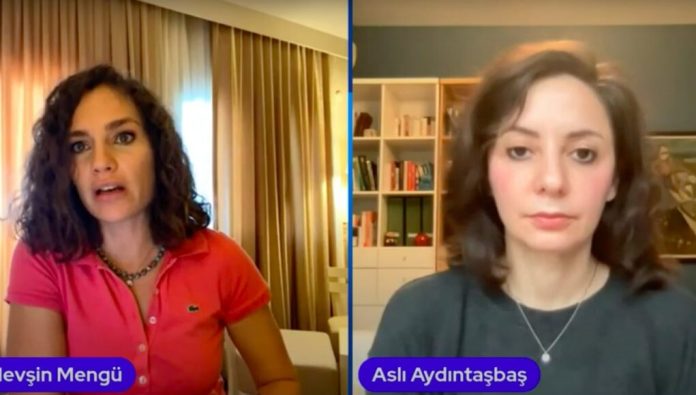
    Two Turkish journalists who are critical of the ruling Justice and Development Party (AKP) have come under fire for arguing that “systematic torture no longer exists in Turkey” during a program broadcast on YouTube on Sunday, Turkish Minute reported.

    Journalist Nevşin Mengü and Aslı Aydıntaşbaş, a journalist and senior fellow at the European Council on Foreign Relations (ECFR), were criticized by rights advocates, journalists and social media users after the latter argued that systematic torture no longer exists in Turkey on Mengü’s program and Mengü failed to object to the statement.

    “Aslı Aydıntaşbaş, who can actually say ‘systematic torture no longer exists’ (!), I invite you to monitor data from the Human Rights Association [İHD] and the Human Rights Foundation of Turkey [TİHV],” Şebnem Korur Fincancı, a prominent human rights activist and head of the Turkish Medical Association (TTB), tweeted.

    İHD co-chair and lawyer Eren Keskin said, “To the ‘white journalists’ of [this] land: Is the suffering of a mother in [the southeastern town of] Cizre, who had lost both her sons and her daughter and still can’t find her daughter’s body, included in ‘systematic torture’? And we still haven’t confronted [the events of] 1915 and 1938…”

    Keskin was referring to the term “white Turk,” which is widely used to refer to the urban republican elite.

    Many scholars see the massacre of as many as 1.5 million Armenians in 1915, during the final days of the Ottoman Empire, as the 20th century’s first genocide, while Turkey disputes the description and says the toll has been inflated, considering those killed victims of a civil war.

    The years 1937-1938 refer to the killing of thousands of Alevis and the displacement of  hundreds of others in Dersim in eastern Turkey in the early years of the Turkish Republic.

    “Nobody expects you to say ‘There’s systematic torture in Turkey’ because that would get you in trouble. [But] at least don’t say ‘there’s no systematic torture.’ With this kind of discourse, you will be the voice of the [Erdoğan] regime, whether you’re aware of it or not,” exiled journalist Tarık Toros said, addressing Mengü and Aydıntaşbaş.

    Criticizing the two journalists’ gestures and expressions when talking about torture, Adem Yavuz Arslan, another Turkish journalist in exile, said, “If you forget to turn up the volume [of the YouTube video], you might think they’re talking about something fun!”

    “[They say] there’s no systematic torture in Turkey, which means they don’t consider systematically tortured Gülen movement supporters and Kurds to be human beings,” he added, referring to President Recep Tayyip Erdoğan and his AKP government’s years-long crackdown targeting both communities.

    “I wish torture had ended in Turkey! … They say there’s no systematic torture, and I say ‘Have a heart,’ some prisoners don’t even go to the hospital just to avoid strip-searches [when leaving and re-entering the facility],” the MP added.

    Most recently Turkey’s Constitutional Court on May 18 ordered that Eyüp Birinci, a former teacher arrested for links to the Gülen movement, be paid 40,000 Turkish lira in compensation for being sexually assaulted, beaten and insulted in police custody.

    According to the family of Birinci, who was arrested in July 2016 and sentenced to eight years, nine months in prison, he fainted from the torture and was taken to a hospital where it was determined that he was experiencing internal bleeding due to his colon being ruptured from torture inflicted with a police baton.

    The court previously ruled in favor of an applicant who claimed that he was tortured for 25 days during his detention at Afyon police headquarters in 2016, ordering the Turkish government to pay TL 50,000 ($6,000) in damages and to launch an investigation into the perpetrators.

    Erdoğan has been targeting followers of the Gülen movement, a faith-based group inspired by Muslim cleric Fethullah Gülen, since the corruption investigations of Dec. 17-25, 2013, which implicated then-Prime Minister Erdoğan, his family members and his inner circle.

    Dismissing the investigations as a Gülenist coup and conspiracy against his government, Erdoğan designated the movement as a terrorist organization and began to target its members. Erdoğan intensified the crackdown on the movement following a coup attempt that he accused Gülen of masterminding. Gülen and the movement strongly deny involvement in the abortive putsch or any terrorist activity.

    After the abortive putsch, ill-treatment and torture became widespread and systematic in Turkish detention centers as evidenced by the UN special rapporteur on torture and other cruel, inhuman, or degrading treatment or punishment in a report based on his mission to Turkey between Nov. 27 and Dec. 2, 2016. Lack of condemnation from higher officials and a readiness to cover up allegations rather than investigate them have resulted in widespread impunity for the security forces. SCF