Category: Diary of Oppression

  • Thousands protest media crackdown in Turkey

    Thousands protest media crackdown in Turkey

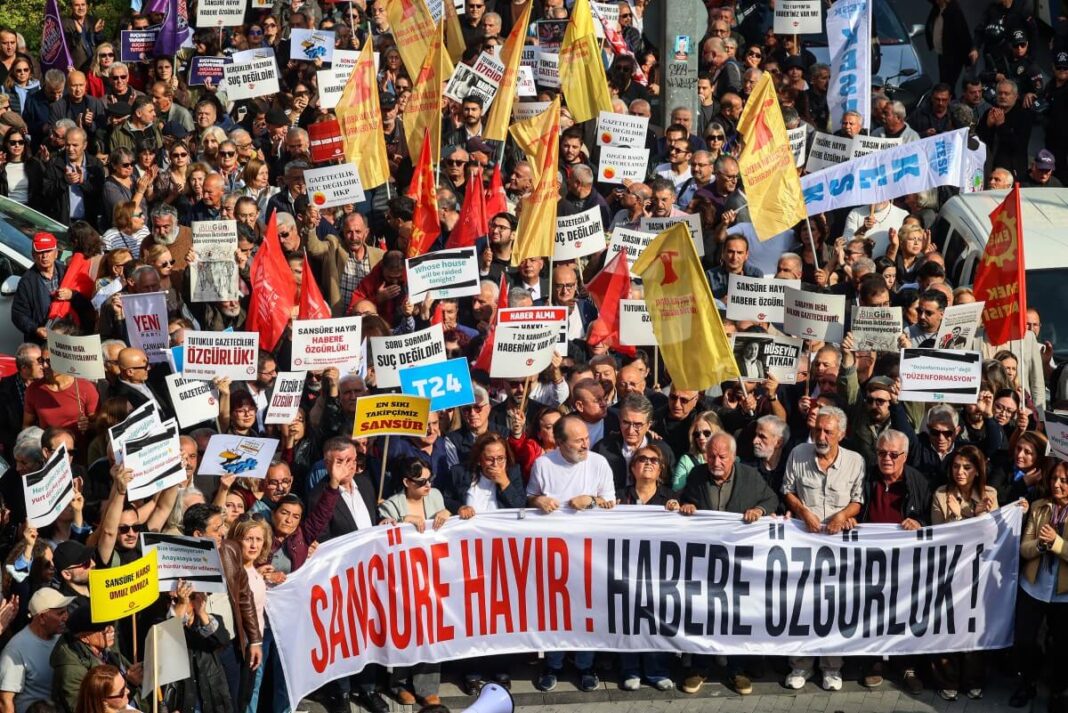
    Thousands rallied in İstanbul and Ankara on Saturday against what they described as growing pressure on journalists in Turkey, including arrests, media shutdowns and the appointment of government administrators to run news outlets.

    Press freedom has been increasingly constrained in Turkey since a failed coup attempt in 2016, with sweeping prosecutions, digital censorship and government accusations that journalists are spreading fake news.

    “Enough!” shouted marchers, mainly journalists, rights activists and opposition party representatives. “We can no longer breathe!”

    On İstanbul’s Asian side, protesters held up photos of jailed journalists, chanting: “We will not be silenced. Enough is enough!” and “We will not bow to pressure”.

    At least 3,000 people attended each protest, according to police counts.

    Recent weeks have seen what rights advocates describe as mounting pressure on independent journalism.

    Eleven journalists have been jailed in the past two months and several media outlets shut down, according to the Turkish Journalists’ Union (TGS).

    Earlier this month, police raided Turkey’s most-watched news channel, Halk TV, halting broadcasts and installing a government-appointed administrator.

    The takeover was the latest move against media outlets seen as critical of President Recep Tayyip Erdoğan and his government.

    It followed the blocking of leading digital news outlet T24’s website and social media accounts over what Turkish officials described as “LGBT propaganda”.

    ‘Intimidation’

    “This gathering is not simply about standing up for journalists,” veteran journalist Zafer Arapkirli told Agence France-Presse after the İstanbul protest.

    “It is also about defending respect for society’s right to access information and news through journalists and independent media,” said the columnist for the BirGün daily.

    Arapkirli, who himself faces lawsuits, said the response and determination to resist must grow as the pressure intensifies.

    “What the regime wants is to intimidate, silence and frighten society through such pressure — by arresting individual journalists, seizing media outlets, banning news coverage and blocking access to social media,” he said.

    “We must show that we will not allow this to happen.

    “We have done so up to now. I believe we are now moving towards demonstrating this determination on a much larger scale”.

    TGS President Gökhan Durmuş said the nature of “the government’s attacks” on the media had changed.

    “If we look at the recent restrictions, access bans and trustee appointments, they have targeted some of the most widely followed and watched broadcasters, news channels and media platforms,” he told AFP.

    “We are seeing a system emerge in which everything is uniform: one voice, one source of news, one centralised operation,” he said.

    ‘Let us do our job’

    In Ankara, protesters chanted against censorship and called for the release of jailed journalists.

    “Today’s protest was important both because it brought journalists together to make their voices heard and because it defended citizens’ right to access information,” T24 journalist Gökçer Tahincioğlu told AFP in Ankara.

    “Journalists are determined to get one message across: we want to practise journalism, and we want to be able to do so freely,” he said.

    The government has repeatedly denied that journalists are arrested or imprisoned for doing their jobs.

    At the Ankara protest, a letter from jailed BirGün journalist İsmail Arı was read to the crowd.

    “I am being held in prison for no reason other than doing my job as a journalist. Days are being stolen from my life,” Arı wrote from Sincan prison on the outskirts of Ankara.

    “We will defend journalism to the very end. Take your hands off us, comply with the constitution and let us do our job.”

    Arı was jailed pending trial on October 21 for the second time in seven months, accused of publicly disseminating misleading information following a complaint by former broadcasting watchdog chief Ebubekir Şahin. He was also investigated on suspicion of insulting a public official.

    © Agence France-Presse
  • Turkish teacher facing possible cancer recurrence jailed again over alleged Gülen links

    Turkish teacher facing possible cancer recurrence jailed again over alleged Gülen links

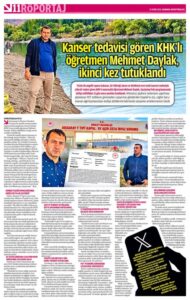
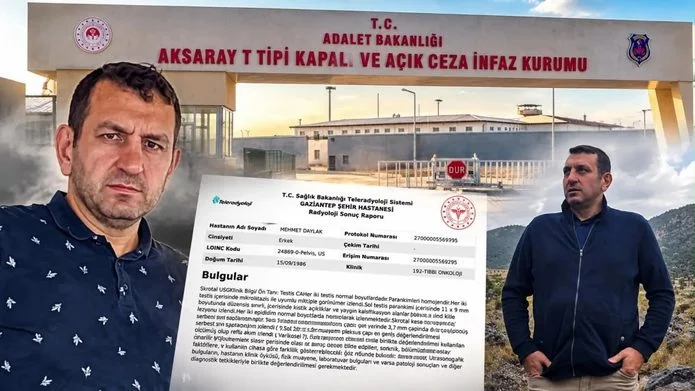
    A former Turkish teacher who underwent extensive treatment for advanced cancer has been jailed again over alleged links to the faith-based Gülen movement 13 days after his release, preventing him from undergoing a medical examination for a possible recurrence of the disease, the TR724 news website reported.

    Mehmet Daylak, who has been assessed as 86 percent disabled under Turkey’s medical disability classification, indicating a severe loss of bodily function, was taken into custody on October 7, a day before he was scheduled to undergo a PET scan, according to his wife.

    The Gaziantep 2nd High Criminal Court sentenced Daylak to more than seven years in prison on September 24 for membership in an armed terrorist organization over alleged links to the Gülen movement but ordered his release pending appeal. His conviction is not yet final.

    Daylak was arrested on May 5, 2025, as part of an investigation into the alleged restructuring of the Gülen movement.

    His wife said recent MRI and CT scans had shown abnormalities suggesting the cancer might have returned. After his release in September, Daylak visited Hacettepe University Hospital in Ankara, where a PET scan was scheduled for October 8.

    Police detained Daylak in the central province of Aksaray following a prosecutor’s objection to a court order for his release. His wife said the family had submitted medical reports and requests for examinations to the authorities but had been unable to secure his release. Daylak is currently being held at Aksaray Prison.

    Turkish President Recep Tayyip Erdoğan has targeted the faith-based Gülen movement, inspired by Muslim cleric Fethullah Gülen, who died in 2024, since corruption investigations in December 2013 implicated Erdoğan as well as some members of his family and inner circle. He dismissed the probes as a Gülenist conspiracy and designated the movement as a terrorist organization in May 2016, intensifying a sweeping crackdown after a coup attempt in July of the same year that he accused Gülen of orchestrating. The movement denies involvement in the coup attempt or any terrorist activity.

    Daylak was diagnosed with testicular cancer in 2014, which later progressed to stage four and spread to several parts of his body. According to his wife, he underwent multiple surgeries, intensive chemotherapy and a stem cell transplant. His treatment included the removal of his left kidney, gallbladder and part of his liver.

    Daylak also suffers from diabetes and gout, which sometimes leave him unable to walk for extended periods, his wife said. She expressed concern that his health could deteriorate further in prison and called for uninterrupted access to medical examinations and treatment.

    Pro-Kurdish Peoples’ Equality and Democracy Party (DEM Party) lawmaker and human rights defender Ömer Faruk Gergerlioğlu criticized the decision to return Daylak to prison despite his serious health problems, accusing authorities of disregarding the health of seriously ill prisoners and adding to overcrowding in prisons.

    Following his cancer treatment, Daylak was appointed as a mathematics teacher in 2015 through a government recruitment program for people with disabilities and began working in Osmaniye.

    Daylak was first jailed in 2017 over alleged links to the Gülen movement and released seven months later on health grounds. He was subsequently sentenced to more than eight years in prison on terrorism charges based on activities including depositing money in Bank Asya, a now-closed bank linked to the movement. The Supreme Court of Appeals overturned the conviction, and the case remains pending.

    According to the latest figures from the justice ministry, more than 127,000 people have been convicted of alleged links to the movement since 2016, with 10,485 still in prison and legal proceedings ongoing against 83,404 individuals.

  • 19 more jailed in investigation targeting Süleymanlılar religious community

    19 more jailed in investigation targeting Süleymanlılar religious community

    A Turkish court has ordered the pretrial detention of 19 people in the latest phase of a financial crimes investigation targeting individuals linked to the Süleymanlılar religious community, the DHA news agency reported on Friday.

    Five others were released under judicial supervision after 24 suspects were brought before a court following questioning by police and prosecutors.

    The decisions follow the fifth round of raids in the investigation, led by the Ankara Chief Public Prosecutor’s Office. Police searched 28 homes and 16 workplaces across 12 provinces after prosecutors issued detention warrants for 38 people.

    Twenty-two people were initially detained in the October 19 raids. The number subsequently rose to 24, according to DHA.

    Prosecutors are investigating allegations of establishing, leading or belonging to a criminal organization, money laundering, defrauding public institutions and violations of tax laws.

    The investigation has targeted community leader Alihan Kuriş, who has been jailed pending trial since August. Kuriş has denied leading a criminal organization or participating in money laundering or fraud.

    The case has expanded through successive operations targeting people and businesses linked to the community. In September, prosecutors issued warrants for 29 suspects and secured the appointment of court-supervised trustees to 23 companies.

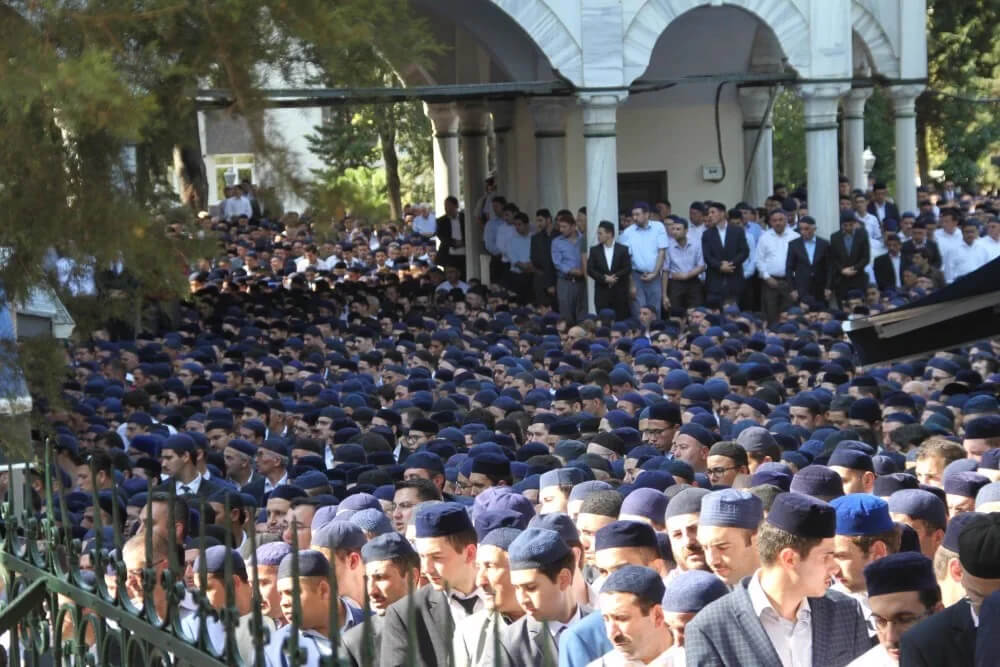
    The Süleymanlılar trace their roots to Islamic scholar Süleyman Hilmi Tunahan. The community runs Quran courses, student dormitories, charities and businesses in Turkey and Europe, particularly Germany. Kuriş, a grandson of Tunahan, became its leader in 2016.

    The investigation has prompted questions about possible political motives. The community has remained outside President Recep Tayyip Erdoğan’s ruling Justice and Development Party’s (AKP) close circle of religious allies and has at times reportedly supported opposition parties.

    Former education minister Hüseyin Çelik, a founding AKP member, warned in August that investigations into religious communities risked becoming a way to punish groups whose leaders opposed the government.

    He questioned whether the Süleymanlılar would have faced similar action had their leadership supported the ruling party.

    The government denies targeting the community over its beliefs or political position. Justice Minister Akın Gürlek has claimed that the investigation concerns alleged financial crimes rather than religious activities.

  • Erdoğan says Turkey shut or took over Gülen-linked schools in over 50 countries, vows to press on

    Erdoğan says Turkey shut or took over Gülen-linked schools in over 50 countries, vows to press on

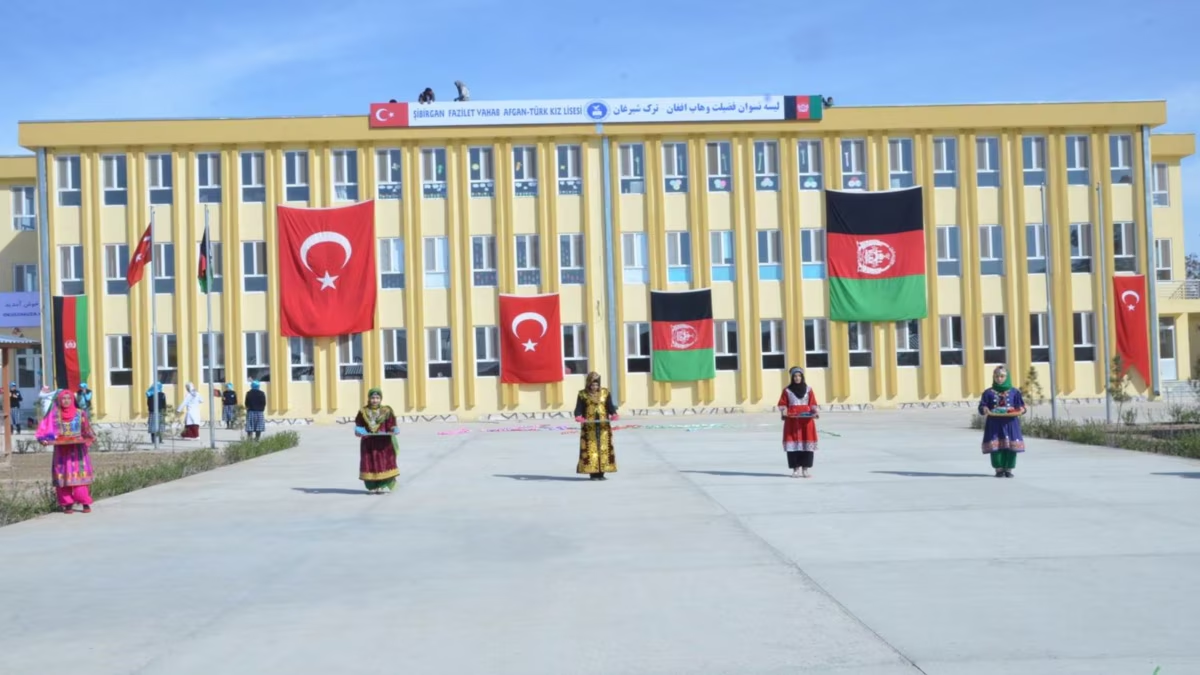
    Turkey has secured the closure or takeover of schools linked to the faith-based Gülen movement in more than 50 countries, President Recep Tayyip Erdoğan said on Thursday, vowing to continue his government’s campaign against the group abroad.

    Speaking at an event in Ankara marking the 10th anniversary of the state-run Turkish Maarif Foundation (TMV), Erdoğan praised the foundation’s takeover of schools previously associated with the movement and credited the Foreign Ministry, the foundation and other government institutions with carrying out the campaign abroad. He said the campaign had intensified after a July 2016 coup attempt.

    Erdoğan also described the Gülen movement as a “network of treachery” and its schools “dens of sedition,” saying its supporters would become “much more pitiable, much more wretched.” The remarks reflect a longstanding pattern of hate speech, with Erdoğan and other government officials portraying the movement’s followers as internal enemies and using dehumanizing language to legitimize their persecution, while pro-government media have amplified the rhetoric.

    Erdoğan has targeted the faith-based Gülen movement, inspired by Muslim cleric Fethullah Gülen, who died in 2024, since corruption investigations in December 2013 implicated Erdoğan as well as some members of his family and inner circle. He dismissed the probes as a Gülenist conspiracy and designated the movement as a terrorist organization in May 2016, intensifying a sweeping crackdown after the coup attempt in July of the same year that he accused Gülen of orchestrating. The movement denies involvement in the attempted coup or any terrorist activity.

    Erdoğan did not identify the countries involved, specify how many schools were affected or say where closures had been complete or partial.

    A July 2026 report by the human rights group Solidarity with Others documented the closure, confiscation or transfer of at least 162 Gülen-linked educational institutions in 29 countries, based on data compiled through March 2023. Of those, 131 were taken over directly by the Turkish Maarif Foundation. The report estimated that approximately 7,800 employees were affected.

    Since the July 2016 coup attempt, Ankara has pressed foreign governments to close or transfer Gülen-linked schools to the TMV, part of a broader campaign against perceived opponents abroad that human rights organizations have described as transnational repression.

    The foundation is the only organization other than Turkey’s Education Ministry authorized to open schools overseas on behalf of the Turkish state.

    The campaign has also extended beyond school closures and takeovers to the educators themselves. SCF has documented cases of educators associated with the Gülen movement being abducted or forcibly returned to Turkey from countries including Kosovo, Pakistan, Malaysia and Myanmar. Many Turkish teachers at schools targeted for takeover fled their host countries, fearing arrest or extradition, and sought refuge in Europe, the United States or Canada.

    The Parliamentary Assembly of the Council of Europe (PACE) cited Freedom House data listing Turkey among the world’s 10 leading perpetrators of physical transnational repression in a June resolution. The rights group documented 160 such incidents attributed to Turkey from 2014 through 2025.

    This article is republished from the Stockholm Center for Freedom.

  • 2 deputy mayors among 7 jailed in Ankara corruption probe

    2 deputy mayors among 7 jailed in Ankara corruption probe

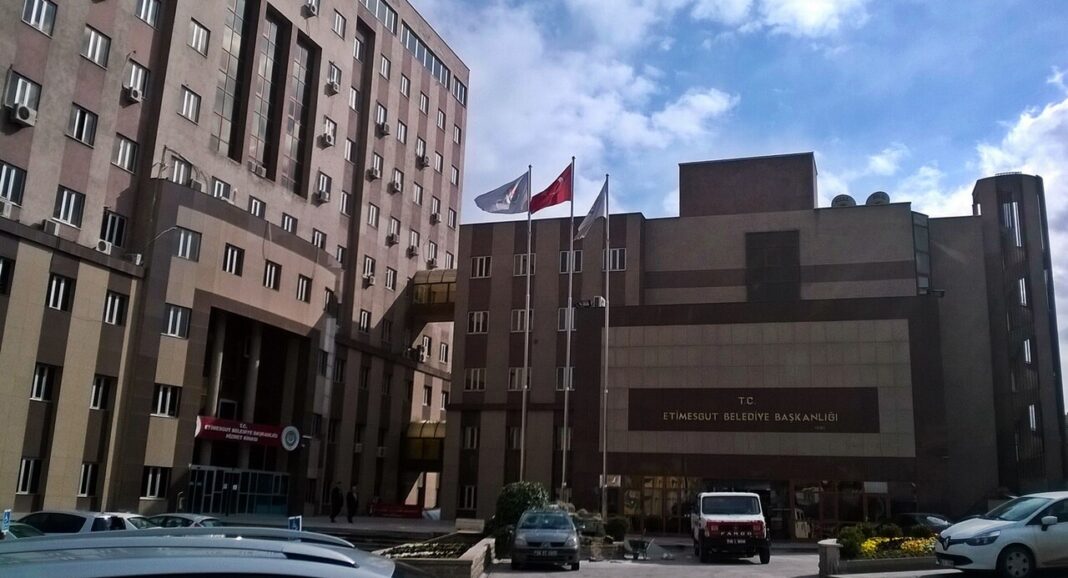
    A Turkish court on Saturday jailed two deputy mayors and five other people pending trial in a corruption investigation into Ankara’s opposition-run municipality of Etimesgut.

    Deputy Mayors Gültekin Bayındır and Fikret Gözüoğlu were among those jailed, while four other suspects were put under house arrest.

    The court decisions followed the detention of 25 people, five of them municipal employees, in raids across five provinces on October 13.

    Etimesgut, in western Ankara, is governed by the opposition Republican People’s Party (CHP).

    The investigation concerns allegations of forged documents and irregularities in municipal contracts, along with improper benefits connected to parking lot leases, zoning decisions and construction permits, according to the Ankara West Chief Public Prosecutor’s Office.

    The offenses under investigation range from bribery, embezzlement and extortion by public officials to forming a criminal organization, rigging tenders and misconduct in carrying out public contracts.

    Nine detainees gave statements under provisions offering leniency for cooperation with investigators, while prosecutors requested judicial supervision for five others, according to a prosecution statement carried by state media.

    The court jailed seven of the 11 suspects whose pretrial detention prosecutors had requested, ordering house arrest for the other four.

    The case had already led to the jailing of Etimesgut Mayor Erdal Beşikçioğlu and 39 others pending trial on August 3, following the detention of 55 people on July 30.

    The Interior Ministry suspended Beşikçioğlu from office the day he was jailed.

    Beşikçioğlu, an actor who plays a homicide detective in the television series “Behzat Ç.,” was elected mayor in 2024.

    He has denied wrongdoing, arguing that some of the irregularities cited in audit reports were uncovered through an internal review he ordered.

    He also denied personal or commercial ties to the companies under investigation and maintained that the municipal tenders in question were outside his direct authority.

    CHP candidate Seda Dilber was elected acting mayor by the city council on August 10, with the support of members from President Recep Tayyip Erdoğan’s ruling party, defeating the New Party’s Mehmet Özdemir.

    The New Party was formed in July by former CHP leader Özgür Özel and lawmakers who left the party after a court removed him as chairman.

    The Etimesgut investigation is part of a series of cases targeting opposition-run municipalities following the CHP’s victory over Erdoğan’s Justice and Development Party (AKP) in the March 2024 local elections.

    Opposition politicians accuse the government of using the investigations to weaken Erdoğan’s rivals and reverse their electoral gains.

  • Jailed İstanbul mayor accuses Erdoğan gov’t of shielding corruption in trial defense

    Jailed İstanbul mayor accuses Erdoğan gov’t of shielding corruption in trial defense

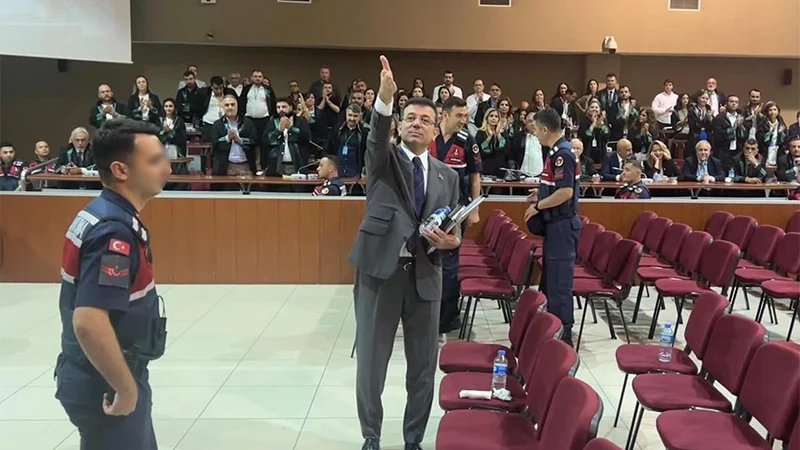
    Jailed İstanbul Mayor Ekrem İmamoğlu, President Recep Tayyip Erdoğan’s main political rival, on Wednesday accused Turkey’s government of using prosecutions and pressure on the media to shield corruption as he began his defense in a trial he says is intended to block his presidential bid.

    İmamoğlu began presenting his defense nearly 19 months after he was jailed pending trial, appearing before a court at the Marmara Prison complex in Silivri, west of İstanbul, where he has been imprisoned since March 23, 2025.

    The case concerns allegations of bribery, bid rigging, money laundering and an organized crime network at the İstanbul Metropolitan Municipality, with 436 defendants, 53 of them in pretrial detention.

    İmamoğlu denies the accusations and faces more than 2,400 years in prison if convicted on all counts, with prosecutors alleging that he used municipal resources to enrich himself and finance his political ambitions.

    In the opening of his defense, he accused those behind his prosecution of protecting people involved in Turkey’s investment fund scandal while portraying him as the leader of a criminal organization, according to a transcript published by the Medyascope news website.

    “They looked in the mirror and wrote what they saw into the indictment against me,” he said.

    İmamoğlu focused on Justice Minister Akın Gürlek, who was İstanbul’s chief public prosecutor when the investigations into the mayor began, accusing him of pursuing opposition politicians while failing to act with the same urgency over suspected financial wrongdoing.

    He told the court that Gürlek’s office sent a request to the Capital Markets Board (SPK), Turkey’s securities regulator, concerning investment funds on February 26, 2025, but failed to follow it with further investigative demands or police operations, the Bianet news website reported.

    He contrasted that response with letters prosecutors sent to İstanbul University on February 24 and March 11, 2025, which he described as pressure to revoke his diploma before police detained him on March 19.

    The university revoked his degree on March 18, 2025, citing alleged irregularities in his university transfer decades earlier, a decision that threatens his presidential candidacy because Turkey requires candidates to have a university degree.

    The fund crisis erupted in September after some funds could not meet withdrawal requests amid suspected share-price manipulation, prompting the regulator to order the liquidation of 131 funds managed by seven companies with 455,758 individual investors.

    İmamoğlu accused officials of failing to secure evidence and allowing companies implicated in the scandal to continue operating, arguing that political connections explained the difference between their treatment and the dawn raids against municipal officials.

    He also condemned Wednesday’s takeover of Halk TV, a broadcaster that covers the opposition, linking the intervention to efforts to prevent the public from hearing about the fund scandal and his defense.

    Police raided the station’s İstanbul headquarters and halted live broadcasts as the state-run Savings Deposit Insurance Fund (TMSF) took control under an investigation into owner Cafer Mahiroğlu over alleged bribery, bid rigging and money laundering.

    İmamoğlu urged people to support Halk TV and journalists, arguing that viewers should decide whether a broadcaster survives and that the government was using the judiciary to compensate for its losses at the ballot box.

    He cited the imprisonment of journalists Mustafa Balcı and Şaban Sevinç and the house arrest of İsmail Saymaz and Murat Ağırel, whose cases concern coverage of alleged links between government figures and the fund scandal.

    Turning to his own trial, İmamoğlu argued that pretrial detention had become a means of punishment and accused officials of transferring defendants to distant prisons and pressuring them after they refused demands he described as unlawful.

    He also challenged the ban on his book, “Millet Şahidimdir” (The Nation Is My Witness), which contains the defense he prepared after a dispute over speaking time prevented him from presenting it in July.

    Police initially justified their intervention at the printing house by alleging that the book lacked required publication labels but switched to examining its contents after the labels were found, he told the court.

    Beyond the allegations against him, İmamoğlu argued that Turkey’s institutions had lost their ability to restrain executive power and that prosecutions against elected politicians threatened the public’s right to replace the government through elections.

    “The real test of popular sovereignty is not how a government is elected, but whether the people can change it,” he said.

    İmamoğlu is the presidential candidate of the opposition New Party, whose leader, Özgür Özel, attended Wednesday’s hearing.

    Özel founded the party in July after he and 90 other lawmakers left the Republican People’s Party (CHP), following a court ruling that removed him as CHP leader and reinstated his predecessor, Kemal Kılıçdaroğlu.

    İmamoğlu won İstanbul’s mayoral election in 2019, ending decades of rule by Erdoğan’s political camp in Turkey’s largest city, and won again in a rerun after the first result was annulled before securing re-election in 2024.

    İmamoğlu and his lawyers have been allotted four days, through October 17, to present their defense in the trial, which began on March 9.

  • Turkey detains 32 people over alleged links to Gülen movement

    Turkey detains 32 people over alleged links to Gülen movement

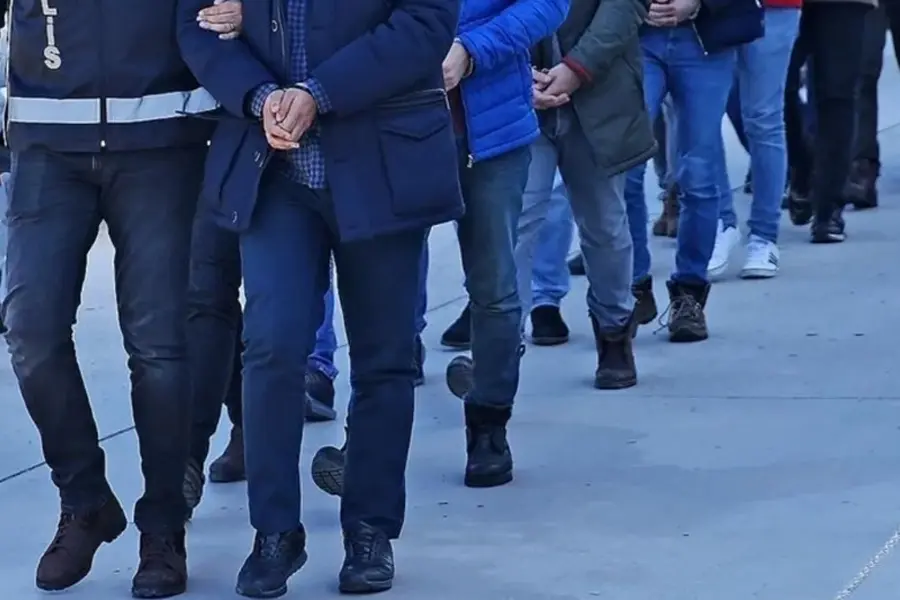
    Turkish authorities have detained 32 people in operations across several provinces over alleged links to the faith-based Gülen movement, Justice Minister Akın Gürlek said Wednesday.

    The operations were part of three investigations launched by prosecutors in Eskişehir and İzmir provinces that targeted 34 people. It was not immediately clear whether any of the detainees had been released or brought before a court.

    In Eskişehir, authorities detained nine of the 10 people included in an investigation into payments made through a US-based company allegedly linked to the Gülen movement. Prosecutors launched the investigation on suspicion that the payments, which were related to food products exported from Turkey, were connected to the movement.

    Turkish President Recep Tayyip Erdoğan has targeted the faith-based Gülen movement, inspired by Muslim cleric Fethullah Gülen, who died in 2024, since corruption investigations in December 2013 implicated Erdoğan as well as some members of his family and inner circle. He dismissed the probes as a Gülenist conspiracy and designated the movement as a terrorist organization in May 2016, intensifying a sweeping crackdown after a coup attempt in July of the same year that he accused Gülen of orchestrating. The movement denies involvement in the coup attempt or any terrorist activity.

    In a separate investigation conducted by the İzmir Chief Public Prosecutor’s Office, authorities detained 21 people across four provinces over allegations that they were involved in the Gülen movement’s ongoing activities.

    Prosecutors said the detainees’ names appeared in digital materials seized from people allegedly linked to the movement. Police also seized digital materials and documents during the raids.

    In a third investigation also led by prosecutors in İzmir, authorities detained two people in İzmir and Aydın over allegations of membership in a terrorist organization. A third person included in the investigation was reported to be abroad.

    Prosecutors cited ByLock messages, records from the now-closed Bank Asya and phone records as evidence of alleged links to the movement. ByLock is an encrypted messaging app once widely available on Apple’s App Store and Google Play that Turkish authorities claim was used as a secret communication tool by Gülen supporters.

    In a landmark 2023 ruling in Yüksel Yalçınkaya v. Türkiye, the European Court of Human Rights (ECtHR) found that convictions based on ByLock use and other alleged Gülen-linked activities, such as having an account at a movement-affiliated bank, violated the rights to a fair trial, no punishment without law and freedom of association.

    Gürlek said the government would continue operations against the Gülen movement and would not tolerate any of its activities.

    According to the latest figures from the justice ministry, more than 127,000 people have been convicted of alleged links to the movement since 2016, with 10,485 still in prison and legal proceedings ongoing against 83,404 individuals.

    This article is republished from the Stockholm Center for Freedom.