Category: Australia

  • Knickers the cow: why Australia’s giant steer is so fascinating


    First, the news, such as it is: there is a giant cow named Knickers in Western Australia and people have gone crazy.

    Technically he is not a cow, but a steer (a neutered male). But he is giant, standing at 1.94 metres (6ft 4in ) to his withers (the shoulder). This is just shy of the world record-holding steer, Bellino, who lives in Italy and stands at 2.02 metres. Knickers, a Holstein Friesian, weighs in at 1,400kg (220 stone) and is believed to be the biggest steer in Australia.And, for some reason, Knickers and his sizeable existence are the talk of the internet, making news all over the world.“It’s out of control,” says Geoff Pearson, Knickers’ owner, over the phone from his property in Myalup, south of Perth. “I didn’t expect it to go as far as it has. I’ve been called every 10 minutes since four o’clock this morning.”

    It is, perhaps, no surprise that a country obsessed with building gaint thing to line its highways –the Big Watermelon has just joined the Big Banana, the Big Prawn and the Big Potato – would be fascinated by an oversized animal.

    But it is not only Australians who have taken to Knickers. Pearson says he has spent the day fielding calls from the UK, the US, Canada and New Zealand, and the story has been picked up by the BBC, CNN, USA Today and the British newspaper the Daily Mirror.

    The US model and social media genius Chrissy Teigen tweeted to say that she pays for wifi on flights precisely so she doesn’t miss out on news like this.

    “They probably don’t have the opportunity to grow to their full potential,” Pearson says. “There could be other animals that could grow to this size but didn’t get the chance.”

    But Pearson is adamant that Knickers, who is seven, is a “standout”. “You could go through thousands and thousands of animals and try to find one of this size and you wouldn’t be able to.”

    Plus, Knickers’ story is one of hope and reprieve. Pearson tried to offload him last month, only to be told by the meat processors said the steer was just too large for the abattoir.

    “He’s too big for the chain, he’s out of spec, he’d be too heavy for the machines and he’d probably actually be hanging on the floor, so there would be contamination issues, and his cuts of meat would be too large,” Pearson says.

    Which means Knickers can live out his days on the 3,000-acre property, home to 4,000 head of cattle, for whom he acts as a “coach” – showing them where to roam.“He just hangs around, he’s part of the furniture,” Pearson says. “Obviously he’s gained some stardom – that’s changed his identity a little bit.

    “We’ll have to see what happens with that.” www.theguardian.com
  • Shaq to lend PM Anthony Albanese a hand on the Indigenous Voice to Parliament

    Anthony Albanese praised O’Neal after meeting with the basketball great in Sydney on Saturday morning, highlighting his work “in the United States about social justice and lifting people up who are marginalised”.

    “He knows that we’re a warm and generous people,” Mr Albanese said.

    “And he wanted to inform himself about what this debate was about.”

    The Prime Minister argued the world was watching the debate in Australia about recognition of First Nations people.

    “I just believe that it will send a really positive message to the world about our maturity as a nation,” Mr Albanese said.

    The Prime Minister, along with Minister for Indigenous Australians Linda Burney, presented O’Neal with a boomerang handmade by First Nations artist Josh Evans, and two jerseys from Mr Albanese’s beloved South Sydney Rabbitohs.

    “I’m here in your country, whatever you need from me, just let me know,” O’Neal said.

    Mr Albanese said the federal government would enlist the support of sporting codes and stars to spread the referendum message through the community, noting he had already had discussions with the AFL, NRL, basketball and netball organisations.

    Whether O’Neal’s involvement in the cause will sway any voters remained to be seen, according to Ms Burney.

    “We need to build-broad based support across the country for a referendum change,” Ms Burney said.

    “It was just so wonderful to meet him and to see that there is international interest from people like Mr O’Neal in relation to the project, the nation-building project we have underway, about the referendum.”

    The Prime Minister conceded there were genuine concerns about the referendum campaign being derailed by divisive and racist commentary.

    “But the truth is that inappropriate comments have been a feature, unfortunately … towards Indigenous people over a long period of time,” Mr Albanese said.

    “And I think some of the comments that have been made about this debate are ill-advised.

    “But it’s also such an opportunity to bring the country together, such an opportunity for unity going forward.”

    Some critics have taken aim at the Voice proposal, arguing the decision to leave the design of the body to parliament means the Australian public will not know the full details of what they are voting for at the time of the referendum.

    “The Uluru statement was very specific and clear about this — it will be the parliament that will make the final decisions about the way in which the Voice will look and what its functions would be,” Ms Burney said.

    “It will not usurp the parliament.

    “It will be a an advisory body only, and it will be a body that is enshrined in the constitution.” abc-news

  • NSW SES deals with 3,900 calls for help as wild weather, flooding hit Sydney

    The NSW State Emergency Service (SES) has responded to over 4,200 requests for help as heavy rain continues to pound Greater Sydney and its surrounds.

    The Hawkesbury, Nepean, Georges and Colo rivers have flooded due to the persistent rain.

    Most of the communities inundated are on Sydney’s south-western and north-western outskirts, but just before 7.30pm, the Bureau of Meteorology (BoM) warned major flooding was possible at the more suburban areas of Liverpool and Milperra tonight and tomorrow.

    About 9.30pm, the SES ordered people in parts of Chipping Norton, about 30km from Sydney’s CBD, to evacuate.

    While the east coast low which sparked the deluge has weakened, the BoM still recorded more than 120mm of rain between 9am and 6pm at Horsley Park, in the city’s south-western suburbs.

    SES Commissioner Carlene York said there had been an “enormous” demand for help with the organisation dealing with about 4,297 requests and 141 rescues taking place.

    With rain easing in some parts of Greater Sydney, Commissioner York warned “it’s still dangerous out there”.

    “It can change quite dramatically. Just because it’s not raining doesn’t mean the catchments aren’t filling up,” she said.

    Commissioner York said while it was still expected to rain in Sydney tomorrow, it would “not be in the amounts that have been seen over the last 72 hours”.

    Minister for Flood Recovery Steph Cooke warned Sydneysiders to be vigilant.

    “Sydney so far has missed out on the worst but it doesn’t mean it’s out of the woods yet. We still have broad warnings from just south of Nowra all the way up to just south of Newcastle at the moment,” Ms Cooke said.

    She said there had been 184 registrations at evacuation centres, with 68 people in emergency accommodation.

    BoM’s Jane Golding said rainfall was expected to be “very high” today across Sydney, the Illawarra, Blue Mountains and the Central Coast.

    “The weather shows signs it will ease tomorrow, but throughout today, expect more rain,” Ms Golding said.

    Premier Dominic Perrottet said he had requested 100 more Australian Defence Force officers, with 100 currently assisting rescues across north-west Sydney.

    Greater Sydney residents have been warned to avoid travel and check the SES website for evacuation orders.

    Camden resident of 42 years, Stephen Rae, said it had been “horrendous” weather this year.

    “The trouble with this flood now is the other flood filled everything up with water, even the groundwater is full, there’s nowhere for it to go,” Mr Rae said.

    “The house is damp, the pets are damp all the time [and] it’s very hard to keep things dry.”

    Windsor resident Tracey moved her animals to Blacktown when water began inundating her property.

    She said insurers had only recently been assessing damage in the area from the last flood, in March.

    “We’re so over it, four times in three months is a bit much for all of us,” she said.

    “A lot of us aren’t coping, there’s a lot of people in the area who are elderly with illness and stuff like that and basically we’re stuck, we’re stranded.”

    Today, the SES told people in low-lying areas near the Hawkesbury River downstream of Wisemans Ferry, north west of Sydney, to evacuate by 10am.

    Warragamba Dam, Sydney’s main water source, began spilling about 2am yesterday and, this morning, WaterNSW said “all major dams in the Sydney network continue to spill”.

    Some rivers have exceeded the major flood levels reached in March.

    Major flooding is continuing along the Nepean River at Menangle where river levels peaked at 16.61 metres on Sunday morning, exceeding the March flood peak of 15.92m, but below the April 2022 flood peak of 16.83m.

    The Hawksbury River at North Richmond peaked at 14.18m this morning, above the March peak of 14.08m and below the March 2021 level of 14.38m.

    A severe weather warning for heavy rainfall is current for the Metropolitan, Illawarra, parts of Hunter and Central Tablelands Forecast Districts.

    It’s the third time this year many of the areas being inundated, including parts of Sydney’s north-west and south-west, have flooded.

    The downpour became deadly yesterday when a man drowned in the Parramatta River at Abbotsford.

    SES deputy state commander Ashley Sullivan said people in Greater Sydney should “bunker down”.

    “This is a developing flood and severe weather situation and we do ask residents to really consider your movements over the next couple of days,” Mr Sullivan said.

    ABC

  • Dancing goalkeeper Andrew Redmayne sends Australia to World Cup

    Dancing goalkeeper Andrew Redmayne sends Australia to World Cup


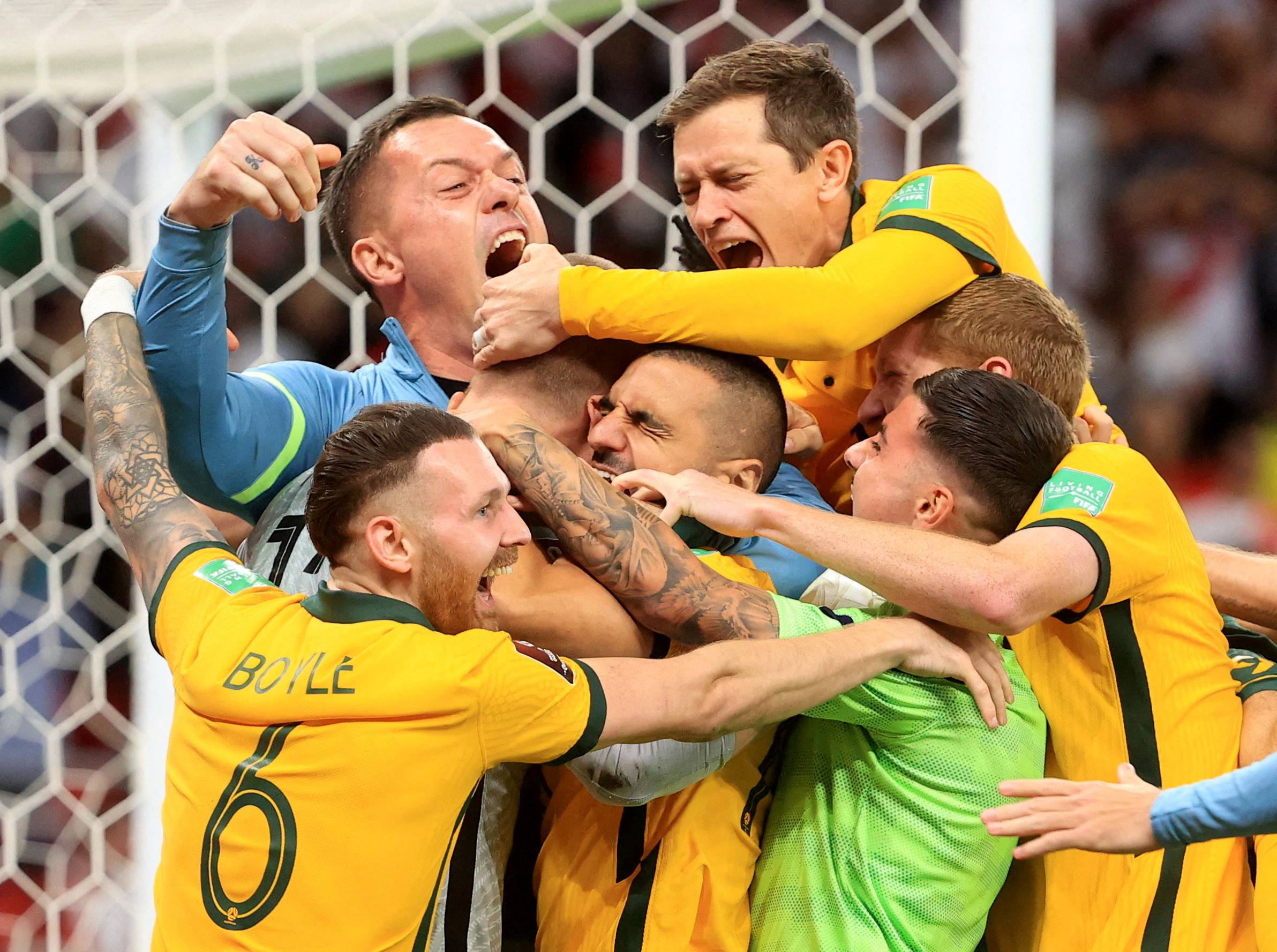
    Australia on Tuesday celebrated the antics of dancing goalkeeper Andrew Redmayne, whose penalty shootout save against Peru saw the Socceroos reach their fifth straight World Cup finals.

    The 33-year-old clowned his way along the goal line as Peru’s players prepared to take their penalty kicks, and his block of Alex Valera’s shot gave Australia a 5-4 win after the two sides had been deadlocked without a goal for 120 minutes.

    Australia coach Graham Arnold brought Redmayne on for team captain Mathew Ryan for the final minutes of extra time as a ploy for the shootout.

    Martin Boyle missed Australia’s first penalty but the next five were all on target.

    Redmayne danced and jigged along the line to unnerve the Peru players and Luis Advincula’s shot cannoned off a post. Redmayne’s save of Valera’s shot set off wild celebrations among the Socceroos and their band of a few hundred supporters.

    Arnold said that Ryan is a “fantastic goalkeeper” but Sydney FC’s Redmayne “is a good penalty saver and at that stage of the game I was just trying to do something that could affect them (Peru) mentally.”

    “Maybe that’s why they hit the post,” Arnold said. “They thought they had to put it closer to the post to score. It’s a risk but it worked.”

    Redmayne denied he was the hero of the night, saying his routine was “a little thing I do” for Sydney that has “proved quite successful.”

    “If I can gain 1% by making a fool of myself then I will,” he said.

    “I love this team, I love this country and I love this sport. I am under no illusions that all I did was to save one penalty.”

    Victory gave Australia the penultimate place available for the tournament that starts on Nov 21. They will play defending champion France in Group D one day later to start their sixth appearance at the World Cup in all.

    Peru, 22nd in FIFA’s list and a 2-0 victor over Australia 2-0 in the 2018 World Cup group stage, was roared on by 10,000 fans, most of whom had flown halfway round the globe for the playoff only to see a frustrating encounter between the rivals with few clear-cut chances.

    Arnold insisted that his whole team were heroes for getting through.

    “What we have been through in the last year and a half with the pandemic, not being able to get back into Australia, players getting COVID, not being able to get the best squad together a lot of the time.

    “I am so proud and happy for the players,” said Arnold.

    “The sacrifices they have made. No one thought they could do it, but they kept on believing.”

    Peru’s Argentine coach Ricardo Gareca said the whole side felt “enormous disappointment” at the way in which it was beaten but would not criticize Redmayne’s conduct on the line.

    “It hurts not to make it as we were doing well in the game,” added Gareca.

    Peru’s red-and-white army of supporters gave the conservative Gulf state a taste of what it can expect in November when some 1.4 million visitors are predicted to come to town. The team’s distinctive red and white shirts dominated the streets.

    For more than two hours the fans chanted “Come on Peruvians, tonight we must win.” Most of the team was left in tears of disbelief after the defeat.

    The final place for the tournament will be decided on Tuesday when Oceania champion New Zealand takes on Costa Rica, who reached the intercontinental phase out of the North and Central American qualifying contest.

  • First ever Aboriginal Supreme Court judge sworn in


    As a young man Lincoln Crowley may not have known if the Supreme Court of Queensland existed, but he understood what was fair and what was not.

    The Warramunga man has become Australia’s first Indigenous Supreme Court judge after being sworn in in Brisbane on Monday.

    Justice Crowley says he didn’t take any classes in legal studies at high school in Charters Towers in the 1980s.

    Nor did he spend much time thinking about the court he would sit on. In fact, he doesn’t think he even knew it existed.

    “But I knew what was fair and what was not,” the new judge told his swearing-in ceremony in Brisbane.

    “I knew it was not fair when I applied for a part-time job after school at a local shop and later found out that the manager threw my application in the bin, while saying: ‘They’re Aboriginal, aren’t they?’

    “And I knew it was not fair when teachers suggested that I wouldn’t amount to anything and when others judged me, and my worth, and potential without even knowing me.”

    Justice Crowley was inspired by his father, a retired army officer and one of the ADF’s first Indigenous majors.

    His dad encouraged his children to be educated, work hard and make something of themselves.

    Justice Crowley says he always resisted measuring himself with “someone else’s yardstick”.

    He was admitted to the bar in 2003 and worked with Aboriginal and Torres Strait Islanders Legal Service, and the NSW Crown Solicitors Office.

    Justice Crowley has been a Crown prosecutor for the Commonwealth Director of Public Prosecutions in Queensland.

    He was a private counsel for the NSW DPP, and served as Senior Council Assisting with the Disability Royal Commission.

    Bar association president Damien O’Brien QC said Justice Crowley is highly respected in the legal community, and especially by aspiring students.

    Mr O’Brien says for too long Indigenous Australians have lacked a voice within the legal system.

    The senior judiciary hasn’t reflected the import role of First Nations people as the custodians of the country, he said.

    “Your honour’s elevation to become the first First Nation superior court judge in this land is an important step in a much longer process to ensure that this historical role is rectified,” Mr O’Brien said.

    “I can tell you right now, the barristers of Queensland are extremely proud that you are one of our own.”

    Back when he was studying law, Justice Crowley distinctly remembers feeling he wouldn’t fit in in the legal profession, which seemed like an exclusive club at the time.

    “Times have changed, though,” he added

    His appoint as a judge comes 30 years after Margaret White became the first female supreme court judge in Queensland, and since the momentous Mabo land rights decision.

    Supreme Court Chief Justice Helen Bowskill says Justice White once said the qualities she admired most in judges were calmness, equitableness, moderation, wisdom and courtesy.

    “With the appointment of Justice Crowley, we add another person of such qualities to our bench and we reinforce the importance of equality before the law,” Justice Bowskill said.

    While he hopes one day that the appointment of an Indigenous judge isn’t remarkable, Justice Crowley said some have asked on social media why his “Aboriginality” is such a big deal today.

    “The answers to these questions are pretty obvious: diversity matters,” he said.

    He said the administration of justice was advanced by having judges who represented Australia’s diverse communities and their life experiences.

    He also hopes his appointment inspired other First Nations people to take up the legal profession.

    “I will strive to do justice in every case,” Justice Crowley said.

    “To my mind that is the most important objective in the law, and the one thing our community expects judges of this court will deliver.

    “In the end, justice is what it’s all about: always was, always will be.” Source: AAP

  • Aussie Covid survivor celebrates 105th birthday

    May Harrison, who is thought to be Australia’s oldest Covid survivor, hit the milestone birthday, surrounded by family and friends.

    “I was very sick and when I came out of it, I was very weak, but I got over it,” she told the ABC.

    “We were to have had a bigger [party] on the Sydney Harbour but they didn’t think I was strong enough.

    “But I love my parties.”

    Ms Harrison is one of nearly 46,000 aged care residents in Australia who have so far had Covid. That is despite regulations put in place to protect this vulnerable cohort.

    And as the country returns to ‘normal’ as we “learn to live with Covid”, the numbers of those instead dying with Covid have been steadily rising this year.

  • Fiji’s Prime Minister says climate change is island nation’s biggest concern

    Frank Bainimarama said it was “wonderful” to meet with Ms Wong on Friday as she continued the Albanese Government’s charm offensive in the region.

    “Fiji is not anyone’s backyard, we are a part of a Pacific family,” he said on Saturday.

    “And our greatest concern isn’t geopolitics — it’s climate change.”

    In a statement posted to the Fijian government’s Facebook page Mr Bainimarama said Anthony Albanese was to be “commended” for his “strong mandate” to do more to deal with climate change.

    For Ms Wong the visit to Fiji was her first solo overseas trip as Minister and it coincides with the Chinese Foreign Minister Wang Yi’s tour of Pacific Island nations.

  • Family of Australian man killed in Ukraine proud of his ‘dangerous’ work helping women and children

    It is understood Michael O’Neill, 47, was helping those caught up in the conflict against Russia when he was killed last week.

    Bernadette Doyle said her brother, who was a truck driver, joined a humanitarian organisation in March 2022 because he saw a desperate need for help in Ukraine.

    “He knew it was dangerous but could see that outside help was desperately needed to assist conveying women and children to safer places,” she said in a statement.

    “[Michael] became more involved delivering supplies onto the front lines, assisting with the retrieval of the injured and deceased”.

    According to Ms Doyle, this exposed the father-of-three to increased danger.

    Michael O’Neill grew up in the Huon Valley in Southern Tasmania and has been remembered as a keen sportsman and talented Australian Rules footballer.

    Mr O’Neill and his brothers played for the Kermandie Football Club, which folded in 2010.

    On Sunday, the Southern Storm Under 17 girls team took to the Kermandie Oval wearing the old Kermandie Football Club jumper in his honour.

    The O’Neill family still has a strong connection with the southern Tasmanian football club.

    “There’s a few O’Neill girls running around today,” Mr Synnott said

    “Obviously, it’s tough on everyone, and as is always the case, people are working through it”.

  • International Day of Families: Fleeing Persecution and Separation from Family

    International Day of Families: Fleeing Persecution and Separation from Family


    Every year on 15 May, the UN observes the International Day of Families to reflect on the importance which the international community attaches to families as basic units of society as well as its concern regarding their situation around the world. In 2022, we have seen an increase in the number of conflicts around the world, with many families becoming separated in the midst of a conflict or during the process of fleeing or migrating.

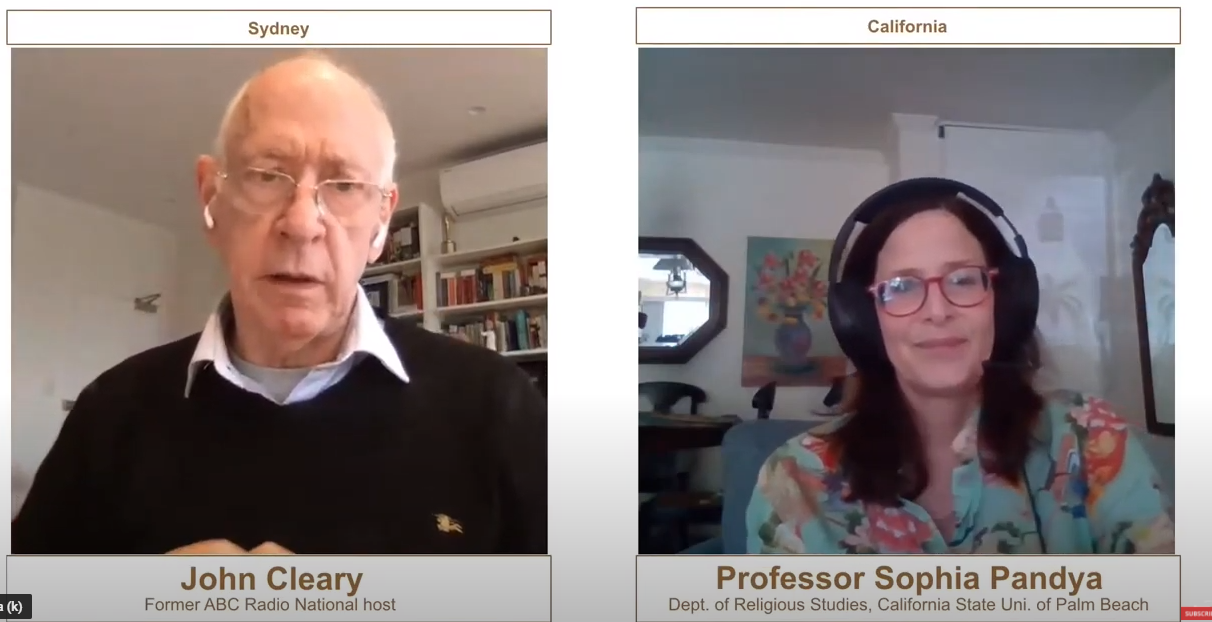
    In honour of the International Day of Families 2022, Advocates for Dignity (AFD) hosted a webinar on Wednesday 18 May, focusing on the effect that despotic regimes have had on families from Ukraine, Afghanistan and Turkey. The webinar was opened by AFD President, Mehmet Saral, who introduced the moderator for the webinar, former ABC journalist John Cleary. Mr Cleary introduced each of the guest speakers and conducted a Q&A session after each speaker’s talk. There were three notable speakers who were experts in their respective fields. The speakers included:

    The webinar began with Prof Pandya reflecting on her studies of Turkish families that crossed the borders of Turkey to Greece through the Maritsa river, to flee persecution as a result of President Erdogan’s regime after the attempted coup of 2016. She noted that in 2022, over 84 million people have become displaced to political turbulence and conflict around the world, with at least 35 million of those being children.

    “When we think about the refugee status, crossing a river is only one stage of their journey. For some, the journey may include hiding from arrest, exploitation, human trafficking, sexual assault, conlfict and death,” she said. “It is actually women and children who die in higher rates, and they are more vulnerable, especially to violence and sexual assault. Many women and girls suffer disproportionately from poverty, family separation, language barriers, lack of access to resources.”

    Pandya’s research has found that the impacts of the trauma of displacement result in depression, anxiety, and a very concerningly diminished ability to parent effectively, which is how displacement becomes an intergenerational issue within families. Not only do children have to endure the trauma of the journey, poor living conditions, a series of relocations, mental health problems, especially PTSD, but they also face poor care due to the mental health of their parents.

    She then provided an example of an interview with a displaced Turkish mother in Greece. She said: “A mother of twins said she arrived in Greece with her twins, and couldn’t even access diapers for them in the refugee camp. Now that her twins are 2 years old she expresses that she does not want to play with them anymore. She said ‘I don’t want to be with them, I can’t handle them’. She did not want to be a mother. This is a family crisis, there are many mothers who are so emotionally and psychologically affected that their family lives are in crisis.”

    Em Prof Maley then spoke about how displacement has been such a major part of the life of Afghan families for decades, highlighting that what displacement fundamentally does is tear apart support networks that are fundamental in sustaining families in functioning societies.

    Maley stated that several specific problems have arisen for Afghan families both within and outside of Afghanistan as a result of the Taliban taking over Afghanistan as of August last year. The first is physical safety; people are being attacked/becoming victims of terrorist strikes. “Each victim is a member of a family. This will affect the internal dynamics of the family, they may lose their breadwinner, their children, their elders. It is very difficult for families to move forward when they are dealing with the overwhelming grief of these attacks.” he said.

    He then continued: “The very idea of family is complex, it can very significantly vary in different countries. About 1 million people have fled since August last year. The conception of family which tends to be applied by western bureaucracies, which can be relevant when people are seeking to use sponsorship mechanisms to reunite fractured families, does not cover their relationship with aunts, uncles, cousins and other extended family members…disruption to family life then affects their ability to function on a day to day basis.”

    Dr Oleinikova started her presentation with an image of destruction in the Kyiv Region, which has severely suffered from the Russian invasion of Ukraine this year. She stated that the human costs of war are severe, with 7.1 million people that have become internally displaced, and 5.5 million refugees that have fled the country. This equates to 25% of the whole population of Ukraine being displaced. Within this escalating refugee crisis an estimated 55 children are forced to flee Ukraine every minute.

    “Men between the ages of 18 and 60 can’t leave Ukraine because they can be called to the front at any time. Those who are fleeing Ukraine are mostly women and children as a result, as well as the older generations, so mostly vulnerable groups are being displaced.” she said.

    As the war started, Oleinikova established a small fund to cover relocation costs for Ukrainian refugees including visa applications, document translation and much more, to assist in the first week of the war when these resources weren’t available as they are now. She was working with 10 volunteers on the ground in Ukraine. “My grandparents live in Kyiv, they are 85, they were surviving the first very harsh months thanks to food and medication provided by volunteers, otherwise they would not have been able to maintain their basic survival needs,” she said.

    Oleinikova then recounted many cases of mothers and children which she knew of personally, who were forced to cross the borders to flee Ukraine during the freezing winter months. Many of these cases had safe endings, however some included the loss of mothers and fathers volunteering to protect their country.

    The program was concluded by Mehmet Saral, who thanked each of the speakers for their insightful talks.


  • Scott Morrison woos voters from Hindu and Sikh communities on campaign trail

    Prime Minister Scott Morrison attended a Hindu Council of Australia in the Western Sydney seat of Parramatta and a Sikh Temple event in the Melbourne seat of La Trobe on Saturday.

    In his sixth campaign trip to the seat of Parramatta, Mr Morrison met with members of the Indian Australian community to announce $250,000 for a kitchen program providing meals for homeless people in an election pledge.

    The prime minister was joined by his Liberal candidate Maria Kovacic and Multicultural Affairs Minister Alex Hawke at the Hindu Council of Australia’s Meet and Greet event.

    He also on Saturday spent time at the Gurdwara Siri Guru Nanak Darbar Sikh Temple in Pakenham in the Melbourne seat of La Trobe.

    Coalition makes superannuation policy pitch

    With less than a week to go until polling day, the Liberal Party will officially launch its federal election campaign, along with news of an expanded superannuation policy to help entice voters.

    The Liberal leader will announce an expansion of a superannuation contribution scheme, funded by the sale of property, coalition sources have told Nine newspapers.

    Under the scheme, people aged 55 and above who are downsizing their primary residence, can contribute up to $1.6 million into superannuation. The terms lower the current policy age of 65 and lift the current cap from $300,000.

    Former prime minister John Howard is expected to be among the Liberal stalwarts in the audience at the Brisbane Convention Centre on Sunday.

    Labor commits to more funding for manufacturing industry

    Labor Leader Anthony Albanese will also start the day in Brisbane where he will announce Labor’s $1 billion election commitment for Australia’s advanced manufacturing industry.

    Labor’s fund aims to build the nation’s industrial base and create new opportunities in key manufacturing industries such as transport, defence, food processing, medical science, and renewables.

    Key economic data on unemployment and wages is due to be released this week.

    Mr Morrison on Saturday reaffirmed his promise to “empathise” and be more consultative after admitting some people find him to be “a bit of a bulldozer”.

    The prime minister said if he is re-elected his government will be “changing gears” and that he had needed to be a strong leader during the COVID-19 pandemic.

    “That was a time for me as prime minister in my government to be in the gear of pushing through and that was necessary,” Mr Morrison said.

    “I will seek … to explain my motives and my concerns, and empathise a lot more.

    “The next stage is very different … I’m looking forward to changing the gears of our government to secure those opportunities that are ahead of us.”

    Mr Morrison said the nation was moving to an “optimistic mode”. sbs