Author: Zaman Australia

  • Appeals court upholds sentences given to İpek family members

    A regional appeals court has upheld prison sentences given to members of the İpek family, whose İpek Holding was seized by the Turkish government in 2015 due to their alleged links to the Gülen movement, labeled by the Turkish government as a terrorist organization.

    The 4th criminal chamber of the Ankara Regional Court on Thursday upheld a prison sentence of 79 years, eight months for Cafer Tekin İpek, a brother of Akın İpek, the founder of İpek Holding who has been living in the UK since 2015, and a prison sentence of 11 years, eight months to his mother, Melek İpek.

    The İpek family members were given the jail sentences on charges of membership in a terrorist organization and tax evasion at the end of a trial concluded in January by the Ankara 24th High Criminal Court.

    Cafer Tekin İpek has been behind bars since April 2016. Melek İpek was a well-known and respected woman even among ruling Justice and Development Party (AKP) circles as a pioneer of charity activities before the government crackdown on the Gülen movement began.

    There were 20 defendants in the trial. The remaining defendants were also given jail sentences ranging between two and almost 10 years.

    The defendants will be able to challenge the court’s ruling at the Supreme Court of Appeals.

    The court also ordered that the defendants’ shares in the company be transferred to the Treasury and that a board of trustees continue to run the organization.İpek Holding has been managed by a group of government-appointed trustees since 2015.

    Turkey accuses the Gülen movement of orchestrating a 2016 coup attempt, although it strongly denies any involvement. Ankara also believes the movement had attempted to overthrow the ruling Justice and Development Party (AKP) government several times before the failed coup, most notably by conducting a corruption investigation into the close circle of then-Prime Minister Recep Tayyip Erdoğan in 2013.

    When the government decided to seize İpek Holding, Akın İpek was in the UK and decided not to return home.

    The Turkish government filed a formal extradition request for the senior İpek that was rejected by a UK court.

  • Interior minister to file complaint against journalists after mafia boss releases video calls

    Turkish Interior Minister Süleyman Soylu has said he will file a criminal complaint against two journalists whom he accused of conspiring against him with a mafia leader.

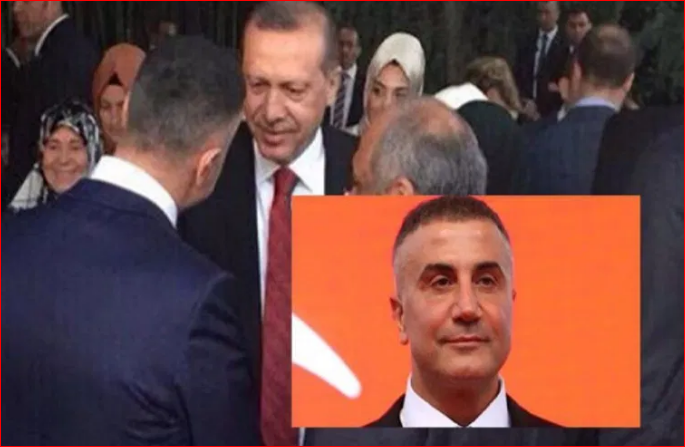
    Mafia boss Sedat Peker on Tuesday released two video calls with pro-government journalist Hadi Özışık after Özışık denied claims that he mediated between Soylu and Peker in the wake of an exchange of words and growing tension between the minister and the mafia leader.

    In the recordings, Peker and Özışık criticize Soylu, who recently called Peker a “dirty mafia leader,” with Özışık telling Peker he would not try to stop him from making revelations about his relationship with Soylu.

    Peker, the head of one of Turkey’s most powerful mafia groups, has for the last two weeks been setting the country’s political agenda through videos he releases on YouTube. The videos reach over a million viewers in the first day of their release. Peker, who lives in Dubai and is the subject of an outstanding warrant in Turkey, has been making shocking revelations about state-mafia relations and drug trafficking and murders implicating state officials.

    After the release of the video calls between Peker and Özışık, Soylu said he was shocked to see the conversation about him between the mafia leader and the journalist. He said he has known journalists Hadi Özışık and his brother Süleyman Özışık for years but denied Peker’s claims that the journalists mediated between Peker and Soylu in order to ensure Peker’s return to Turkey, according to the superhaber news website.

    In the videos, Peker is heard constantly telling Özışık, “I was going to return to Turkey in April. What has happened to that?” meaning that Soylu made his return impossible by attacking him on Twitter as a dirty mafia leader and failed to keep a promise.

    Soylu said he would file criminal complaints against the journalists accusing them of conspiring against him with a mafia boss.

    “If only something had happened to him and I didn’t see this day,” Soylu said, according to superhaber, expressing his disappointment over the association of his name with a mafia leader.

    In the meantime, Hadi Özışık released a statement on Wednesday in which he offered his apologies to Soylu and the public due to the conversations published by Peker.

    Özışık confirmed Soylu’s account in that neither he nor his brother met with Soylu to mediate between him and Peker. He said he tried to calm Peker down during the phone conversations and decided on his own to make the calls to the mafia leader. He said Soylu knew nothing about his calls with Peker.

    Once a staunch supporter of Erdoğan, Peker left Turkey following the publication of a report related to arms trafficking to Syria that was allegedly carried out under the guise of humanitarian aid. Although police recently raided his villa in İstanbul’s Beykoz district as part of an organized crime operation, they failed to detain him since he was out of the country.

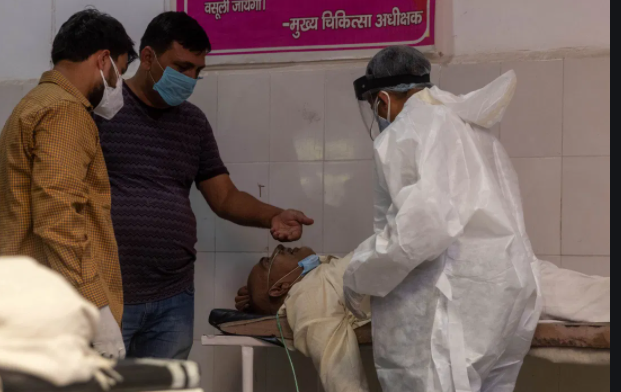
  • Australian citizen Sunil Khanna dies from COVID-19 in India

    Australian citizen Sunil Khanna dies from COVID-19 in India

    Sunil Khanna died on April 29 and is one of several known Australian citizens or permanent residents to have recently died of the disease in India.

    His 83-year-old mother, who was not an Australian citizen, also died of COVID-19 a day later.

    Mr Khanna had been in India for several years and was hoping to bring his parents to Australia next month before he and his family contracted the virus.

    President of the Little India Harris Park Business Association, Sanjay Deshwal, who was also Mr Khanna’s migration agent, said the whole family was trying to get to Australia.

    “All his family contracted COVID-19 — he, his 83-year-old mother and 84-year-old father,” he said.

    “Unfortunately, he passed away on April 29, and his mother died the next day, on April 30.

    “Both the mother and father had new [Indian] passports, and Sunil himself was trying to get back this June.

    “The plan was, if everything was alright, they’d all get back to Australia.”

    Mr Deshwal said the family was still hoping Mr Khanna’s father could be brought to Australia.

    “So far, the Australian government has done very well in keeping Australia safe, there’s no doubt about that,” he said.

    “But cases like these, tragedies like these, make me wonder if there should be some leniency to allow certain people to come through.

    “For example, parents and close family members.”

    During a speech at the Shri Shiva Vishnu Temple, in Melbourne’s south-east, earlier today Prime Minister Scott Morrison confirmed the number of Australians wanting to return home from India was growing.

    Previously 9,000 Australians had asked DFAT for assistance returning to Australia, but Mr Morrison said the number had risen.”Our consular staff are providing support right now to roughly 11,000 Australians who are registered to return to Australia, including 970 who we know are particularly vulnerable,” Mr Morrison said.

  • Investigation into Trump Organization now ‘in a criminal capacity’, New York Attorney-General says

    Attorney-General Letitia James has been investigating whether the Trump Organization falsely reported property values to secure loans and obtain economic and tax benefits.

    “We have informed the Trump Organization that our investigation into the organisation is no longer purely civil in nature,” Fabien Levy, spokesman for the Attorney-General’s office, said in a statement.

    “We are now actively investigating the Trump Organization in a criminal capacity, along with the Manhattan DA (District Attorney).”

    The office did not specify what prompted the change in its approach to the investigation or why it chose to announce it publicly.

    The Trump Organization could not immediately be reached for comment.

    Ms James’s disclosure of a widening investigation is not necessarily an indication she is planning to bring criminal charges.

    In New York, if that was to happen, the state Attorney-General could do so through a county district attorney or with a referral from Governor Andrew Cuomo or a state agency.

    Mr Trump has previously said the investigation overseen by Ms James, a Democrat, is politically motivated.

    Ms James has been investigating whether the Trump Organization inflated the values of some properties to obtain better loans, and lowered their values to get property tax breaks.

    Separately, Manhattan District Attorney Cyrus Vance has been investigating Mr Trump’s pre-presidency business dealings for more than two years.

    Mr Vance’s office said in court filings it was investigating “possibly extensive and protracted criminal conduct” at the former president’s Trump Organization, including tax and insurance fraud and falsification of business records.

    Mr Vance’s probe began after Mr Trump’s former lawyer and fixer, Michael Cohen, paid hush money to silence two women before the 2016 election about claimed sexual encounters with the former president.

    That investigation has accelerated since Mr Trump lost his bid for a second term to current US President Joe Biden.

    Mr Vance’s investigation has also appeared to focus in recent weeks on the Trump Organization’s long-time finance chief, Allen Weisselberg.

    His former daughter-in-law, Jen Weisselberg, has given investigators reams of documents as they look into how some Trump employees were compensated with apartments or school tuition.

    Ms James’s existing civil investigation and Mr Vance’s criminal probe had overlapped in some areas, including examining whether Mr Trump or his businesses manipulated the value of assets — inflating them in some cases and minimising them in others — to gain favourable loan terms and tax benefits.

    Mr Vance’s investigation included a look at the propriety of tax write-offs the Trump Organization claimed on millions of dollars in consulting fees it paid, including money that went to Mr Trump’s daughter, Ivanka.

  • Dexter Kruger: Australia’s oldest man, 111, reveals secrets of long life are eating chicken brains and living simply

    Australia’s oldest man has revealed some of his secrets for long life – including eating chicken brains.

    Dexter Kruger, a former rancher and vet, is 111 years and 124 days old and told the Australian Broadcasting Corp (ABC) a weekly poultry delicacy had contributed to his longevity.

    Speaking from his nursing home in rural Queensland, Mr Kruger said: “Chicken brains. You know, chickens have a head. And in there, there’s a brain. And they are delicious little things. There’s only one little bite.”

    Chicken’s brains are smaller even than the bird’s eyeball, according to cuisinevault.com, which describes them as “a fatty organ that taste a lot like chicken fat with a unique sponge-like texture”.

    Mr Kruger’s son Greg, himself a sprightly 74, puts his father’s long life down to his simple Outback lifestyle.

    Much of his longevity he puts down to the simple lifestyle he enjoyed in the bush.

  • The Garden of Humanity: Affinity Parliamentary Iftar resumes in 2021

    On Thursday 6 May, 150 guests gathered at The Fullerton Hotel Sydney to break bread in the spirit of harmony and diversity at Affinity Intercultural Foundation’s twelfth annual Friendship and Dialogue Iftar dinner.

    The gathering saw guests from diverse backgrounds in attendance, including members of Parliament, police, Royal Australian Navy members,  religious, community and education leaders, businesspeople, academics, members of the judiciary and media as well as representatives from other faiths and cultures.

    The diversity of backgrounds, added to the rich tapestry of the evening and is symbolic of the multiculturalism and diversity that we see in Australia.

    Ms Philippa McDonald, Former ABC Reporter, Journalist and Communications Specialist Acted as the MC on stage with her charming presence and set the night with its proceedings.

    The evening began with a most extraordinary Acknowledgement of Country and Elders from Ms Phillipa McDermott, Chairperson of Bangarra Dance Theatre & Lead Indigenous Employment and Diversity ABC.

    This was followed by a colourful and spectacular Didgeridoo performance, where the audience was captivated by Uncle Walangari Karntawarra, Australian Aboriginal Artist and Affinity’s valuable advisory member.

    Mr Bilal Kilic from Amity College delivered the ‘adhan’ (call to prayer) and the fast was broken with dates followed by a magnificent three-course dinner.

    During his speech as co-host the Hon Dr Geoff Lee MP, Minister for Sport, Multiculturalism, Seniors and Veterans, shared on a light note, how wonderful it is to be gathered on this evening with over twenty guests, face-to face rather than via Zoom last year.

    “Having a dinner is the best ways for any background whether multicultural, multifaith society, it’s a leveling playing field, like sport, that we can all join together and celebrate  everything good that makes us Australian. Ramadan is a particularly important time that we self-sacrifice, doing good for others and providing charity for others in this month,” he said.

    Co-host Ms Sophie Cotsis MP, Shadow Minister for Better Public Services, touched on how “Affinity embodies humanity, in bringing everyone together, fighting through barriers during uncertain days.”

    Presenting his warm welcome, Executive Director of Affinity, Mr Ahmet Polat, decreed tonight’s dinner as  ‘The garden of humanity’, which was  “inspired by a desire to celebrate the possibility and perhaps one day, the reality of peaceful coexistence among all faiths and all cultures in society.”

    “Our main goal is to accept each other unequivocally as valued members who have a rightful place in society. I have four words that came to my mind while reflecting on tonight’s Iftar dinner “courage, vision, dedication, and optimism”. This Iftar dinner is a profoundly optimistic gathering. It has established on a belief that we can learn, and we can give, and it seems to me, that this is the vision and future of the world we would like to have and build towards. We are dedicated and courageous to oversee our differences and share a delightful conversation over a delightful meal,” he said.

    A tranquil Quran recitation was provided by Mr Ibrahim Karaisli from Amity College, followed by an Affinity Parliament Iftar Dinner Highlight video. This video encapsulated the last 5 dinners, held in the NSW Parliament House, in a nutshell.

    The Grand Mufti, Dr Ibrahim Abu Mohammed’s speech was presented by ANIC spokesperson Mr Bilal Rauf.  “We as Muslims believe that all humanity comes from one source and are therefore, brothers and sisters united in their humanity. True belief in Islam is intertwined love for all people. Our Prophet (s) said, none of you will truly believe until you love for your brother, what you love for yourself.”

    The audience was transported to Ottoman times with a special Sufi music performance by Tarik Hussein and Tariq Hawala.

    In her keynote address, Tracey Holmes, senior reporter, and presenter at ABC’s NewsRadio, The Ticket said that the dinner contributed to building social cohesion and trust between different people.

    “There is much to despair but yet again here we all are, different but together. With different worldviews, but able to share a meal in peace. We challenge our worldviews, but we are together in peace,” she said.

    “We were able to change one word of the national anthem, so at least now we are all one. I don’t say any of these things with political overtone, I am not talking about politics. I am talking about people. I am talking about you and I am talking about me. I am talking about the ground that we share together, despite all of our differences. We cannot let humanity become politicised.”

    “We will never ever all be the same and isn’t that a wonderful thing. We will never ever all think the same way. We do not even experience this world in the same way, we’ve not even experienced tonight in the same way. And yet once again, here we are in peace. ”

    Floor reflections were provided by distinguished guests. Ms Naomi Steer, National Director Australia for UNHCR, shared her insight, “I am always hopeful because in my work I see sometimes the worst of humanity, but I certainly see the best of humanity and tonight I see that reflected within everybody here, and I really hope we will take that outside and beyond globally in support of the most vulnerable people we know.”

    Judge Dale Kemp, The Federal Circuit Court, reflected, “As a judge involved in family law matters, the court has to consider making orders in the best interest of children. The principles are divided into primary considerations (the need to maintain meaningful relationships between children and parents)  and additional considerations (one such matter relates to the lifestyle, culture and traditions of the child and the parents). Events such as tonight raised the awareness of the lifestyle and cultural traditions of Muslims.”

    A special guest joined from the United States, NBA basketball player for the Portland Trail Blazers Mr Enes Kanter, who shared his humble view of sports.

    “I believe sport delivers connection and belonging in the community. It is something that people from all walks of life can join together to play, cheer, celebrate, and appreciate, despite any ethnic, religious, or cultural differences.  Sport also promotes and celebrates diversity by rejecting racism and division and promoting Unity and Inclusion. It is with these values that we hope to create a world where all are comfortable and respected in all they do,” Enes said.

    A vote of thanks was offered by Mr Craig Foster AM, Former Socceroo, Broadcaster, Adjunct Professor, Author, Human Rights Activist & Affinity Advisory Board Member.

    “This is so important, what is happening in this room tonight and always is at this event, is when you look around you see the true vision of what Australia is. You see more than that actually, the promise of what we can be. You see here, an Australian secular society where everyone is free to exercise their own faith, to have their own beliefs and to be respected for doing so. But more than that, to come together, to sit together, to break fast and build understanding, and as Cousin Ahmet would say, to conduct dialogue and conversations, people to people connections, and breaking down barriers.”

    “It’s not just multiculturalism, diversity, inclusion, and it’s not just tolerating other people and other faiths, we accept them. Actually it’s saying we are better together. That is real multiculturalism. It’s to say this person next to me is part of this country, is equal to me, and I will fight for you when it is necessary, ” he said.

    Concluding remarks were provided by Mr Richard Broinowski AM, Former Australian Public Servant & Diplomat and Affinity advisory board member who wished  “at this time of international crisis, we must hope that the tradition of self-reflection imbued within Ramadan will result in tolerance across our community. We need tolerance now more than ever before.”

    This event was possible with the generous support from sponsors including Pfizer Australia Biopharmaceuticals, Innovo Technology Solutions, Galaxy Foundation and the Australian Relief Organisation.by Gulen Azra Polat
  • Suppression of Kurdish language in Turkey is reflection of general intolerance towards Kurds: community leader

    The pressure on Kurds in Turkey to not speak their own language is a reflection of a general intolerance towards the Kurdish population, said Birca Belek Language and Culture Association Co-chair Mirza Roni.

    Speaking to the Mezopotamya news agency (MA), Roni said five people had been killed in Turkey in the last seven years for speaking Kurdish. He added that authorities had remained silent about hate crimes against Kurds.

    According to Roni in 2015 11-year-old A.Ö had been beaten and later expelled from school in eastern Erzurum province for speaking Kurdish. A year later another student, Pınar Çetinkaya, was thrown out of her dormitory for speaking Kurdish with her family on the phone. The dormitory management claimed she had links to illegal Kurdish organizations.

    Bedriye Yaşlı, 71, and her husband were beaten in a hospital by another patient’s visitor for speaking Kurdish with each other in 2019.

    “The Kurdish population is being oppressed for speaking their language,” Roni said. “Not only have people been killed, but Kurdish magazines, newspapers, news agencies and TV channels have been shut down.”

    According to Roni the government’s policies discouraging the use of Kurdish is embarrassing. Although Kurdish associations have worked hard to preserve their language and culture, their activities face the constant threat of being banned, he said.

    Authorities have increasingly restricted the use of Kurdish in recent years. The government-appointed local administration removed bilingual Turkish-Kurdish street signs in the majority-Kurdish-populated city Diyarbakır in southeastern Turkey in 2018. The same administration shut down a Kurdish-language audio library for disabled children.

    Hate crimes against Kurds have increased in Turkey in the recent past. Last October, a Kurdish seasonal farm worker, Şirin Tosun (19) was shot dead in Sakarya for speaking to his friends in Kurdish.

    Sixteen Kurdish seasonal farm laborers were attacked on September 4, 2020 by a farm owner and a group of villagers in Turkey’s northwestern province of Sakarya in an incident that appears to have been caused by anti-Kurdish sentiment.

    In another hate crime father and son Kadir Sakçı (43) and Burhan Sakçı (16) were attacked by a mob, again in Sakarya, for speaking in Kurdish to each other. Kadir Sakçı died as a result of his injuries, and Burhan was hospitalized for an extended period of time.

    Prohibitions against the use of Kurdish in Turkey go back many years. Kurdish language, clothing, folklore and names had been banned since 1937. The words “Kurds,” “Kurdistan” and “Kurdish” were among those officially prohibited. After a military coup in 1980, speaking Kurdish was officially forbidden even in private life.

  • Document shows mob boss given police protection after vowing to shed blood

    Document shows mob boss given police protection after vowing to shed blood

    Mafia leader Sedat Peker was given police protection after he vowed to shed rivers of blood at a rally he held to condemn terrorism in the Black Sea province of Rize in 2015, according to a document revealed by an opposition deputy.

    Peker, the head of one of Turkey’s most powerful mafia groups, has for the last two weeks been setting the country’s political agenda through videos he releases on YouTube. The videos reach over a million viewers in the first day of their release. Peker, who lives in Dubai and is the subject of an outstanding warrant in Turkey, has been making striking revelations about state-mafia relations and drug trafficking and murders implicating state officials.

    In his last video released on Wednesday, Peker made allegations about his relationship with Interior Minister Süleyman Soylu, who recently called him a “dirty mafia leader,” claiming that Soylu’s views of him were different until recently.

    In the video Peker said he was even given police protection by the state.

    Following Peker’s claims, Ömer Çelik of the ruling Justice and Development Party (AKP) said people who have documents proving Peker’s allegations should take legal action.

    Prompted by Çelik’s call, Ali Mahir Başarır of the main opposition Republican People’s Party (CHP) posted a document on Twitter which showed that Peker was given police protection by the İstanbul Governor’s Office in 2015 following the rally in Rize.

    “They are making a big mistake. When they realize their mistake, it will be too late. We will shed their blood in rivers as if the carotid arteries of the world were dissected,” said Peker at the rally targeting the outlawed Kurdistan Workers’ Party (PKK), which has been waging a bloody war in Turkey’s Southeast since 1984 and is listed as a terrorist organization by Turkey, the US and the EU.

    One day after Peker’s remarks on Oct.10, 2015, the deadliest terrorist attack in the history of modern Turkey took place in the Turkish capital city of Ankara where 109 civilians were killed and more than 500 others were injured in twin suicide bombings at a pro-Kurdish rally.

    No organization has ever claimed responsibility for the attack, but the attackers, who were two brothers, were later found to have had links to the Islamic State in Iraq and the Levant (ISIL).

    Başarır said the AKP government, which fails to provide police protection to women suffering from domestic violence, provided police protection for a mafia boss whom they now call a “dirty mafia leader.”

    The CHP said the police protection for Peker was provided before Soylu became interior minister but continued after he was appointed in August 2016, and hence he should resign.

    Following his controversial remarks in Rize, Peker also threatened academics who demanded the Turkish army halt operations in Turkey’s Southeast in 2015 that killed hundreds of people, displaced thousands and destroyed entire sections of cities.

    “We will shed your blood in streams and take a shower in your blood,” Peker said in a statement released on his personal website in January 2016 targeting the academics whom he accused of supporting the PKK.

    He was indicted following an investigation into his threats, facing 11 years in prison, but was acquitted of charges in 2018.

  • Protesters march in Sydney, Melbourne against Israeli attacks on Gaza

    Several thousand people marched in Sydney and hundreds in Melbourne today, protesting against Israeli attacks on Gaza amid days of conflict between the two sides.

    Israeli planes renewed air strikes in Gaza early today and Hamas militants in Gaza responded by firing rockets into Israel as their battle entered a fifth night.

    In Melbourne, protesters gathered at the State Library of Victoria and then marched to Parliament House, many carrying “Free Palestine” posters.

    At least 132 people have been killed in Gaza since Monday, including 32 children and 21 women, Palestinian medical officials said.

    Eight people have been killed in Israel, including six civilians, among them two children, Israeli authorities said. ― Reuters

  • A NIGHT OF SHARING: ISRA AND THE ABC

    The Islamic Sciences and Research Academy Australia (ISRA) hosted its inaugural ‘Night of Sharing’ on the evening of Friday 23 April. Almost thirty guests from the Australian Broadcasting Corporation (ABC) joined with both emerging and long-standing Muslim leaders to share iftar and address the evolving, and sometimes volatile, relationship between the Muslim community and the media.

    The two organisations connected during the 2020 ISRA Women’s Leadership Mentoring Program. In response to Dr Derya Iner’s damning Islamophobia report, which exposed that women constitute 71% of victims of Islamophobia, postdoctoral researcher Chrisanthi Giotis sought to investigate how Muslim women felt about the role of the media in perpetuating these alarming rates, interviewing some of the mentoring program’s participants as part of her research.

    In attendance at the iftar was ISRA Founding Director Mehmet Ozalp, ISRA volunteers, the mentoring program’s participants, and a myriad of young Muslim advocates. ISRA was excited to be joined by the deputy editors of the ABC Sydney, Victorian and Asia-Pacific newsrooms, as well as the ABC 5050 Equality Team member, Flip Prior, who co-hosted the iftar alongside Amar Hamed. Young journalists and producers from a diversity of backgrounds; social media, digital media, radio, politics, and local community reporting invigorated the general sense of hope and solidarity enveloping the room.

    The event kicked off with each table discussing ‘you can’t ask that’ style questions, which were laced with the mutual, and arguably warranted, fear and distrust between the Muslim community and the media. It was an opportunity to debunk misconceptions and myths, but also to explain the skepticism experienced by each side towards the other.

    This was followed by an insightful panel consisting of political reporter Nour Hayder, seasoned journalist Stephen Hutcheon, Mehmet Ozalp, and politics student Lina Ali. The panelists discussed the responsibility of journalists to recognise the danger of conflating fear-mongering buzzwords such as ‘jihad’ and ‘sharia law’ with the Australian Muslim identity.

    On the other hand, the onus on the Muslim community to nurture media literacy and address popular and circulating conspiracy theories was discussed. Attendees and panelists expressed their take on the controversial roads of tokenism and diversity quotas. It was foremostly agreed that diversity and competence are not mutually exclusive. The iftar was the first step of many to come, and the ABC was thrilled to have expanded their database of Muslim contacts to greater reflect the diversity of the Muslim community. At the closing of the event, the ABC reinforced their hope to be accessible bridges for the Muslim community to not only share their stories but join the world of media reporting. ISRA looks forward to seeing the fruits of the event’s conversations manifest in media and reporting policy. I am sure that most attendees would agree that, above all, there was something warm and promising about sharing dates and syrupy Lebanese sweets with our fellow Australians. Posted by Aisha Abdu